Wholesale Personal Care Tools: How to Source Manicure and Pedicure Kits
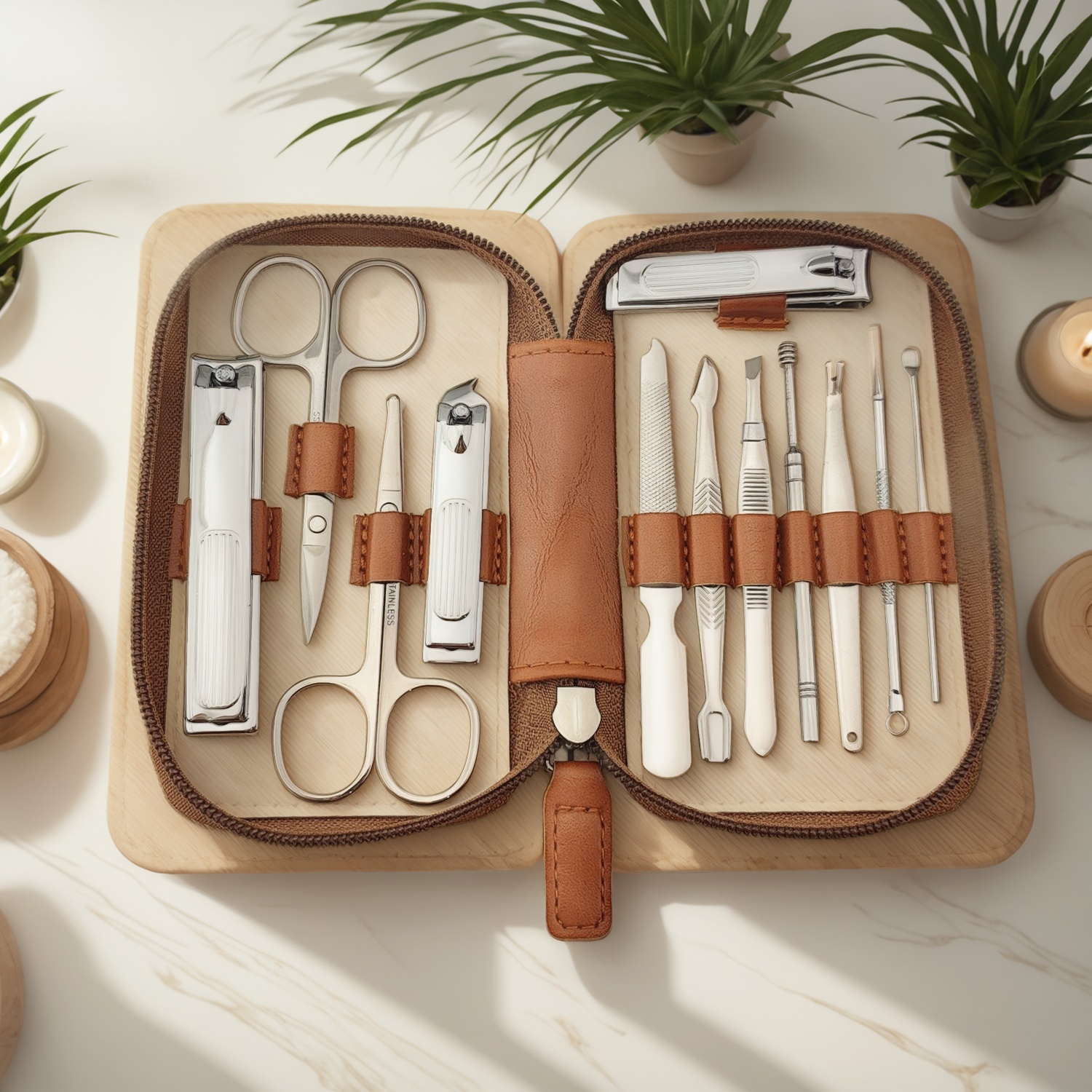
Wholesale manicure and pedicure kits are compact, practical beauty-tool products for retailers, distributors, salon suppliers, gift programs, and e-commerce sellers. The buying decision should not be based on product photos alone. A kit must combine usable tools, consistent stainless steel finishing, secure case construction, accurate tool count, and packaging that fits the intended sales channel.
Olimor supplies personal care and grooming tools for wholesale buyers comparing manicure and pedicure kits, pedicure tools in bulk, and beauty tools supplier options in China. Supplied product information includes multi-piece manicure and pedicure kits made with stainless steel tools and presented in a case or faux leather pouch. Kit formats may include 12-piece or 16-piece versions, but buyers should always confirm the exact contents, material description, packaging, and approved sample before placing a bulk order.
This guide explains how to evaluate a nail grooming kit as a complete retail product: tools, pouch or case, packaging, inspection approach, customization discussion, and supplier communication.
Why Manicure and Pedicure Kits Work for Wholesale Buyers
Personal care tools remain attractive in wholesale because they are familiar, easy to explain, and useful across seasons. A manicure and pedicure kit gives the end user a single purchase for trimming, shaping, cleaning, cuticle care, and general grooming. For sellers, a kit can be easier to merchandise than many individual tools because the value is visible in one organized set.
These kits can serve several channels without changing the core function. Beauty retailers can place them near nail polish, skincare accessories, and cosmetic tools. Salons and spas can sell them as home-care add-ons after nail services. Online stores can position them as travel grooming kits, self-care bundles, or practical household items. Gift suppliers can use the complete set and presentable case as a compact personal care gift. Distributors can add them to a stable grooming category for regional retail accounts.
The same product, however, should not be sold to every customer in the same way. A budget-focused retailer may prioritize dependable function and landed cost. A gift channel may care more about case appearance and clean packaging. A salon supplier may focus on cutting feel, hinge movement, and whether the tools look appropriate beside professional services. A travel-oriented assortment needs compact storage and secure tool placement so the pieces do not shift easily inside the case.
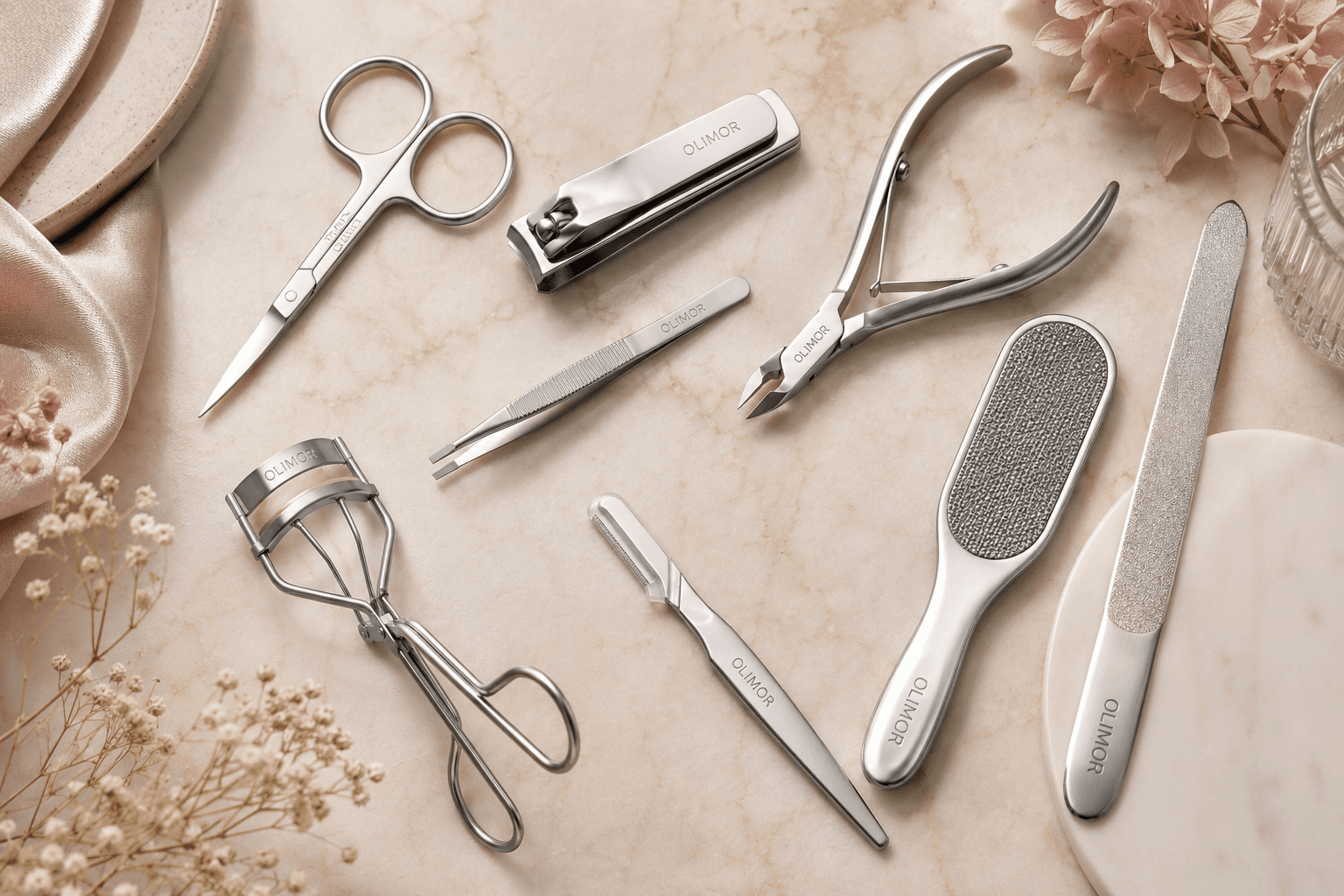
For buyers building a broader grooming range, it is useful to compare nail kits with related items in Olimor's beauty tool product range. Looking across categories helps buyers plan a more balanced assortment instead of treating one kit as a standalone purchase.
Define the Product Before Requesting a Quotation
A common sourcing mistake is asking for a price before defining the product clearly. Multi-piece grooming kits can vary by tool count, case type, packaging style, finishing level, and branding requirements. A quotation is only meaningful when both buyer and supplier are discussing the same specification.
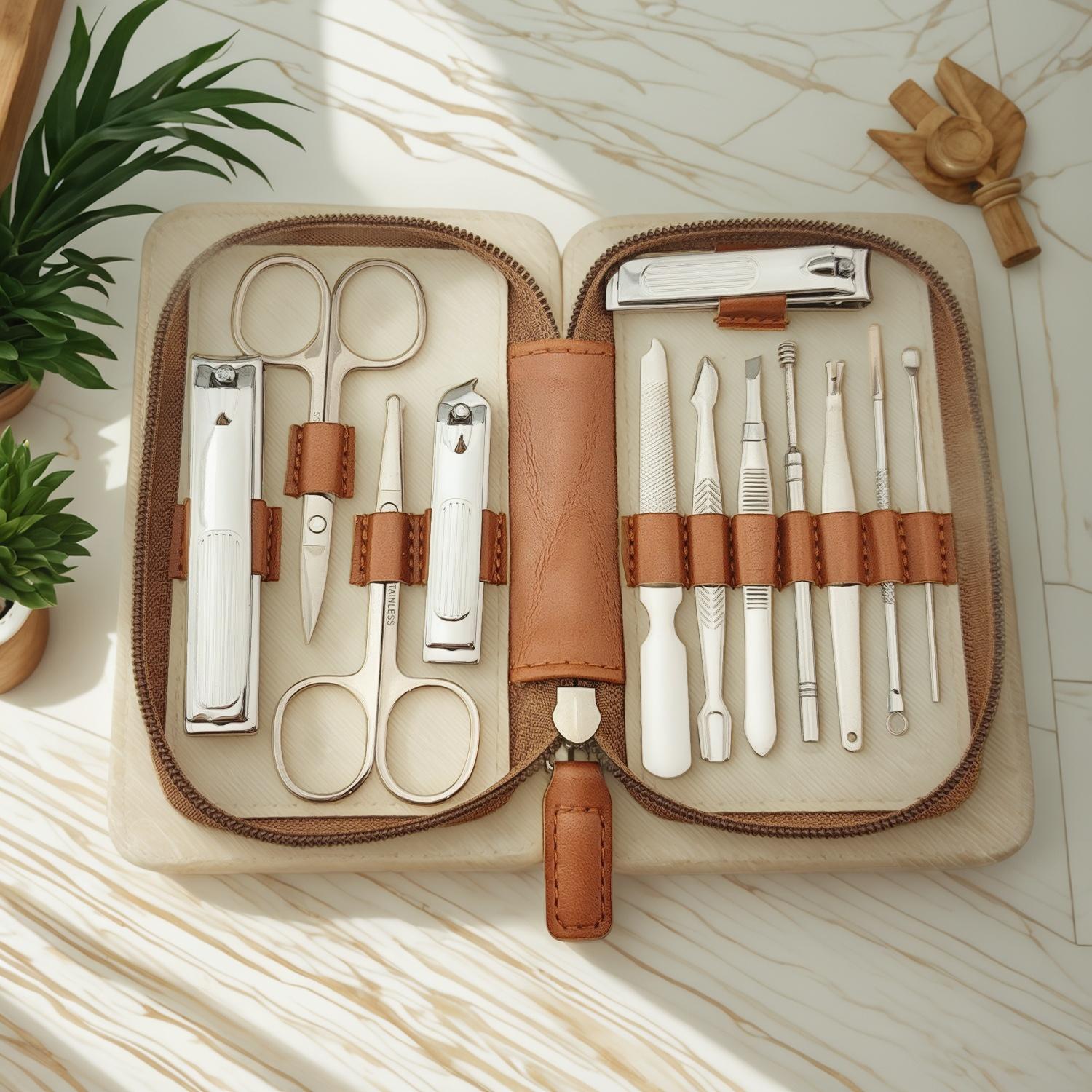
Start by confirming whether you need a 12-piece manicure and pedicure kit, a 16-piece kit, or another assortment. Supplied Olimor product information references stainless steel tools and a case presentation, including a faux leather pouch for the 12-piece kit and an elegant case presentation for the 16-piece kit. The exact tool list should be confirmed for the version being purchased, especially if you plan to publish product descriptions, create retail packaging, or sell through marketplaces that require accurate contents.
Buyers should prepare these details before requesting samples or pricing:
- Target sales channel: retail store, salon retail, online store, distributor program, promotional gift, or private label range.
- Preferred kit format: 12-piece, 16-piece, or another confirmed assortment based on customer needs.
- Case expectation: faux leather pouch, compact travel case, gift-style case, or shelf-ready packaging direction.
- Branding needs: neutral presentation, private label artwork, barcode placement, language requirements, or care information.
- Inspection priorities: tool count, surface finish, cutting performance, hinge movement, pouch stitching, packaging accuracy, and bulk consistency.
- Destination market: needed for labeling, safety information, packaging language, and any market-specific documentation review.
Clear requirements help the supplier recommend a suitable version and help the buyer compare offers fairly. A lower unit cost may not be better if the case, finishing, or packaging does not match the intended customer.
What to Inspect in a Wholesale Manicure and Pedicure Kit
A nail grooming kit is judged by touch and use. End customers handle the tools closely, expect them to feel clean, and notice rough edges or weak movement quickly. Before buying bulk quantities, review a physical sample and, where possible, compare more than one sample to see whether quality is consistent.
Tool Count and Layout
Confirm that the sample contains the agreed number of tools and that each piece has a secure position inside the pouch or case. A neat layout improves first impression, reduces tool movement during shipping, and makes the kit easier for customers to understand. If the kit is sold online, the visible contents should match the product photos and written description.
Stainless Steel Finish
The supplied product information describes the tools as stainless steel. Buyers should inspect the finish rather than relying only on the material name. Look for smooth surfaces, clean edges, uniform polishing, and no visible rust, stains, burrs, discoloration, or sharp unwanted corners where fingers touch the tool. If you intend to make material claims on packaging or listings, align the wording with supplier documentation.
Cutting, Trimming, and Grooming Function
Relevant clippers, scissors, and cuticle tools should operate smoothly and feel controlled in the hand. Review edge alignment, clean action, and whether the tool performs its intended grooming function without rough tearing or unstable movement. Do not use one demonstration piece as proof of bulk consistency. Ask how approved samples are compared with production goods.
Hinge, Spring, and Handle Feel
Where tools include moving parts, open and close them repeatedly. Movement should not feel gritty, loose, overly stiff, or unstable. Handles should feel practical for common grooming tasks. For salon retail and premium-leaning channels, small differences in movement and balance can influence customer perception.
Pouch or Case Construction
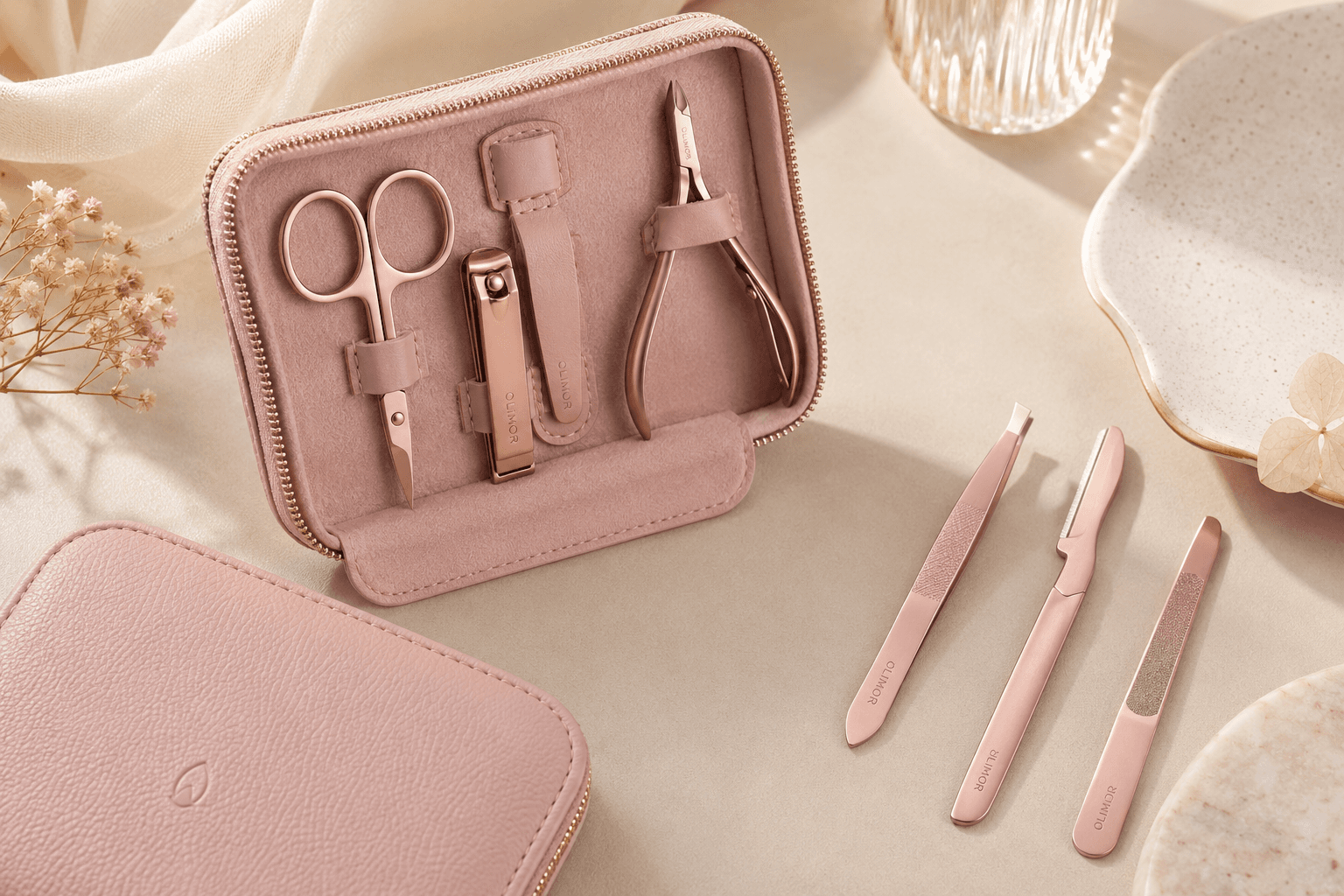
The case is part of the product, not only a container. Inspect the faux leather surface or other case material, stitching, seams, closure, internal bands, slots, and tool retention. The tools should be held firmly while remaining easy to remove. For travel positioning, secure organization matters. For gift positioning, surface appearance and clean presentation matter more.
Packaging and Retail Presentation
Review how the kit will be protected from scratches, pressure, movement, and moisture during transport. Packaging should match the channel: e-commerce needs parcel protection, retail stores need clear display and barcode placement, and gift programs need clean outer presentation. If market-specific language, care instructions, or barcode placement is required, discuss this early.
Comparison Table: Match the Kit to the Sales Channel
| Buyer Type | Main Sourcing Priority | What to Review in Samples | Common Risk if Ignored |
|---|---|---|---|
| Beauty retailer | Shelf-ready value and clear product presentation | Outer packaging, tool count accuracy, case appearance, barcode area, visible retail information | Product looks appealing online but weak or unclear on the shelf |
| Salon or spa supplier | Reliable grooming feel and professional presentation | Clipper action, cuticle tool finish, hinge movement, case durability, clean tool surfaces | Clients view the kit as low quality compared with salon service standards |
| E-commerce seller | Clear value, accurate listings, and reduced return risk | Photos versus actual contents, shipping protection, pouch closure, tool organization | Customer complaints about missing tools, scratched surfaces, or damaged packaging |
| Gift distributor | Complete set with presentable case | Case finish, stitching, packaging cleanliness, perceived value, branding area | The kit functions but does not feel giftable |
| Regional distributor | Repeatable specification and supplier reliability | Sample-to-bulk matching, inspection records, packaging consistency, communication process | Future orders vary from the approved sample |
How to Evaluate a Beauty Tools Supplier in China
China is an important sourcing base for beauty and personal care tools because buyers can find a wide range of manufacturing experience, packaging options, and export-focused supplier services. For manicure and pedicure kits, supplier organization is especially important because the finished product combines multiple tools, a case, packaging, and inspection steps.
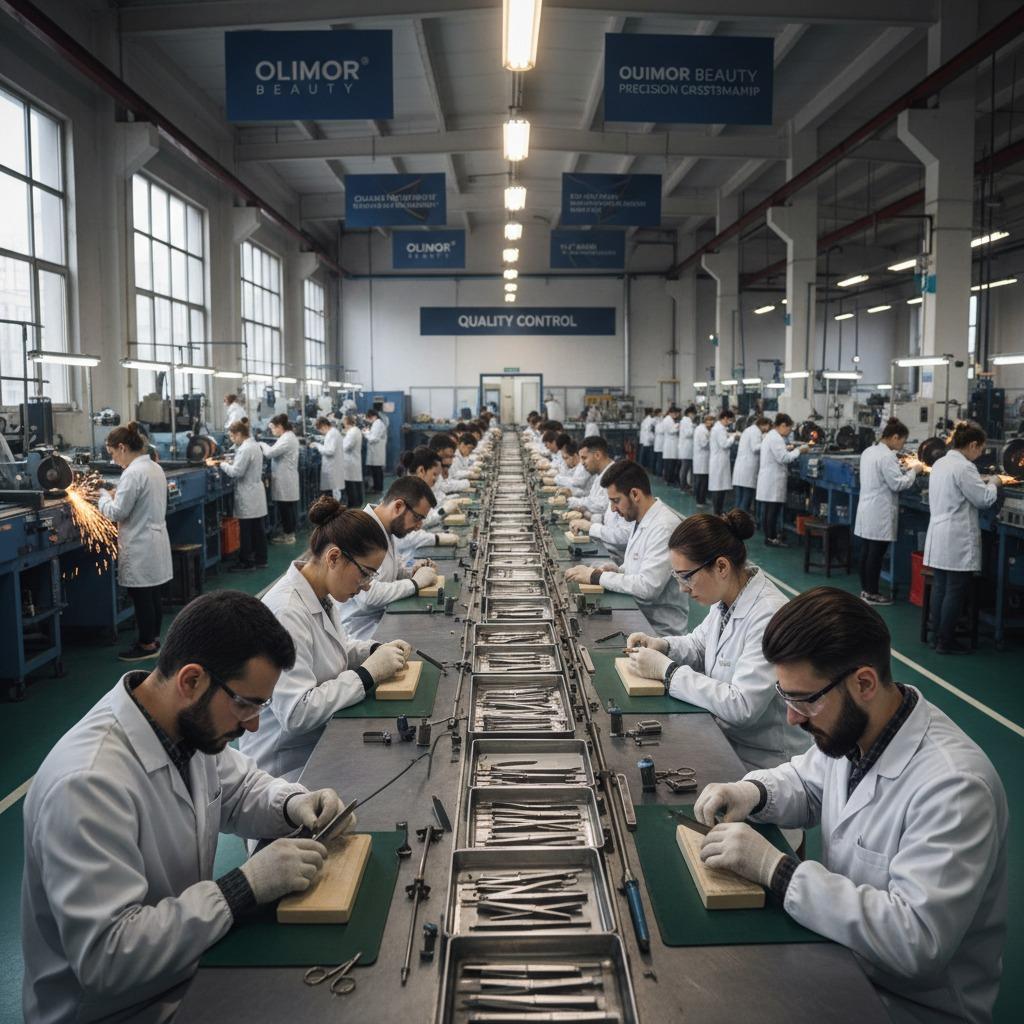
When evaluating a beauty tools supplier in China, do not rely only on catalog images or broad promises. Ask practical questions that reveal how the supplier controls product details from sample approval to shipment.
- How is the kit checked before shipment? Look for an inspection approach covering tool count, surface finish, pouch or case condition, closure, packaging accuracy, and obvious functional issues.
- How is stainless steel described and documented? The product may be described as stainless steel, but buyers should confirm the exact wording to use on packaging and listings with supplier documentation.
- How are approved samples matched to bulk production? Ask whether visual and functional reference samples are kept and how production goods are compared.
- What packaging options are available? Packaging affects retail placement, shipping protection, customer perception, and private label planning.
- What information is needed for customization? Prepare artwork, logo files, language requirements, barcode placement, and destination-market details before requesting branded options.
- How are nonconforming items handled? A useful answer should include sorting, replacement, correction, or other action before goods are shipped.
Buyers can browse Olimor's personal care tool collections to compare product directions and then use Olimor's inquiry page to discuss a specific manicure and pedicure kit specification.
Quality Checks and Documentation Buyers Should Request
Wholesale buyers should build a practical quality control plan even for simple-looking products. Nail grooming tools are not cosmetic formulas, but customers still associate them with cleanliness, safety, and reliability. Inspection should cover both the functional tools and the complete retail presentation.
A buyer-side checklist can include:
- Approved sample file: keep photos and notes for the exact kit version, tool count, case type, finish expectation, and packaging.
- Incoming sample review: inspect more than one sample when possible and record any concerns before confirming production.
- Pre-shipment inspection points: check tool count, surface finish, edge alignment, hinge movement, pouch or case construction, closure, packaging, labeling, and carton marks.
- Defect definitions: define what counts as a critical concern, such as missing tools, broken closure, visible rust, sharp burrs, incorrect packaging, or wrong branding.
- Market documentation review: verify the labeling, safety information, and claims required for your destination market.
For inspection planning, buyers may refer to recognized sampling frameworks such as ISO 2859-1 for acceptance sampling by attributes, where appropriate. Consumer product requirements can also vary by market, and buyers selling in the United States may need to review relevant guidance from the U.S. Consumer Product Safety Commission for applicable product and labeling obligations. These references do not mean a supplier holds a certification or that a product is automatically compliant. Buyers should verify the applicable version, destination-market requirements, and supplier documentation before purchasing.
Cost Factors Beyond the Unit Price
When comparing wholesale manicure and pedicure kits, the lowest quoted unit price may not produce the lowest total cost. Customer returns, damaged packaging, inaccurate tool descriptions, and inconsistent bulk quality can create hidden expenses. A better comparison looks at the complete landed and selling situation.
Key cost factors include the number of tools in the kit, case or pouch construction, surface finishing level, packaging format, branding requirements, inspection expectations, carton protection, and shipping method. A 16-piece kit may provide stronger perceived value than a smaller set, but it may also require more careful tool layout and packaging control. A 12-piece kit may be compact and practical for travel or entry-level programs, but the buyer still needs dependable cutting action and case quality.
Private label requirements can also affect cost and lead time. Custom artwork, packaging revisions, barcode placement, and destination-language content should be confirmed before production planning. Instead of asking only for the cheapest version, ask which specification best matches your channel, price position, and inspection expectations.
How to Prepare a Strong Wholesale Inquiry
A clear inquiry helps both buyer and supplier avoid delays. Before contacting Olimor, prepare the basic commercial and product information you already know. You do not need to have every detail finalized, but the more specific the inquiry, the easier it is to recommend a suitable kit and sample direction.
Include the preferred kit size, expected sales channel, destination market, packaging preference, branding needs, and any quality concerns from previous sourcing experience. If you are comparing a 12-piece kit with a 16-piece kit, state what you want customers to notice most: compact travel convenience, gift value, salon retail suitability, or budget-friendly daily grooming. If you need private label support, provide artwork requirements and ask what files or packaging details are needed for review.
For buyers who are ready to discuss samples, packaging, or a repeat wholesale program, Olimor can be contacted through the Olimor contact page. Keep the CTA practical: request a sample discussion, confirm the tool list, and ask how the approved sample will be controlled for bulk production.
Common Sourcing Problems and How to Prevent Them
Many manicure and pedicure kit problems are preventable when buyers inspect the right details early. Missing or mismatched tools usually come from unclear specifications or weak packing checks. Rough edges and inconsistent cutting action often appear when buyers approve a product by photo rather than by physical sample. Damaged pouches or loose tools can result from weak internal retention or packaging that does not protect the kit during transport.
To reduce these risks, confirm the tool list in writing, approve a physical sample, define packaging expectations, and request inspection points before shipment. If your sales channel has strict return policies or customer review exposure, invest time in sample testing and packaging review before ordering bulk quantities. A grooming kit is small, but the customer's first impression includes every detail: how the case opens, whether the tools sit neatly, how the metal feels, and whether the product looks clean and complete.
FAQ
Can I request samples before placing a bulk order?
Yes. Wholesale buyers should review samples before committing to bulk quantities. Use the sample to confirm tool count, stainless steel finish, cutting feel, pouch or case construction, packaging direction, and whether the product matches your sales channel.
Does Olimor offer fixed MOQ or lead time information?
MOQ and lead time can depend on the kit version, packaging, customization, order quantity, and production schedule. Buyers should request current details directly from Olimor instead of assuming a standard number.
Can manicure and pedicure kits be customized for private label programs?
Customization may be discussed based on the product version and packaging requirements. Prepare logo files, artwork, barcode needs, language requirements, and destination-market information so the supplier can review what is practical.
What quality checks should be included before shipment?
Useful checks include tool count, surface finish, edge condition, hinge movement, pouch or case stitching, closure function, packaging accuracy, labeling, and comparison with the approved sample. Buyers should define unacceptable defects before production is completed.
How should I choose between a 12-piece and 16-piece kit?
Choose based on your customer and channel. A 12-piece kit can suit compact daily grooming, travel, or entry-level retail programs. A 16-piece kit can support a more complete set presentation. In both cases, confirm the exact tool list and inspect a sample before purchase.
Tag: