Sourcing Precision Tweezers from Olimor Beauty: A Buyer’s Guide
Choosing a tweezers exporter is not only about finding a low unit cost. For beauty brands, salon suppliers, wholesalers and retail buyers, tweezers must feel precise in the hand, grip reliably at the tip and arrive with consistent appearance across every shipment. A small tool can create a large impression: if the tips do not meet cleanly, if the finish feels rough, or if packaging looks inconsistent, customers notice immediately.
Olimor Beauty supports buyers looking for stainless steel tweezers, export-ready beauty tools and OEM/ODM tweezers programs. The goal of this guide is to help you evaluate what matters before placing a bulk order: tweezer function, design decisions, quality control points, customization questions and practical export considerations. If you are comparing suppliers or building a private-label beauty tool line, use the points below to create a clearer specification and reduce avoidable sampling problems.
What a Professional Tweezers Exporter Should Help You Control
A dependable tweezers exporter should understand both product performance and international buying expectations. Tweezers are compact, but their quality depends on many small details: material selection, arm tension, tip alignment, edge smoothness, surface finish, inspection method and packaging protection during transport. Buyers should not treat them as a generic accessory.
For a beauty business, consistency is especially important. A consumer may buy one pair from a retail display, while a salon distributor may supply many locations. In both cases, the product should perform the same way from one unit to the next. Olimor Beauty positions its tweezers manufacturing around practical use for professional and home beauty routines, with attention to ergonomic handling and reliable plucking or shaping.
When evaluating any tweezers supplier, begin with the use case. Eyebrow shaping, fine hair removal, lash application support and general grooming may require different tip styles and hand feel. A precise product brief helps the manufacturer recommend a suitable design rather than forcing one general tweezer into every market segment.
Key Product Details to Define Before Sampling
Before requesting samples or discussing OEM/ODM tweezers, define the product as clearly as possible. This does not require technical drawings at the first stage, but it does require decisions about user experience and retail positioning. A premium brow tool, an entry-level travel tweezer and a salon kit component can share the same product family but should not always share the same finish, packaging or grip profile.
- Tip style: Decide whether your customers need slanted, pointed, flat or specialty tips. Each shape supports a different grooming task.
- Grip and tension: The arms should feel controlled, not too stiff and not too loose. Consistent spring tension affects comfort and precision.
- Material direction: Stainless steel is a common choice for durable beauty tweezers and is explicitly part of Olimor Beauty’s tweezers offering.
- Finish and color: Polished, matte or coated finishes can change both the look and perceived value of the product.
- Packaging format: Retail card, pouch, box or set packaging should match the sales channel and protect the tips.
- Branding area: Consider whether the logo belongs on the tweezer body, packaging, insert card or a combination of these.
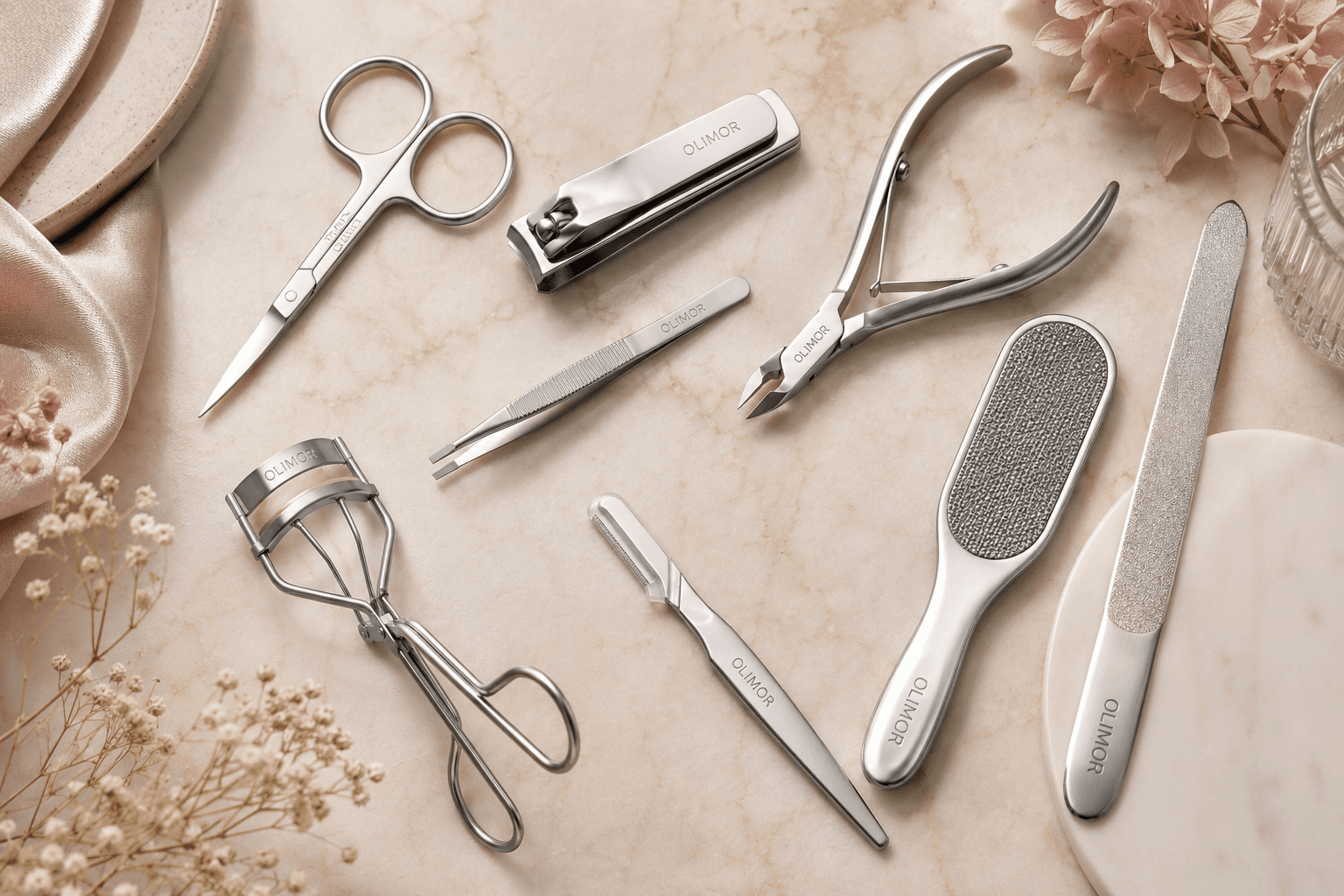
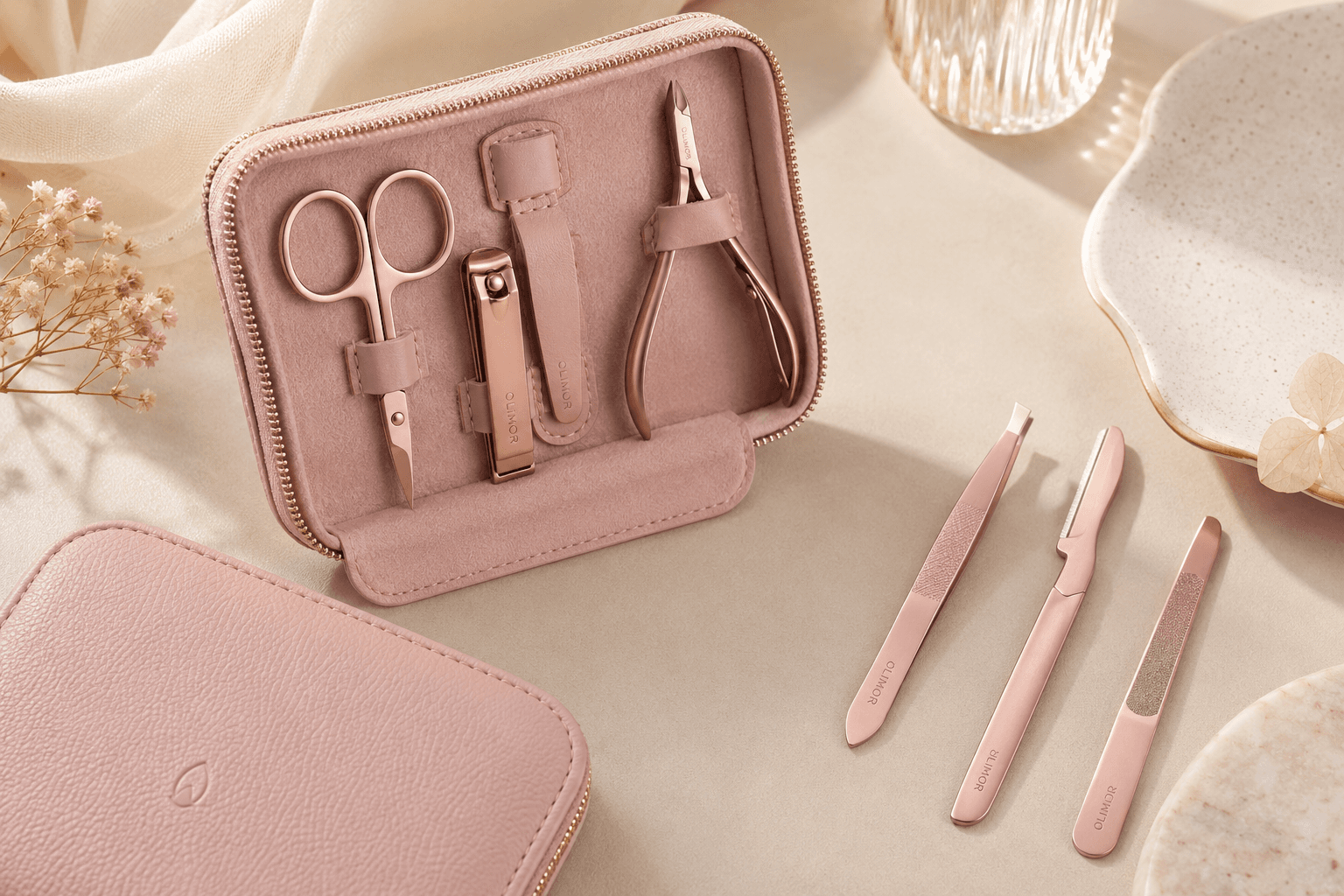
If you are still building your product range, review Olimor’s broader beauty tool products to see how tweezers can sit beside complementary grooming tools. Buyers developing seasonal or channel-specific assortments may also find it useful to compare related product collections before finalizing a single tweezer specification.
How Olimor Beauty Approaches Manufacturing and Quality Checks
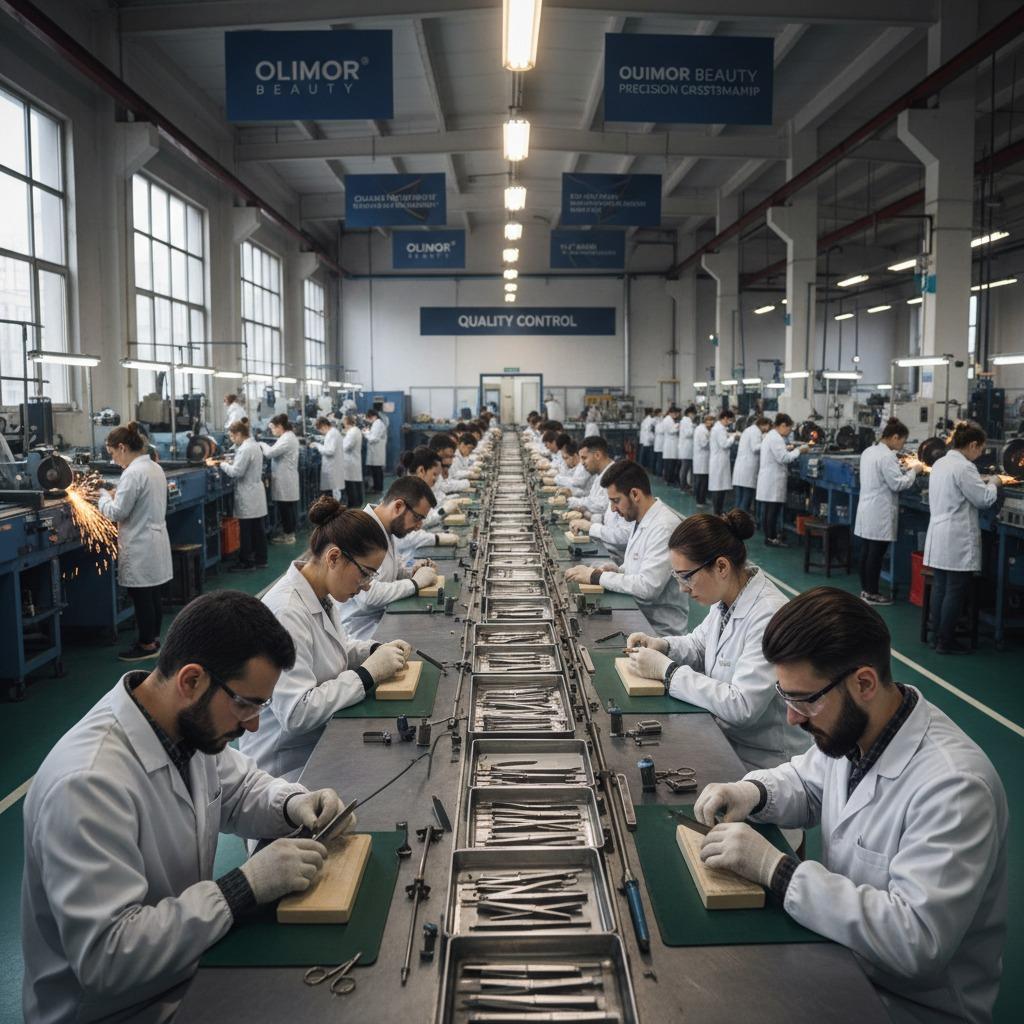
Tweezers quality is easy to judge in the hand but harder to control without a structured process. Olimor Beauty highlights quality assurance from raw material selection through final inspections. For buyers, this matters because tweezer defects are often subtle: a small mismatch at the tip, uneven pressure between the arms, a sharp unfinished edge or an inconsistent surface finish can reduce customer satisfaction.
A useful inspection plan for tweezers should focus on function and appearance together. Functional checks may include tip meeting, gripping ability, alignment, arm tension and comfort during repeated use. Appearance checks may include surface marks, color consistency, logo placement, burrs and packaging condition. Export orders should also be checked for carton labeling and packaging integrity so products remain presentable after international shipping.
Buyers can improve results by providing a reference sample, approved artwork, target market expectations and a clear definition of unacceptable defects. For example, if the product is intended for brow precision, the standard for tip alignment should be stricter than for a general-purpose grooming tweezer. If the item will be sold in a gift set, packaging presentation may need a higher cosmetic standard.
OEM/ODM Tweezers: Customization Without Losing Practical Function
OEM/ODM tweezers services can help beauty brands create differentiated products, but customization should not compromise the reason customers buy tweezers in the first place: accurate grip and comfortable control. Olimor Beauty’s OEM/ODM approach can support tailored solutions, including design direction, prototyping and production planning. Buyers should use customization to strengthen the product’s market fit, not simply to add decoration.
Common customization decisions include finish color, surface texture, logo method, packaging style, set combination and display presentation. A pastel shade or decorative theme can help a product fit a brand identity, while an ergonomic grip can support practical daily use. The best programs balance visual appeal with inspection discipline, because a beautiful tweezer that does not grip well will create returns and negative reviews.
- Confirm the customer segment. Define whether the product targets salons, retailers, travel kits, private-label beauty brands or promotional sets.
- Approve the functional sample first. Tip alignment and grip should be confirmed before investing too much time in decorative changes.
- Review artwork in context. Logo size and placement may look different on the narrow tweezer body than on packaging.
- Check packaging durability. Tweezers tips should be protected so they do not arrive bent, scratched or misaligned.
- Keep a signed reference sample. This creates a practical benchmark for production and final inspection.
Export Buying Considerations for Distributors and Retailers
International buyers need more than a sample that looks good on a desk. They need stable communication, product repeatability and shipment preparation that supports their sales calendar. When sourcing tweezers for export, consider the full buying process from sample approval to reorder. If your market requires specific labeling, barcode placement, language information or packaging claims, those requirements should be included early in the project brief.
Olimor Beauty serves buyers looking for a tweezers manufacturer and exporter for global distribution. To make export cooperation smoother, prepare purchase requirements in a format that is easy to confirm: product description, quantity plan, packaging format, logo files, inspection expectations and delivery destination. Even when the final specification is still developing, this information allows a manufacturer to give more relevant feedback.
Eco-conscious packaging is also a growing consideration in beauty retail. The original product plan may include eco-friendly packaging options, but buyers should define what that means for their market: reduced plastic, recyclable paperboard, smaller packaging volume or a reusable pouch. Avoid vague sustainability language on consumer packaging unless the claim can be supported in the destination market.
A Practical Checklist for Comparing Tweezers Suppliers
If you are comparing Olimor Beauty with other tweezers suppliers, use a consistent checklist rather than judging only by catalog images. This makes it easier to compare sample quality and avoid choosing a product that looks attractive but performs poorly.
| Evaluation Area | What to Check | Why It Matters |
|---|---|---|
| Tip alignment | Tips meet evenly without visible gaps | Directly affects grip and precision |
| Hand feel | Comfortable pressure and stable control | Improves repeated use for salons and consumers |
| Surface finish | No rough edges, scratches or inconsistent coating | Supports retail appearance and perceived quality |
| Branding | Logo is clear, correctly positioned and durable for the intended use | Protects brand presentation across the order |
| Packaging | Protects tips and matches the sales channel | Reduces damage and supports shelf appeal |
Building a Better Tweezer Program with Olimor Beauty
A strong tweezer program starts with a clear product purpose. Are you creating a professional brow tool, a simple grooming essential, a private-label retail item or a coordinated beauty tool set? Once that direction is clear, Olimor Beauty can be evaluated not just as a tweezers exporter, but as a manufacturing partner for repeatable quality, OEM/ODM development and export preparation.
To move forward efficiently, prepare your preferred tip style, finish direction, packaging idea, branding files and target sales channel. If you need guidance on the best route for a new tweezer line or want to confirm whether a design can be adapted for your market, contact Olimor or send an inquiry with your product requirements. A precise brief leads to better samples, clearer production expectations and a finished beauty tool that customers can trust in daily use.
Tag: