How to Choose a Nail Clipper Manufacturer for OEM Beauty Tool Programs
For retailers, beauty brands, distributors and sourcing teams, a nail clipper is not a simple commodity purchase. It is a small tool that customers judge immediately by feel, cutting performance, finish and durability. A clipper that pulls, bends, dulls quickly or feels uncomfortable can damage confidence in an entire grooming line. That is why choosing the right nail clipper manufacturer matters, especially when the project involves OEM customization, wholesale supply or private-label packaging.
Olimor Beauty works in the beauty tools category with nail clippers positioned for everyday grooming, travel kits, retail assortments and professional-style personal care sets. The focus for buyers should be practical: does the supplier understand blade geometry, handle comfort, surface finishing, inspection and packaging requirements well enough to support consistent repeat orders? This guide explains how to evaluate a nail clipper factory or OEM supplier, what details to define before production, and how to compare options without relying only on price.
What Buyers Should Expect From a Nail Clipper Manufacturer
A capable nail clipper manufacturer should be able to support more than basic production. The supplier should help translate a buyer’s market position into a tool that feels appropriate for the target customer. A pharmacy nail clipper, a travel grooming accessory, a premium manicure kit component and a promotional item may all look similar at first glance, but their design priorities can differ.
Important expectations include stable cutting performance, comfortable leverage, clean surface finishing, and packaging that protects the product during transport and display. The original product positioning for Olimor Beauty highlights ergonomic handling, precise control, stainless steel blades, polished finishing and inspection from raw materials through packaging. Those are relevant considerations for any buyer comparing nail clipper suppliers because the end user notices them quickly.
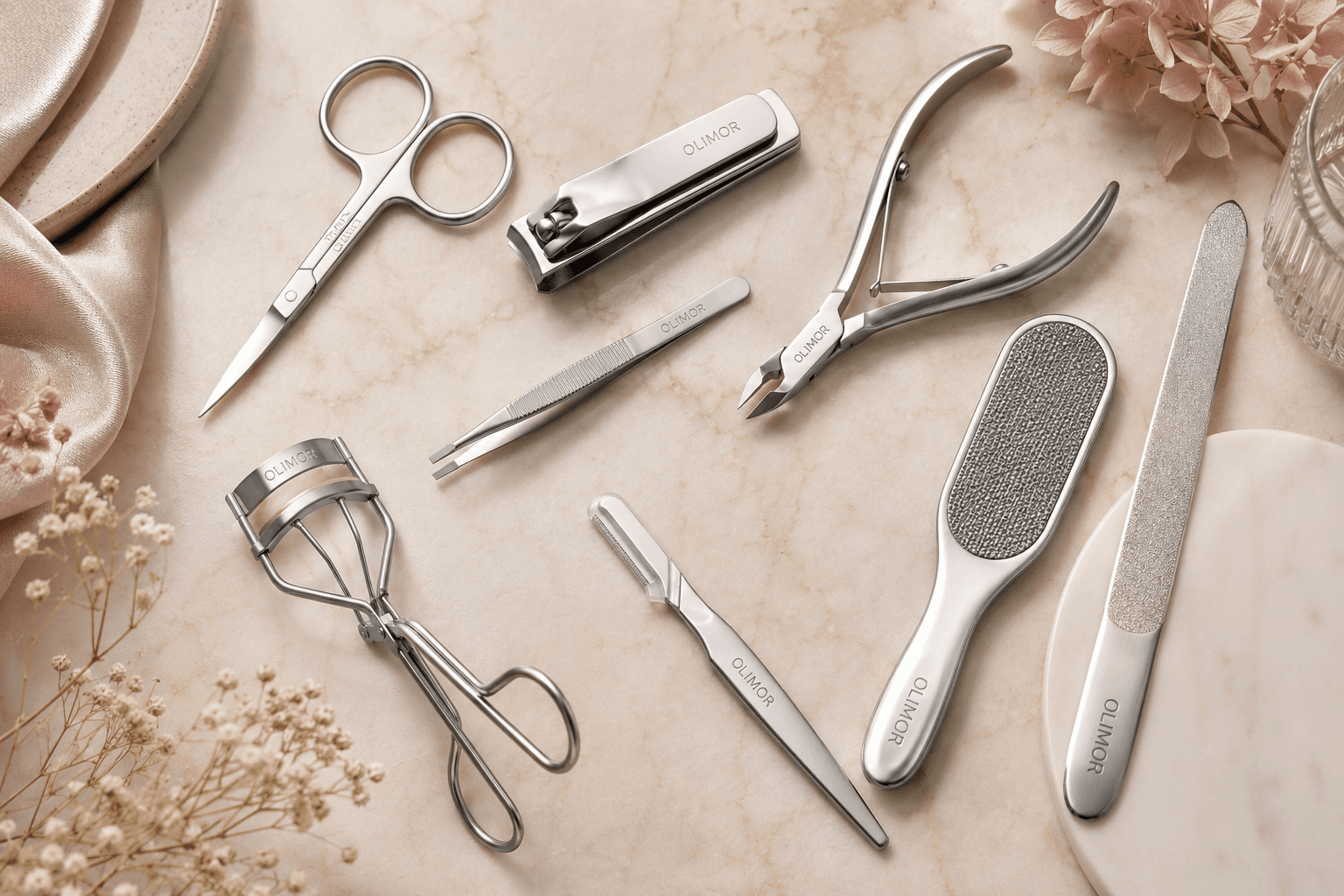
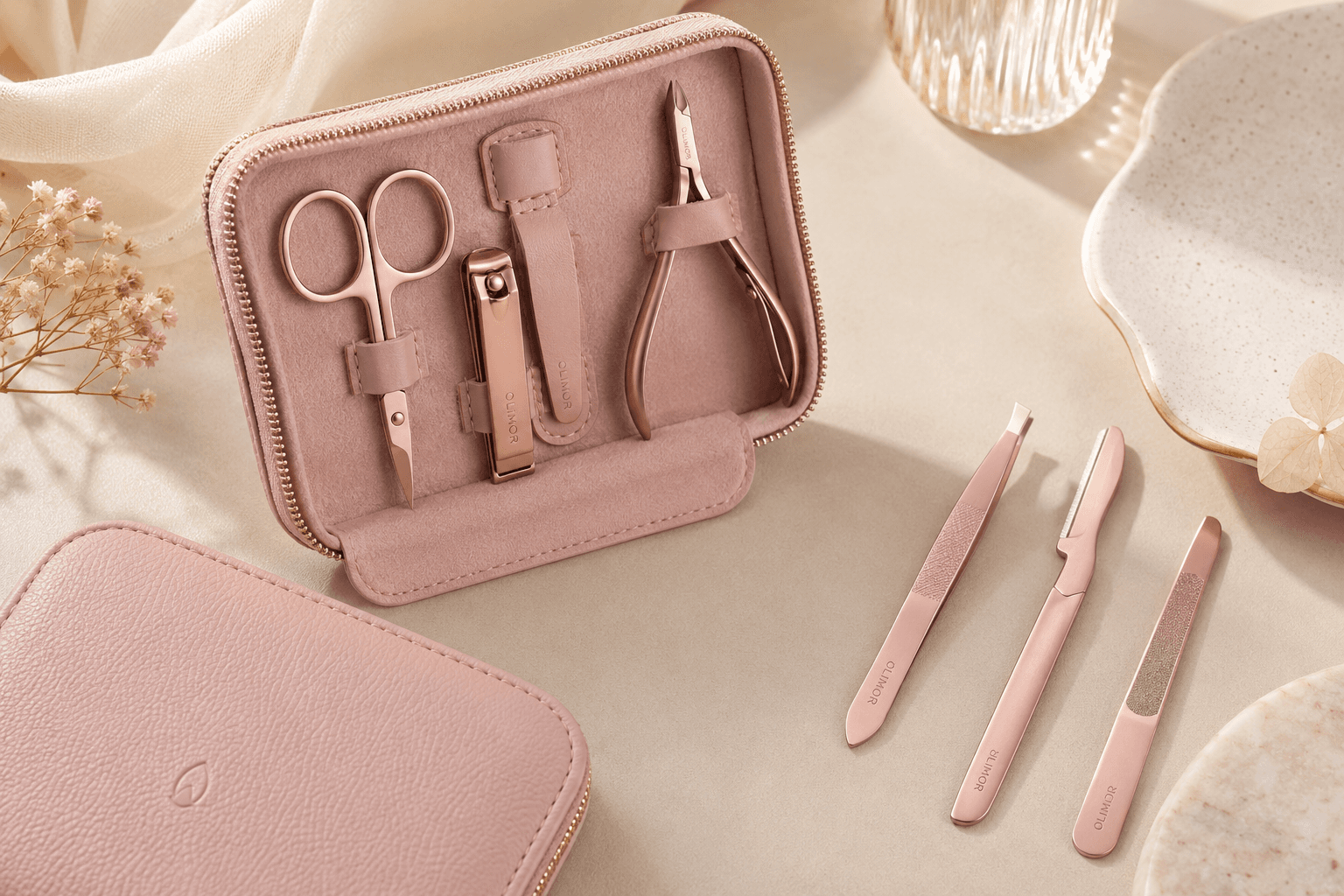
When evaluating beauty tool products, sourcing teams should also consider how a nail clipper fits into a broader assortment. A single clipper may be sold alone, bundled with other manicure tools, placed in a travel kit, or used as an entry-level item in a larger personal care range. The manufacturer’s ability to keep appearance, finish and packaging consistent across related items can simplify brand management.
Design Details That Affect Cutting Quality
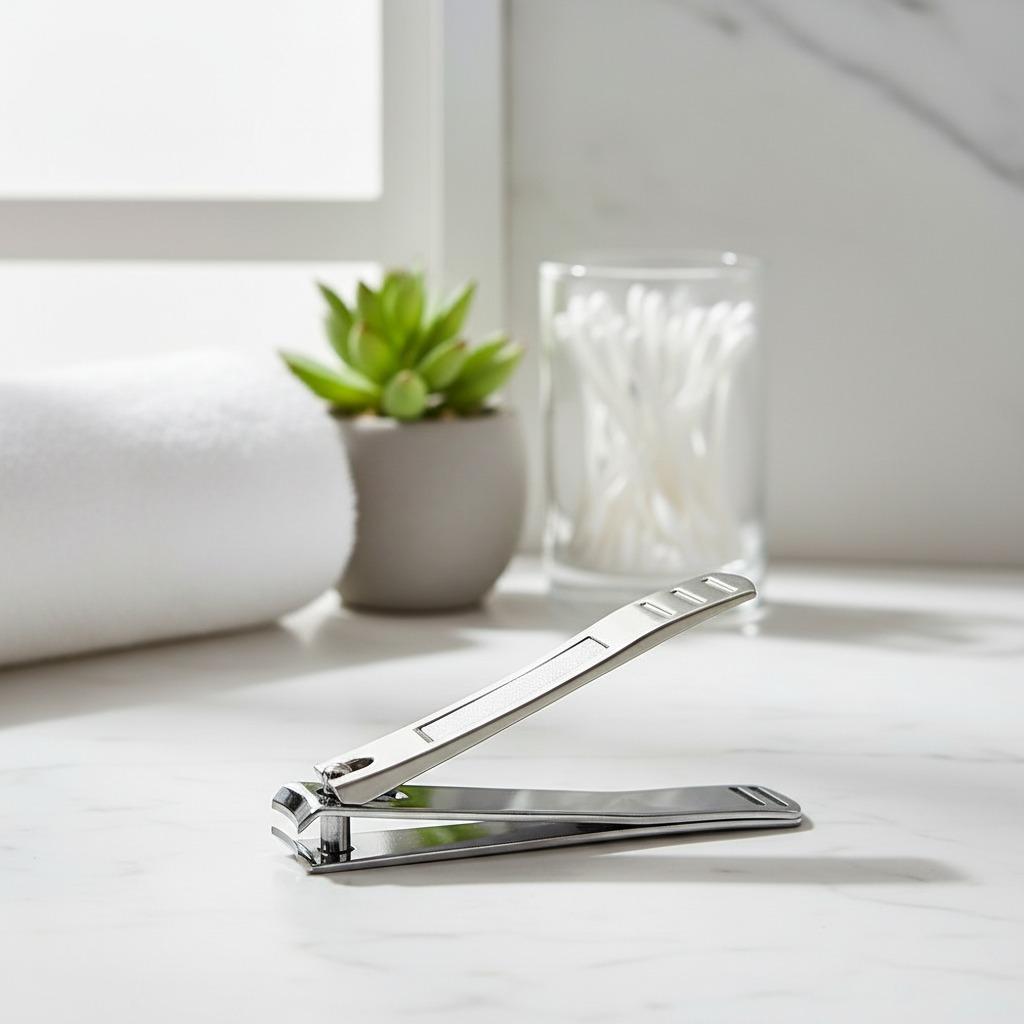
Nail clipper performance depends on small design choices. A buyer should not evaluate a sample only by its shine or weight. The cutting edge, jaw alignment, lever action and user grip are more important to long-term satisfaction. Poor alignment can cause squeezing instead of cutting. A lever that is too stiff may feel unpleasant, while one that is too loose can reduce control. Handles that are too narrow may be difficult for some users to hold securely.
Before approving an OEM nail clipper, check the following practical points:
- Blade alignment: The cutting edges should meet evenly across the full cutting area without visible offset.
- Cutting feel: The clipper should cut cleanly with controlled pressure and should not crush or tear the nail sample used for testing.
- Lever comfort: The handle should provide enough leverage without sharp edges or awkward pressure points.
- Edge finishing: Corners and contact surfaces should feel smooth enough for safe handling during everyday use.
- Opening and closing action: Movement should be stable, with no excessive side play.
- Cleaning access: The shape should not trap debris in a way that makes normal maintenance difficult.
For consumer-facing beauty brands, ergonomics should be evaluated by multiple users rather than only by a technical buyer. A compact, travel-friendly clipper may be ideal for one channel, while a larger lever may be better for users who prefer easier hand control. The best choice depends on the customer group, price position and retail format.
Material and Finish Considerations for Stainless Steel Nail Clippers
The supplied product information identifies stainless steel blades as a key feature. Stainless steel is commonly selected for grooming tools because it is suitable for a clean appearance and regular personal care use, but buyers should still define their requirements clearly. The term “stainless steel” alone does not describe every performance expectation, and it should not replace sample testing, finish review and inspection planning.
Surface finishing also affects customer perception. A polished finish can make a nail clipper look clean and retail-ready, but it must be consistent across the order. Uneven polish, visible scratches, burrs or discoloration can lead to returns even if the cutting edge is functional. Buyers planning private-label or giftable packaging should pay particular attention to finish consistency because the product is often judged visually before use.
Maintenance guidance should be considered as part of the product experience. Nail clippers should be kept clean and dry after use, stored away from damp environments when possible, and wiped regularly to remove nail residue. If the clipper is part of a kit, the packaging or insert can include concise care instructions to reduce misuse and support customer satisfaction.
OEM Customization: What to Define Before Sampling
Olimor Beauty is positioned as a nail clipper OEM provider for businesses seeking tailored solutions. For an OEM project to run smoothly, the buyer should define the commercial and functional brief before requesting samples. Vague instructions such as “premium nail clipper” or “good quality clipper” leave too much room for interpretation. A clear brief helps the manufacturer recommend suitable tooling, finishing and packaging options.
Useful OEM planning criteria include:
- Target user: Define whether the clipper is for daily home grooming, travel, retail impulse purchase, manicure sets or professional-style personal care kits.
- Size preference: Decide whether compact portability or stronger hand leverage is more important.
- Finish direction: Choose the desired visual direction, such as polished, simple, understated or gift-oriented, without assuming the factory will infer it.
- Branding location: Identify where a logo, label or packaging brand element should appear, subject to technical feasibility.
- Packaging format: Clarify whether the item will be sold individually, bundled in a kit, packed for wholesale cartons, or displayed in retail packaging.
- Inspection priorities: List the defects that are most unacceptable, such as poor cutting, sharp burrs, cosmetic scratches, weak lever action or packaging damage.
Private-label buyers can also review related product collections to consider whether the nail clipper should visually match tweezers, manicure tools, grooming scissors or other beauty accessories. A coordinated assortment can make shelf presentation more coherent and reduce the need to manage many unrelated suppliers.
Quality Inspection Points From Raw Material to Packaging
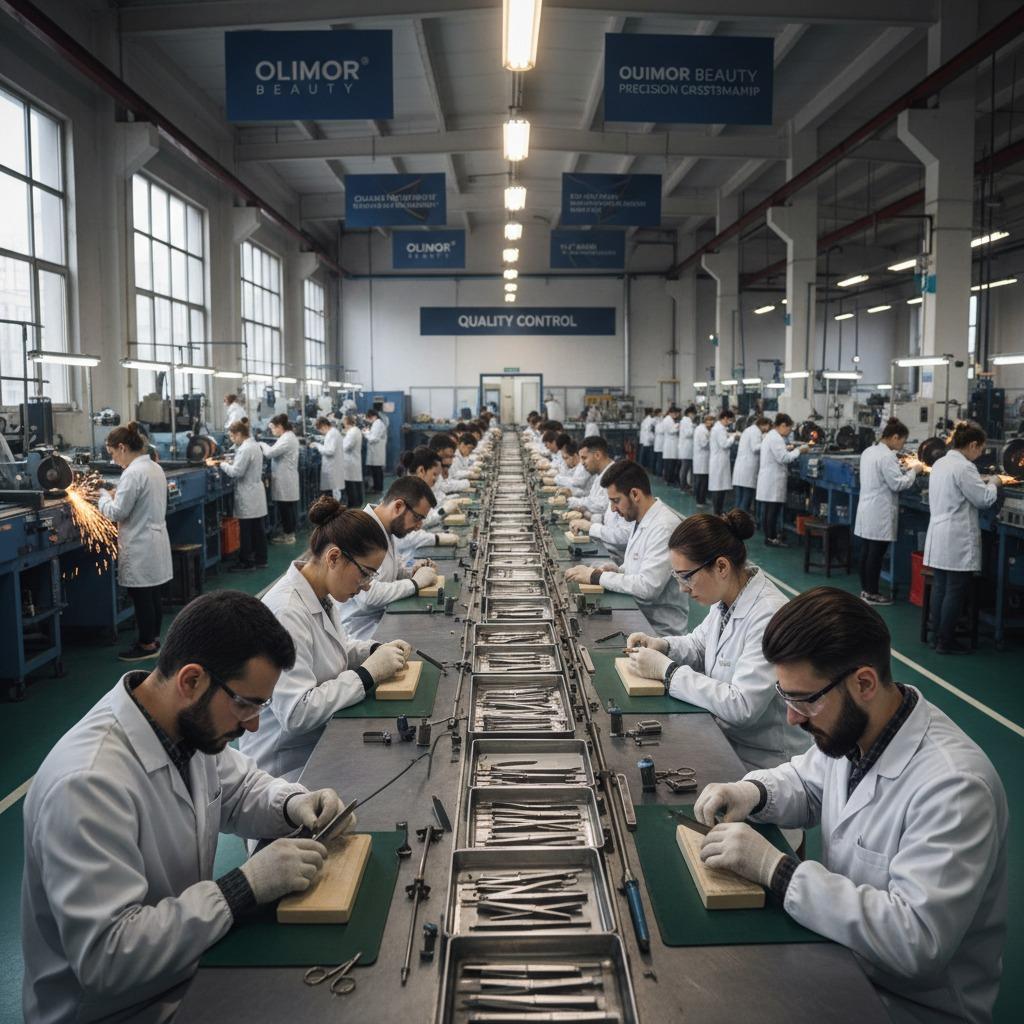
The original product description emphasizes quality assurance from raw materials to packaging. For buyers, this should translate into a defined inspection checklist. A nail clipper may pass a basic visual check but still fail in use if the cutting edge is dull or the lever is unstable. Conversely, a tool that cuts well can still create customer complaints if packaging is scratched, misprinted or poorly sealed.
| Inspection stage | What to check | Why it matters |
|---|---|---|
| Incoming materials | Material appearance, surface condition and suitability for production | Helps prevent visible defects and inconsistent finishing later |
| In-process assembly | Blade alignment, lever movement and edge condition | Controls cutting performance before final packing |
| Surface finishing | Polish consistency, burrs, scratches and stains | Affects safety, perceived value and retail acceptance |
| Functional testing | Cutting action, grip comfort and stability | Confirms that the tool performs as expected for the user |
| Packaging review | Label accuracy, protection, carton condition and presentation | Reduces complaints during wholesale delivery and retail display |
Buyers should keep approved samples and packaging references for comparison with production orders. This creates a practical standard for repeat purchasing and helps resolve questions quickly if a future batch differs from the agreed sample.
How Retailers and Distributors Can Compare Suppliers
Price is important, but it should not be the only comparison point when selecting a nail clipper China manufacturer or wholesaler. Very small differences in unit cost can be outweighed by higher return rates, inconsistent packaging, delayed replenishment or a product that does not match the intended market level. A more useful comparison looks at sample quality, communication, production understanding and ability to support the buyer’s assortment strategy.
When comparing suppliers, prepare the same questions and sample tests for each candidate. Ask for a clipper that matches the intended sales channel rather than a generic best sample. Review how clearly the supplier explains available options, limitations and trade-offs. A reliable OEM partner should be able to discuss design feasibility, packaging choices and quality concerns in practical terms.
If your team is building a new nail care range or refreshing an existing product line, you can send an inquiry with your target market, packaging concept and expected product positioning. For broader sourcing discussions, use contact Olimor to clarify which beauty tool categories may fit your program.
Care Guidance to Improve the End-User Experience
Even a well-made nail clipper benefits from proper use and care. Including simple customer guidance can reduce avoidable complaints. Users should clip nails when they are clean, avoid forcing the tool through overly thick material beyond its intended use, wipe the clipper after grooming, and store it in a dry location. If the product is sold in a travel pouch or manicure kit, the user should still allow the tool to dry before storage.
Retailers can include short care instructions on packaging inserts or product pages. The message does not need to be long. Clear usage guidance supports better reviews and helps customers understand that precision grooming tools last longer when kept clean and dry.
Final Buying Perspective
Olimor Beauty’s nail clipper offering is best evaluated through the lens of practical sourcing: cutting precision, ergonomic control, stainless steel blade performance, polished appearance, OEM flexibility and quality checks through packaging. For brands and distributors, the goal is not simply to find a nail clipper supplier, but to choose a manufacturing partner that can produce a tool appropriate for the audience, sales channel and brand promise.
A good nail clipper feels simple to the end user because the complicated work has already been handled in design, production and inspection. By defining requirements early, testing samples carefully and aligning packaging with the retail plan, buyers can build a nail clipper program that is consistent, useful and commercially reliable.
Tag: