Why buyers look for an OEM manicure tools supplier in the first place
If you are comparing an OEM manicure tools supplier, you are usually not shopping for a single tool. You are trying to build a product line that looks coherent on the shelf, works consistently in the hand, and can be sold under your own name without turning every replenishment order into a fresh round of sourcing headaches. That is especially true for cuticle tools, where appearance matters, but so does the feel of the spring action and the precision of the jaws.
For sourcing managers and product teams, the real decision is rarely “Can this supplier make a nipper?” It is closer to: can they make a family of manicure tools that matches our brand positioning, holds up in everyday beauty use, and can be produced with repeatable finish quality? That is where an experienced beauty-tool factory or private-label partner becomes useful, because the business problem is broader than one SKU.
What cuticle nippers tell you about the supplier behind them
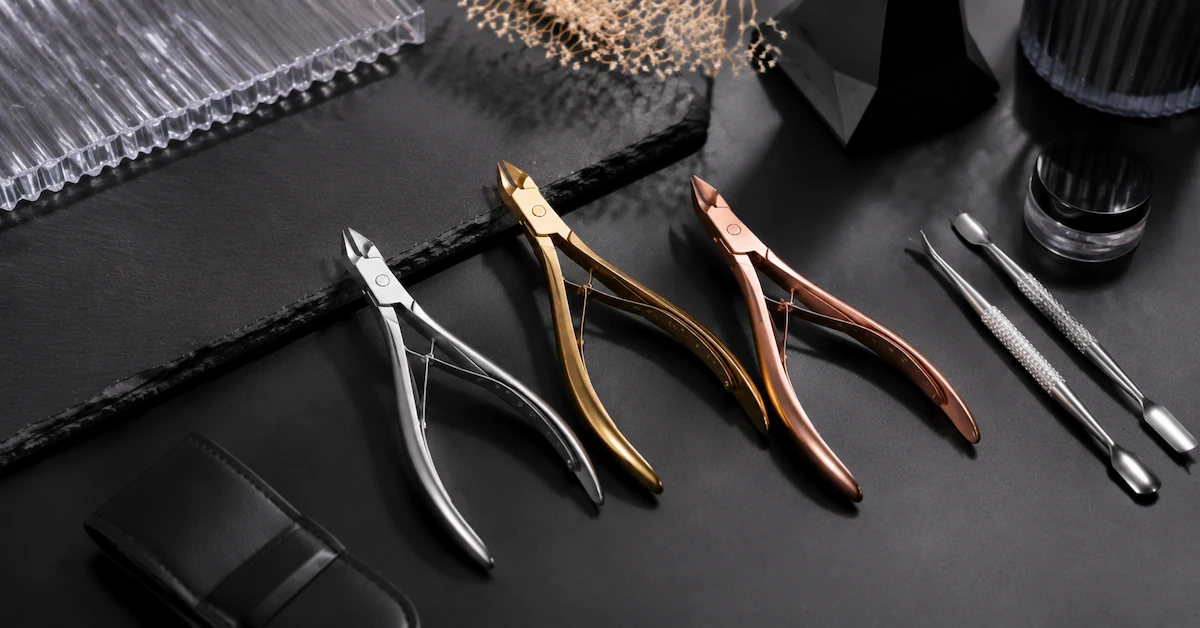
Cuticle nippers are a good test product because they reveal a lot about a manufacturer’s process discipline. The visible structure is simple enough: a spring-loaded handle, an angled cutting head, and compact precision jaws. But keeping those features consistent across silver, gold, and rose-gold finishes is where quality control starts to matter.
A well-made manicure nipper should feel balanced rather than flimsy. The handles should open and return smoothly. The jaws should meet cleanly. The finish should look intentional, not patchy or overly decorative. In private label programs, those points matter because the customer rarely sees the factory. They see the tool in the box, then they notice immediately whether it feels refined or disposable.
The product data here points to stainless-steel construction with polished metallic finishes. That is a common and sensible route for beauty hand tools. Stainless steel is widely used in manicure and pedicure accessories because it supports a clean, durable look and can be formed into compact, functional shapes. Exact alloy, hardness, and coating details are not stated, so it is best not to assume more than that.
Quick reference: what to compare before you place an OEM order
When you are evaluating a cuticle nipper manufacturer OEM program, the short list is not complicated, but it is easy to skim past the details that later cause problems.
- Tool geometry: Are the jaws compact and aligned consistently across samples?
- Handle action: Does the spring return feel smooth and predictable?
- Finish options: Can the supplier support silver, gold, rose-gold, or other brand-matched surfaces?
- Branding method: Can logos, labels, or packaging be applied without damaging the tool finish?
- Batch consistency: Do repeated samples look and feel the same?
- Packaging fit: Will the nipper fit your retail box, kit insert, or salon set without awkward redesigns?
Those are basic questions, but they save real money. A beauty-tool line can look polished in a sample room and then become messy when packaging, labeling, and replenishment are added to the picture.
Product features that matter more than the catalog photo
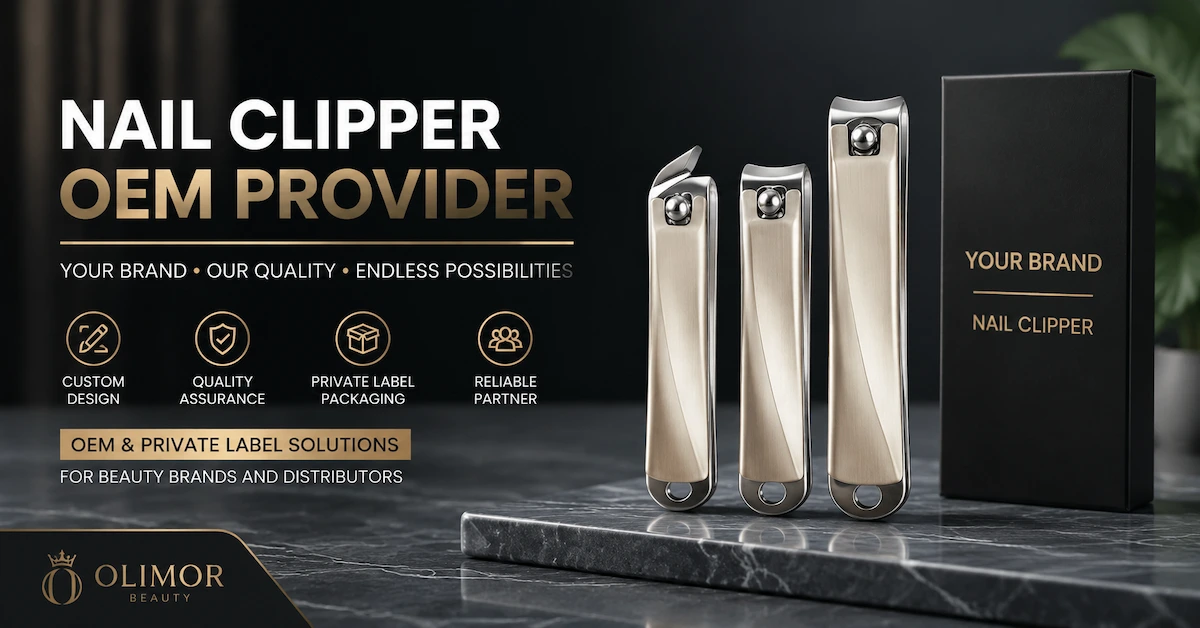
The image of three neatly arranged nippers in different finishes is useful, but buyers should go beyond the visual appeal. Several features tend to determine whether a tool belongs in a private-label assortment or stays as a one-off sample.
1. Precision jaws
The short, pointed cutting tips are the working end of the tool. In manicure use, that compact geometry is what allows careful trimming around cuticles and small bits of dead skin. The advantage is obvious: the user can work in a tight area without feeling like the tool is oversized. The caution is equally obvious: a small cutting head can look neat in photos even when the actual edge alignment is inconsistent, so sample inspection matters.
2. Spring-loaded handle action
Spring action is one of those details that users notice immediately, even if they do not know how to describe it. Too stiff and the tool feels fatiguing. Too loose and it feels cheap. For salon buyers and retail brands, the challenge is getting a balanced return force that suits repeated use.
3. Surface finish and color control
Silver, gold, and rose-gold finishes are not just about style. They help brands segment product lines, create giftable sets, and differentiate premium-looking SKUs without changing the base tool geometry. That said, a decorative finish should not distract from practical quality. If the surface looks good but scratches easily, the brand pays for it in returns and complaints.
How OEM manicure tools are typically developed
For a buyer, the development path usually starts with a reference sample or a target market spec. The supplier then maps that into a manufacturable product with the right form, finish, and branding space. For a cuticle nipper, the process likely involves metal forming, shaping, machining, polishing, and surface finishing. That is a reasonable assumption for this kind of precision hand tool, though exact process steps vary by factory.
A practical OEM workflow usually includes:
- sample review and shape confirmation
- finish selection
- logo or private-label placement
- packaging mockup
- pre-production confirmation
- mass production and final inspection
The point is not to turn a simple item into a complicated project. It is to avoid discovering too late that the tool and the packaging were never designed as one product family.
Choosing a private label cuticle nipper supplier: what buyers should ask
When speaking with a private label cuticle nipper supplier, it helps to ask questions that expose whether the factory understands beauty-tool retail, not just metalworking.
First, ask about finish consistency across colors. A brand may want multiple metallic tones in the same assortment, but those tones need to look intentional together. Second, ask how the supplier handles branding on polished surfaces. Some logo methods work better than others depending on the finish. Third, ask for photo samples from multiple angles, because a front-facing image can hide small asymmetries in the jaws or handle profile.
For larger programs, also ask whether the supplier can keep the tool geometry consistent when moving between SKUs. A common mistake is to approve one excellent sample, then later discover that the “same” model in another finish feels slightly different because the production route was adjusted.
Common mistakes in manicure tool sourcing
One of the most common errors is treating appearance as proof of function. Polished metallic surfaces sell well online and in-store, but beauty buyers still need to think like operators. A tool that looks premium but is awkward in the hand will generate complaints from salon professionals and careful home users alike.
Another mistake is over-specifying the wrong details and under-specifying the important ones. Buyers sometimes ask for elaborate packaging concepts before they settle the tool dimensions, logo placement, or finish family. That can create rework. It is better to lock the physical tool first, then build the box and insert around it.
A smaller but expensive mistake: ignoring replenishment. If your brand plans to expand from a starter kit into standalone retail, the supplier needs to be comfortable with repeat production, not just a one-time decorative sample run.
Where these tools fit in the market
Cuticle nippers sit in a practical middle ground. They are not complex devices, but they are not throwaway commodities either. Nail salons want reliable hand feel. Beauty retailers want a product that photographs well and fits a giftable assortment. Personal grooming buyers want something compact and easy to store. OEM programs work because they can tailor the same base tool to those different channels through finish, branding, and packaging.
That flexibility is why stainless-steel manicure tools remain attractive in private label programs. A single base design can support multiple market tiers if the supplier can keep the geometry stable and offer enough visual variation to suit the brand strategy.
FAQ for buyers
Is a cuticle nipper the same thing as a manicure nipper?
In practice, the terms are often used closely or interchangeably in sourcing conversations, though product catalogs may use one label more than the other. Buyers should confirm the exact tool function rather than relying on naming alone.
Are gold and rose-gold finishes only cosmetic?
Mostly, yes, from the information provided. They appear to be finish options for visual differentiation. Buyers should still confirm durability and surface behavior during sampling.
Should I prioritize the finish or the jaw design?
For most buyers, jaw design and handle action come first. Finish matters for brand presentation, but the tool has to perform as a tool before it can succeed as a retail item.
Next step for sourcing teams
If you are building a beauty-tool line and need a manufacturing partner, start with the basics: material, geometry, finish options, branding method, and packaging fit. Ask the supplier to show how the same core nipper design can be adapted across a coherent private-label range. That will tell you more about the factory than a polished product photo ever will.
For an OEM manicure tools supplier, the best signal is not a fancy sales pitch. It is whether the tool, the finish, and the repeat order process all make sense together.