Nail Clippers Supplier Guide for Durable OEM Personal Care Tools
Choosing a nail clippers supplier is not just a price decision. For beauty brands, retailers, distributors, private-label buyers, and promotional programs, the real value of a nail clipper comes from how cleanly it cuts, how long it stays usable, how it feels in the hand, and whether the supplier can keep production consistent. A small grooming tool can still affect customer satisfaction, repeat orders, and brand reputation.
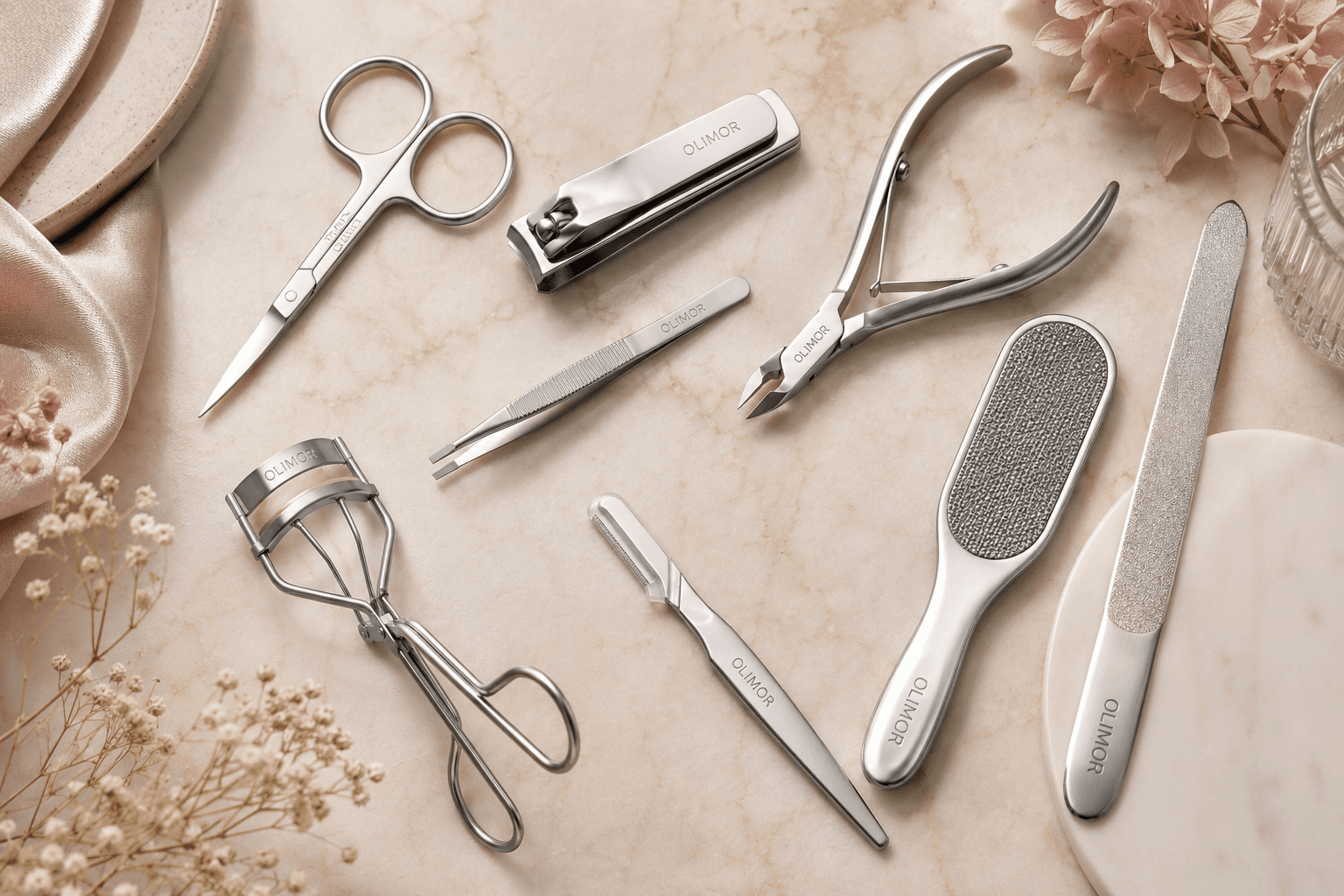
Olimor Beauty supplies personal care tools for buyers who need practical, presentable, and durable products for bulk sourcing and OEM planning. If you are reviewing beauty tool products for a grooming range, nail clippers deserve careful attention because minor construction choices can change the user experience quickly.
What a reliable nail clippers supplier should help you evaluate
A reliable supplier should make quality comparison easier, not harder. The first thing to review is cutting performance. The upper and lower cutting edges should meet evenly and cut cleanly, without crushing or splitting the nail. Sharpness matters, but so does alignment: even a sharp blade can perform poorly if the jaws do not meet properly.
Beyond cutting action, the clipper should feel stable during use. The lever should press smoothly, the body should not feel flimsy, and the grip area should support controlled trimming. For retail buyers, that affects satisfaction. For salons and repeated-use settings, it affects speed, comfort, and consistency.
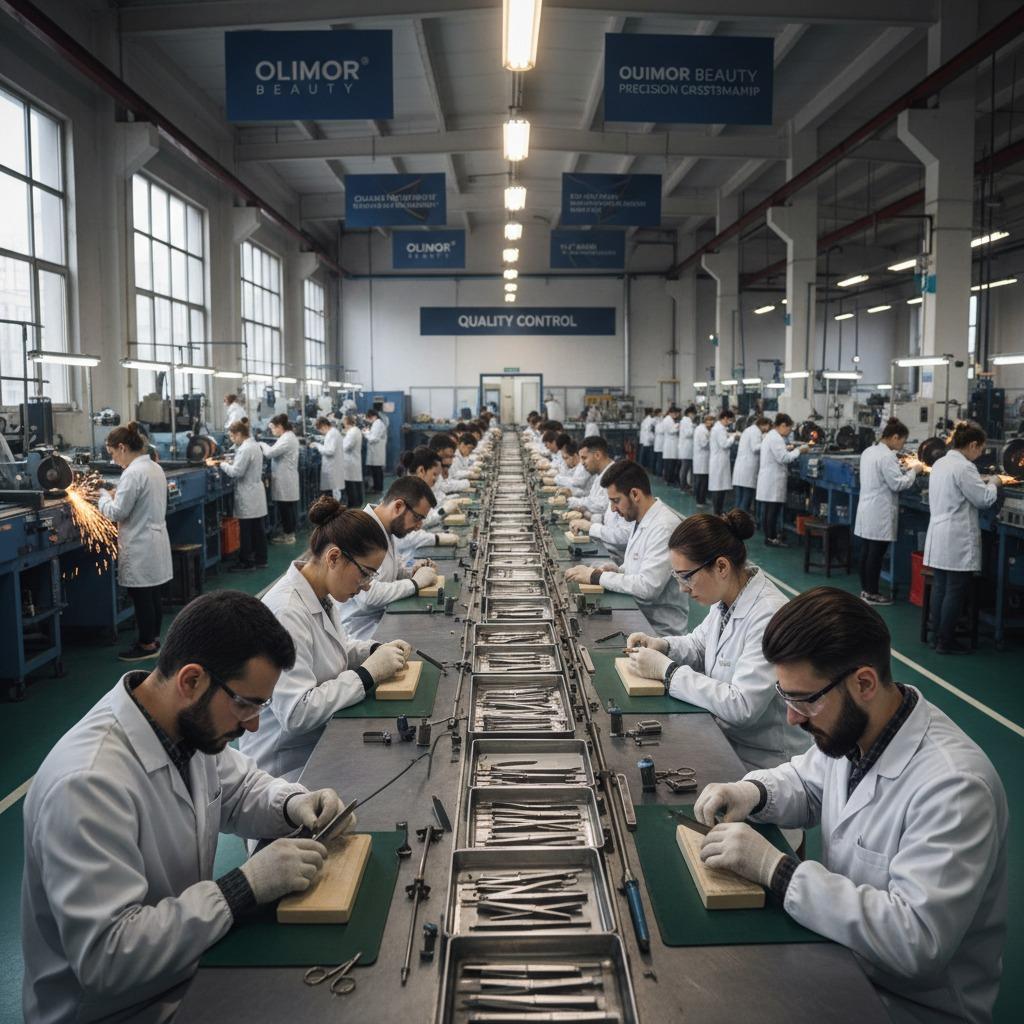
When comparing suppliers, ask how they handle raw material selection, production checks, finishing inspection, and packaging review. Those steps matter because nail clippers are small precision tools. A sample that looks good is only the starting point; repeat production should match the agreed standard.
- Check whether the clipper cuts cleanly without pulling the nail.
- Confirm that the lever moves with stable pressure and limited wobble.
- Inspect whether the body feels solid rather than loose or thin.
- Review how the supplier manages surface finishing and visible marks.
- Ask how packaging, logo placement, and assortment needs are handled.
Material and construction details that affect everyday use
Stainless steel is commonly preferred for nail clippers because it supports strength, hygiene, and resistance to rust when properly manufactured and maintained. The supplied product information highlights high-grade stainless steel and rust resistance, both of which are useful for tools used in bathrooms, salons, travel kits, and manicure stations.
For buyers, the important point is not only the material name but how the finished tool behaves. A durable nail clipper should cut with controlled pressure, stay aligned, and keep a clean appearance through regular handling. If the cut feels rough or the lever requires too much force, the user experience drops quickly.
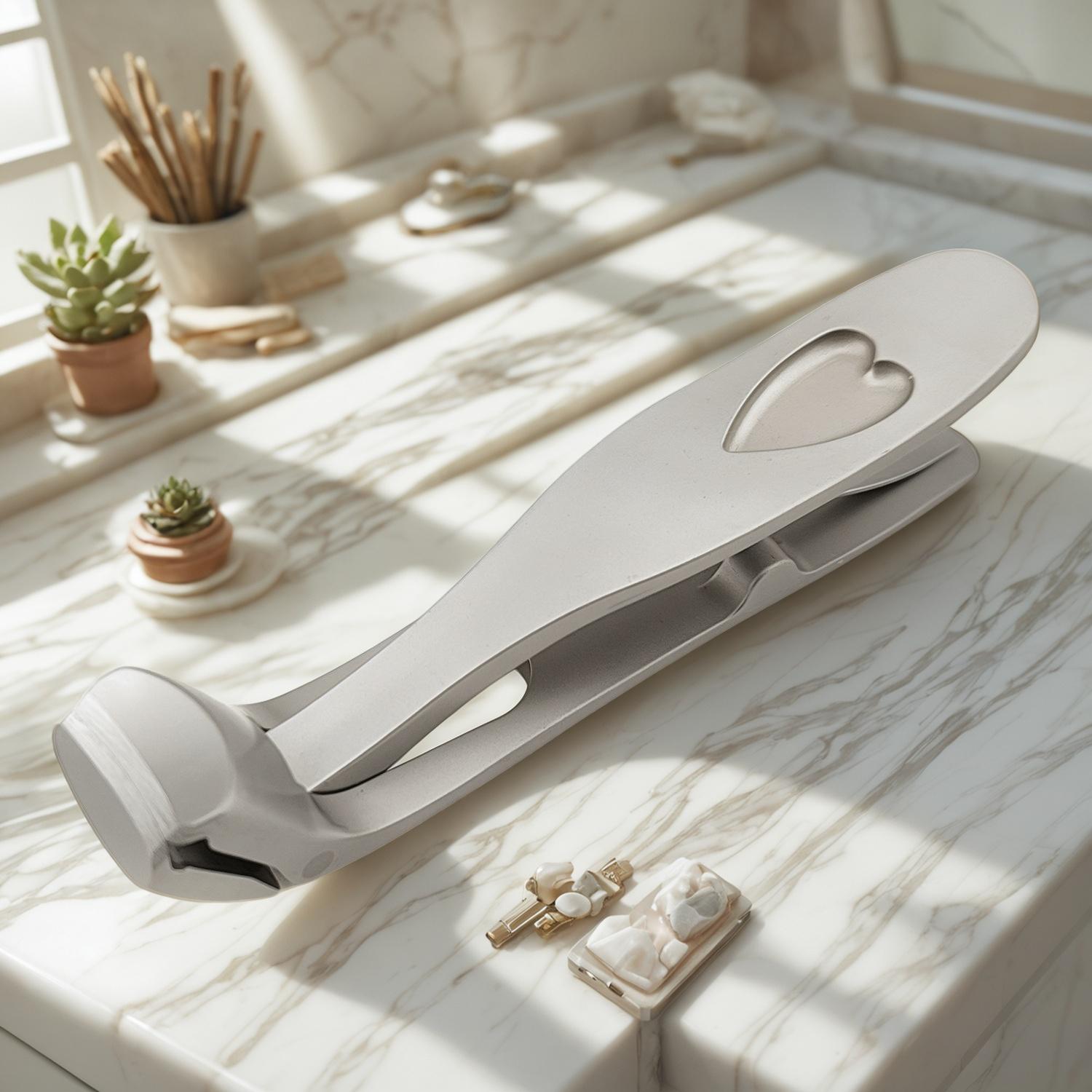
The Designer Nail Clipper 1.0 is described with a sleek matte silver finish, ergonomic design, enhanced leverage mechanics, rust resistance, and a distinctive embossed heart detail. Those details show how a simple grooming tool can be positioned for retail, travel, gift sets, or a more polished personal care range without losing practicality.
How to judge sharpness and leverage
Sharp blades matter, but buyers should test them in realistic conditions. A retail customer does not evaluate a clipper in a lab. They notice whether it trims smoothly, whether the lever feels secure, and whether the surface is comfortable to hold. For thicker nails or users with limited hand strength, leverage design becomes especially important.
When reviewing samples, open and close the tool repeatedly, test it on suitable nail thicknesses, and observe whether the edge remains aligned after use. If the lever wobbles or the cut feels uneven, the sample deserves closer review before bulk approval.
Design choices for retail, salon, travel, and gift sets
Design affects perceived value. A nail clipper can be simple, but it should not look careless. A matte silver finish can create a cleaner, less flashy appearance than a highly polished utility tool, which may help the product fit minimalist packaging, wellness branding, or professional beauty assortments.
The embossed heart detail in the example product adds a recognizable accent without making the tool feel decorative only. That kind of detail may suit gift sets, manicure kits, travel accessories, or retail displays where visual presentation matters as much as function.
Before choosing a style, think about the sales channel. A salon-focused item may prioritize grip and professional appearance. A retail beauty brand may want a giftable finish. A travel kit may care more about compactness and packaging efficiency. The physical design should match the promise made on the package.
| Use case | What to prioritize | Common mistake | Questions to ask the supplier |
|---|---|---|---|
| Retail shelves | Clean finish, stable cutting, broad visual appeal | Choosing style without checking function | How consistent is the finish across samples? |
| Salon use | Durability, lever stability, repeatable performance | Ignoring comfort in repeated use | How is alignment checked during production? |
| Travel kits | Compact form, safe packaging, rust resistance | Overlooking package fit and protection | Can the clipper be packed for kits or pouches? |
| Gift sets | Presentation, coordinated branding, polished surface | Using generic packaging that feels mismatched | What branding and packaging formats are available? |
OEM planning without losing core function
OEM personal care tools require decisions that balance appearance with usability. Customization can include finish, logo placement, packaging format, set composition, or presentation style. But a well-designed package cannot fix weak cutting performance. Keep functional requirements separate from presentation requirements so you can review each point clearly.
Functional requirements include edge quality, lever stability, grip comfort, material expectations, and surface smoothness. Presentation requirements include color direction, retail card style, box structure, barcode area, and brand layout. Separating these two categories helps buyers avoid approving a clipper that looks right but performs poorly.
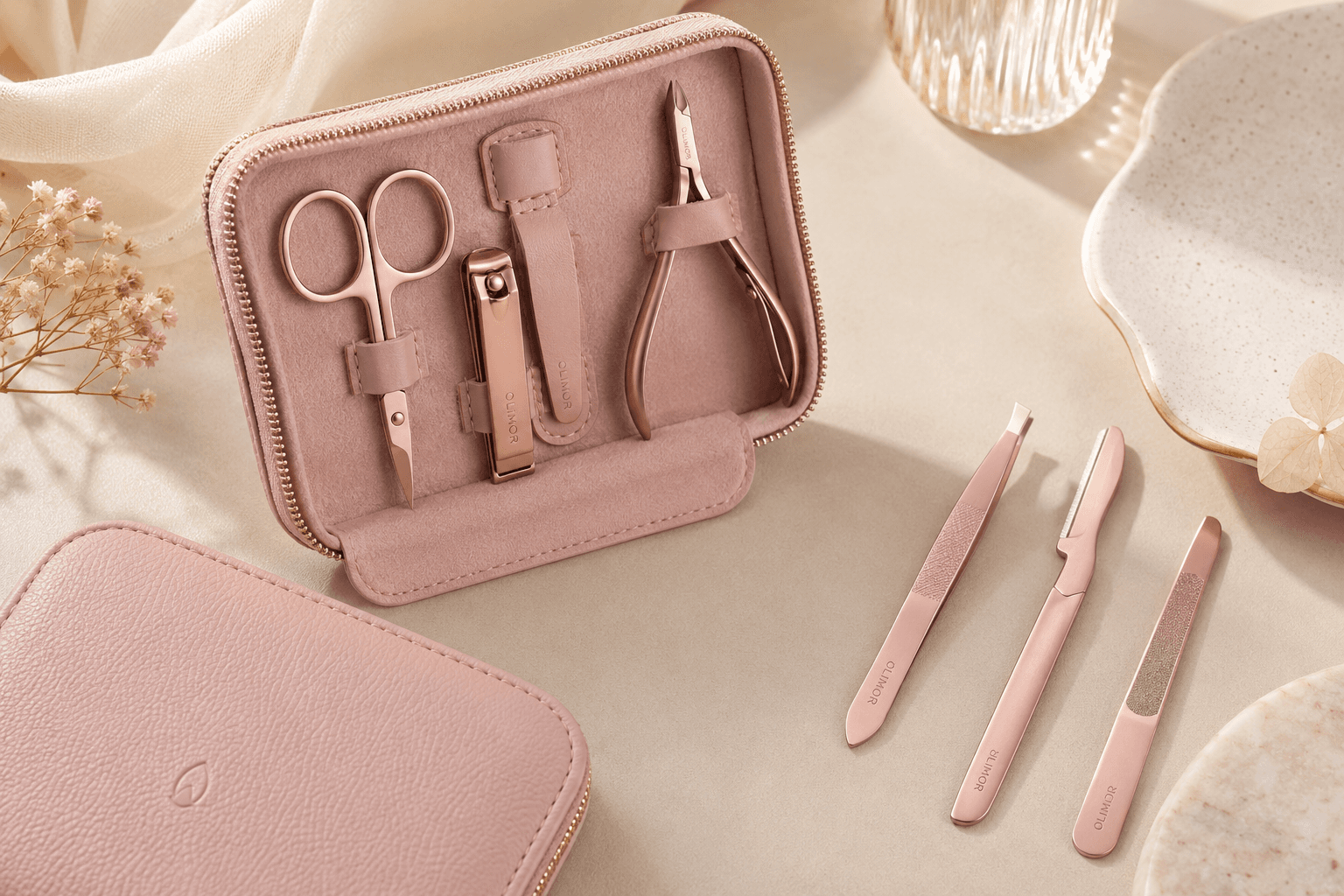
If you are building a broader assortment, it can help to review coordinated beauty tool collections so the finish, packaging direction, and quality level feel consistent across the range. That is often important for private-label brands that want a neat visual story across several personal care items.
OEM checklist for early sourcing discussions
- Confirm the intended use case: personal grooming, salon use, travel, or retail gifting.
- Define the cutting standard you want to see in samples.
- Review material expectations and corrosion-resistance needs.
- Decide on finish direction, from matte to polished or other available options.
- Specify branding needs such as logo area, unbranded presentation, or subtle design accents.
- Agree on packaging format, including carding, box packaging, pouches, or bulk packing.
- Set inspection points for scratches, lever movement, edge alignment, and packaging condition.
How to review samples before placing a bulk order
Sample review is one of the most important steps in sourcing nail clippers. Do not rely on one perfect-looking piece. Compare multiple samples from the same batch to see whether the production is consistent. A good supplier should welcome practical testing because repeatability is what protects your reorder plans.
Start with visual checks, then move to handling and cutting tests. Examine the finish for scratches, uneven color, or rough edges. Open and close the lever several times to check for stable movement. Then test the clipper on suitable nails to see whether the cut is smooth and whether the edge remains aligned after use.
Packaging should be checked as part of the sample, not as an afterthought. The clipper should fit the intended package cleanly, arrive protected, and look ready for the chosen sales channel. If the item is part of a set, confirm that the size, finish, and presentation match the other tools in the assortment.
For buyers selling into different markets, it is also sensible to verify any applicable consumer product or materials requirements for the destination country. Depending on the market, that may include guidance from public bodies such as the European Commission's REACH framework for chemical restrictions or the U.S. Consumer Product Safety Commission for consumer-facing safety expectations. Buyers should verify the applicable version and ask the supplier for supporting documentation rather than assuming compliance.
Quality points that matter most in bulk purchasing
Bulk purchasing only works when consistency is strong. A lower unit cost does not help if weak spring action, dull edges, poor alignment, or finish defects create complaints and replacement work. Durable nail clippers reduce those risks because they support predictable customer use.
| Quality area | What to review | Why it matters |
|---|---|---|
| Blade alignment | Upper and lower cutting edges should meet evenly | Uneven alignment can tear or crush the nail |
| Sharpness | Test clean cutting on suitable nail samples | Sharp blades support smoother trimming |
| Lever stability | Check pressure, rebound, and side movement | A loose lever feels unreliable and hard to control |
| Surface finish | Inspect edges, corners, and visible marks | Smooth finishing improves comfort and shelf appeal |
| Material selection | Confirm stainless steel expectations and finish direction | Material affects durability, appearance, and maintenance |
| Packaging fit | Review how the clipper sits in card, box, pouch, or kit | Good packaging protects the item and supports presentation |
It is also useful to ask how the supplier handles inspection at more than one stage. A buyer should want to know whether the supplier checks raw material, in-process assembly, and final appearance before shipment. Those controls help prevent problems that are hard to spot from catalog photos alone.
What changes the cost of an OEM nail clipper order
Several practical factors can affect sourcing cost. Material choice is one of the biggest. A stainless steel tool with a cleaner finish and better leverage design may cost more to produce than a basic utility clipper. Surface treatment also matters because a matte or polished finish requires different processing and inspection.
Customization can also change cost. Logo placement, unique packaging, gift-style presentation, and set assembly all add work. So does tighter quality control. Buyers should view these as value decisions, not just extra charges, because they can influence customer perception and repeat purchasing.
The best supplier discussions focus on the final use case. If the clipper is for a professional beauty line, the buyer may prioritize appearance and consistent finishing. If it is for a travel set, packaging and compactness may matter more. If it is for a private-label retail brand, the buyer may want a balanced mix of function, appearance, and practical branding space.
Where Olimor fits in your sourcing process
Olimor Beauty supports buyers who need beauty tools that are practical, presentable, and suitable for OEM planning. If you are assembling a broader personal care range, reviewing a coordinated assortment can help you keep product presentation and quality expectations aligned across the line. You can also request an OEM sourcing discussion if you want to compare product options, packaging approaches, or customization needs.
For direct discussion, use the contact page to ask about samples, branding ideas, and product fit for your channel. A clear request usually works best when you explain the target customer, sales format, and expected presentation level.
FAQ
Can I request samples before a bulk order?
Yes. Sample review is the best way to check cutting performance, lever stability, finish quality, and packaging fit before approving production.
What should I ask about MOQ?
Ask how the minimum order relates to customization, packaging format, and product style. MOQ can vary by project, so confirm it directly with the supplier.
Can the nail clipper be customized for private label use?
Often yes, but the key is to separate branding and packaging needs from functional requirements. Confirm logo placement, finish direction, and presentation format early.
How do I check quality before shipment?
Review multiple samples, inspect blade alignment and finish, test lever movement, and confirm that packaging protects the tool and matches the approved sample.
What lead time should I expect?
Lead time depends on order scope, customization, and current production planning. Ask the supplier for a project-specific schedule rather than assuming a standard timeline.
If you are comparing suppliers for durable OEM personal care tools, the safest approach is to judge performance, finish consistency, and inspection discipline together. A good nail clipper should feel simple to use, dependable in bulk, and appropriate for the customer segment you are targeting.
Tag: