Nail Clipper Sourcing Guide for Retail Buyers and Resellers
For retailers, nail clippers are small products with high expectations. Customers may buy them as everyday grooming tools, travel accessories, family bathroom essentials, or add-on items near a checkout counter. The price point is usually accessible, but the product must still feel safe, sharp, comfortable, and durable. A weak lever, rough edge, dull blade, or slippery handle can quickly lead to complaints and returns.
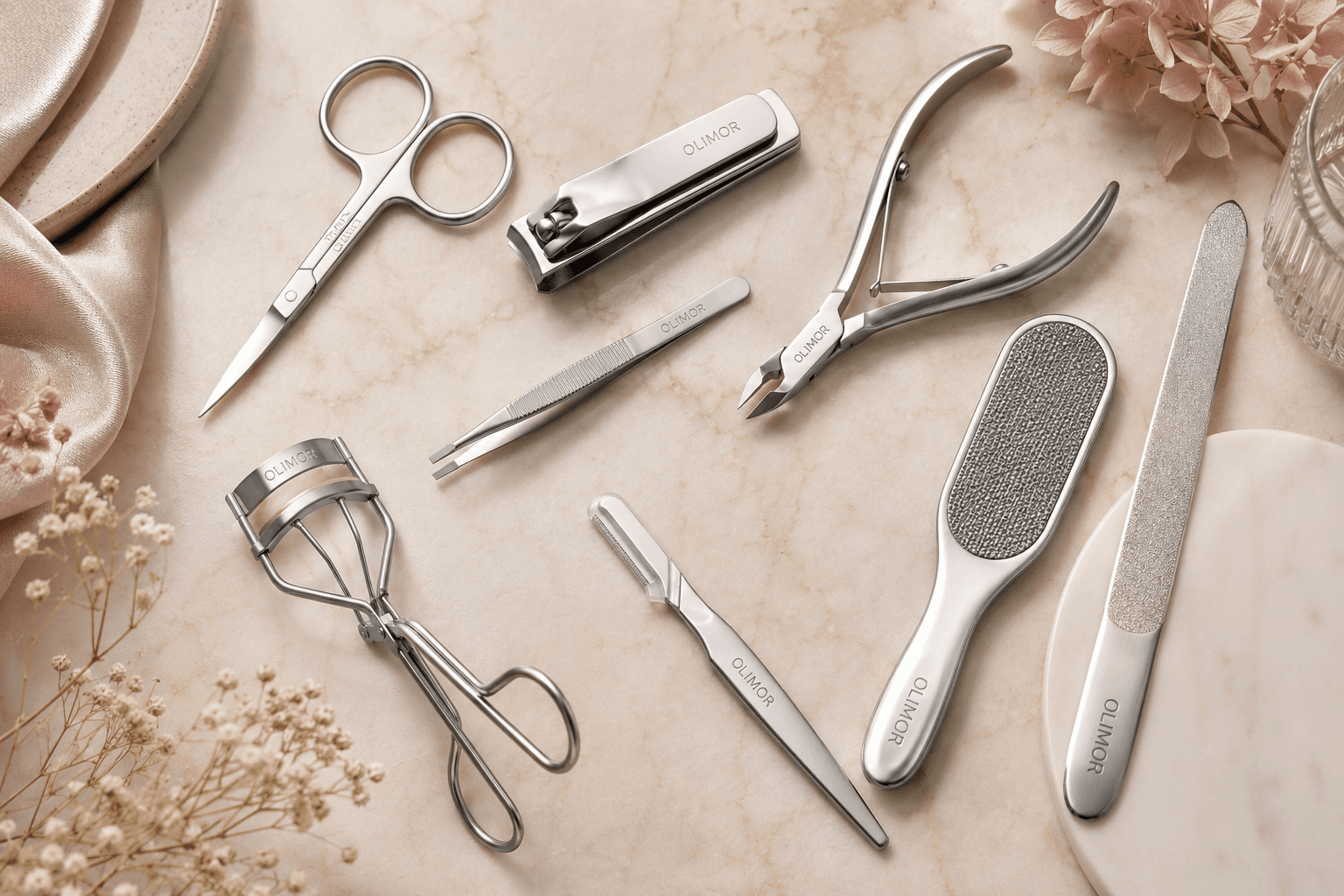
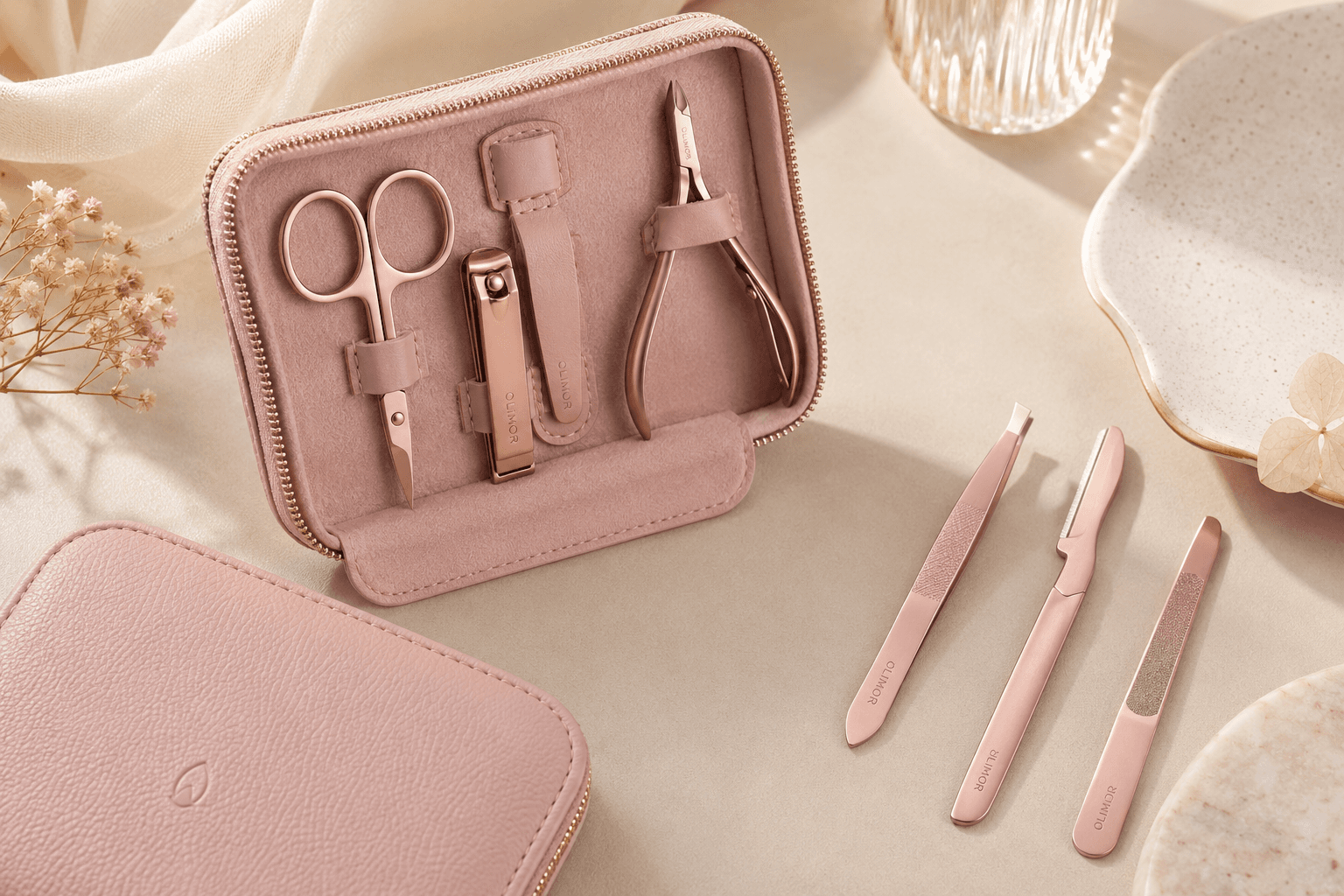
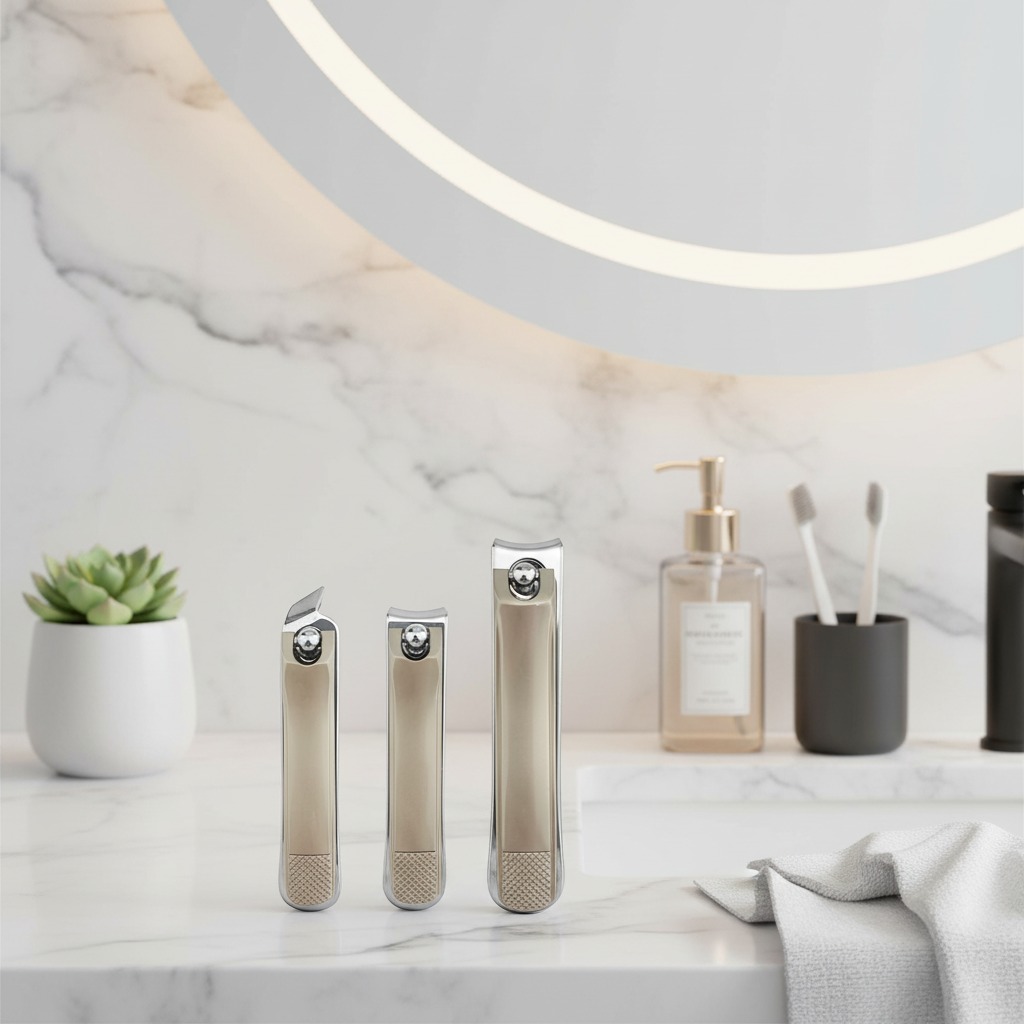
This guide is written for retail buyers, resellers, importers, and distributors comparing nail clipper options for store shelves or online listings. The Olimor Beauty nail clipper set shown here focuses on practical retail value: stainless steel construction, sharp cutting edges, ergonomic handles, textured grip areas, compact lever design, and metallic finishes in silver and champagne tones. Instead of treating nail clippers as a basic commodity, buyers should evaluate how the tool performs in real use, how it presents in packaging, and how reliably it can be sourced for repeat sales.
What Retail Customers Expect from a Nail Clipper
A nail clipper for retailers must serve more than one customer type. Some shoppers want a clean-cutting tool for home use. Others want a compact clipper for travel kits, toiletry bags, gym bags, or personal care gift sets. Resellers should choose products that are simple to understand at first glance but good enough to earn repeat purchases.
The most important customer expectations are straightforward:
- Clean cutting: The blades should meet evenly and cut without crushing or tearing the nail.
- Comfortable handling: An ergonomic lever and stable grip help customers control the cut.
- Safe edges: The clipper should feel finished, not rough, when held or packed in a pouch.
- Durable appearance: Stainless steel and metallic finishes often communicate hygiene and longevity.
- Portable size: Compact clippers are easier to sell for travel, office drawers, handbags, and grooming sets.
- Retail-ready presentation: The product should photograph well and display clearly on shelf or in an online listing.
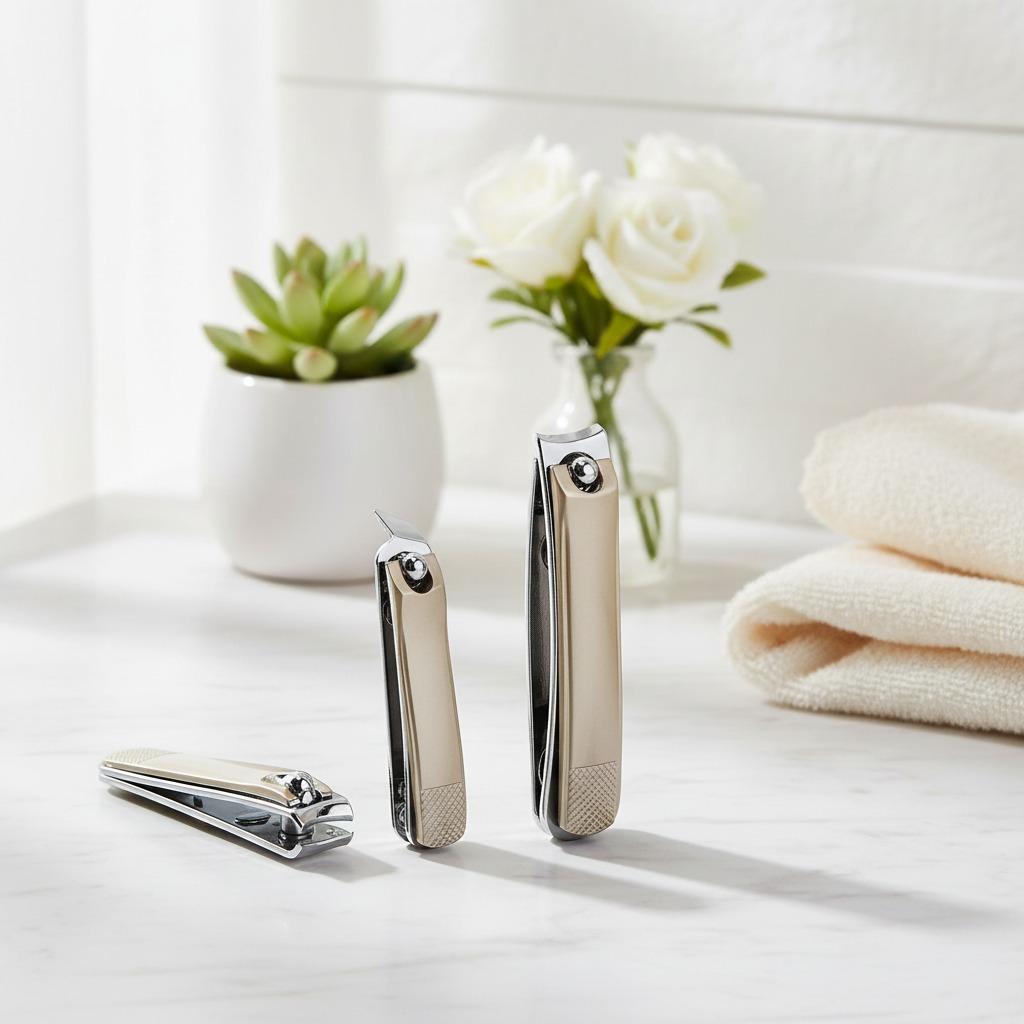
Olimor Beauty’s shown nail clipper set includes a trio of clippers, which can be useful for retailers building grooming bundles or offering different cutting options in one purchase. When product specifications beyond the visible design are needed, buyers should confirm details through the normal sourcing process before placing an order.
Selection Criteria for Retail Nail Clippers
When comparing nail clippers from different suppliers, avoid making the decision on unit price alone. A very low-cost clipper may look acceptable in photos but fail in hand feel, blade alignment, or finish quality. For retail channels, the best choice is usually the product that balances cost, performance, packaging, and after-sale risk.
Use the following criteria when reviewing samples:
- Blade alignment: Close the lever slowly and check whether both cutting edges meet evenly across the full curve. Uneven contact can cause poor cutting performance.
- Cutting sharpness: Test the clipper on appropriate sample material or personal nail use where suitable. It should cut cleanly with controlled pressure.
- Lever stability: A good lever should not wobble excessively. The action should feel firm without requiring uncomfortable force.
- Grip texture: Textured handles, like those shown on the Olimor Beauty clippers, can help reduce slipping during use.
- Surface finish: Inspect for visible scratches, burrs, discoloration, or rough edges. Metallic finishes in silver and champagne tones should look consistent across a batch.
- Portability: Compact sizing and a practical lever design can improve suitability for travel kits and small grooming sets.
- Packaging fit: Confirm that the clipper is secure in its packaging and will not rub, rattle, or scratch during transport.
Retailers carrying broader personal care assortments can compare nail clippers with other beauty tool products to decide whether the item should be sold individually, as a set, or as part of a grooming category display.
How to Evaluate a Nail Clipper Supplier
Supplier selection is a major part of nail clipper sourcing. A supplier should be able to support consistent production, reasonable communication, export documentation, and quality control expectations. For importers and resellers, the first order is important, but repeatability is even more important. If a product sells well, you need confidence that the next shipment will match the approved sample.
Before moving from sample approval to production, prepare a clear buyer checklist. It should include the product finish, size expectations if specified, packaging method, carton labeling, inspection process, and shipment requirements. Avoid vague approvals such as good quality or same as photo. Photos are useful, but written standards reduce misunderstanding.
| Supplier check | Why it matters for retailers | What to review |
|---|---|---|
| Sample consistency | Ensures the listed product matches what customers receive | Compare multiple samples for blade alignment, finish, lever feel, and grip texture |
| Material statement | Supports accurate product descriptions | Confirm stainless steel claims and any other material details before publishing listings |
| Packaging options | Affects shelf display, online presentation, and damage prevention | Review inserts, labels, barcode placement, and protection during shipping |
| Quality control process | Reduces returns and complaints | Define inspection points for cutting edge, lever operation, surface finish, and packing |
| Export support | Helps avoid shipment delays | Confirm documents, carton marks, trade terms, and logistics coordination |
If your assortment requires matching tools, custom packaging direction, or a sourcing discussion, you can contact Olimor with your retail channel and intended use case.
Sourcing Nail Clippers from China for Export
China is a major sourcing base for beauty tools and personal care accessories, including nail clippers. For retailers, the appeal is not only production scale but also the ability to compare many designs, finishes, and packaging formats. However, international sourcing works best when the buyer manages details early instead of solving problems after goods are finished.
Start with product purpose. A clipper for a discount bin, a pharmacy wall display, a travel set, and a premium grooming bundle may all require different packaging and presentation. The Olimor Beauty set, with stainless steel construction, textured handles, sharp blades, and silver and champagne metallic tones, is positioned more toward a refined grooming presentation than a disposable appearance. That makes it relevant for retailers who want an item that feels giftable or suitable for a coordinated personal care assortment.
Next, review export basics. Confirm the shipping method, carton size expectations, product labeling needs, and import requirements for your market. Do not assume that one packaging style works everywhere. Retailers selling through marketplaces may need scannable labels or specific packaging dimensions, while physical stores may care more about hanging holes, display visibility, and theft-resistant packaging.
Finally, plan the approval process. Keep one approved sample as a control reference. Use it to compare production samples or pre-shipment inspection photos. This step is especially helpful when the product uses metallic finishes, because color tone and surface consistency influence customer perception even when the tool functions correctly.
Retail Merchandising and Listing Tips
A nail clipper is a familiar item, so the retail task is to make the value clear quickly. Online shoppers cannot test the lever, so images and descriptions must explain the functional benefits without exaggerated claims. In stores, packaging should show the finish, handle texture, and set contents clearly.
For product listings, focus on practical search phrases and buyer concerns. Good description points include stainless steel construction, sharp cutting edges, ergonomic handling, textured non-slip grip, compact lever design, and suitability for home or travel grooming kits. If selling a trio or set, explain what is included without inventing sizes or functions that have not been confirmed.
For physical retail, consider where the product will be placed. Nail clippers can work in several sections: nail care, men’s grooming, travel accessories, bath and body, gift sets, or checkout add-ons. If your store carries related tools, group them in a clear grooming display so shoppers can compare choices. Buyers planning category expansion can review Olimor product collections for assortment ideas.
Quality Control Before Bulk Acceptance
Even a simple grooming tool deserves a structured inspection. Nail clippers contain moving parts and cutting edges, so they should not be treated like purely decorative accessories. A practical inspection plan protects both the retailer and the customer.
During inspection, select samples from different cartons rather than only from the top of one box. Open and close the lever several times. Check whether the clipper cuts smoothly and whether the handle texture feels secure. Look at the edges near the cutting area and the underside of the lever. Review the surface finish under good lighting to catch scratches, spots, or inconsistent color. Packaging should be clean, correctly oriented, and strong enough for the chosen shipping route.
Retailers should also check product information before goods go live. If the listing says stainless steel, the sourcing file should support that claim. If the listing highlights a non-slip grip, images should show the textured handle. If the product is promoted for travel, confirm that the packaging and size presentation match that use case.
Building a Repeatable Nail Clipper Sourcing Process
The best sourcing process is repeatable. Once a nail clipper performs well in your channel, document the approved finish, packaging, inspection criteria, and reorder procedure. This makes future purchasing faster and reduces the chance of receiving a slightly different product without noticing until customers respond.
Retail buyers should track sell-through, return comments, star ratings, and customer questions. If shoppers ask whether the clipper is suitable for thicker nails, do not guess; use verified product information and testing feedback. If customers praise the grip, finish, or compact size, those points can guide future merchandising. If returns mention dull cutting or lever issues, make blade performance and lever stability higher priorities in the next inspection.
A well-sourced nail clipper can be a steady, practical item in a beauty or personal care assortment. By focusing on cutting performance, comfortable handling, finish consistency, packaging, and supplier communication, retailers can turn a small grooming tool into a reliable category product. To discuss product options for retail, wholesale, or distribution planning, you can send an inquiry to Olimor Beauty.
Tag: