B2B Nail Clipper Sourcing Guide for Distributors and Retail Buyers
A B2B nail clipper may look simple, but for distributors, importers, retailers, salons, grooming brands, and promotional buyers, it is a product where small details directly affect resale value. Cutting feel, blade alignment, grip comfort, packaging, safety features, and consistency across bulk shipments all influence whether customers reorder or complain. The goal is not only to find a low unit price; it is to source a nail clipper that matches your sales channel, brand positioning, and quality expectations.
This guide explains how to evaluate nail clippers for business use, including custom options, bulk price structures, distributor requirements, and practical quality checks. It is written for buyers comparing wholesale beauty tools, private-label accessories, and personal care products for retail programs. You can also browse related beauty tool products to compare nail care tools with other beauty accessories in your sourcing plan.
Why Nail Clippers Work Well in B2B Beauty Tool Programs
Nail clippers are compact, widely used, easy to bundle, and suitable for many sales channels. They can be sold as individual personal care tools, included in grooming kits, paired with nail files or cuticle tools, or used as branded promotional items. Because the category is familiar to end users, buyers do not need to educate the market heavily. Instead, differentiation comes from build quality, comfort, visual design, packaging, and reliable supply.
For distributors, nail clippers also have practical logistics advantages. Their small size makes them easier to store and ship compared with bulky beauty devices. A compact clipper can support high unit counts per carton, which helps with warehouse planning and retail replenishment. The original product information notes an 86mm compact size and 28g lightweight build, both of which are useful considerations for buyers planning portable personal care assortments.
However, the low complexity of the product should not lead to weak supplier evaluation. A poor nail clipper can bend, leave rough edges, pinch the hand, rust prematurely, or feel loose after repeated use. In retail channels, these issues can cause returns, negative reviews, and lower trust in the overall product range.
Key Product Details to Check Before Bulk Ordering
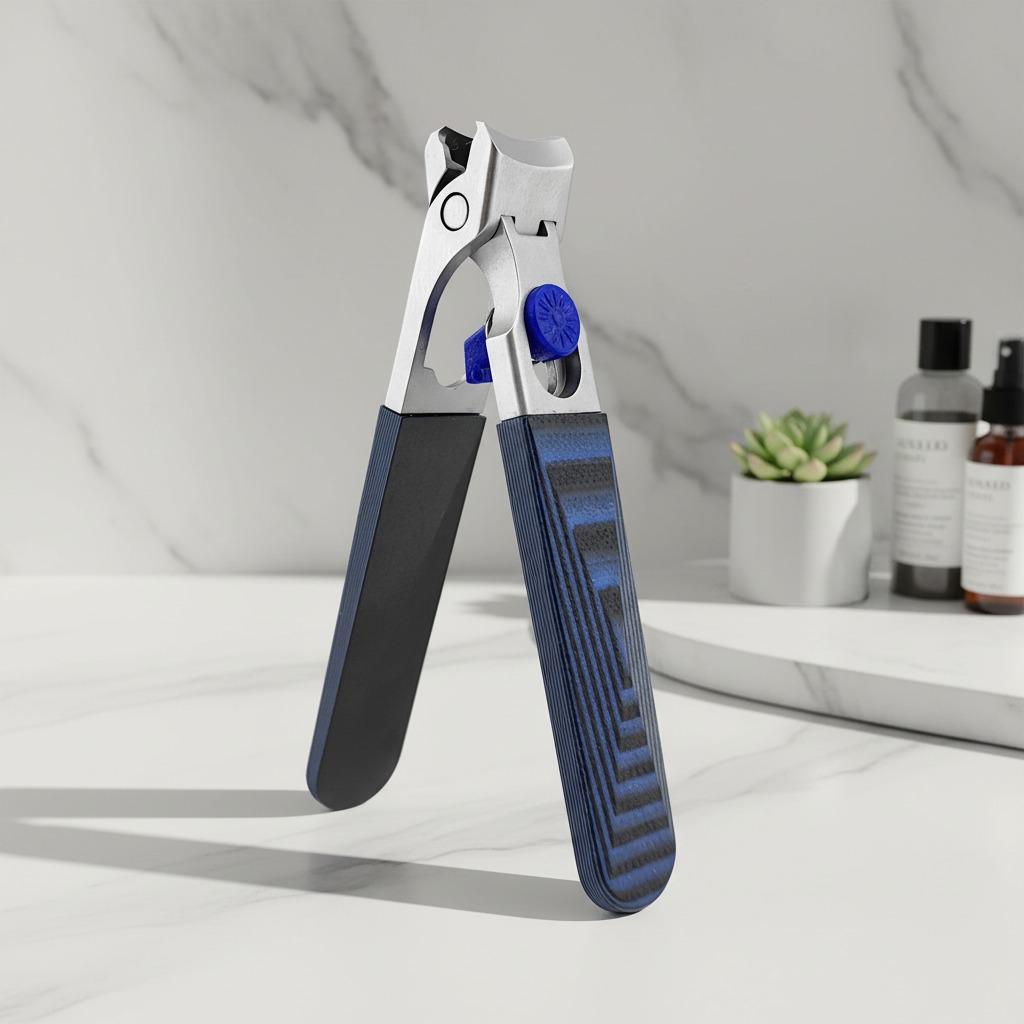
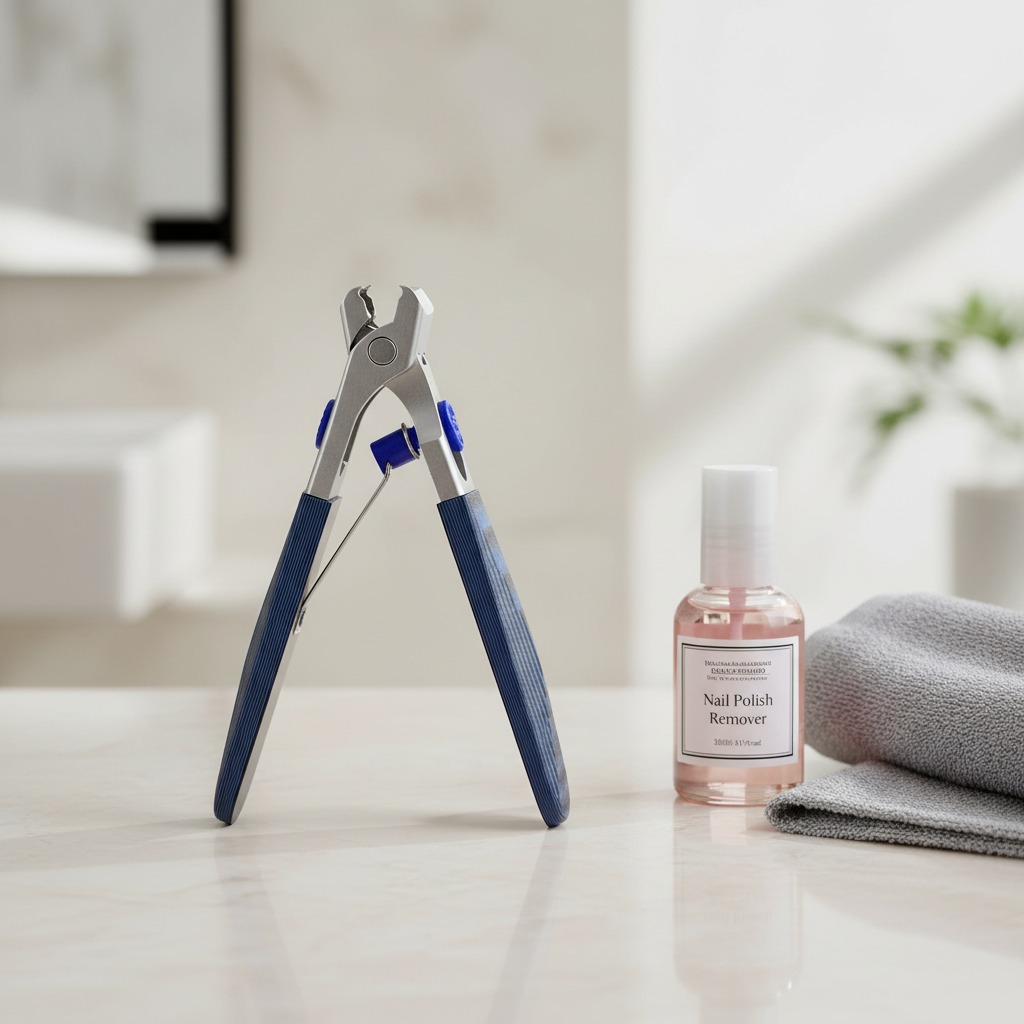
When comparing a B2B nail clipper for distributors or retail programs, assess more than the surface finish. A polished or colorful appearance may help shelf appeal, but the functional experience depends on blade precision, leverage, spring action, handle grip, and safety details. The supplied product description highlights stainless steel blades, ergonomic handles, smooth spring action, non-slip grips, safety guards, built-in locks, a sleek blue design, and geometric-patterned handles. These details can all support a stronger product presentation when verified through samples.
| Evaluation area | What to examine | Why it matters for B2B buyers |
|---|---|---|
| Blade alignment | Check whether the cutting edges meet cleanly from side to side. | Helps reduce uneven cuts and customer dissatisfaction. |
| Cutting feel | Test the pressure needed to cut and whether the action feels stable. | A smooth spring action can improve perceived quality. |
| Handle comfort | Review grip shape, non-slip surface, and ergonomic handling. | Important for retail users, salon staff, and grooming applications. |
| Safety features | Confirm the safety guard and built-in lock operate as expected. | Supports safer storage, transport, and consumer use. |
| Finish consistency | Inspect color, coating, edges, and surface marks across multiple samples. | Helps protect brand presentation in bulk shipments. |
A distributor should request samples before finalizing a large order. Sample evaluation should include real cutting tests, repeated open-and-close checks, packaging review, and visual comparison between units. If your business sells through multiple channels, test the product in each likely use case: retail display, online fulfillment, kit assembly, and warehouse handling.
Custom Nail Clipper Options for Business Buyers
Custom nail clipper programs can help businesses create a more recognizable product line. Customization may include branding, handle color, packaging, product sets, or presentation formats. The original product information refers to personalization such as branding or specific handle colors, which is relevant for businesses building private-label or promotional assortments.
Before choosing customization, decide what business problem it must solve. A custom logo may support brand recall. A distinctive color may help a retailer separate its product from generic shelf items. A compact size may suit travel kits or gift sets. A safety-focused design may work better for grooming or personal care bundles where secure storage matters.
- Retail brands: Focus on packaging clarity, consistent finish, barcode readiness, and a design that photographs well for e-commerce listings.
- Distributors: Prioritize stable supply, standardized cartons, simple SKU management, and products that can serve several customer types.
- Promotional buyers: Look for visible branding areas, compact portability, and packaging suitable for event distribution.
- Salons and grooming businesses: Emphasize cutting performance, hand comfort, safety guards, and easy handling during repeated use.
- Gift set suppliers: Match the clipper finish and color with other personal care tools for a coherent set presentation.
Customization should not hide weak fundamentals. A branded clipper with dull blades or inconsistent assembly will still underperform. Confirm the base product first, then finalize branding and packaging details. If your team is developing a broader assortment, reviewing Olimor product collections can help you consider how a nail clipper may fit with related personal care tools.
How to Compare Bulk Nail Clipper Price Without Sacrificing Quality
Bulk nail clipper price is important, but a reliable comparison requires more than a single unit cost. Buyers should evaluate the total landed and operational cost, including packaging, customization, inspection needs, shipping method, import duties where applicable, storage, and expected return risk. A slightly higher product cost can be justified if the clipper has better consistency, stronger packaging, or fewer complaints after sale.
When comparing quotations, keep the specification basis the same. If one quote includes custom packaging, a safety guard, built-in lock, or a particular handle finish, while another quote is for a basic item with no equivalent feature set, the prices are not directly comparable. Prepare a sourcing sheet that lists the required product features, packaging expectations, quantity range, delivery terms, and sample approval process.
- Define the target channel. A discount retail item, salon accessory, and private-label gift set may need different cost and quality balances.
- Confirm the product structure. Record known details such as stainless steel blades, ergonomic handles, non-slip grips, safety guard, built-in lock, and finish requirements.
- Compare packaging separately. Packaging can change the final price and shipping volume significantly.
- Review sample quality. Test multiple samples rather than relying on one ideal demonstration unit.
- Calculate resale margin realistically. Include marketplace fees, retail markdowns, freight, quality checks, and after-sales handling.
For distributors, tiered pricing can be useful, but it should align with actual demand. Ordering beyond your sell-through capacity can create storage pressure and tie up working capital. A better strategy is often to start with a controlled first order, measure customer feedback, then increase volume once the product has proven itself in your sales channel.
Distributor Selection Criteria: Matching the Clipper to the Market
The ideal nail clipper for distributors is not always the most decorated model. It is the product that can be sold repeatedly with predictable quality and clear positioning. A sleek blue design and geometric-patterned handle may offer visual appeal, while practical features such as non-slip grips, safety guards, and built-in locks can strengthen the product story for retailers and end users.
Consider how the product will be described on invoices, catalogs, online listings, and sales presentations. Clear feature language matters. Instead of vague claims, use concrete descriptions that buyers can verify: stainless steel blades, ergonomic handle, compact 86mm size, 28g lightweight build, safety guard, built-in lock, and smooth spring action. These terms are more useful to B2B customers than broad promotional wording.
Distributors should also think about assortment architecture. A nail clipper can be an entry-level SKU that introduces customers to a wider beauty tool catalog. It can also be part of a travel care kit, grooming kit, or seasonal gift program. If you plan to build a multi-product order, consider whether the clipper’s finish, size, and packaging style are compatible with other products you sell.
Quality Assurance and Shipment Readiness
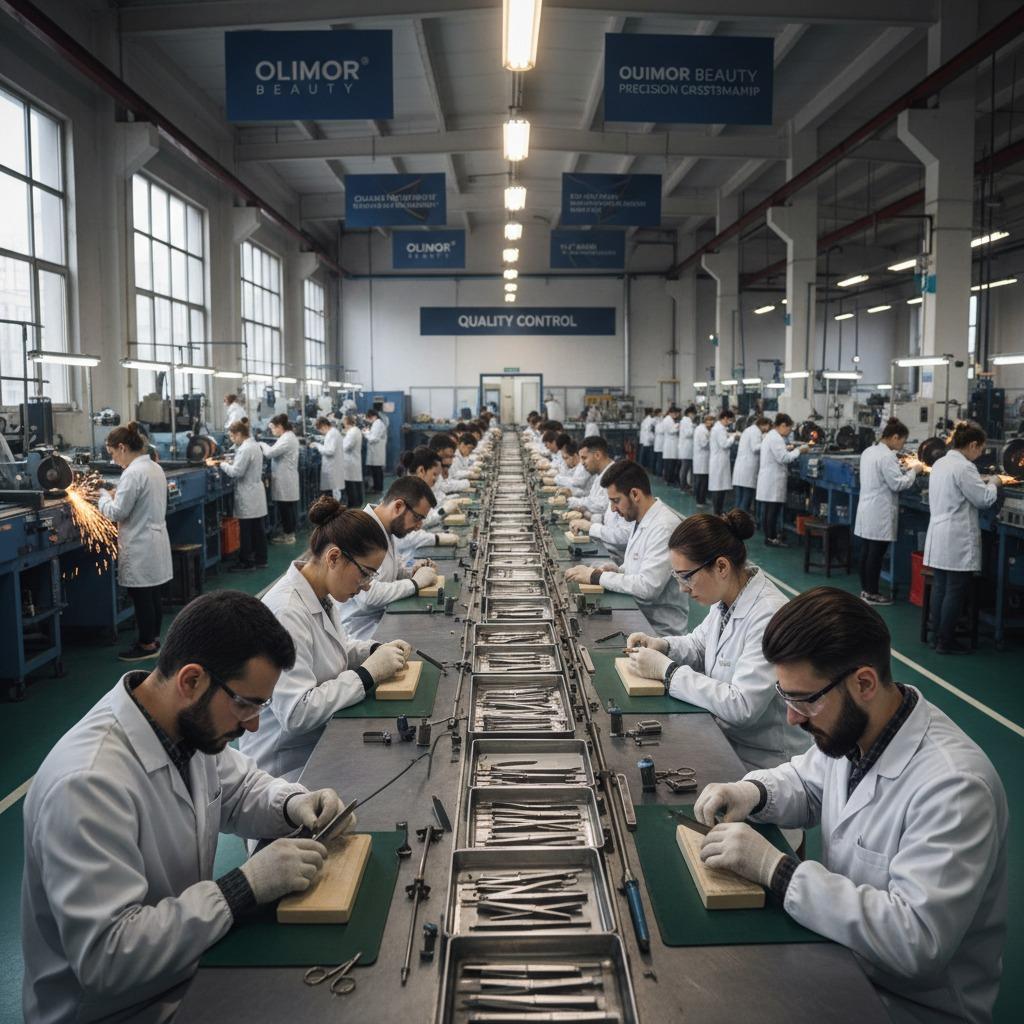
Quality assurance begins before production and continues through packing. The original content notes inspections from raw materials to packaging, a useful principle for any B2B nail clipper purchase. Buyers should define what needs to be checked and how acceptance will be judged. This protects both the buyer and the supplier by reducing ambiguity.
A practical inspection checklist may include blade sharpness, alignment, opening and closing action, lock function, safety guard position, grip finish, color consistency, logo placement if customized, packaging damage, carton labeling, and quantity verification. For e-commerce sellers, packaging durability deserves special attention because individual units may be handled many times before reaching the final consumer.
Documentation also matters. Keep approved sample photos, packaging artwork files, carton marks, and product descriptions in one shared reference. This makes repeat orders easier and helps avoid small changes that could affect customer perception. If you need to clarify product options, packaging plans, or order preparation, you can contact Olimor or send an inquiry with your target market and sourcing requirements.
Building a Smarter B2B Nail Clipper Sourcing Plan
A strong sourcing plan balances product function, customer expectations, pricing, and supply reliability. Start by defining the channel: distributor catalog, retail shelf, online marketplace, salon supply, promotional program, or private-label kit. Then choose the features that support that channel. For many buyers, the best direction is a compact clipper with stainless steel blades, comfortable grip, stable spring action, safety-focused details, and packaging that communicates the product clearly.
Finally, avoid treating nail clippers as a purely low-cost commodity. In beauty and personal care, everyday tools can become repeat-purchase items when they feel reliable and look consistent. By reviewing samples carefully, comparing bulk nail clipper price on an equal basis, and aligning customization with the needs of your market, your business can build a practical nail care SKU that supports long-term sales rather than one-time clearance volume.
Tag: