How to Choose Manicure and Pedicure Tools for Salon-Ready Grooming Kits
Manicure and pedicure services depend on small tools that must perform consistently under close visual work. A nail clipper that does not cut cleanly, a tweezer that loses alignment, or a tool handle that becomes tiring during repeated use can slow down a salon service and reduce the quality of the final result. For salon owners, spa buyers, distributors and private-label beauty tool teams, choosing manicure and pedicure tools is therefore not just a matter of appearance. It is a sourcing decision that affects service efficiency, hygiene practices, customer comfort and repeat purchasing.
Olimor Beauty supplies manicure and pedicure tools designed for professional grooming use, including items such as nail clippers and precision tweezers. The focus is on practical tool performance: ergonomic handling, durable stainless steel construction, a polished finish and internal checks from concept to packaging. Whether you are building a compact grooming kit, comparing wholesale options or reviewing a supplier for salon-ready tools, the following guide explains what to evaluate before placing an order.
What a Complete Manicure and Pedicure Tool Set Should Support
A good grooming kit is not defined only by the number of pieces inside it. The more important question is whether each tool has a clear role and whether the set supports a smooth manicure or pedicure workflow. Nail salons and spa teams usually need tools for trimming, shaping, cleaning and detail work. Individual consumers may want fewer items, but they still expect reliable cutting edges and comfortable control.
When reviewing manicure and pedicure tools, start by mapping the service process. For fingernails, precision matters because the working area is small and highly visible. For toenails, the tool may need more leverage and a stable grip. Tweezers and detail tools should close evenly and allow controlled movement without excessive pressure. Clippers should cut cleanly without crushing the nail edge. If a set includes multiple tools, each item should contribute to the kit rather than simply increasing the piece count.
Buyers comparing beauty tool products should also consider where the kit will be used. A salon may prefer tools that are easy to identify, handle and clean between services. A retail grooming kit may need attractive organization and a polished presentation. A spa distributor may require consistency across batches so that multiple locations receive tools with the same look and handling feel.
Key Selection Criteria for Professional Nail Tools
Professional manicure and pedicure tools must satisfy both performance and operational requirements. A polished finish can improve presentation, but the more important factors are tool geometry, grip comfort, material suitability and repeatable quality. The following checklist can help buyers compare options in a structured way.
- Cutting performance: Nail clippers should meet cleanly and cut without requiring excessive force. The edge should feel stable and predictable during use.
- Alignment: Tweezers and similar precision tools should close evenly. Poor alignment reduces control and can make detail work frustrating.
- Comfort in the hand: Ergonomic designs help reduce fatigue during repeated salon use. A tool should not feel slippery, sharp on the fingers or awkward to position.
- Durability: Stainless steel tools are valued in grooming kits because they can provide strength and long service life when manufactured and maintained properly.
- Finish quality: A polished finish should be smooth and consistent, without rough spots that could catch on skin, fabric or packaging.
- Cleanability: Tools should have shapes that are practical to wipe and maintain according to the hygiene procedures used by the salon or spa.
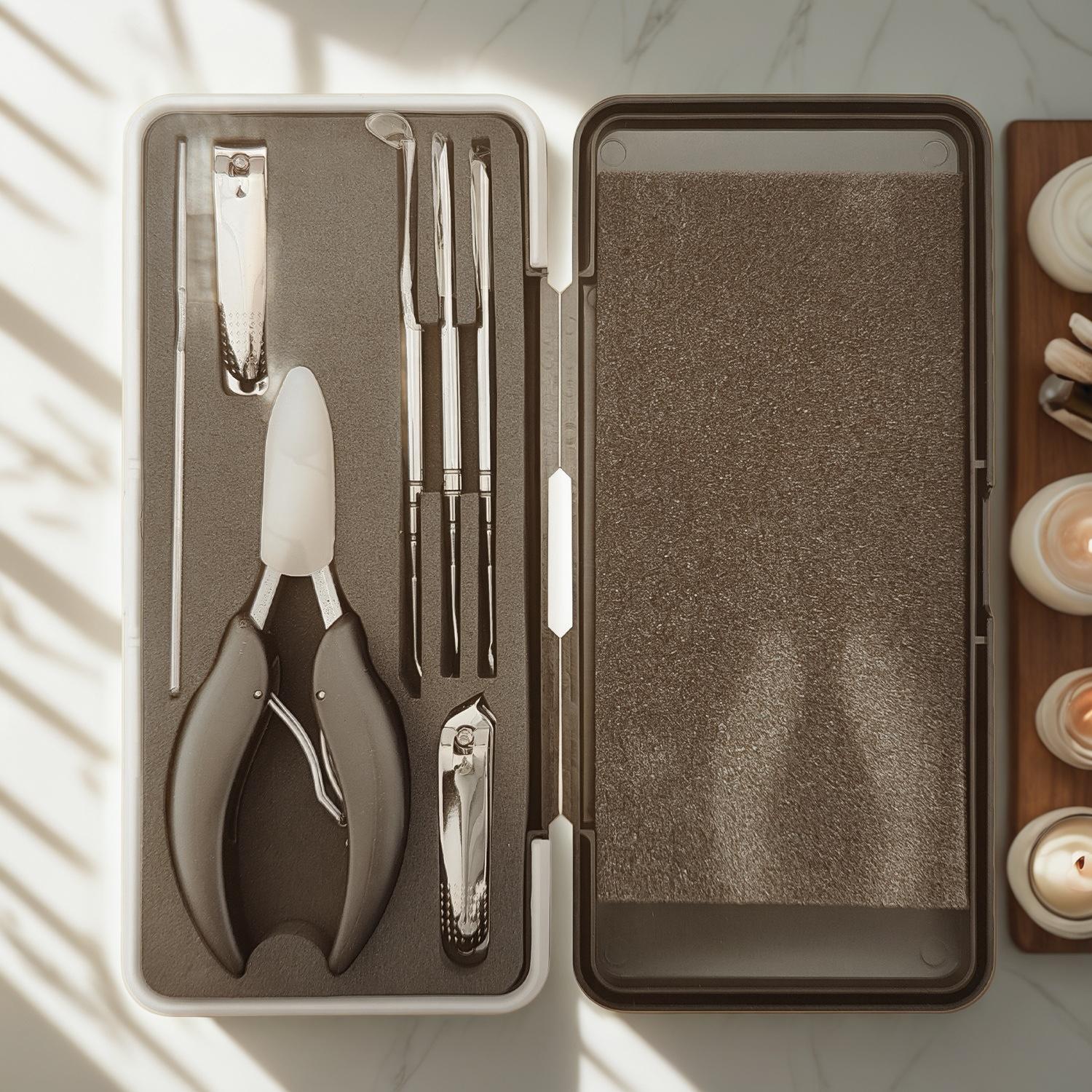
- Packaging suitability: For wholesale and retail kits, the storage format should protect edges, keep tools organized and present the set professionally.
This evaluation is especially useful for distributors and salon wholesale buyers because it separates measurable tool quality from general marketing claims. It also helps purchasing teams compare samples more consistently across suppliers.
Why Ergonomics Matter in Salon and Spa Use
Ergonomic design is often discussed as a comfort feature, but in manicure and pedicure tools it also affects precision. Nail technicians repeat small movements many times throughout a workday. If a clipper requires too much pressure or a tweezer handle is difficult to control, the user may compensate by gripping harder. Over time, this can increase hand fatigue and make fine work less consistent.
For clippers, look at how the lever sits under the thumb and whether the tool feels stable as pressure is applied. A good clipper should allow controlled force rather than a sudden, jerky cut. For tweezers, the tension should feel balanced: firm enough for control, but not so stiff that the user must strain. For any tool in a manicure set, edges that touch the hand should feel smooth and finished.
Ergonomics also matters for customer-facing perception. Clients may not analyze tool design, but they notice when a technician works confidently and smoothly. Tools that feel balanced can support a more professional service pace. For distributors, this is one reason to evaluate how tools perform in real handling tests rather than judging only by photos or piece count.
Material, Finish and Hygiene Considerations
The original purpose of a manicure and pedicure tool is practical: it must trim, shape or grip effectively. Material choice and finish quality help determine whether the tool can do that reliably over time. Olimor Beauty manicure tools include stainless steel tools, a common choice for grooming applications because it can offer durability and a clean appearance when produced correctly.
However, material naming alone is not enough for sourcing decisions. Buyers should examine samples for surface smoothness, edge consistency and resistance to visible defects. A polished finish should look refined, but it should also support cleaning by avoiding unnecessary roughness. Hinges, joints and contact points deserve special attention because these are areas where poor finishing can affect function.
Hygiene practices are ultimately set by the salon, spa or local regulations, so tool buyers should select items that fit their own cleaning and handling protocols. Avoid designs that trap residue in hard-to-reach areas unless there is a clear maintenance method. For kits intended for repeated professional use, storage should protect tools after cleaning and reduce contact with loose dust or other items in a drawer.
How Wholesale Buyers Can Compare Manicure and Pedicure Sets
Wholesale buyers often review several manicure and pedicure sets at once. A structured comparison helps prevent decisions based only on price or appearance. The table below outlines practical review points that are relevant to salons, spa product wholesalers and professional beauty tool suppliers.
| Review area | What to check | Why it matters |
|---|---|---|
| Tool mix | Confirm that clippers, tweezers and other included tools match the intended manicure or pedicure use. | A focused set is easier to sell and use than a kit filled with unnecessary pieces. |
| Handling | Test grip comfort, leverage and control during realistic hand movements. | Comfort supports efficiency during repeated salon services. |
| Edge and tip quality | Inspect cutting edges, tweezer tips and alignment under good lighting. | Precision parts determine whether the tool performs well. |
| Finish | Look for a smooth polished surface and consistent appearance across tools. | Finish affects presentation, touch and cleanability. |
| Packaging | Check whether the packaging protects tools and suits retail, salon or distribution needs. | Good packaging reduces damage risk and improves customer perception. |
| Quality checks | Review how the supplier controls quality from development through packaging. | Consistent checks reduce variation between batches. |
For buyers building a broader assortment, it can also help to review related product collections so that grooming tools, cases and beauty accessories can be sourced with a consistent positioning. If your team needs to discuss a specific tool mix, packaging direction or supply plan, you can send an inquiry with your intended use and purchasing priorities.
Maintenance Practices That Protect Tool Performance
Even well-made manicure and pedicure tools need correct maintenance. Poor storage, residue buildup or rough handling can shorten service life and reduce cutting precision. Salons and spas should create a tool care routine that matches their local hygiene requirements and the way tools are used during services.
- Clean after use: Remove visible residue from tool surfaces, edges and joints according to the salon’s approved procedure.
- Dry thoroughly: Moisture left on metal tools can affect appearance and may contribute to deterioration over time.
- Store safely: Keep clippers, tweezers and detail tools in a case or organized compartment so edges and tips are not damaged.
- Inspect regularly: Check alignment, sharpness, hinge movement and surface condition before tools are placed back into service.
- Separate damaged tools: If a tool is bent, misaligned or no longer cuts cleanly, remove it from professional use.
For retail grooming kits, simple maintenance guidance can also reduce customer complaints. Clear instructions about cleaning, drying and storage help users understand that precision tools require care. For wholesale buyers, maintenance expectations should be considered early because overly delicate tools may not be suitable for high-frequency salon environments.
Questions to Clarify Before Sourcing a Grooming Kit
Before ordering manicure and pedicure tools for salon, spa or distribution use, define the buyer scenario as specifically as possible. A kit for professional nail technicians may need different priorities than a compact travel grooming set or a retail gift item. The clearer the use case, the easier it is to select the correct balance of tool mix, finish, packaging and cost.
Useful sourcing questions include: Who will use the tools, and how often? Are the tools intended for professional services, retail resale or promotional distribution? Which items are essential, such as nail clippers and precision tweezers, and which are optional? Does the market prefer a minimal kit or a more complete grooming set? What packaging format will protect the tools while matching the selling channel? How will incoming samples be evaluated for cutting, gripping, finish and comfort?
Olimor Beauty’s approach to manicure and pedicure tools emphasizes carefully made products with ergonomic designs, stainless steel construction, polished finishing and quality assurance checks from concept to packaging. For buyers who need dependable grooming tools rather than generic accessories, those details are important starting points for evaluation.
Choosing Tools That Support Reliable Grooming Results
Manicure and pedicure tools may be small, but they carry a large share of the service experience. The right clipper, tweezer or grooming tool helps the user work with control, protects the quality of the nail finish and supports a cleaner, more organized workflow. For salons and distributors, reliable tools can also reduce replacement issues and make product assortments easier to trust.
When comparing options, avoid judging only by kit size or decorative appearance. Focus instead on tool purpose, edge quality, ergonomic comfort, stainless steel durability, polished finish, packaging protection and the supplier’s quality process. Olimor Beauty offers manicure and pedicure tools for buyers who value practical performance and careful presentation. To discuss sourcing needs, packaging direction or product options, contact Olimor and share the grooming kit requirements for your market.
Tag: