

How to Sanitize Nail Clippers for Safe Nail Care
Nail clippers are small tools, but they come into direct contact with nail edges, skin oils, fine debris and sometimes tiny breaks in the skin. That makes proper cleaning and sanitation an important part of safe nail care. Whether you use a clipper at home, prepare grooming kits for retail, or source tools for a salon, spa or hotel amenity program, a clear hygiene routine helps protect the user and preserve the tool.
Olimor Beauty offers beauty tools including stainless steel nail clippers designed for precise trimming and everyday durability. Stainless steel is a practical choice for nail care because it can be wiped, washed, dried and disinfected more effectively than porous materials. Still, even a well-made clipper needs regular care. This guide explains when to clean, how to disinfect, how to dry and store clippers, and what buyers should look for when evaluating nail clipper hygiene.
Why Nail Clipper Sanitation Matters
During trimming, nail clippers collect nail fragments, keratin dust, lotion residue and natural oils from the hands or feet. If those residues remain inside the cutting edge, hinge or handle area, they can become difficult to remove later. A neglected tool may also transfer debris from one nail to another, or from one person to another if shared.
Sanitizing nail clippers is especially important when trimming toenails, cutting thick nails, working around dry cuticles, or using the same tool in a household. It is also essential for beauty businesses that handle demonstration samples, retail testers or grooming accessories in client-facing environments. Even when a clipper looks clean, invisible residue may remain around the jaw and pivot.
A good sanitation routine supports three goals:
- Hygiene: removes clippings, skin oils and surface contaminants before the next use.
- Tool performance: prevents buildup that can interfere with smooth cutting action.
- Product longevity: reduces moisture exposure and residue that may affect the finish or hinge over time.
For buyers comparing beauty tool products, sanitation should be considered alongside cutting feel, handle comfort, packaging, material, finish quality and intended user group.
What You Need Before Cleaning
You do not need complicated equipment for routine nail clipper care. The key is to use items that remove visible debris first, then disinfect the cleaned surfaces, and finally dry the tool thoroughly. Disinfection works best on a tool that has already been cleaned; alcohol or disinfectant is less effective when trapped dirt remains in the hinge or under the cutting edge.
Prepare the following items before you begin:
- A soft, clean cloth or disposable lint-free wipe
- Warm water and mild soap for washing
- A small cleaning brush, such as a nail brush or soft toothbrush used only for tools
- Rubbing alcohol or another suitable disinfectant for metal grooming tools
- A dry towel or absorbent paper towel
- A clean storage pouch, box or drawer area after drying
A stainless steel nail clipper, such as the Olimor Beauty nail clipper, is well suited to this kind of routine because it can tolerate ordinary cleaning steps when handled properly. Avoid abrasive powders, harsh scraping tools or prolonged soaking, because aggressive cleaning can affect the surface finish or make the hinge feel less smooth.
Step-by-Step: How to Sanitize Nail Clippers
The following method is suitable for regular home use and for general tool maintenance. If a business must meet a local salon, spa or medical sanitation regulation, follow the applicable local standard in addition to the practical steps below.
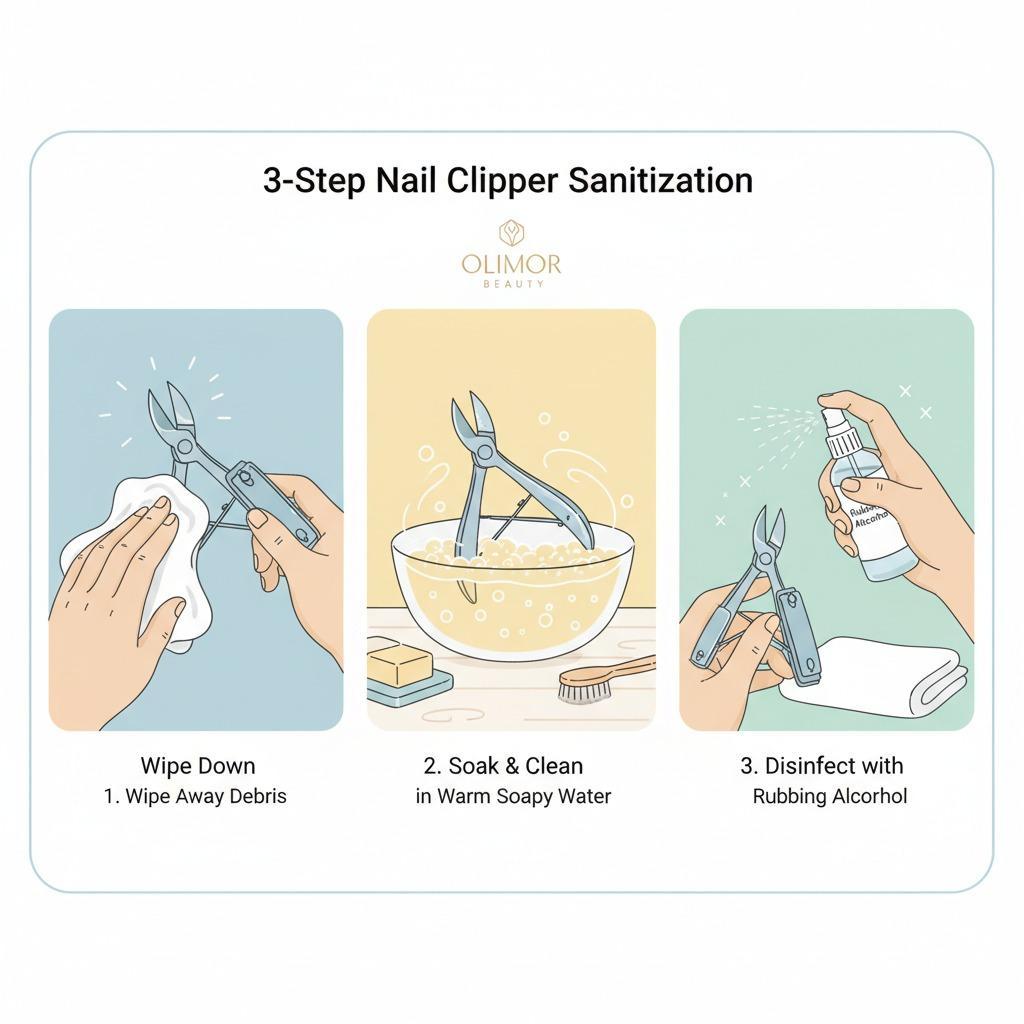
- Remove loose debris immediately after use. Open the clipper and tap out nail fragments over a bin. Wipe both blades and the handle with a clean cloth. Do not let clippings remain inside the jaw.
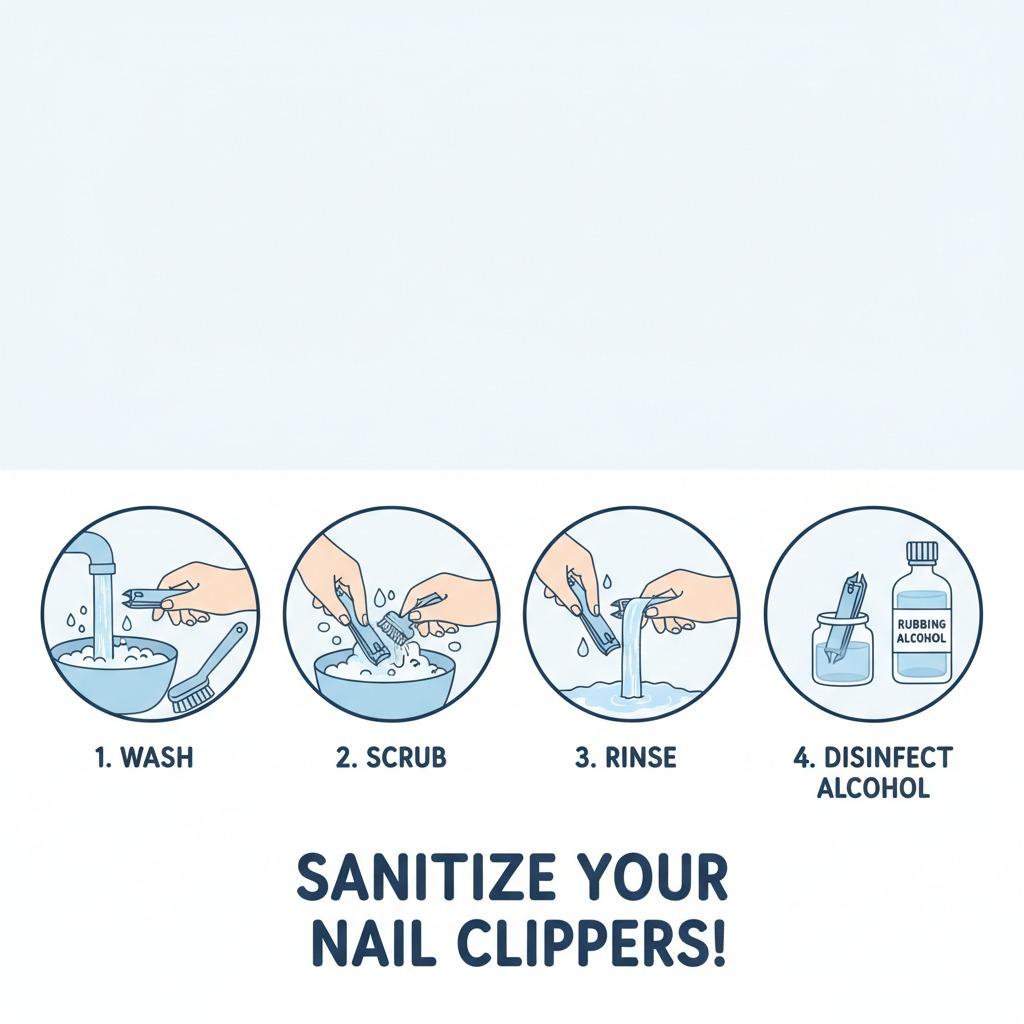
- Wash the clipper with mild soap. Use warm water and a small amount of mild soap. Open and close the clipper gently while washing so water reaches the cutting edge and hinge. Use a soft brush to lift residue from crevices.
- Rinse thoroughly. Soap residue can leave a film on the metal surface. Rinse under clean water while keeping the clipper open so the jaw and lever areas are cleared.
- Dry before disinfecting. Pat the tool with a towel and remove water from the hinge area. Moisture trapped around the pivot is one of the most common reasons a clipper feels rough over time.
- Disinfect the clean surfaces. Apply rubbing alcohol or a compatible disinfectant to the cutting edges, lever, handle and underside. Make sure the liquid reaches areas that contact fingers and nails.
- Allow sufficient contact time. Follow the label directions for the disinfectant you use. Wiping it off too quickly may reduce effectiveness.
- Dry completely and store safely. Once disinfected, let the clipper air-dry on a clean surface or wipe it with a fresh dry cloth. Store it in a dry place away from loose bathroom moisture.
For everyday personal use, a quick wipe after every trim and a deeper wash-and-disinfect routine at regular intervals is usually practical. For shared tools, disinfect before and after each use. For professional environments, use a written hygiene protocol so staff follow the same process every time.
Cleaning Frequency for Different Use Cases
The right cleaning schedule depends on how the clipper is used. A personal manicure tool kept in a dry drawer has a different hygiene risk than a shared grooming kit or a salon tool used throughout the day.
| Use case | Recommended routine | Extra care point |
|---|---|---|
| Personal fingernail trimming | Wipe after each use; wash and disinfect regularly | Keep separate from tools used on toenails if possible |
| Toenail trimming | Clean and disinfect after each session | Remove thicker debris from the jaw and hinge carefully |
| Shared household tool | Disinfect before and after every user | Consider separate clippers for each person |
| Salon, spa or retail demonstration | Follow a documented sanitation procedure after every handling | Separate clean tools from used tools to avoid mix-ups |
This kind of use-based plan is helpful for sourcing teams as well. When reviewing nail tools for product collections, consider how the final customer will use and maintain the product, not only how it looks in packaging.
Drying and Storage Are Part of Sanitation
Many people clean a clipper correctly but store it while it is still damp. Bathrooms are often humid, and a wet clipper placed in a sealed pouch or drawer can retain moisture around the hinge. Good storage is simple: dry the tool fully, keep it away from standing water, and avoid mixing it with dirty accessories.
If the clipper comes with a pouch or is part of a grooming kit, make sure the case is also clean and dry. A sanitized clipper stored inside a dusty or damp case will not stay clean for long. For retail and hospitality kits, packaging should protect the cutting edge from contact with other items while allowing the end user to remove and store the tool conveniently.
Do not use the clipper for tasks it was not designed for, such as cutting wire, plastic tags or packaging. Misuse can dull the cutting edge or change the alignment of the blades. A sharp, well-aligned clipper requires less pressure and helps create a cleaner nail edge, which is better for both comfort and hygiene.
What Buyers Should Check When Sourcing Nail Clippers
For distributors, private-label buyers, salon suppliers and beauty retailers, nail clipper sanitation is also a product selection issue. A tool that is difficult to clean may create complaints even if it looks attractive at first glance. When evaluating options, look beyond the surface finish and check practical details.
- Material suitability: stainless steel is a common choice for nail clippers because it supports cleaning and offers durability for repeated use.
- Blade access: the cutting edge should be easy to open, wipe and inspect for trapped nail fragments.
- Handle control: a wider or ergonomic handle can help users maintain a steady grip during trimming and cleaning.
- Hinge movement: the lever should open and close smoothly, without excessive looseness or stiffness.
- Finish consistency: uneven surfaces, burrs or rough edges can trap residue and reduce user comfort.
- Packaging design: packaging should keep the tool clean before sale and present care instructions clearly when needed.
Olimor Beauty works with beauty tools across nail care and grooming categories. If you are comparing nail clippers for retail assortments, promotional kits or salon supply channels, you can send an inquiry with your intended use, packaging needs and target market so the discussion stays focused on practical requirements.
Common Mistakes to Avoid
Several habits reduce the effectiveness of nail clipper sanitation. The first is using alcohol on a visibly dirty clipper without washing it. Disinfectant should not be treated as a substitute for debris removal. Clean first, then disinfect.
The second mistake is sharing a clipper casually without cleaning between users. Shared tools can transfer residue from one person to another, particularly when used on toenails or around irritated skin. If a clipper must be shared, disinfect it before and after each user.
The third mistake is leaving the tool in a wet place. Even stainless steel tools should be dried and stored properly. Long moisture exposure is unnecessary and can affect the appearance or feel of the product over time.
Finally, avoid ignoring changes in cutting performance. If a clipper begins to crush rather than cut, requires much more pressure, or shows visible damage at the blade, it may no longer be suitable for clean trimming. A hygienic routine cannot compensate for a damaged cutting edge.
Build a Safer Nail Care Routine
Sanitizing nail clippers is a small habit with real benefits. Remove clippings after each use, wash away visible residue, disinfect clean surfaces, dry the tool thoroughly and store it in a clean, dry place. These steps help protect the user, keep the clipper working smoothly and support a more reliable grooming routine.
For beauty retailers and sourcing teams, hygiene should be part of product evaluation from the beginning. A nail clipper should not only cut neatly; it should also be easy to clean, comfortable to hold and suitable for the way customers will actually use it. To discuss Olimor Beauty nail care tools or related beauty tool sourcing needs, contact Olimor for more information.
Tag: