How to Evaluate Grooming Kits for Travel Retail
Choosing grooming kits for travel retail is not simply a matter of counting tools and selecting the smallest case. Retail buyers need a set that is practical in luggage, presentable on a shelf, reliable enough for repeated use, and aligned with the intended customer and sales channel. A compact grooming and manicure kit typically combines scissors, nail clippers, a razor, tweezers, and narrower cleaning or probing implements in a zippered case. The purchasing decision therefore covers both the metal tools and the case system that keeps them organized.
This article explains what buyers should examine before approving a private-label, hospitality, promotional, or retail travel-care product. It focuses on visible construction, likely manufacturing processes, product usability, and the questions that should be answered by a supplier before sampling or production.
What a travel retail buyer is really selecting
A travel grooming kit is a small product, but it has several performance points. The tools must be useful without making the case bulky. The case must close securely and retain the implements during transport. The overall presentation must also justify its position beside luggage accessories, toiletries, men’s grooming products, or pharmacy personal-care items.
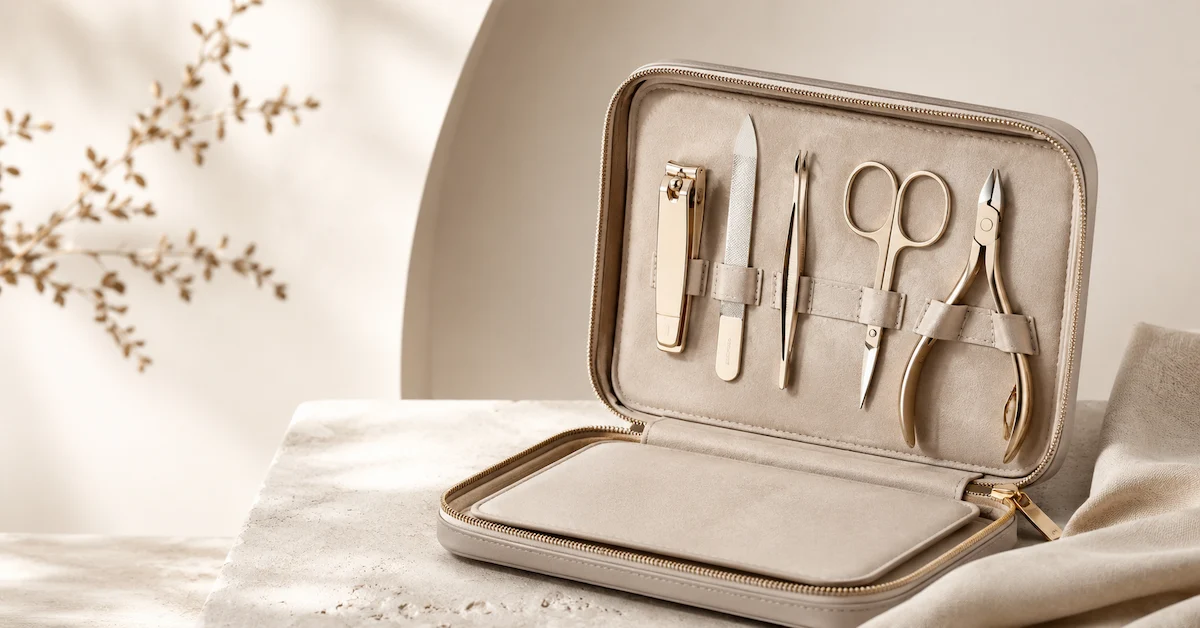
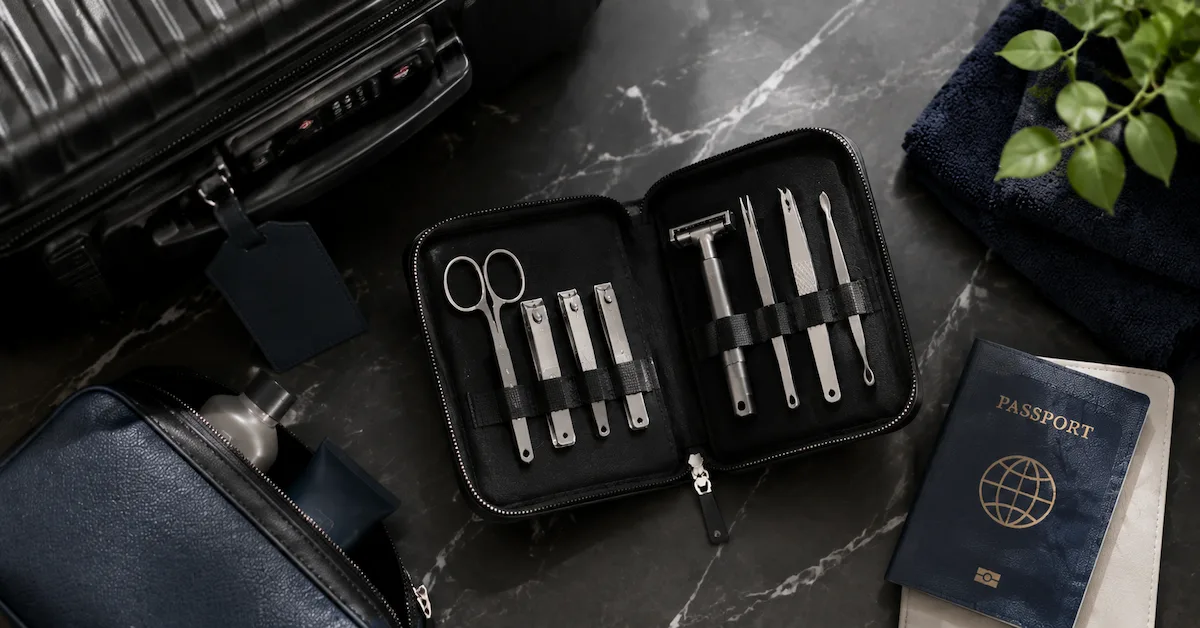
The illustrated product format uses a rectangular, rounded-corner case with a perimeter zipper. Its black exterior and black interior create a restrained appearance, while the bright metal tools provide visual contrast. Inside, elastic retention loops hold the implements separately on both sides of the case. That arrangement is more than a visual detail: it reduces loose-tool movement and makes it easier for the user to identify the required implement quickly.
For a buyer, the central question is not whether the set contains the maximum number of tools. It is whether the selected combination supports a clear use case. A carry-on customer may value compactness and basic nail maintenance. A hotel or airline amenity program may prioritize controlled cost, consistent presentation, and straightforward packing. A department-store or pharmacy line may need stronger packaging, a defined brand position, and more attention to perceived finish.
Quick reference: features and buyer implications
| Feature | Why it matters | What to verify |
|---|---|---|
| Zippered fold-open case | Keeps the set together in luggage and gives the product a finished retail format. | Zipper operation, pull-tab attachment, closure security, and resistance to snagging. |
| Elastic tool loops | Separates and retains individual implements. | Loop tension, stitching or attachment method, and suitability for the actual tool sizes. |
| Mixed metal implements | Supports nail, facial-hair, and general grooming functions in one set. | Tool geometry, edge condition, surface finish, and consistency between samples. |
| Compact black case | Provides a neutral presentation for private-label or promotional branding. | Exact covering material, dimensions, branding area, and resistance to surface wear. |
Breaking down the tool set
Scissors and clipper-style tools
The visible set includes small grooming scissors and several clipper-style tools in different sizes. This variety suggests a general-purpose product rather than a single-function nail kit. Small scissors may be used for facial hair or minor grooming tasks, while clippers address fingernail or toenail maintenance. Different clipper geometries can also help the set appeal to users who prefer a particular handle size or cutting profile.
However, tool count should not substitute for tool quality. Buyers should request clear specification of the intended function of each implement, especially where the narrow tools are not immediately identifiable. A product description that simply says “multiple accessories” may create confusion at retail and make quality control more difficult. Each tool should have a defined purpose, a consistent name, and an inspection point.
Razor, tweezers, and narrow implements
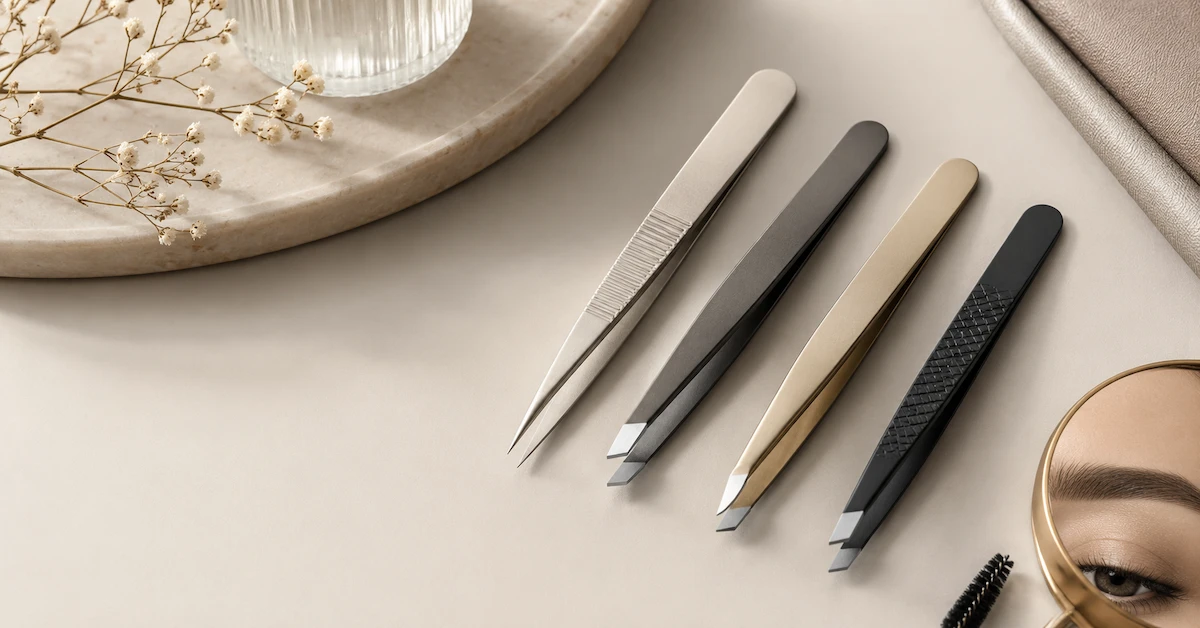
The handled razor and tweezers broaden the kit beyond nail care. They make the product more suitable for personal travel, hospitality use, and general grooming lines. The narrow implements may be intended for cleaning, probing, or other detailed grooming tasks, but their exact function should be confirmed before packaging copy is prepared.
This is a practical caution for product teams: do not infer a tool’s permitted use from its appearance alone. If an implement is marketed for a particular personal-care task, the supplier should define its intended application and provide appropriate handling guidance. That is especially important when the kit will be sold across different markets or included in an amenity program.
Case construction and portability
The case appears to use a flexible textile, synthetic leather, or leather-like covering, but the exact material cannot be identified from the available product information. This distinction matters. Different coverings can change the product’s hand feel, abrasion behavior, cleanability, odor, and perceived value. A private-label retailer should specify the desired material category rather than accepting an unqualified description such as “leather case.”
The rounded rectangular geometry is well suited to luggage and toiletry storage because it avoids sharp external corners and uses the available footprint efficiently. The pull tab on the perimeter zipper gives the user a defined opening point. During sampling, buyers should inspect whether the zipper opens smoothly around the corners and whether the pull tab remains easy to grasp with wet or hurried hands.
Inside the case, elastic loops are a simple and effective retention method. They also introduce several inspection requirements. The loops should hold the tools firmly without making removal awkward. Their spacing must correspond to the actual tool profiles, and their attachment should not leave loose threads or visibly weak points. A loop that stretches excessively after repeated loading can turn an organized kit into a collection of rattling metal pieces.
Likely manufacturing process
The metal implements would typically involve forming or cutting, grinding, polishing, assembly, and surface finishing. These are general process categories rather than confirmed details for this specific product. Scissors, clippers, tweezers, and razor components may each require different forming and finishing steps. The buyer should therefore evaluate the complete assembled tool, not just the raw material declaration.
Case production would commonly involve material cutting, sewing or bonding, zipper installation, and elastic-loop attachment. Again, the exact process depends on the case material and supplier construction. For private-label programs, it is useful to confirm which operations are performed in-house and which are subcontracted. More production stages can create additional variation in alignment, stitching, finish, and packing.
Surface appearance deserves attention because polished silver-colored tools are a major part of the product presentation. Buyers should check for inconsistent polishing, visible scratches, burrs, uneven edges, and contamination introduced during assembly. The available information does not confirm whether the tools are stainless steel, carbon steel, plated alloy, or another metal, so that specification should be obtained directly rather than assumed from the bright finish.
Selection criteria for sourcing managers
Start with the use case and retail position. A basic travel-care item, a premium men’s grooming set, and a hotel amenity kit may all use the same general format, but they should not automatically use the same tool mix or case specification.
- Define the tool list: Confirm the exact count, function, dimensions, and naming of every implement.
- Set material requirements: Request the metal grade or material category, case covering specification, lining details, and elastic construction.
- Review portability: Check closed dimensions, opened layout, tool retention, and compatibility with the intended toiletry or luggage format.
- Assess presentation: Confirm available branding areas, color requirements, packaging format, and shelf-facing appearance.
- Plan inspection: Establish checks for zipper operation, loop retention, tool alignment, edge condition, surface finish, and case workmanship.
- Clarify commercial details: Ask about minimum order quantities, customization scope, sample approval, packaging, warranty terms, and production documentation.
Do not approve a sample based only on photographs. A flat image cannot show whether the zipper catches, whether the loops are too tight, or whether the scissors and clippers feel balanced in use. Even a short hands-on review can reveal problems that would otherwise appear after launch.
Common purchasing mistakes
One frequent mistake is treating the case as secondary packaging. In this product category, the case is part of the product. It protects the tools, shapes the customer’s first impression, and determines whether the kit remains useful in a suitcase. Weak retention loops or an unreliable zipper can undermine otherwise acceptable metal tools.
Another mistake is assuming that a polished finish proves corrosion resistance or a particular steel grade. It does not. Those characteristics require a supplier specification and, where appropriate, agreed inspection or testing procedures. Exact durability, sterilization suitability, and service life should not be promised unless they have been established for the production version.
Buyers should also avoid adding tools simply to make the package look fuller. Extra implements can increase cost, complicate instructions, consume space, and create uncertainty about intended use. A shorter, clearly defined set may be more credible than a crowded case with poorly explained accessories.
FAQ for grooming kit buyers
What functions can this type of kit cover?
The visible configuration supports general nail, facial-hair, and personal grooming maintenance. It includes scissors, clipper-style tools, a razor, tweezers, and narrow implements. The exact function of every narrow tool should be confirmed with the supplier.
Is the case leather?
The case has a leather-like appearance, but the exact material is not identifiable from the available information. Buyers should request the precise covering material and construction details before creating product claims.
Can the kit be used for private-label retail?
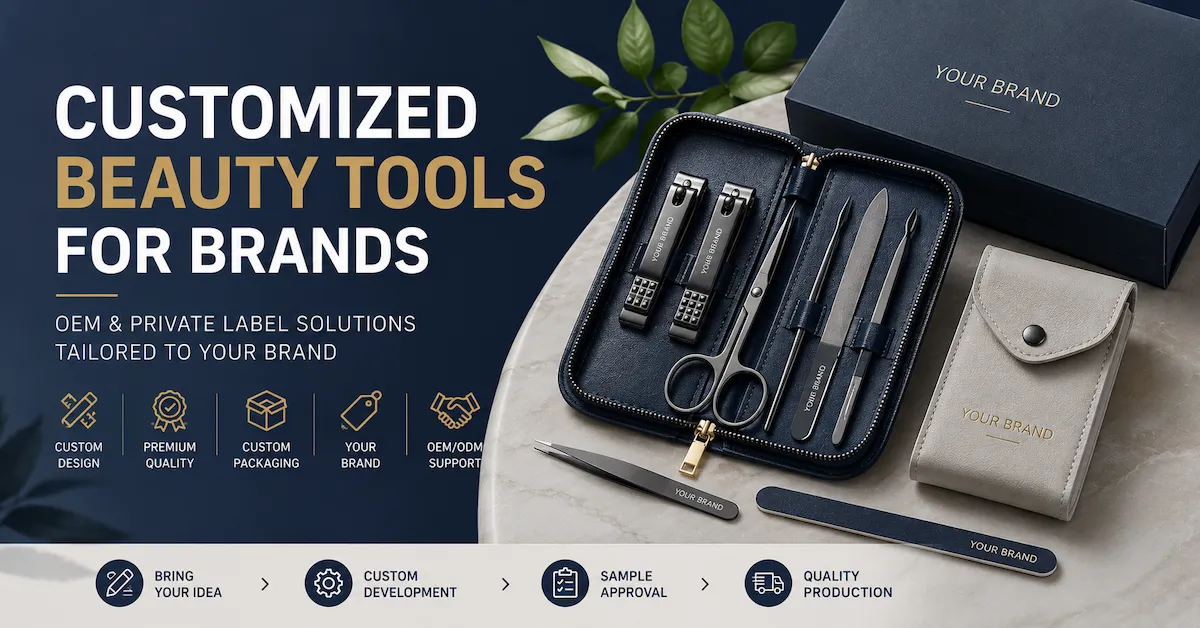
The format is suitable in principle for private-label retail, pharmacy, luggage, department-store, hospitality, promotional, and gift applications. Branding options, packaging, minimum order quantities, and customization availability must be confirmed separately.
What should be checked before a purchase order?
Approve a representative sample and verify the complete tool list, metal specification, case material, dimensions, zipper, elastic loops, surface finish, packaging, labeling, and agreed inspection requirements. Certifications, pricing, lead times, and warranty terms should also be requested rather than assumed.
Next step: convert the concept into a controlled specification
For a successful travel retail launch, turn the product image and general concept into a written specification. Define the tool functions, case material, retention layout, finish expectations, branding area, packaging, and inspection points. Then ask a qualified supplier to provide a sample against that brief.
The compact fold-open format is commercially flexible, but its value depends on disciplined specification. When the tools are clearly defined and the case is treated as a functional component—not an afterthought—the kit can serve several channels without losing usability or retail clarity.