












How to Buy Nail Clippers Wholesale: A Practical Guide for Beauty Tool Buyers
Buying nail clippers wholesale is not only about finding a low unit price. For beauty retailers, salon suppliers, grooming kit brands and e-commerce sellers, the better question is whether the product can be sold repeatedly with low complaint risk, consistent appearance and suitable packaging for the target market. A nail clipper is a small tool, but customers notice blade sharpness, hand feel, finish, alignment and durability very quickly.
This guide explains how to evaluate wholesale nail clippers, compare B2B beauty supplies partners, and approach nail clipper ODM projects when you need customized packaging or product presentation. It is written for buyers who want a structured sourcing process rather than a generic quotation request.

Start With the Market You Plan to Serve
Before comparing suppliers, define how the nail clippers will be sold. A clipper for a low-cost travel kit may have different priorities from a clipper sold through a premium grooming display or included in a manicure set. The same tool category can serve pharmacies, supermarkets, salons, hotel amenities, online bundles, gift sets and private label grooming brands.
Useful buyer questions include:
- Sales channel: Will the clipper be sold individually, bundled in a kit or supplied in bulk to salons?
- End user: Is the buyer purchasing for personal grooming, professional use, travel, men’s grooming or family care?
- Packaging level: Do you need retail-ready packaging, simple protective packaging or customized private label presentation?
- Price position: Is the product intended as an entry-level essential, a mid-range grooming tool or part of a more refined beauty accessory range?
- Repeat purchase risk: What quality issues would create returns, negative reviews or retailer complaints?
Answering these questions early helps you judge whether a quoted product is actually suitable. A low price is not useful if the clipper does not match the customer’s expectations for grip, cutting precision or shelf presentation.
Evaluate the Nail Clipper Itself, Not Just the Quote
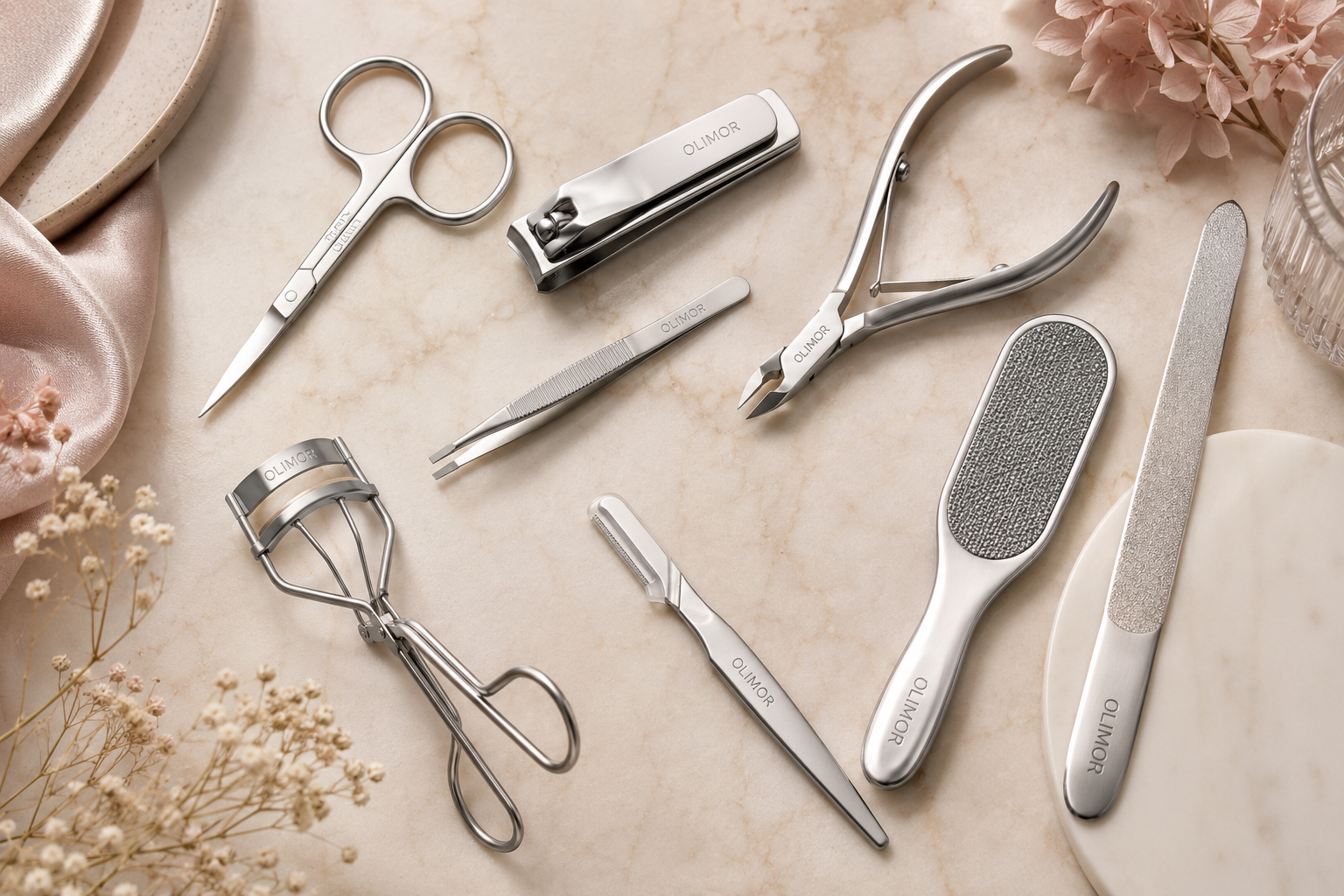
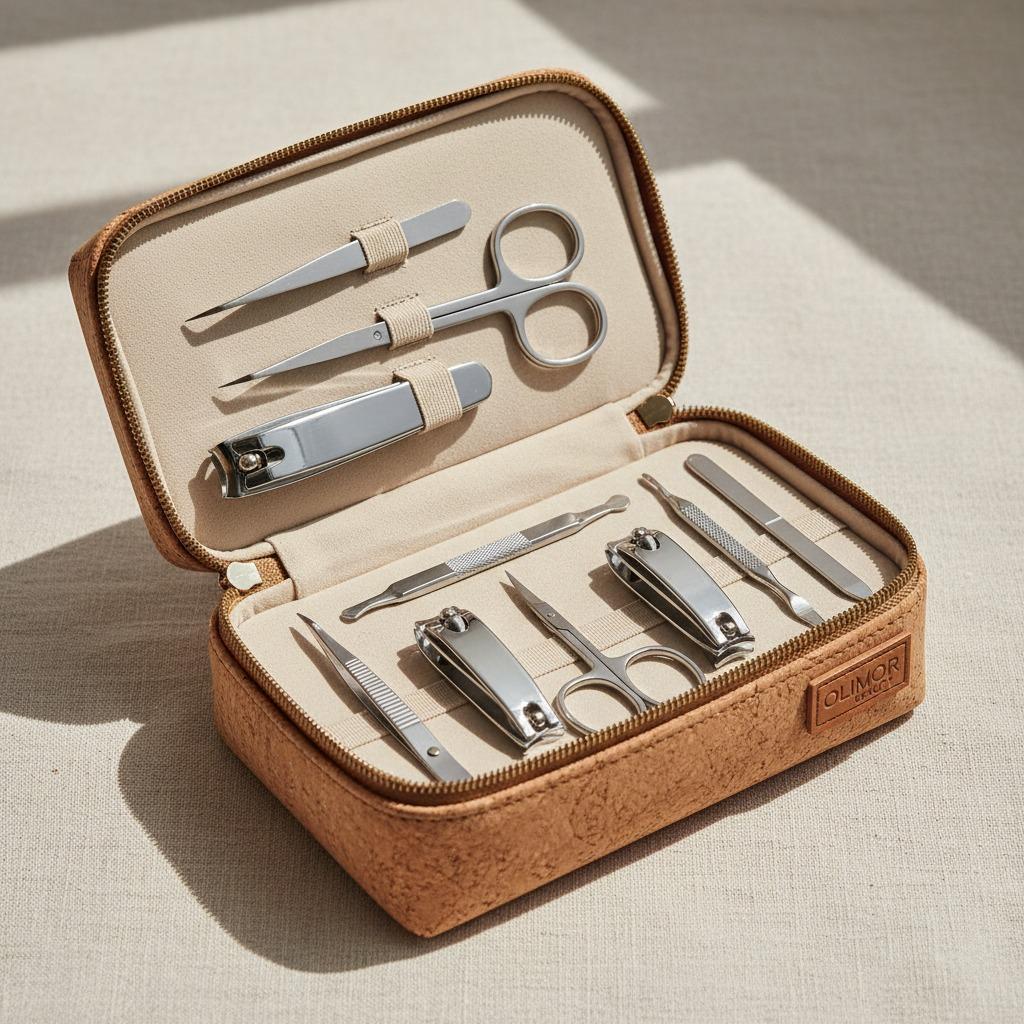
The supplied nail clipper shown here is described as measuring 90 mm in length and 15 mm in width, with a weight of 60 grams. It features a polished metal finish, curved sharp blades and stainless steel construction. These explicit details are useful starting points because they help buyers compare physical size, handling and perceived value against other wholesale nail clippers.
When reviewing a sample, check more than whether it can cut a nail. A well-made clipper should feel stable when pressed, return smoothly after cutting and keep the blades aligned. The edges should be clean, the lever should not wobble excessively, and the polished surface should look consistent across multiple units. If the product is being sold in retail channels, visible finish defects can matter as much as cutting performance.
For wholesale purchasing, inspect samples from the perspective of the final customer. Open and close the clipper repeatedly. Test the curved blades on different nail thicknesses. Look at the tool under bright light for scratches, uneven polishing or burrs. Check whether the 90 mm size feels appropriate for the intended user group. A slightly heavier, polished tool may communicate durability, while a smaller or lighter item may be better for compact kits.
How to Compare B2B Beauty Supplies Partners
Choosing a B2B beauty supplies partner requires more than scanning a catalog. Nail clippers are common products, so the supplier’s ability to maintain consistency becomes especially important. Buyers should look for clear product information, responsive communication, sample support and a realistic approach to customization.
Olimor Beauty works with beauty tool buyers who need grooming products for wholesale and business use. You can browse related beauty tool products to understand the broader sourcing range, or review product collections when planning kits and coordinated grooming assortments.
When comparing suppliers, prepare a simple evaluation sheet. This makes it easier to compare offers fairly instead of relying on scattered email replies.
| Evaluation Area | What to Check | Why It Matters |
|---|---|---|
| Product dimensions | Length, width, weight and sample feel | Confirms whether the clipper suits your sales channel |
| Cutting performance | Blade alignment, sharpness and smooth pressing action | Reduces return risk and customer dissatisfaction |
| Surface finish | Polishing consistency, scratches, burrs and visible marks | Affects perceived value in retail and gift channels |
| Packaging options | Protective packaging, retail display needs and label placement | Helps control damage, presentation and compliance needs |
| Communication | Response detail, sample process and customization clarity | Shows whether the supplier can support wholesale planning |
Consider Nail Clipper ODM When You Need Differentiation
Nail clipper ODM can be useful when you want a product adapted for your brand or market rather than a completely generic item. ODM does not always mean changing the entire tool. In many wholesale projects, the most practical customization decisions involve packaging format, branding placement, surface presentation, kit pairing or display preparation.
For a grooming retailer, ODM may help create a consistent line across nail clippers, tweezers, scissors and other personal care tools. For an e-commerce seller, it may help improve the unboxing experience and make the product easier to photograph. For distributors, it can support regional label requirements or retailer-specific presentation. The key is to define what customization actually improves commercial value.
Before starting an ODM discussion, prepare reference materials such as target packaging size, preferred color direction, logo files, sales channel requirements and examples of competing products. Also decide which details are flexible and which are not. For example, if the 90 mm length and 60 gram weight match your target user, you may focus customization on packaging and branding rather than changing the tool structure.
Sample Testing Checklist for Wholesale Nail Clippers
Samples are essential because product photos cannot prove cutting feel, lever stability or finish consistency. A structured test helps different team members judge samples in the same way. If you are buying for multiple channels, test the sample in each expected use case.
- Visual inspection: Check the polished metal finish for scratches, stains, uneven areas or sharp burrs.
- Blade alignment: Close the clipper slowly and confirm the curved blades meet evenly.
- Cutting test: Test on different nail thicknesses and check whether the cut is clean rather than crushed or jagged.
- Lever action: Press the lever repeatedly to see whether movement is smooth and stable.
- Grip comfort: Hold the 90 mm clipper in different hand sizes and evaluate control during use.
- Packaging fit: Confirm the packaging protects the finish and is suitable for shipping and retail handling.
- Batch expectation: Record the approved sample details so future production can be compared against it.
Keep one approved sample as a reference. For wholesale orders, this reference sample becomes important when checking pre-shipment units or resolving quality questions.
Plan Packaging, Labeling and Retail Presentation Early
Packaging should not be left until the end of the buying process. Nail clippers are compact, but polished surfaces can be scratched during handling if packaging is too loose or abrasive. Retail packaging also affects shelf appeal, barcode placement, product information and how easily the customer understands the item.
If the nail clipper will be sold online, consider how the packaging photographs and whether it protects the product during parcel delivery. If it will be sold in stores, consider hanging holes, display boxes, blister packaging or compact cartons based on retailer needs. For salon or professional supply, simpler packaging may be acceptable if the buyer prioritizes tool quality and efficient replenishment.
Private label buyers should prepare artwork carefully and avoid overcrowding a small package. Basic information, brand identity and any required market labeling should be clear. If you are unsure which packaging approach fits your sales channel, you can contact Olimor with your intended use case and product requirements.
Wholesale Order Steps That Reduce Sourcing Risk
A clear process helps prevent misunderstandings. Start with product selection and sample approval, then move into quotation confirmation, packaging decisions and order documentation. Keep all important details in writing, including product size, finish, packaging style, labeling requirements and inspection criteria.
For buyers comparing multiple B2B beauty supplies options, avoid changing too many variables at once. If you test one nail clipper sample with one packaging option and then request major changes to both, it becomes harder to identify the cause of any issue. A staged process is usually more reliable: approve the tool, approve the packaging, then confirm the complete retail unit.
When you are ready to discuss a wholesale order or ODM project, you can send an inquiry with your target quantity range, market, packaging needs and any customization notes. The more precise the request, the easier it is to receive a useful response and compare options accurately.
Final Buying Advice for Nail Clipper Wholesale
The best wholesale nail clipper choice balances product performance, presentation, consistency and commercial fit. For this 90 mm polished metal nail clipper with curved blades and stainless steel construction, buyers should focus on sample testing, finish inspection, packaging suitability and whether the product matches the intended retail or professional channel.
Wholesale success comes from disciplined selection rather than rushing to the cheapest offer. Define the market, test the sample, document the approved standard and make packaging decisions before placing a larger order. With that approach, nail clippers can become a dependable grooming category in your beauty tool assortment instead of a low-margin product with avoidable quality problems.