Wholesale Grooming Tools: How to Choose a Manufacturer Your Beauty Brand Can Trust
For a beauty brand, salon supplier, distributor, or private label buyer, grooming tools are more than simple accessories. Tweezers that do not grip, clippers that feel rough, or files that wear down too quickly can create customer complaints and weaken trust in the entire product line. When you source high-quality grooming tools wholesale, the buying decision should focus on consistency, usability, and the manufacturing controls behind the finished product.
Olimor Beauty works with buyers who need practical, dependable beauty tools for retail, professional, and promotional channels. The right sourcing partner should help you evaluate materials, finish, ergonomics, packaging, and inspection methods before you commit to a product range. This guide explains what to look for when comparing a custom beauty tools manufacturer and how to make better decisions when sourcing from a beauty tools supplier in China.
What “High-Quality” Means in Grooming Tools
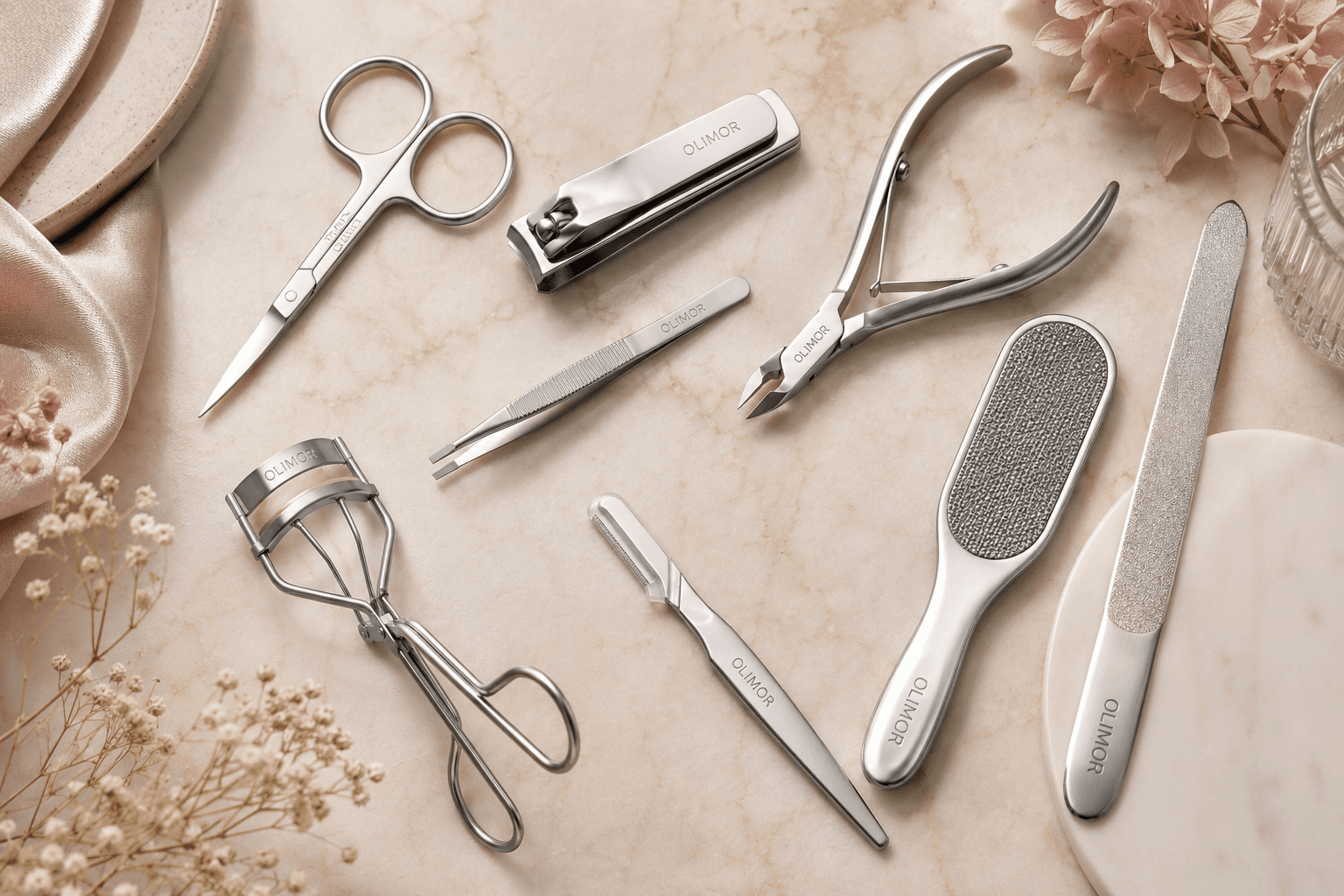
Quality in grooming tools is easy to claim but should be judged through measurable details. For tweezers, buyers often look at tip alignment, grip accuracy, tension, surface smoothness, and how comfortable the tool feels during repeated use. For clippers, the cutting edge, hinge movement, leverage, and handle comfort matter. For files and manicure implements, the finish, durability, and safe user feel become important factors.
Stainless steel is commonly preferred for many grooming tools because it supports durability and a clean appearance. However, the material alone does not guarantee a good product. The manufacturing process, polishing, edge finishing, assembly, and inspection all affect the final result. A well-made tool should feel balanced in the hand, perform its intended task without excessive force, and maintain a professional look after normal handling.
Before choosing a wholesale range, consider whether the tool is designed for everyday retail customers, salon professionals, travel kits, gift sets, or private label collections. Each use case may require a different balance of price, finish, packaging, and perceived value. A professional buyer should compare samples under realistic conditions rather than relying only on catalog photos.
Why Manufacturer Capability Matters More Than a Low Unit Price
Wholesale purchasing often starts with price comparison, but the lowest quote can become expensive if products arrive with inconsistent finishing, weak alignment, or packaging that does not match the sales channel. A capable manufacturer should be able to explain how the product is made, what inspections are performed, and which customization options are realistic for your order.
As a custom beauty tools manufacturer, Olimor Beauty focuses on technical precision and practical beauty tool design. The original goal is not simply to produce a tool that looks acceptable in a photo, but to deliver items that feel dependable when customers use them. For buyers building a long-term brand, that difference is important.
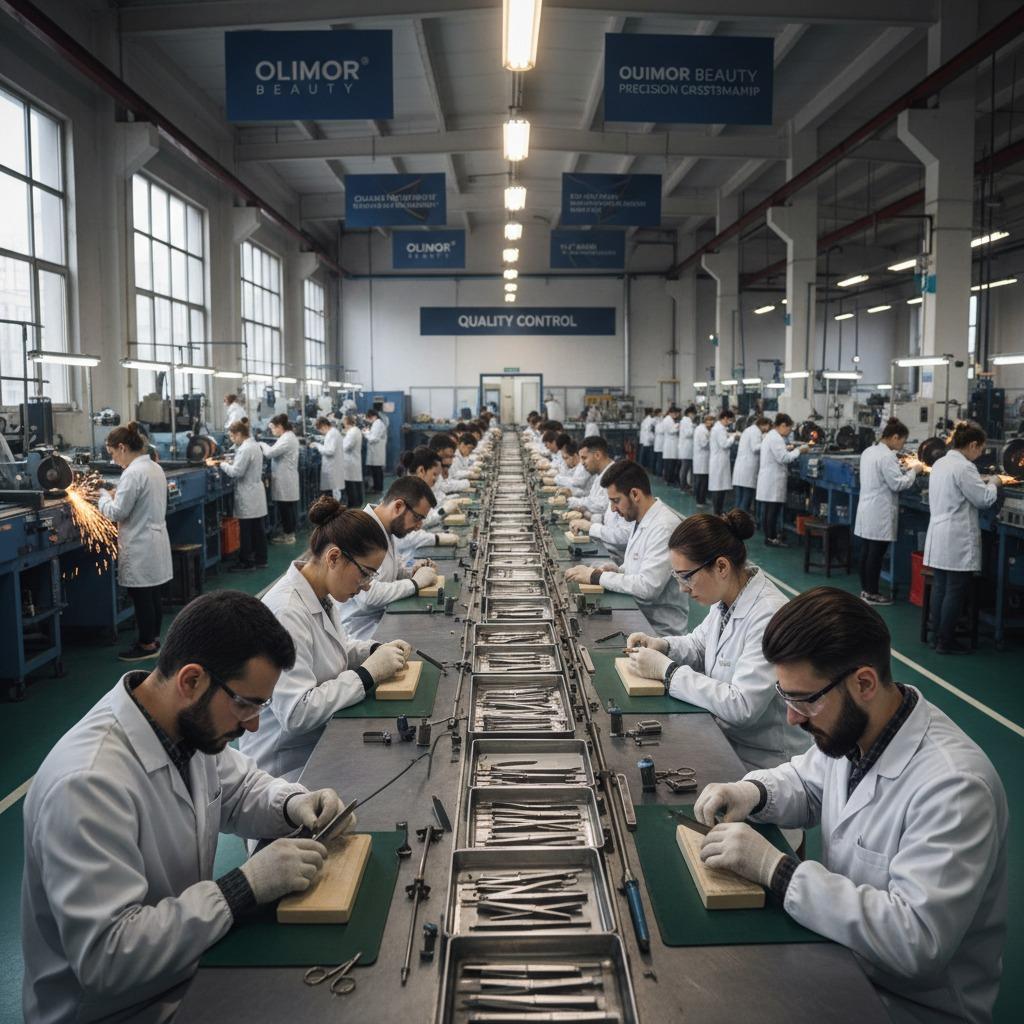
When reviewing a potential supplier, look for signs that production and quality control are connected. For example, raw material checks, in-process inspection, final product review, and packaging approval should not be treated as separate afterthoughts. A supplier that understands each step can help reduce preventable defects and support more consistent repeat orders.
Buyers can browse Olimor’s wider beauty tool products to compare tool types and consider how grooming items may fit into a broader product plan. If you are building seasonal kits, retail displays, or private label assortments, reviewing related product collections can also help you identify complementary items without creating an overly complicated catalog.
Key Selection Criteria for Wholesale Grooming Tools
A structured checklist helps teams compare samples and quotes more objectively. Instead of judging a tool only by appearance, use the same criteria across suppliers so purchasing, quality, and marketing teams can agree on what matters most.
- Material suitability: Confirm whether the material is appropriate for the tool type, expected durability, and customer positioning.
- Functional performance: Test whether tweezers grip cleanly, clippers cut smoothly, and files or manicure tools work without rough edges or awkward handling.
- Ergonomic comfort: Check grip shape, pressure points, tool weight, and ease of control during repeated use.
- Surface finish: Look for smooth polishing, consistent color or coating if applicable, and no sharp unwanted edges.
- Consistency across samples: Compare several pieces, not just one approved sample, to identify variation in alignment, finish, or assembly.
- Packaging compatibility: Review whether packaging protects the tool, supports your retail display needs, and communicates product value clearly.
- Customization practicality: Consider logo placement, packaging artwork, finish choices, and whether customization affects lead time or inspection requirements.
- Quality control process: Understand what is checked before shipment and how defects are identified and separated.
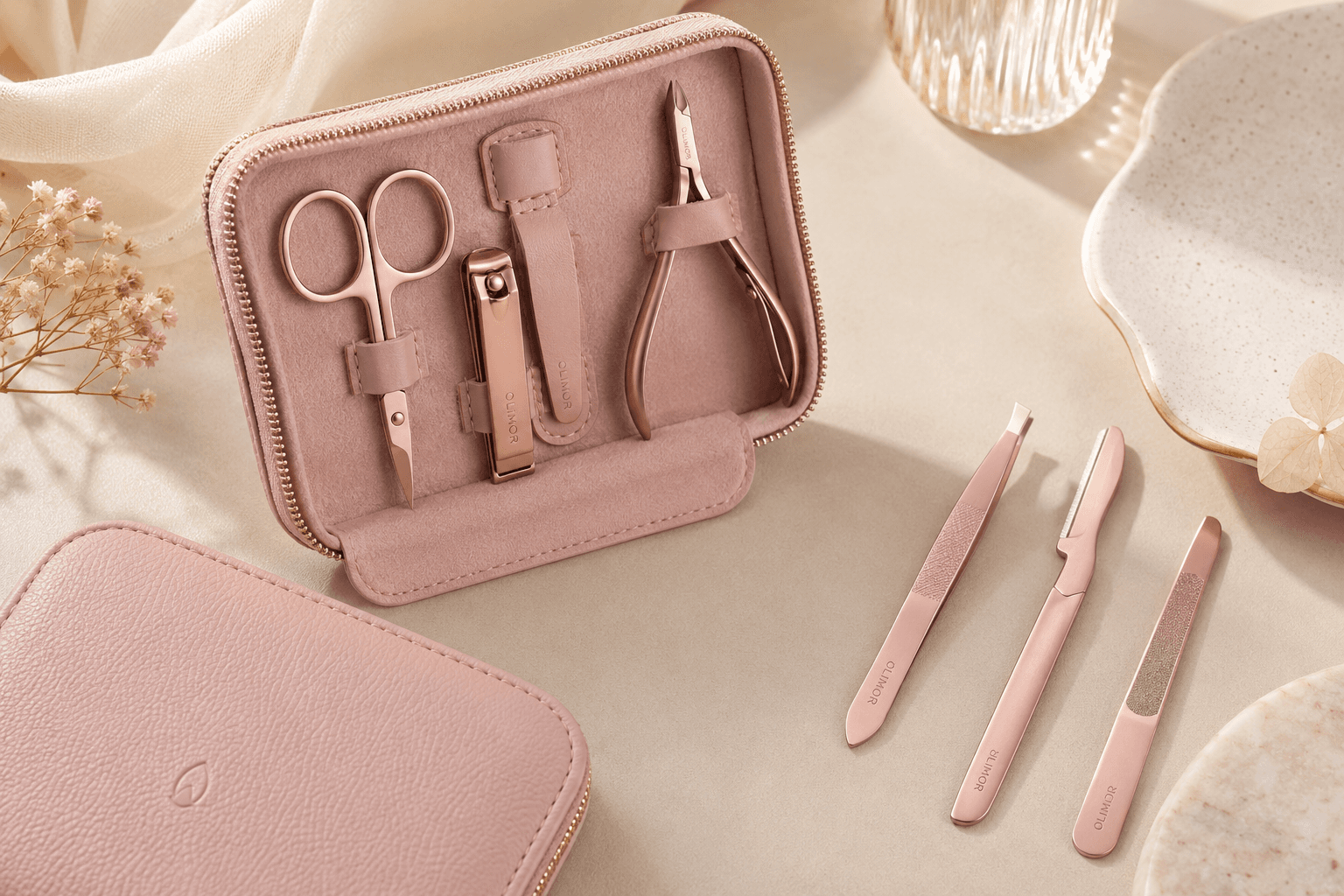
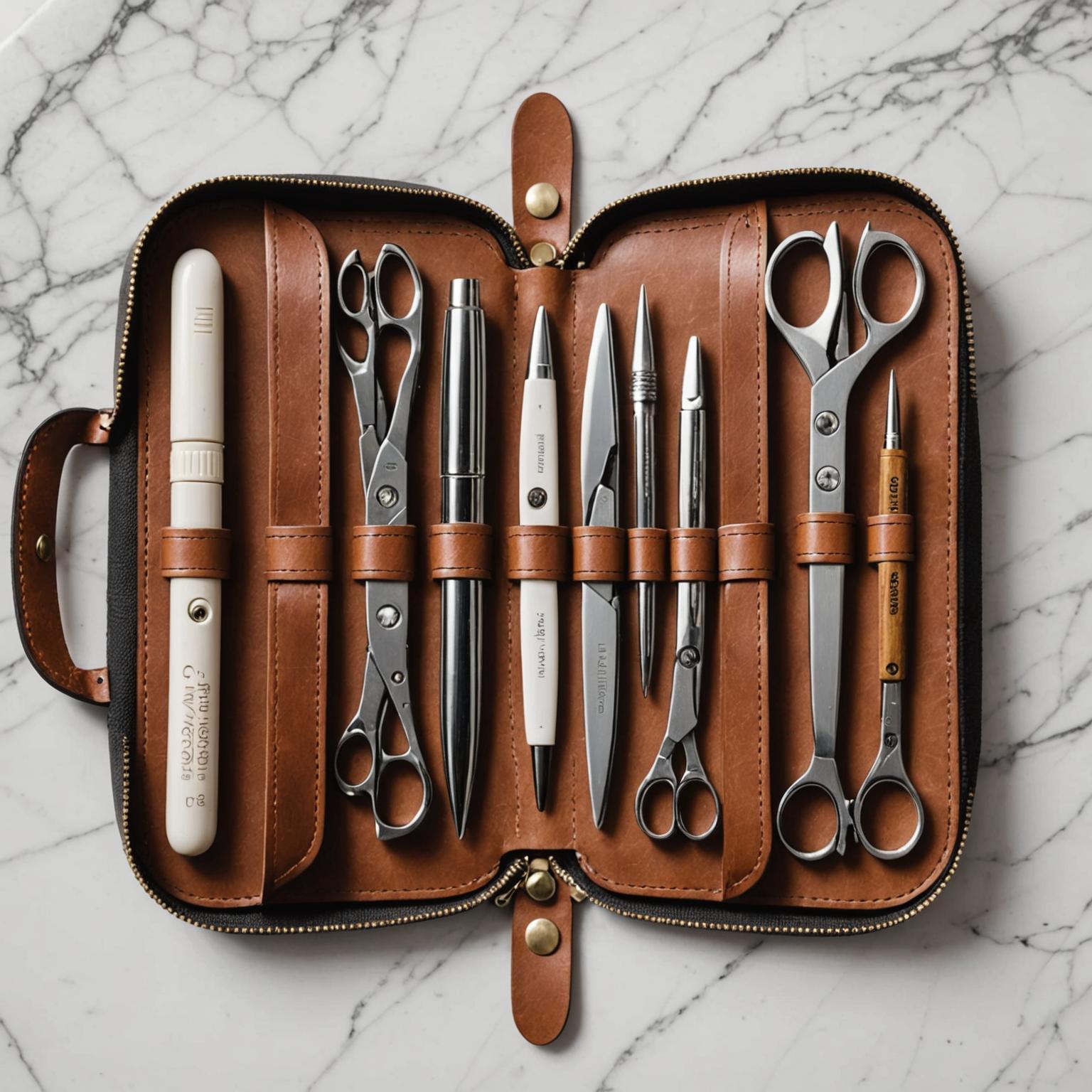
This type of review is especially useful for brands purchasing mixed grooming sets. A kit may include several different tools, and one weak item can affect the customer’s view of the whole set. Consistency across the range is therefore just as important as the quality of a single hero product.
Sourcing from a Beauty Tools Supplier in China
Many buyers source grooming tools from China because the market offers manufacturing experience, scalable production options, and established supply chains for beauty accessories. The advantage is not only production volume; it is also the ability to coordinate tool manufacturing, finishing, packaging, and customization within a sourcing environment familiar with international beauty categories.
However, sourcing successfully requires clear product expectations. A buyer should prepare reference samples, target use cases, packaging requirements, and any brand standards before production discussions begin. The more clearly you define the intended customer and sales channel, the easier it is to judge whether a proposed tool is suitable.
For example, a professional salon supplier may prioritize durability, grip, and easy cleaning. A retail beauty brand may also need strong shelf presentation and clear consumer instructions. A travel grooming kit may require compact sizing, protective packaging, and a coordinated appearance across multiple items. None of these needs are identical, so the sourcing plan should reflect the actual market application.
Olimor Beauty combines China-based manufacturing advantages with internal quality checks through the production cycle. These checks may include reviewing raw materials, monitoring production details, inspecting finished goods, and approving packaging before shipment. For buyers, this kind of structured oversight supports more dependable purchasing decisions.
Customization, Packaging, and Brand Presentation
Wholesale grooming tools often serve as brand touchpoints. A customer may use a tweezer, clipper, or nail tool for months, so the way it looks and feels can reinforce whether the brand is perceived as careful, professional, or disposable. Customization should therefore be planned around the product’s real function, not only decoration.
Logo placement should be visible without interfering with grip or cleaning. Packaging should protect functional edges and prevent tools from rubbing against each other during transport. If the item is sold online, packaging may need to survive handling before it reaches the end customer. If it is sold in stores, the outer presentation should make the tool type and benefit easy to understand quickly.
For private label buyers, it is helpful to define a brand system before choosing products. This may include consistent colors, packaging structure, product naming rules, instruction style, and photo requirements. A clear system makes future orders easier and helps different grooming tools feel like one coherent range.
Ethical and Vegan Manicure Tool Considerations
Consumer expectations continue to change, and some buyers are interested in vegan manicure tools wholesale for ethical or cruelty-free product positioning. In grooming tools, “vegan” considerations often relate to avoiding animal-derived components in accessories, packaging details, or bundled items. Because beauty claims can vary by market, brands should treat ethical positioning as a specification that needs to be reviewed carefully.
When developing an ethical grooming line, create a written checklist covering materials, packaging inserts, adhesives if relevant, and any included cases or pouches. The goal is to prevent conflict between the product claim and the actual components. This is particularly important when a kit includes multiple items sourced or assembled together.
A responsible supplier should help you identify the parts that require confirmation and avoid unsupported claims. Buyers can then align product copy, packaging language, and retail descriptions with the actual product configuration.
How to Compare Samples Before Placing a Wholesale Order
Sample evaluation should be more than a quick visual approval. A practical sample review can reveal whether the tool is suitable for your channel and whether the supplier understands your expectations. Use a simple scoring process so decisions are easier to explain internally.
| Evaluation Area | What to Check | Why It Matters |
|---|---|---|
| Function | Grip, cutting action, filing performance, or tool-specific use | Confirms the product works as customers expect |
| Comfort | Hand feel, pressure, balance, and control | Improves repeat use and reduces negative feedback |
| Finish | Polishing, edges, coating consistency, and cleanliness | Affects perceived value and user safety |
| Consistency | Variation across multiple sample pieces | Helps predict bulk order reliability |
| Packaging | Protection, labeling space, and retail appearance | Supports shipping, display, and brand communication |
During testing, involve people who represent the real end user when possible. A procurement manager may notice surface issues, while a salon professional may notice tension, control, or cutting feel. Combining both perspectives creates a stronger product decision.
Building a Long-Term Wholesale Partnership
The best supplier relationship is not based on a single order. Grooming tool ranges often need updates, packaging adjustments, new kit combinations, or seasonal planning. A long-term manufacturer relationship can make these changes more efficient because the supplier already understands your quality expectations and brand direction.
Before moving forward, prepare a clear product brief. Include the tool types you need, target market, packaging style, finish preferences, inspection priorities, and any ethical or vegan requirements. If you already have approved samples or competitor references, use them to clarify expectations while avoiding direct copying.
If you are planning a new grooming line or comparing wholesale options, you can contact Olimor to discuss product direction or send an inquiry with your sourcing requirements. Clear communication at the beginning helps reduce misunderstandings later and supports a smoother path from sample review to finished shipment.
High-quality grooming tools wholesale sourcing is ultimately about protecting your customer experience. By focusing on function, consistency, material suitability, packaging, and quality control, beauty buyers can build a product range that supports trust over time. Olimor Beauty provides manufacturing knowledge and practical sourcing support for brands that want grooming tools designed for real use, not just attractive product listings.
Tag: