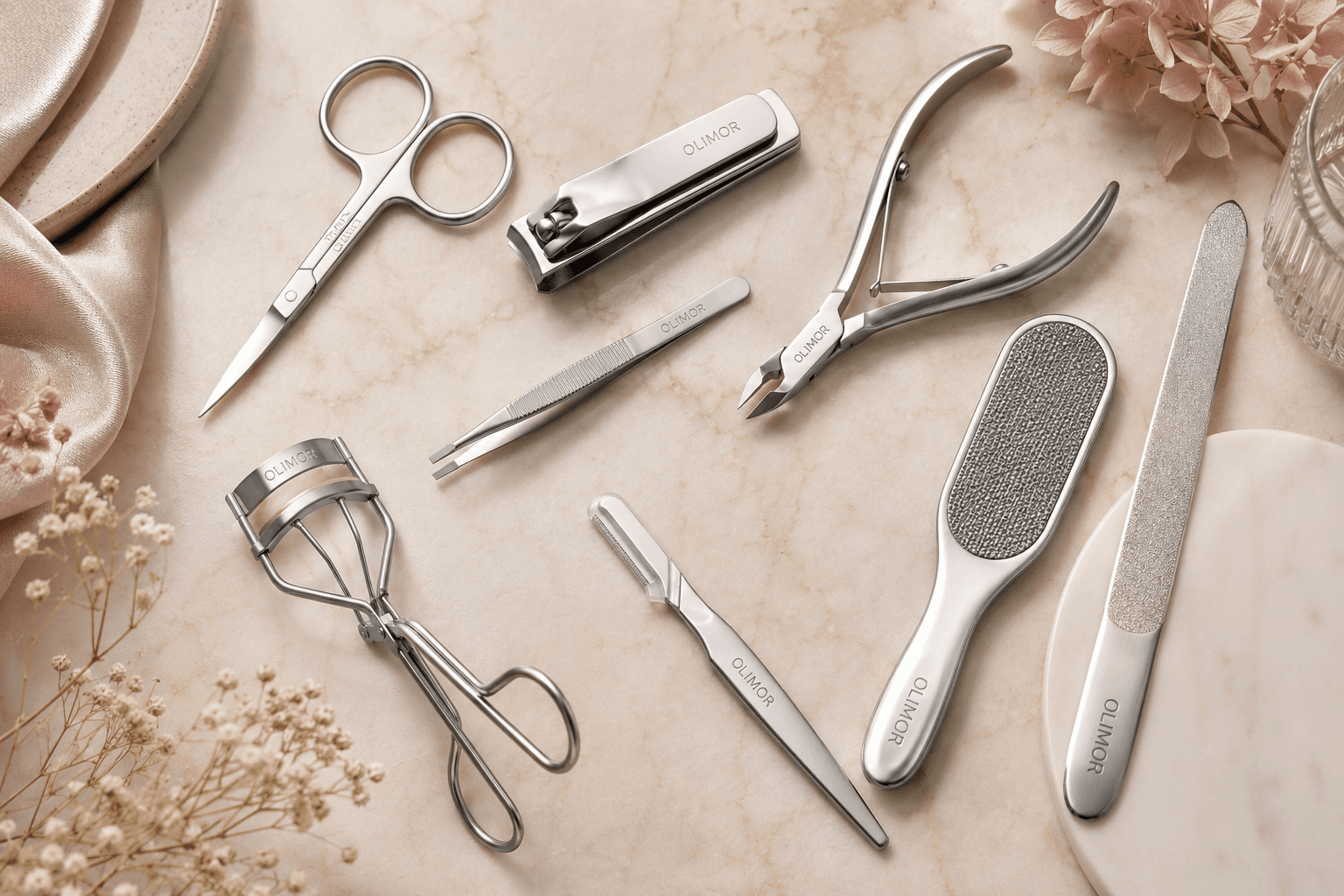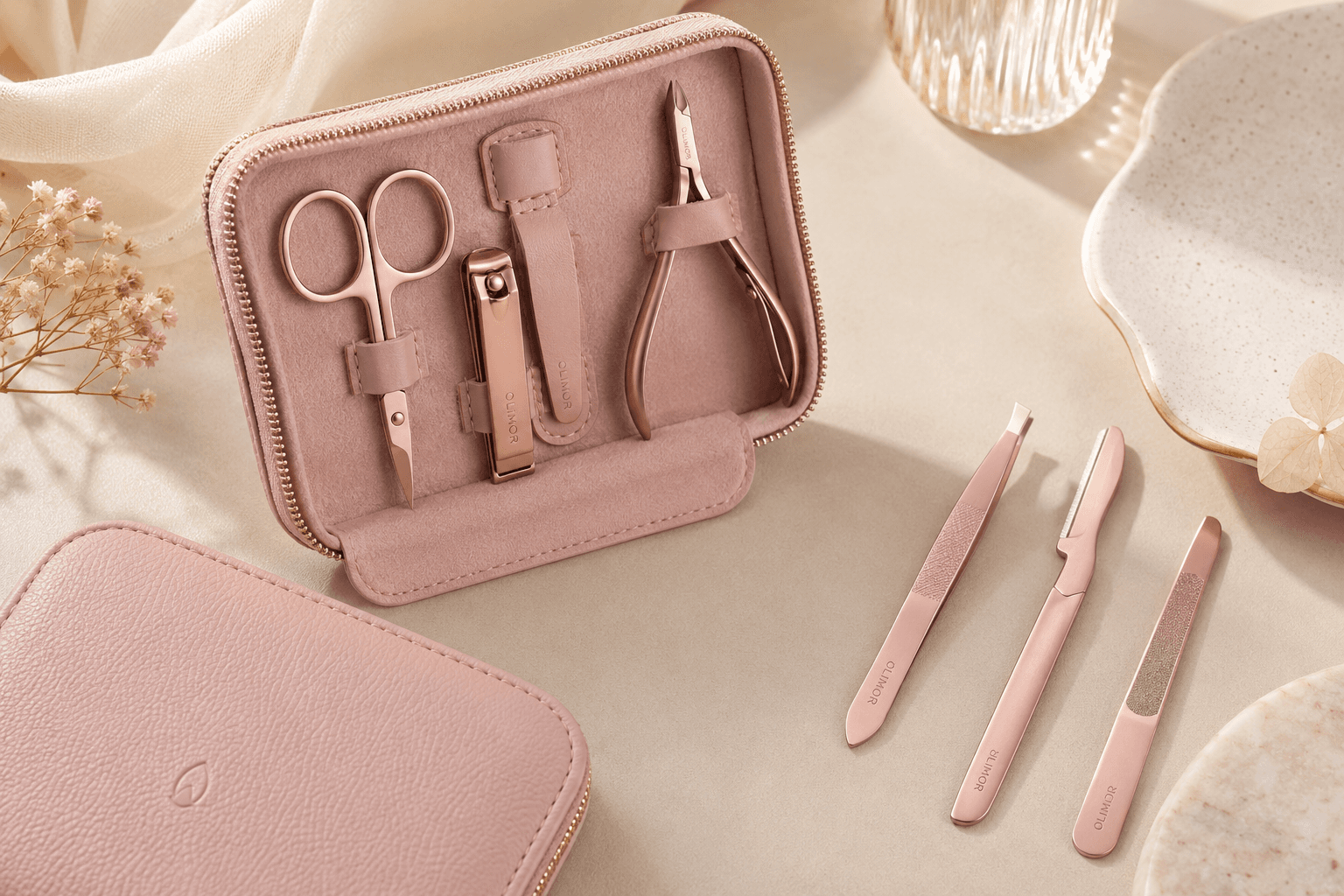
Wholesale Grooming Tools for Spa, Salon and Sustainable Personal Care Programs
Wholesale grooming tools are purchased for many different reasons: to stock a spa treatment room, support a salon retail shelf, build a personal care kit, or prepare promotional beauty sets. Whatever the use case, the buying decision should go beyond appearance. A tool that looks polished in a catalog still needs to feel balanced in the hand, hold up to repeated cleaning, arrive consistently finished, and suit the hygiene expectations of professional and personal care environments.
Olimor Beauty supplies grooming tools wholesale for spa and personal care buyers who need practical, presentable tools for daily use. The focus is on dependable construction, careful finishing and internal quality control rather than short-lived novelty. Stainless steel grooming tools are especially relevant for this category because the material is durable, clean-looking and suited to repeated handling. For buyers comparing options, the most useful approach is to define the tool’s job first, then evaluate material, comfort, finish, packaging and long-term replacement needs.
What Wholesale Grooming Tools Need to Do in Real Use
Grooming tools are small items, but they carry a large responsibility in the customer experience. In a spa or salon, a client notices whether a tool feels smooth, clean and controlled. In retail, shoppers judge a grooming set by the apparent quality of the metal, the neatness of the finish and whether the tool feels comfortable enough to use at home. In personal care kits, the priority is often reliability: the buyer wants tools that perform predictably over time.
Before selecting a wholesale assortment, identify the environment where the tools will be used. A spa may need professional-looking tools that tolerate frequent cleaning and handling. A salon may want products that are attractive enough for display while still being functional. A distributor may prioritize consistency across cartons so the same item can be sold in multiple channels. A personal care brand may focus on how the tool fits into a kit, pouch or gift set.
For most buyers, the core requirements are similar: smooth edges, secure grip, balanced weight, clean presentation and stable quality across the order. These details may seem basic, but they are what separate usable grooming tools from items that create returns, complaints or unnecessary replacements.
Why Stainless Steel Is a Practical Choice for Sustainable Beauty Tools
Sustainability in grooming tools should be discussed in practical terms. A durable tool that can be used for a long period helps reduce the need for frequent replacement. Stainless steel is often chosen for grooming tools because it offers strength, a refined appearance and a clean surface that fits beauty and personal care settings. When a tool keeps its shape, remains comfortable to handle and continues to look professional after regular use, it supports a more responsible buying strategy.
This does not mean every stainless steel tool is equal. Buyers should compare the finishing, edge treatment, surface consistency and overall feel. A sleek tool with poor edge finishing can be uncomfortable. A tool with a nice shine but weak alignment may disappoint during use. The sustainability benefit comes from the complete product: material, workmanship, usability and quality consistency all working together.
For spa and personal care programs, durable stainless steel tools can also simplify assortment planning. Instead of constantly replacing low-quality items, buyers can focus on maintaining a stable product range and improving presentation. This is useful for businesses that want grooming tools to feel professional without relying on excessive packaging or trend-driven redesigns.
Selection Criteria for Spa and Personal Care Buyers
A structured evaluation process helps prevent purchasing decisions based only on price or product photos. When reviewing wholesale grooming tools, use the tool’s actual application as the starting point. The right item should be easy to hold, easy to clean, visually consistent and appropriate for the brand or treatment environment.
- Material suitability: Stainless steel is valued for durability and a clean, professional look. Check whether the selected material and finish match the intended use.
- Edge and surface finish: Grooming tools should feel smooth where they touch the skin or hand. Rough edges, uneven polishing or visible defects can affect user confidence.
- Ergonomic handling: Tools used repeatedly in spas and salons should not feel awkward, slippery or tiring. Balance and grip matter as much as appearance.
- Consistency across units: Wholesale buyers need repeatable quality, not just one good sample. Look for uniform shape, finish and function across multiple pieces.
- Cleaning compatibility: Tools should be suitable for the hygiene routines used in the buyer’s own operating environment.
- Packaging fit: For retail or kit assembly, confirm that the tool size, appearance and packing format support the final presentation.
- Replacement planning: Durable tools can reduce replacement frequency, but buyers should still plan reorder cycles and assortment continuity.
These criteria are especially important for buyers building a long-term product line. A low unit cost may not be helpful if the tool feels uncomfortable or creates inconsistent customer feedback. A slightly more considered selection process can protect both customer satisfaction and operational efficiency.
Common Wholesale Use Cases and What to Check
Different buyers look for grooming tools wholesale with different priorities. A spa operator and a beauty distributor may buy similar tools, but they evaluate them through different business needs. The table below outlines typical use cases and the checks that matter most.
| Use case | Main buying priority | Practical checks |
|---|---|---|
| Spa treatment rooms | Professional feel and repeated handling | Smooth finish, comfortable grip, clean appearance, reliable consistency |
| Salon retail shelves | Customer appeal and daily usability | Polished look, clear function, neat packaging, easy explanation to customers |
| Personal care kits | Fit within a set and dependable function | Tool size, weight, finish matching, storage compatibility |
| Distributor inventory | Stable assortment and fewer complaints | Batch consistency, practical packaging, broad market suitability |
| Sustainable beauty programs | Longer usable life and reduced replacement | Durable material, sturdy construction, timeless design, responsible assortment planning |
This comparison also helps buyers communicate internally. Procurement teams may focus on cost, while marketing teams may focus on presentation. Operations teams may care most about cleaning, storage and repeat ordering. A simple checklist aligns these priorities before a wholesale order is finalized.
Quality Control Questions That Matter Before Ordering
Quality control for grooming tools should be practical and observable. Olimor Beauty emphasizes precise production steps and internal quality checks, which are important because small metal tools reveal defects quickly. Uneven surfaces, inconsistent shapes or uncomfortable edges can be noticed immediately by professional users and retail customers.
When evaluating a potential order, buyers can prepare a review process around the following questions:
- Does the tool perform its intended function cleanly? Test the item as it would be used in the target setting.
- Are touch points smooth and comfortable? Check handles, edges and contact areas by hand, not only by sight.
- Is the finish consistent under normal lighting? Look for scratches, dull areas, uneven polishing or visible marks.
- Do multiple pieces match? Compare samples side by side for shape, weight impression and surface quality.
- Does the packaging protect the tool? Consider transport, storage and retail handling, not only the first impression.
- Will the tool fit the buyer’s cleaning and storage routine? Confirm that the design supports real operating conditions.
These questions help buyers avoid vague quality discussions. Instead of asking whether a tool is “good,” the team can determine whether it is suitable for a specific spa, salon, retail or personal care program.
Building a More Sustainable Grooming Tool Assortment
A sustainable grooming tool assortment does not have to be complicated. It starts with avoiding disposable thinking. Choose tools that have a clear purpose, can be used comfortably, and are durable enough to remain in service. Stainless steel tools support this approach because they are designed for longevity and can reduce the need for frequent replacement when properly selected and maintained.
Assortment discipline is also part of sustainability. Carrying too many overlapping items can create slow-moving inventory and unnecessary waste. Instead, focus on tools that serve clear grooming needs, match the buyer’s customer profile and can be reordered with confidence. A compact, well-chosen range may perform better than a broad range of similar products with uncertain demand.
Packaging decisions also affect the final footprint and customer perception. Buyers should review whether packaging is protective, appropriate for the sales channel and not excessive for the tool’s value. For spa back-of-house use, simple protective packing may be more relevant than display-heavy presentation. For retail shelves, packaging needs to communicate function and quality without making the product harder to inspect or store.
Care, Storage and Handling After Purchase
Even durable grooming tools need proper care. Good handling helps preserve the clean appearance and usability that buyers expect from stainless steel beauty tools. In professional environments, teams should follow their own hygiene protocols and store tools in a clean, dry location. Tools should not be tossed loosely into drawers where surfaces may scratch or edges may be damaged.
For retail customers, simple care guidance can improve satisfaction. Clear instructions about cleaning, drying and storage help users understand that a grooming tool is a long-term personal care item rather than a disposable accessory. This is particularly helpful for gift sets and take-home spa products, where the customer may not already know how to care for stainless steel grooming tools.
Maintenance also supports brand reputation. When a tool stays presentable and comfortable, the buyer’s customer is more likely to view the overall kit, treatment or retail selection as reliable. That is the practical connection between product quality, care habits and long-term value.
How to Source Wholesale Grooming Tools from Olimor Beauty
When sourcing grooming tools wholesale, start with a clear brief: intended use, target customer, preferred material direction, packaging expectations and any handling requirements. This makes comparison more efficient and reduces the risk of choosing a tool that looks suitable but does not match the real application. You can browse Olimor’s wider beauty tool products to understand available product directions and then narrow the selection based on your channel.
Buyers developing a coordinated range can also review product collections to think through assortment structure. For example, a spa retail program may need a different mix from a distributor catalog or personal care kit. If you already have a defined project, you can send an inquiry with your target use, quantity expectations, packaging needs and timing so the discussion can focus on suitable grooming tool options.
For questions about product selection, sourcing details or wholesale planning, contact Olimor and prepare a concise checklist of what the tools must achieve. The best wholesale grooming tool decisions are made when durability, hygiene, ergonomics, presentation and sustainability are considered together. With a practical evaluation process, spa, salon and personal care buyers can build grooming tool assortments that look professional, work reliably and support longer-term value.
Tag: