How to Evaluate Grooming Kits for Travel Retail
Buying grooming kits for travel retail is not simply a matter of choosing a case and filling it with small tools. Retailers, hotel suppliers, travel-accessory brands, and private-label product teams must decide which functions belong in the set, how the tools should be organized, and what can be verified before production. The right decision balances portability, perceived value, tool usefulness, presentation, and supplier control without making claims that the finished kit cannot support.
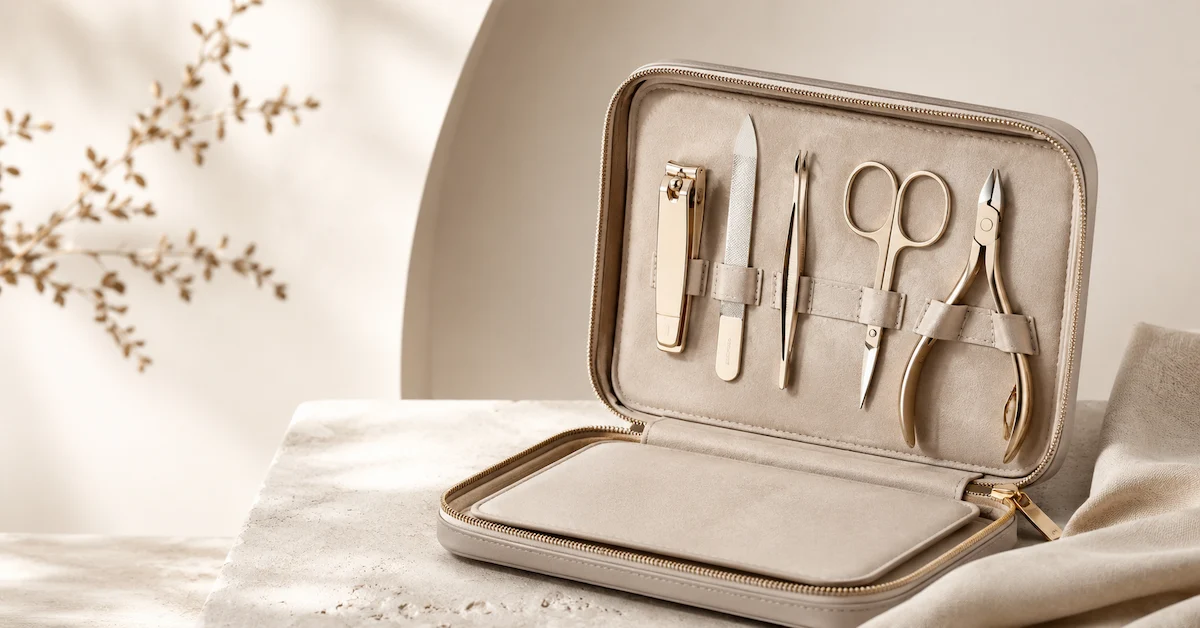
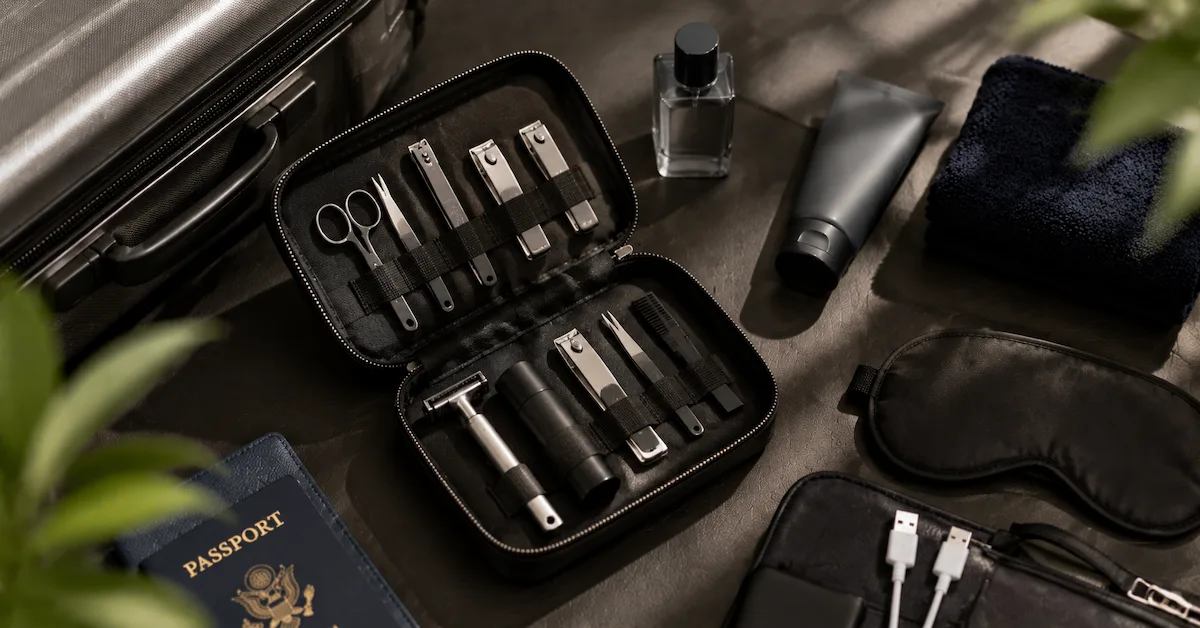
A compact zippered grooming and manicure/pedicure kit can serve several use cases: personal travel, hotel stays, business trips, camping, carry-on luggage, vanity storage, and gift retail. The product shown in the preparation information appears to be designed around this broad use case. It combines several metallic grooming tools with a folding storage case, internal elastic retaining straps, and a perimeter zipper. However, the visible design is only the starting point. A buyer still needs to confirm the tool list, materials, dimensions, packaging, and compliance requirements before approving a production specification.
What the buyer is really deciding
The central question is not “How many tools can fit in the case?” It is “What grooming problem should this set solve for the intended customer?” A basic travel set may need to cover nail trimming and filing, eyebrow or facial-hair tidying, hair combing, and shaving. A more specialized manicure set may focus on nail and cuticle care, with less emphasis on shaving or hair grooming.
That distinction affects nearly every commercial decision. A business traveler may prefer a restrained kit that fits easily into luggage and contains only frequently used tools. A gift buyer may respond to a fuller assortment and a more substantial-looking case. A hotel amenity supplier may prioritize simple operation, organized presentation, and reliable replacement availability. The same case geometry can support different markets, but the contents and packaging should not be treated as interchangeable.
Quick reference: visible product characteristics
| Area | What is indicated | What must be confirmed |
|---|---|---|
| Format | Compact rectangular case with rounded corners and a zipper | Finished dimensions, weight, closure performance, and packing volume |
| Organization | Two folding sections with internal elastic retaining straps | Strap tension, tool retention, stitching quality, and ease of removal |
| Tools | Scissors, several nail clippers, a file or pointed grooming tool, tweezers, comb, manual razor, and one unclear cylindrical item | Exact tool count, function, dimensions, and final assortment |
| Appearance | Black or dark case with metallic-looking tools and some black accessories | Color standards, surface finish, branding, and packaging presentation |
| Materials | Metal tools and a textile- or synthetic-leather-like case are visible | Steel grade, coatings, case substrate, lining, padding, and corrosion performance |
This distinction between visible features and confirmed specifications is important. Stainless steel may be a reasonable possibility for the tools, but it has not been verified in the supplied information. Likewise, the case may use textile or synthetic leather, but its exact construction is unknown. A sourcing document should separate observations from agreed technical requirements.
Breaking down the kit by function
Nail and hand care
Nail clippers, scissors, and a nail file form the most recognizable part of the set. Multiple clipper styles can increase apparent versatility, but extra pieces are useful only when their purposes are clear. Buyers should ask whether the clippers are intended for fingernails, toenails, or both, and whether the sizes are practical for the target customer.
Scissors need particular attention. Their cutting action, tip shape, handle comfort, and storage position influence both usability and perceived quality. A sharp tool that shifts inside the case can also create a safety and presentation problem. The retaining straps should hold each item firmly without making removal awkward.
Facial hair, shaving, and hair tidying
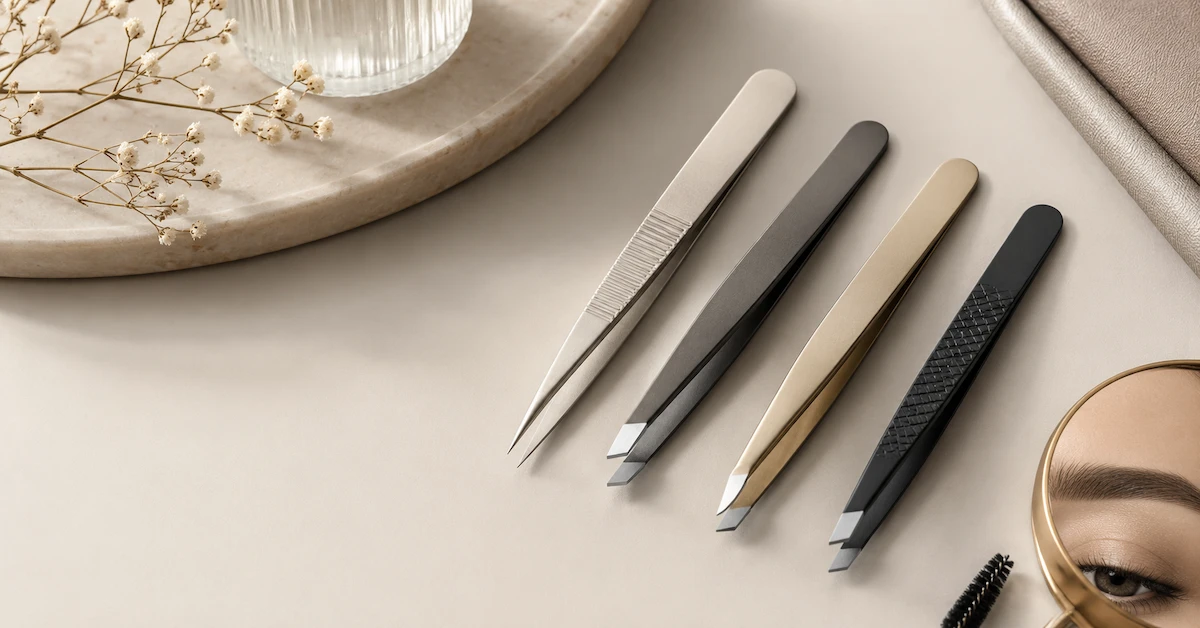
The visible assortment includes tweezers, a small comb, and a manual razor, suggesting that the product is intended to cover more than nail care. Tweezers can support eyebrow or splinter-related grooming, while the comb provides a simple hair-tidying function. The cylindrical black accessory is not identifiable from the available information, so it should not be marketed with a specific function until the supplier confirms it.
The manual razor also deserves a separate review. Retail teams should confirm whether it is a complete usable item, a replacement-style component, or an accessory intended for occasional emergency use. Blade protection, packaging, and the intended sales channel may affect the final design. Do not assume that a razor included in a general grooming kit automatically meets every transport or retail requirement; those obligations depend on the destination market and shipping method.
Case construction and user experience
The case appears to use a compact rectangular form with rounded corners, two hinged or folding sections, a perimeter zipper, and elastic tool holders. This layout has a practical advantage: it gives the user a defined place for each item and reduces loose-tool movement in luggage. It also creates a more organized retail presentation than a pouch with an undivided interior.
Still, organization is only useful when the case works in real conditions. Check whether the zipper opens smoothly, whether the two sections stay aligned, and whether the elastic retains both small and larger tools. Inspect the areas where straps meet the lining, since these attachment points may receive repeated pulling. A dark exterior can look understated and travel-friendly, but color consistency, lint attraction, surface scuffing, and cleaning behavior should be considered during sampling.
Manufacturing questions to put into the specification
Individual tools may involve stamping, forming, grinding, sharpening, polishing, or assembly. The case may involve textile or synthetic-leather cutting, stitching, padding, lining, and zipper installation. These processes are reasonable manufacturing assumptions for this type of product, but the exact process route should be confirmed with the supplier rather than copied into a purchase order as fact.
A useful specification should cover:
- Exact tool names, quantities, and intended functions.
- Tool dimensions and acceptable fit within the elastic straps.
- Metal material grade, surface finish, and any coating requirement.
- Edge, point, and blade protection for sharp components.
- Case dimensions, construction layers, lining, padding, and zipper type.
- Color references for the case, accessories, and any branded elements.
- Logo application, if required, including location and artwork format.
- Unit packaging, retail carton requirements, inserts, and labeling.
- Inspection criteria for loose stitching, surface defects, incomplete finishing, and missing components.
It is also wise to define what is not included. If waterproofing, sterilization, corrosion resistance, airline suitability, or a particular safety certification is commercially important, it must be requested and documented specifically. None of those characteristics should be inferred from a black case or polished-looking metal.
How to compare compact grooming sets
When comparing compact grooming sets, avoid using tool count as the primary ranking method. A larger assortment may occupy more space, complicate organization, and increase the number of components that require inspection. Instead, compare the kit against the intended customer journey.
For travel retail, useful comparison points include footprint in luggage, ease of opening in a hotel bathroom, tool visibility, retention inside the case, and whether the contents cover common minor grooming needs. For a corporate gift, exterior branding and presentation may carry more weight. For a hotel or amenity program, the buyer may favor a simpler assortment that is easy to replenish and explain.
Ask for a physical sample before final approval. Check every tool, not just the case. Open and close the zipper repeatedly, remove each item from its strap, and inspect the interior after the case has been folded and handled. A sample review often reveals practical issues that photographs hide, especially around small tool fit and the balance between a compact form and usable handles.
Common sourcing mistakes
Assuming the image shows the complete specification
The supplied product view does not verify the full tool count or the exact function of every accessory. Images are useful for discussing layout and visual direction, but they are not a substitute for a component list.
Specifying “metal” without a material requirement
Metallic appearance does not identify the underlying grade or performance. If corrosion resistance, finish consistency, or long-term durability matters, state the required material and inspection method clearly.
Ignoring the case as a manufactured product
The case affects perceived value and protects the tools. Stitching, zipper installation, lining, padding, and elastic retention should receive the same attention as the metal components.
Adding tools without checking customer relevance
Every extra item adds cost, packing complexity, and inspection work. The unidentified cylindrical item is a good example: its inclusion should be based on a confirmed function, not on visual assumption.
Practical advice for retail buyers
Start with a target customer profile and a short functional brief. Then ask the supplier to provide a proposed bill of materials, case measurements, sample photographs from multiple angles, and a physical pre-production sample where practical. Request clarification on material grades, finishing, sharpness, packaging, branding options, minimum order quantity, and destination-market requirements rather than leaving those subjects implied.
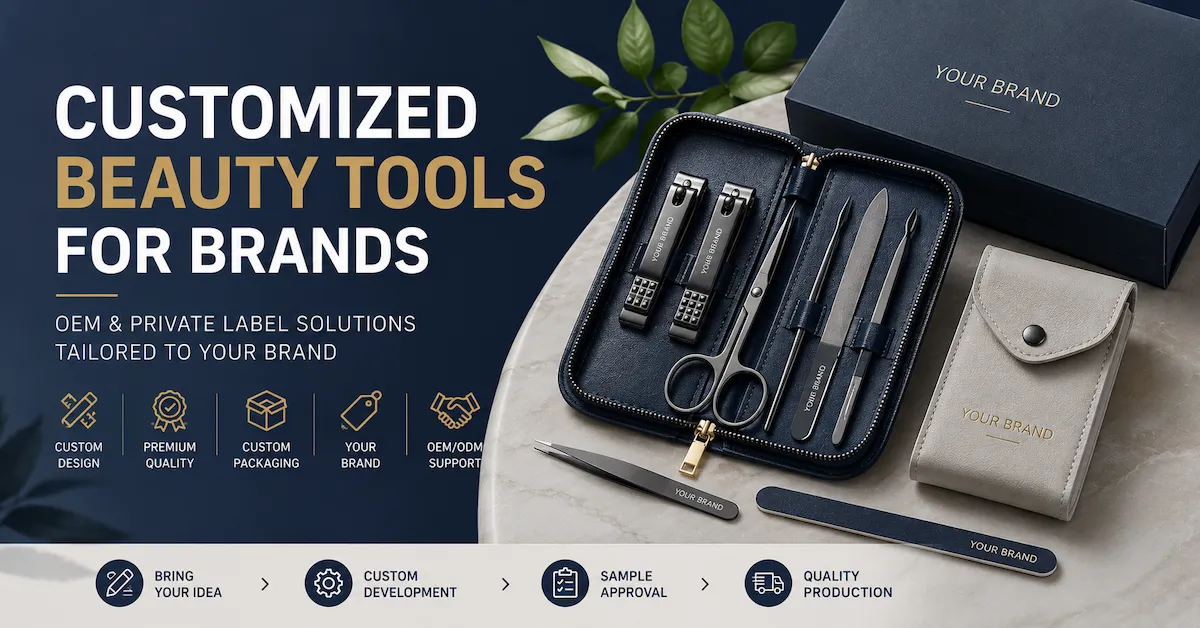
For brands developing portable grooming accessories, a restrained black case with organized internal straps offers a neutral foundation for private-label development. The final commercial result will depend less on the general concept than on execution: whether the tools are useful, whether they stay secure, whether the case survives normal handling, and whether the claims on the package can be supported.
Frequently asked questions
What tools appear to be included?
The visible assortment appears to include scissors, several nail clippers, a nail file or similar pointed grooming tool, tweezers, a small comb, a manual razor, and a cylindrical black item whose function is unclear. The complete tool count and contents must be confirmed.
Is the case waterproof?
Waterproofing is not supplied as a verified feature. The case appears to have a textile- or synthetic-leather-like exterior with a zipper, but its water resistance and construction should be tested or specified separately.
Are the tools stainless steel?
Stainless steel is possible, but it has not been verified. Buyers should request the material grade, finish, and any corrosion-resistance information before using such a claim in product literature.
Who might buy this type of product?
Potential buyers include retailers, travel-accessory brands, hotel amenity suppliers, corporate gift distributors, and private-label personal-care companies seeking an organized grooming set.
Next step for product teams
Turn the visual concept into a controlled sourcing brief: define the customer, lock the tool list, identify every material, describe the case construction, and establish sample inspection points. Then ask a qualified supplier to confirm what can be produced, branded, packaged, and documented for the intended market. That process gives buyers a clearer basis for comparing grooming kits for travel retail—and prevents a convenient-looking set from becoming an uncertain product at launch.