How to Evaluate Grooming Kits for Travel Retail
Choosing grooming kits for travel retail is not simply a matter of selecting a small case and filling it with nail tools. Buyers must balance portability, perceived value, presentation, tool coverage, case durability, hygiene expectations, and the practical limitations of the sales channel. A kit suitable for an airport shop may not be the right fit for a hotel amenity program or a pharmacy private-label range. This guide explains what to inspect, which product details need confirmation, and how to compare suppliers before committing to a retail-ready set.
Why the Product Format Matters
Small grooming kits occupy an unusual position in the market. They are functional products, but they are also giftable, easy to merchandise, and often purchased when convenience matters more than extensive product research. The case is therefore part of the product, not just packaging. Its appearance, opening experience, internal organization, and ability to protect the tools all influence whether the set feels dependable.
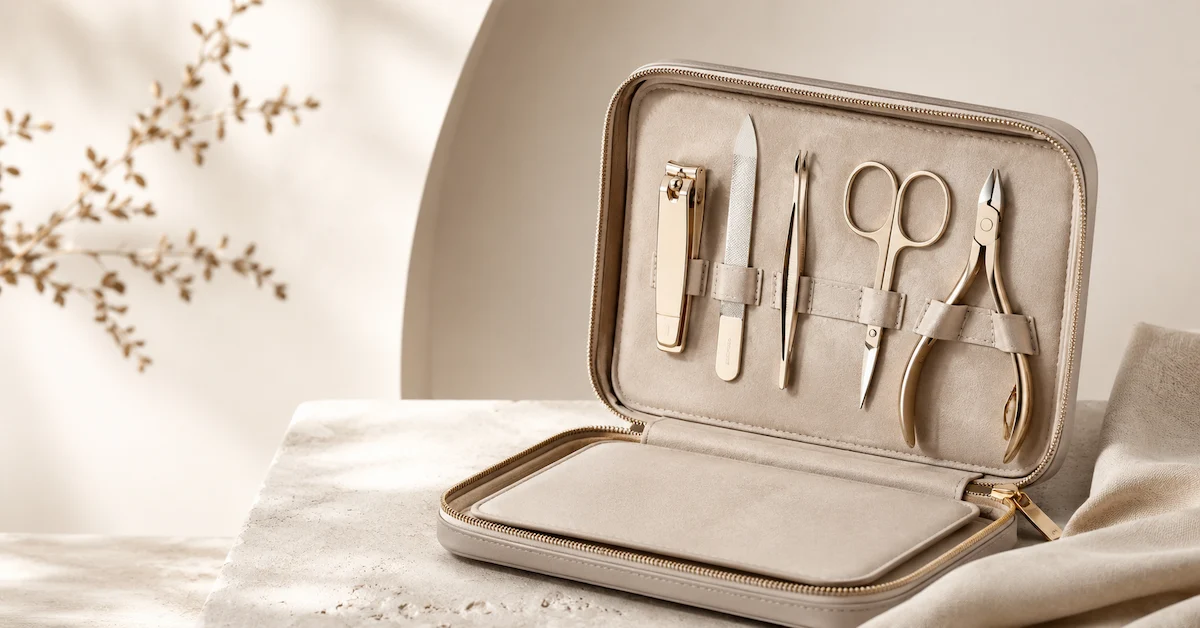
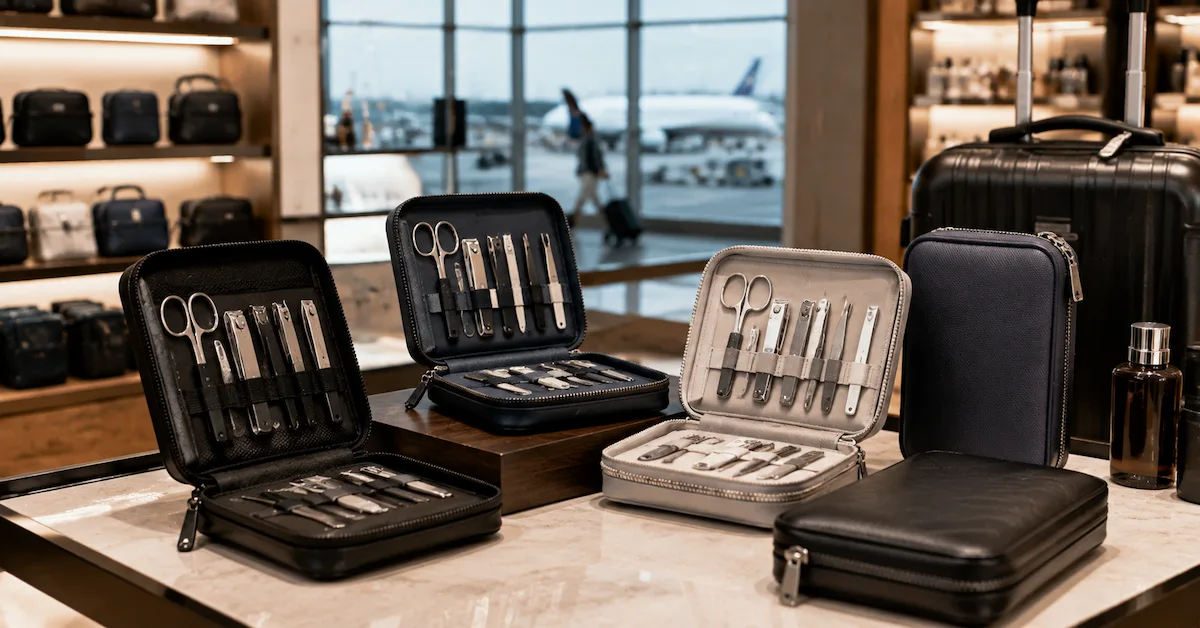
For travel retail, the format also has to work in constrained spaces. A compact rectangular case with rounded corners and a perimeter zipper can be easier to display and store than a larger toiletry bag. Fitted interiors and elastic retaining loops help keep scissors, nail clippers, files, cuticle tools, tweezers, and similar implements in defined positions. That organization reduces loose-metal movement inside the case and gives the customer a clearer view of what is included.
Still, visual organization should not be confused with verified performance. Product images may show metallic-looking implements and a structured case, but they do not establish the steel grade, corrosion resistance, blade sharpness, impact resistance, or long-term zipper life. Those points belong in the supplier specification and sample review.
Quick Comparison: Match the Kit to the Sales Channel
| Sales channel | What usually matters most | Questions for the buyer |
|---|---|---|
| Airport and other travel retail | Compact presentation, gift appeal, clear tool organization, easy shelf handling | Does the case present well when opened? Is the format suitable for carry-on-oriented shoppers? |
| Hotels and hospitality | Consistent appearance, controlled packing, hygiene procedures, dependable replenishment | Are the tools intended for individual use, and what cleaning or packaging process is available? |
| Pharmacies and department stores | Private-label flexibility, retail packaging, readable labeling, perceived value | Can the case, tool assortment, and outer presentation be specified for the target shelf? |
| Corporate or promotional gifting | Color options, logo placement, coordinated presentation, cost control | Which surfaces can accept branding, and will customization affect production or inspection? |
What the Kit Is Made Of
The case
Visible examples of this product category commonly use a zippered case with a smooth leather-like or coated textile exterior, stitched edges, metal zipper pulls, and a fabric-lined interior. The exterior material may be synthetic leather, coated fabric, or another wipeable textile. Unless the supplier confirms otherwise, it is safer not to describe such a case as genuine leather or waterproof.
Some cases appear semi-rigid or structured. That structure may come from internal reinforcement, a formed panel, or another construction method; the exact build cannot be established from appearance alone. Ask the supplier to identify the shell or reinforcement material, the lining, the edge construction, and the areas most likely to experience stress. A case that looks firm on a product page may still flex considerably in a packed suitcase.
The internal retention system
Elastic loops or bands are a practical solution for narrow grooming implements. They keep each item visible and reduce the frustration of searching through a loose pouch. Inspect whether the loops hold tools securely without requiring excessive force. Also check whether repeated insertion stretches the elastic or causes the tool handles to rub against the lining.
The number and exact identity of tools should be confirmed in writing. A photograph may suggest scissors, clippers, files, tweezers, and cuticle tools, but it may not show every item clearly. Tool counts should not be inferred from a lifestyle image, particularly when several configurations or colors are displayed together.
The metal implements
Metal tools in these sets may involve stamping, forming, grinding, polishing, and assembly. Their visible finish can be polished or brushed-looking, but appearance alone does not verify the steel grade or corrosion behavior. Buyers should request the declared material, surface treatment, and inspection standard where those details are commercially important.
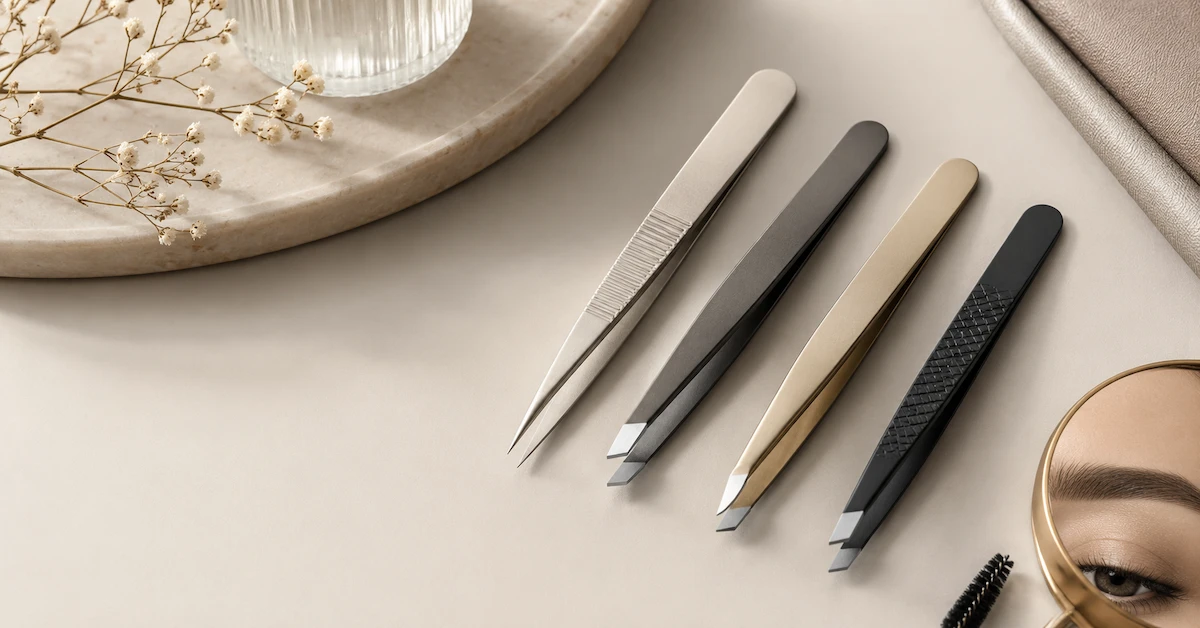
For retail purposes, consistency can matter as much as raw material. Nail clippers should operate smoothly, scissors should align correctly, and tweezers should meet at the intended tip. A sample inspection should include opening and closing the tools repeatedly, checking for rough edges, examining the hinge or pivot, and looking for marks that could affect the user experience.
Selection Criteria for Buyers
1. Define the use case before specifying the assortment
A general personal-care set may need a balanced assortment, while a compact travel product may benefit from fewer tools and a smaller footprint. Hospitality buyers should be particularly careful about whether the kit is supplied as a reusable personal item or as part of a controlled amenity program. Hygiene expectations, individual packaging, and handling procedures must be agreed separately rather than assumed from the case design.
2. Review the opened and closed dimensions
Closed dimensions affect display density, storage, and portability. Open dimensions affect how easily a user can identify and remove a tool. Request both measurements, along with product weight if shipping or point-of-sale handling is important. Capacity should also be confirmed: a case with several loops may not accommodate additional tools without changing the pattern or stressing the zipper.
3. Treat the exterior as a retail surface
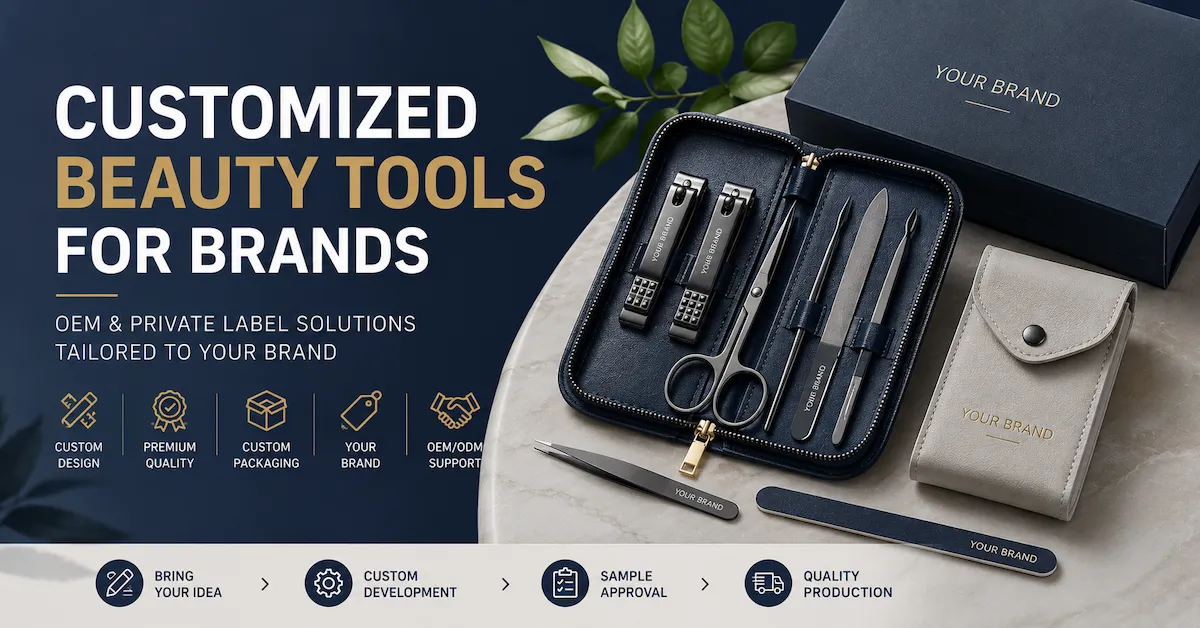
Color and finish influence perceived value. Black and light-colored options are common, but the image of a color is not enough to establish production availability or colorfastness. Ask for physical samples or an agreed color reference. If a logo is required, determine whether it will be printed, embossed, debossed, or applied by another method, and inspect the result on the actual case material.
4. Check packaging and labeling requirements
A retail buyer should specify whether the case is sold loose, in a gift box, inside a sleeve, or with a hangable presentation. Confirm what information must appear on the packaging, including tool identification, material descriptions, care guidance, and any applicable market-specific notices. Do not use claims such as medical, salon-grade, sterilizable, or waterproof unless the supplier can substantiate them and the intended market permits the wording.
5. Use a sample-based approval process
Photographs are useful for comparing general style, but a production decision should rely on samples. Open and close the zipper, inspect stitching, pull each tool from its loop, and place the kit in a bag or drawer similar to its intended use. Check whether the lining sheds fibers, whether the case remains organized when turned over, and whether the tools leave marks on the interior. These are modest tests, but they reveal issues that catalog images rarely show.
Common Buying Mistakes
One frequent mistake is selecting a kit by tool count alone. More implements can create a stronger visual impression, but they may also increase case size, complicate organization, and raise the risk of unused components. A smaller, well-arranged set can be more credible for a travel-oriented customer.
Another mistake is assuming that a metal finish equals a specific steel specification. It does not. The buyer should request the relevant material information rather than translating a polished surface into an unsupported performance claim.
It is also risky to treat every visible case option as a confirmed product range. Multiple colors or layouts in an image may represent samples, alternatives, or separate configurations. Confirm which combinations are actually available and whether changing the tool assortment requires a new interior pattern.
Practical Advice for Retail and Product Teams
Build the product brief around the customer’s moment of use. A traveler may want a compact case that prevents tools from scattering. A gift buyer may care more about the unboxing presentation. A pharmacy shopper may need clear labeling and a sensible balance between price perception and tool coverage. These are different priorities, even when the underlying case looks similar.
When comparing travel-size grooming essentials, use a side-by-side checklist covering closed size, opened layout, confirmed tool list, case material, lining, zipper construction, branding options, packaging, and inspection requirements. Keep unknowns visible in the sourcing file. It is better to mark a detail as unconfirmed than to build product copy around an assumption that later proves inaccurate.
For travel bathroom kits, the same discipline applies. A broad category label can hide major differences in tool quality, case construction, and intended use. Decide whether the product is a reusable personal set, a gift item, a promotional bundle, or a hospitality amenity before finalizing the specification.
Frequently Asked Questions
What tools are typically included?
Visible examples may include scissors, nail clippers, nail files, cuticle tools, tweezers, and other narrow grooming implements. The exact contents and quantity must be confirmed for the specific configuration.
Are these cases made from genuine leather?
Not necessarily. A smooth leather-like appearance may come from synthetic leather, coated fabric, or another material. Ask the supplier for the confirmed exterior and lining materials before making a product claim.
Can the kits be used for hospitality?
They may be considered for hospitality applications, but suitability depends on the intended handling, packaging, hygiene process, and market requirements. A compact case alone does not establish sterilization suitability or regulatory compliance.
What should be checked during sampling?
Inspect the zipper, stitching, elastic loops, lining, tool alignment, tool edges, finish consistency, and overall organization. Test the case both open and closed, and verify that the delivered assortment matches the approved sample.
Next Step: Turn the Concept into a Clear Specification
Before requesting quotations, prepare a short specification that states the target channel, closed and opened size requirements, confirmed tool assortment, case material preference, color direction, branding method, packaging format, and sample approval criteria. Ask suppliers to identify any assumptions, especially around shell construction, metal material, and hygiene-related use.
The strongest grooming product is not necessarily the one with the most tools or the most decorative case. It is the one whose construction, presentation, and intended use are aligned. A disciplined comparison of samples and documented specifications gives sourcing and product teams a much better basis for choosing a dependable kit for the retail environment.