How to Choose a Precision Tweezers Supplier for Beauty, Craft and OEM Projects
Choosing a tweezers supplier is not only about finding a tool that looks polished in a catalog. For beauty brands, salons, brow artists, craft users and detail-focused buyers, tweezers must feel controlled in the hand, meet hygiene expectations and keep their tips aligned through repeated use. The right supplier should help you evaluate shape, finish, grip, packaging and quality consistency before you commit to a product line or customized order.
Olimor Beauty supplies stainless steel tweezers for precision work, including options for tweezers OEM and projects where buyers want to design their own tweezers. This guide explains what to look for when comparing suppliers and how to make practical sourcing decisions for grooming, beauty retail, craft kits and other precision tool applications.

Start With the Actual Use Case
Tweezers may look similar at first glance, but different users need different forms of control. A brow stylist may prioritize clean hair removal and a comfortable squeeze over long appointments. A beauty retailer may need a versatile shape that appeals to everyday consumers. Craft and detail-work users may care more about access to tight angles and tip visibility.
Before comparing finishes or packaging, define the primary use case. A supplier can provide more useful guidance when you know whether the tool is for personal grooming, salon work, kits, private label retail or technical detail tasks. This also prevents over-customizing a tool in ways that look attractive but do not improve performance.
- Beauty and brow grooming: prioritize tip alignment, clean gripping edges, comfort and easy cleaning.
- Salon or professional use: look for consistent tension, durable stainless steel construction and reliable finish quality.
- Retail beauty sets: consider a balanced selection of tip shapes, attractive packaging and clear product positioning.
- Craft and detail work: focus on access, visibility and the ability to hold small items securely.
- OEM or private label projects: evaluate customization options together with inspection standards and packaging suitability.
Compare Tip Shapes Before Choosing a Tweezers Supplier
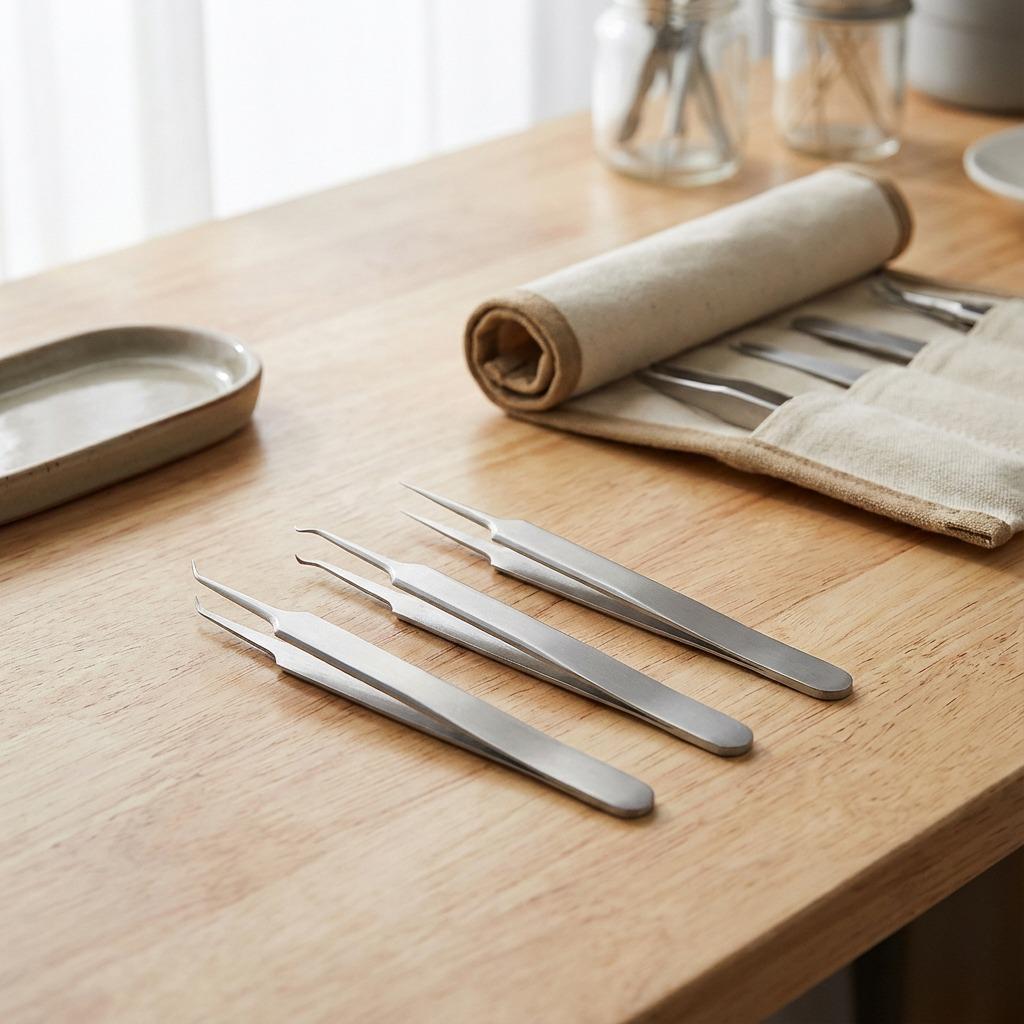
Tip shape is one of the most important sourcing decisions. The original product information highlights finely tipped straight, angular and curved variants, which can be used to build a practical range for different needs. A good supplier should be able to explain which tip style fits each task and how the edges are finished to support precision.
| Tip style | Best suited for | Buyer considerations |
|---|---|---|
| Straight tip | General gripping, craft handling and detail placement | Check that both tips meet evenly and do not leave a visible gap. |
| Angular tip | Brow shaping and controlled hair removal | Look for a clean slanted edge and comfortable angle for repeated use. |
| Curved tip | Hard-to-reach angles and delicate positioning | Assess visibility and whether the curve improves access without reducing control. |
When evaluating samples, test each shape with realistic tasks instead of relying only on appearance. Pick up a fine hair, a small thread, a thin film edge or another object that reflects the intended use. The best tweezers should close predictably, hold without slipping and release cleanly without requiring excessive hand force.
Why Stainless Steel Construction Matters
The supplied product information identifies stainless steel construction as a key feature. For beauty and grooming tools, stainless steel is valued because it supports hygiene, durability and corrosion resistance when properly cared for. It also gives tweezers the firmness needed for accurate gripping while allowing a polished or refined surface finish.
For OEM buyers and retail brands, stainless steel quality is not only a material question; it affects how customers judge the whole product. A tweezer that flexes unevenly, feels rough at the edge or loses alignment quickly can create returns and weaken brand trust. When reviewing a supplier, pay attention to how the material, grinding, polishing and final inspection are managed.
Useful evaluation points include surface smoothness, edge consistency, absence of burrs, stable spring tension and clean meeting points at the tips. For beauty tools, consider how easily the tweezers can be wiped and maintained. If the product will be sold in humid markets or stored in bathroom environments, corrosion resistance and user care instructions become especially important.
OEM Customization: What to Decide Before Production
Tweezers OEM services are useful for brands that want a product aligned with their market, price position and packaging concept. Customization can include the tool shape, finish direction, branding approach, set composition and retail presentation. However, the most successful OEM projects start with a clear brief rather than a broad request for anything custom.
If you plan to design your own tweezers, prepare a decision list before sample development. This helps the supplier understand the product goal and helps your team avoid changes late in the process.
- Target user: define whether the tweezers are for brow professionals, everyday beauty consumers, travel kits, craft users or gift sets.
- Tip selection: choose straight, angular, curved or a combination if you are building a set.
- Grip and handling: consider width, tension feel and whether the tool is comfortable for repeated squeezing.
- Finish direction: decide whether the product should appear minimal, professional, decorative or retail-friendly.
- Branding and packaging: plan how the product will be displayed, protected and explained to buyers.
- Inspection priorities: confirm how tip alignment, surface condition, tension and packaging condition will be checked.
Customization should improve the user experience or support your brand positioning. Decorative choices are valuable when they match the customer, but precision remains the central feature of a good tweezer. A well-made plain tool is more useful than an attractive tool with poor closure.
Quality Checks That Matter for Precision Tweezers
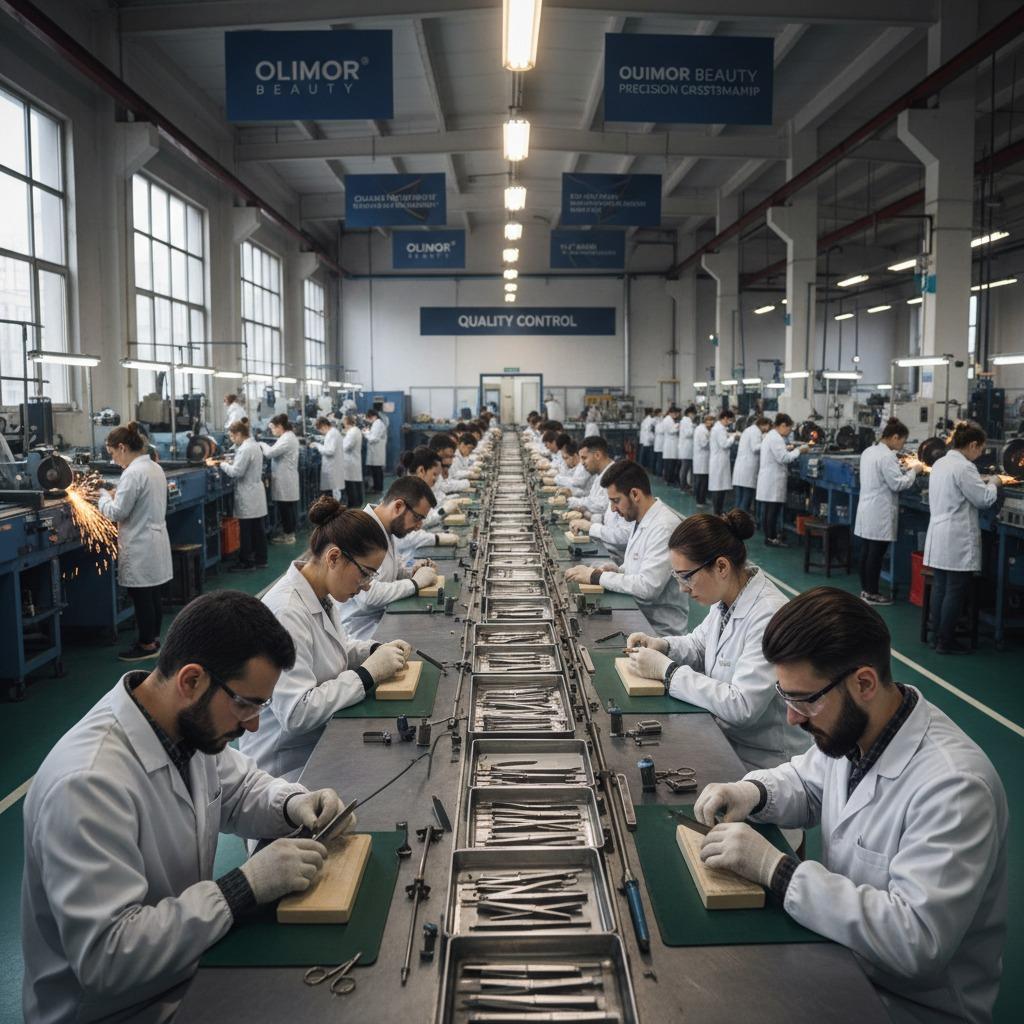
Olimor Beauty emphasizes quality assurance from raw materials to packaging. For buyers, this means quality should be evaluated as a process, not a single final glance. Precision tweezers require attention at multiple stages because small defects can affect performance. A tiny misalignment at the tip, rough inner edge or uneven tension can be noticeable to the end user.
When reviewing supplier samples, create a simple inspection routine. Hold the tweezers against a light background to check tip contact. Open and close them repeatedly to feel whether the tension is smooth. Look along the tool body to see whether the arms are symmetrical. Run a careful visual check for scratches, burrs or inconsistent polish. If the product includes packaging, verify that the tool is protected from movement and that the presentation matches the sales channel.
For professional or premium retail positioning, consistency across units is as important as the quality of one approved sample. Requesting a small range of samples for review can help reveal whether the supplier can maintain alignment and finish across multiple pieces. For ongoing sourcing, document your acceptance criteria so every reorder can be compared against the same expectations.
Packaging and Retail Presentation for Tweezers
Packaging is often overlooked until late in a project, but it has practical and commercial value. It protects the tips during shipping and storage, communicates the intended use and supports the customer’s first impression. For beauty retail, packaging also helps explain the difference between straight, angular and curved variants so shoppers can choose the right tool.
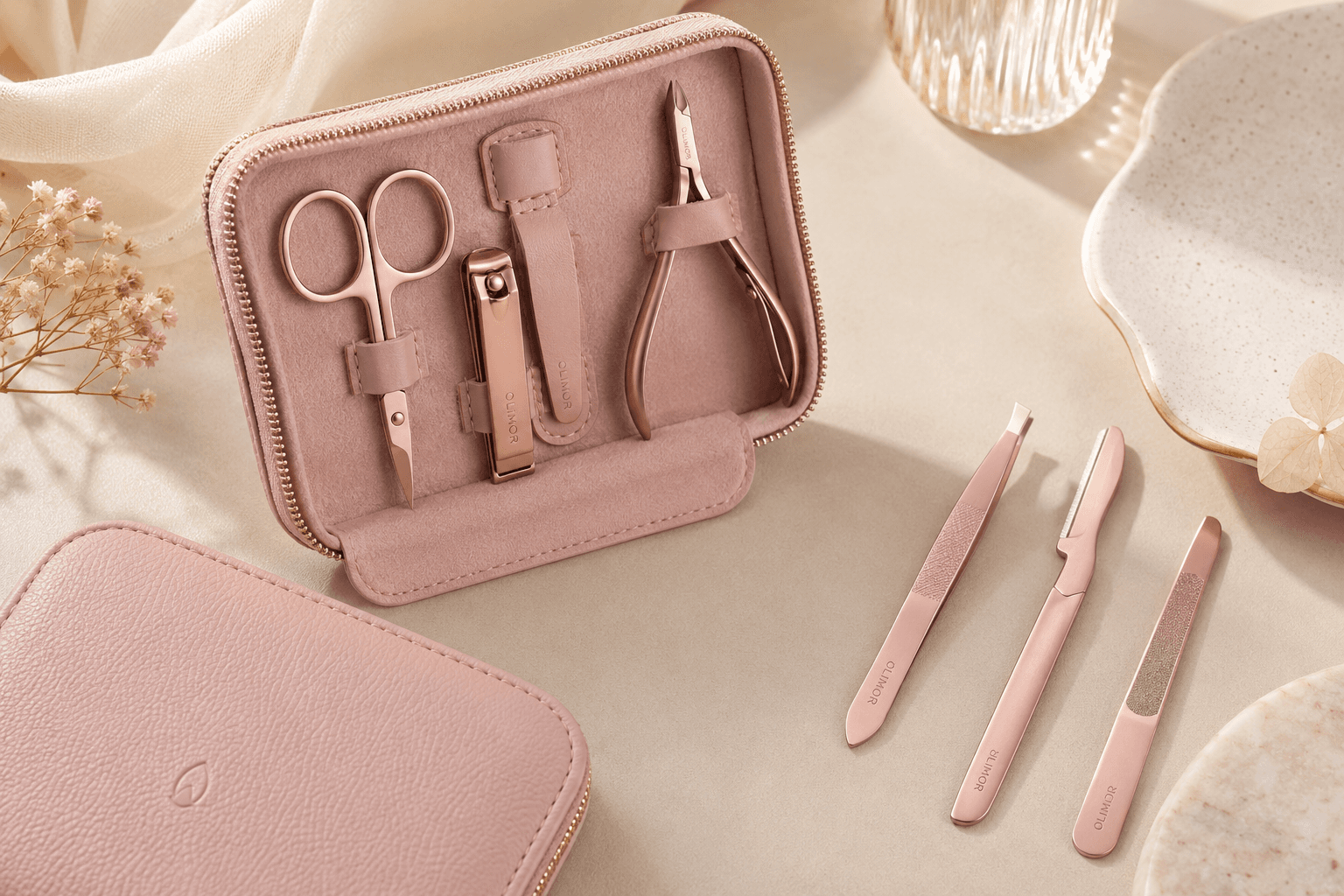
Good packaging should hold the tweezers securely without pressing the tips out of alignment. It should also be appropriate for the channel. A salon kit may need practical protective storage, while a retail product may need a clearer product message and a visually consistent presentation. For OEM projects, packaging decisions should be made early enough to allow the tool, insert, labeling and shipping protection to work together.
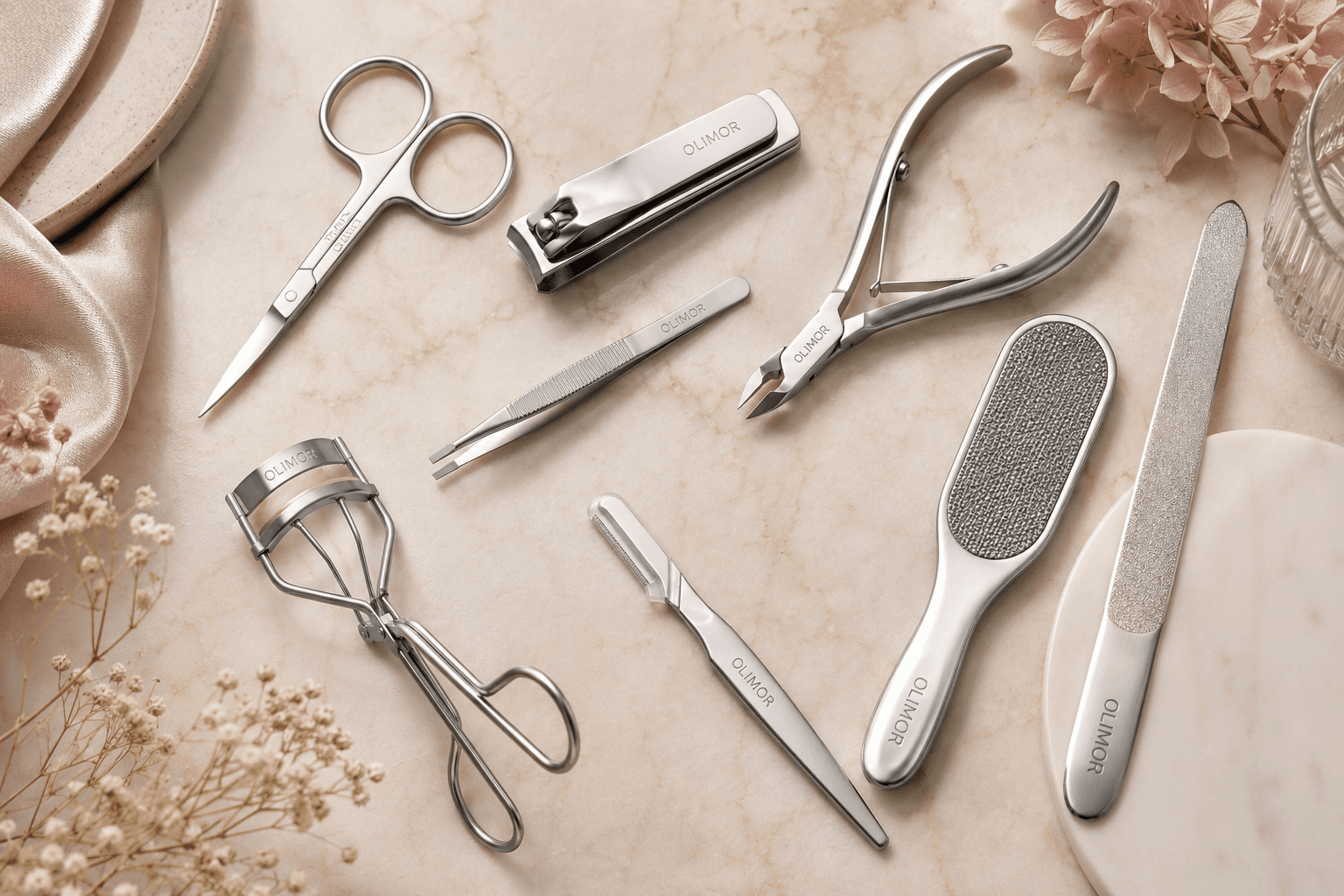
If your product line includes other beauty accessories, browse Olimor Beauty beauty tool products and product collections to compare how different tools may be grouped or positioned for a coherent range.
How to Assess a Supplier Partnership
A reliable tweezers supplier should do more than accept an order. The supplier should help you match the tool to the intended task, understand customization limits and avoid choices that reduce precision. Communication is especially important for OEM programs because small details such as tip angle, grip feel and packaging protection can determine whether the final product meets customer expectations.
When comparing potential suppliers, look for clear discussion around stainless steel construction, ergonomic design, corrosion resistance, hygiene considerations and inspection steps. Avoid making decisions based only on the lowest quote or the most decorative sample. A tweezer is a small product, but the tolerance expectations are high because users feel every flaw immediately.
It is also useful to prepare reference samples or photos of the intended direction. If you already sell beauty tools, compare the new tweezers with your existing range so finish, packaging and price position make sense together. If you are starting a new line, begin with a focused selection of shapes rather than trying to launch too many variations at once.
Working With Olimor Beauty on Precision Tweezers
Olimor Beauty supports buyers looking for stainless steel tweezers, tweezers OEM services and design-your-own tweezers projects. The focus is on precision, ergonomic comfort, aesthetic appeal and quality assurance, with applications across grooming, crafts and detail work. Whether you need a single practical style or a coordinated set with straight, angular and curved variants, the sourcing process should begin with a clear understanding of user needs.
For best results, prepare your target use case, preferred tip shape, expected finish, packaging direction and inspection priorities before discussing a project. This will make sample evaluation more efficient and help ensure the final product delivers the control and durability your customers expect.
To discuss a tweezers project or OEM customization idea, contact Olimor. If you are ready to share product requirements, you can also send an inquiry with your preferred tip styles, application and packaging expectations.
Tag: