Professional Eyelash Extension Tweezers for B2B Beauty Supply Buyers
Eyelash extension tweezers are precision tools for isolating natural lashes, picking up fine extensions, controlling placement and supporting repeatable salon work. For B2B beauty supply buyers, the main purchasing question is not simply which tweezer looks best, but which tool set can support accuracy, comfort, cleaning routines and consistency across multiple technicians or resale customers.
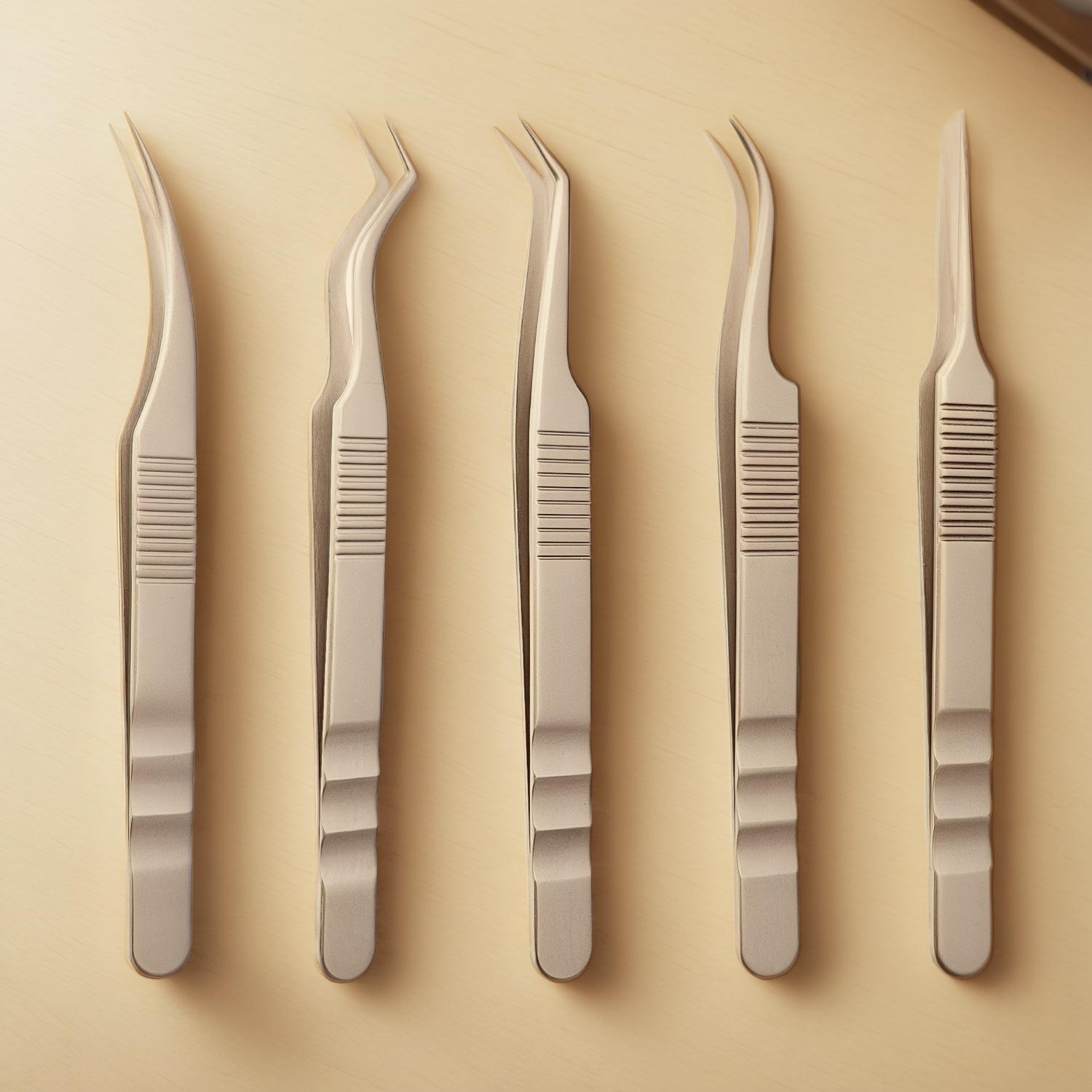
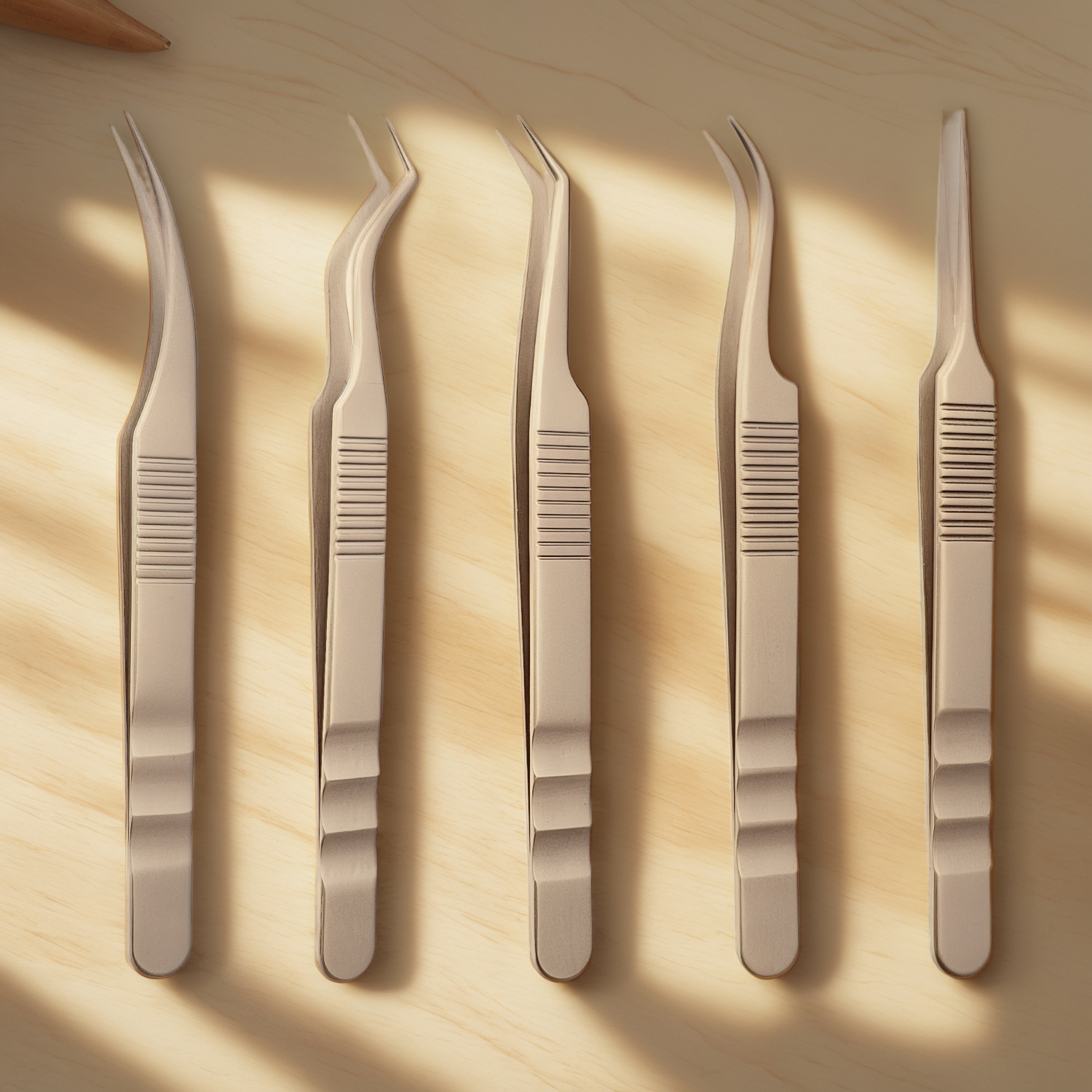
Olimor Beauty supplies professional beauty tools for lash and salon environments, including stainless steel tweezer sets and precision tweezer styles with slanted, pointed, angled, curved, gold-plated and brushed matte options. Supplied product details highlight stainless steel construction, aligned precision tips, textured or etched grip areas, ergonomic handling, lightweight designs, tarnish-resistant gold-plated finish on relevant models and quality checks from raw materials through final packaging. This guide explains how salons, lash studios, training academies and distributors can evaluate eyelash extension tweezers before buying in quantity.
Why Tweezer Choice Matters in Eyelash Extension Services
Eyelash extension application depends on small, controlled movements near the eye area. A lash artist may repeat isolation, pickup, adhesive control, placement and release hundreds of times in one appointment. If the tweezer tips do not meet evenly, the artist may need extra attempts to pick up an extension. If the surface slips, the hand may tense. If the tool is uncomfortable, fatigue can affect accuracy during longer sessions.
For an individual user, a minor handling issue may be inconvenient. For a salon, academy or distributor, that same issue can become a recurring operational problem. A professional lash business needs tweezers that help technicians work with stable pressure, predictable grip and clean movement. A purchasing team also needs packaging that protects fine tips and a supplier that understands beauty-tool quality requirements.
The best B2B buying process treats lash tweezers as working instruments rather than low-value accessories. Tip alignment, grip texture, material finish, ergonomic feel and cleaning compatibility should all be tested before a large order is approved.
Core Features to Evaluate Before Buying in Bulk
When comparing eyelash extension tweezers for professional supply, focus on the details that affect daily service performance. Price matters, but it should be weighed against usability, consistency and replacement risk.
- Tip alignment: The tips should meet cleanly without visible gaps, crossing or uneven pressure. This supports pickup of fine lash fibers and controlled release.
- Stainless steel construction: Stainless steel is widely used for professional beauty tools because it supports durability and routine cleaning when handled correctly.
- Tip shape: Slanted, pointed, angled and curved tips each support different working angles and technique preferences.
- Grip surface: Textured grips, etched ridges, secure grip areas or brushed matte surfaces can help reduce slipping during detailed work.
- Ergonomic handling: A comfortable shape can help reduce unnecessary strain during repeated isolation and placement movements.
- Finish quality: Gold-plated, brushed matte or polished stainless finishes should be smooth, even and free from rough areas that could affect handling or cleaning.
- Set variety: A five-piece tweezer set or multi-shape assortment gives teams flexibility for isolation, pickup, placement and adjustment.
- Packaging protection: Fine tips should be protected during shipping, storage and distribution to reduce the risk of bending or misalignment.
Buyers building a wider professional assortment can compare related Olimor beauty tool products to see how lash tweezers fit alongside other salon and detail-work tools.
How Different Tweezer Shapes Support Lash Workflows
No single tweezer shape is ideal for every lash artist or every service style. Classic, fuller and correction-focused lash services may require different approach angles and grip habits. In B2B sourcing, a multi-shape set can be more practical than relying on one universal tool.
Pointed Tweezers
A sharp pointed tip is useful for precise handling of individual lashes and fine separation tasks. In dense natural lash lines, the narrow tip can help the technician approach small areas with accuracy. Buyers should check that pointed tips are symmetrical, cleanly finished and aligned under normal hand pressure.
Angled Tweezers
An angled tip can help the artist reach the lash line from a more controlled hand position. This can support pickup, placement and fine adjustment, especially when visibility and wrist angle matter. Angled tweezers are often considered when technicians want a lifted working angle rather than a straight approach.
Curved Precision Tweezers
Curved tweezers can support controlled access during placement or adjustment, depending on the artist’s technique. Olimor Curved Precision Tweezers are described with high-grade stainless steel construction, a curved precision form, etched ridges for grip, ergonomic handling and quality checks from raw materials through final packaging. For B2B buyers, the practical value is repeatable control rather than shape alone.
Slanted Tweezers
Slanted tips can be useful for general gripping, controlled handling and some brow-area or detail-work tasks. In a salon assortment, slanted tweezers may support broader precision beauty use, but salons should separate tools by service type when hygiene policies require it.
Gold-Plated and Brushed Matte Options
Olimor Gold-Plated Precision Tweezers are described with an angled tip, a gold-plated finish that resists tarnish and ergonomic handling intended to reduce slippage during intricate tasks. A gold-plated finish can help maintain a polished professional appearance, but buyers should still prioritize tip closure, grip response and smooth finishing.
Olimor Elite Precision Stainless Steel Tweezers are described with a sharp pointed tip, lightweight construction, secure grip and brushed matte finish. A matte surface can give a professional look and may feel less slippery than a very glossy finish, depending on the user’s hand position and service environment.
Comparison Table: Selecting the Right Tweezer Option
| Tweezer type or feature | Best-fit professional use | What B2B buyers should check |
|---|---|---|
| Pointed tip | Fine isolation, individual lash handling and precision correction | Clean alignment, symmetrical tip finish and stable closure |
| Angled tip | Approaching the lash line at a controlled angle for pickup or placement | Comfortable working angle, no rough edges and predictable grip |
| Curved precision form | Placement, adjustment and controlled access depending on artist technique | Curve consistency, etched ridge grip and sample feedback from technicians |
| Slanted tip | General salon precision tasks and broader detail handling | Suitability for intended service type and hygiene separation needs |
| Five-piece set | Salons, academies and distributors serving varied techniques | Consistent feel across pieces, protected packaging and useful shape mix |
| Gold-plated finish | Client-facing tool presentation with tarnish-resistant appearance | Even coating, smooth edges and functional tip performance |
| Brushed matte finish | Professional handling where secure feel and clean appearance matter | Surface smoothness, grip security and cleaning compatibility |
B2B Sourcing Criteria Beyond Unit Price
Bulk buying eyelash extension tweezers is not only about lowering cost per piece. A low upfront price may become expensive if tools arrive with bent tips, inconsistent closure, poor grip or packaging that does not protect the working ends. Salons, academies and distributors should evaluate total usability.
- Application fit: Confirm that the tweezer shape matches eyelash extension isolation, pickup, placement or adjustment needs rather than general grooming only.
- Sample testing: Ask experienced lash artists to test pickup, isolation and comfort with real or simulated lash materials before approving a larger order.
- Batch consistency: Multiple units should feel similar enough that technicians do not need to relearn grip pressure from tool to tool.
- Workstation planning: Consider active tools, cleaned backups, training tools and replacement needs when planning quantity.
- Packaging review: Check whether tips are protected during shipping and storage, especially for resale or multi-location distribution.
- Supplier communication: Share intended use, preferred shapes, packaging expectations and inspection priorities before placing an order.
For buyers building a complete salon supply program, Olimor’s professional product collections can help compare tweezer options with related beauty-tool categories.
Inspection Checklist for Receiving and Quality Review
A practical receiving inspection helps reduce avoidable service issues. Olimor product information notes attention to quality checks from raw materials through final packaging, but B2B buyers should still define their own incoming review process based on intended use and local requirements.
- Inspect tip closure: Close each tweezer gently and check whether the tips meet evenly without gaps or crossing.
- Check grip response: Test pickup with fine lash materials to confirm the tool holds without excessive squeezing.
- Review surface finish: Look for rough areas, uneven plating, sharp handle edges or visible flaws that could affect comfort.
- Compare units: Sample several pieces from the order to see whether weight, tension and closure feel are reasonably consistent.
- Confirm packaging condition: Ensure tips are protected and not pressed against other tools or hard packaging surfaces.
- Assign use status: Separate approved tools, tools needing further review and any damaged items before they enter salon service.
This checklist is useful for salons stocking multiple stations, distributors receiving wholesale inventory and training academies issuing tools to students.
Maintenance, Hygiene and Storage for Professional Use
Stainless steel supports professional cleaning routines, but precision tweezers still need careful handling. The most vulnerable part of the tool is the tip. A dropped tweezer, loose storage in a drawer or contact with heavy metal tools can create subtle misalignment that affects pickup performance.
Salons should clean tweezers according to their own hygiene procedures and the requirements of applicable local health departments or state cosmetology boards. Buyers should verify the current applicable rules and keep supplier documentation on file. If a business uses a quality-management framework such as ISO 9001 for supplier evaluation, it should confirm the applicable version and request documentation directly; this should not be treated as a claim that any supplier holds a certification unless that evidence is supplied.
- Remove visible residue before storage according to salon procedure.
- Store tweezers with tip protection and avoid loose storage with heavier tools.
- Train staff not to use precision lash tweezers for non-lash tasks that may damage tips.
- Inspect tools after drops, visible bending or unusual pickup problems.
- Label tools by station, technician or service type when hygiene procedures require separation.
Good maintenance protects tool performance and makes replacement planning more predictable. For academies, it also teaches students that lash tools are precision instruments requiring disciplined handling.
Cost Factors When Comparing Eyelash Extension Tweezers
Because buyers often ask about cost, it is useful to separate price from value. The final purchasing decision can be influenced by material, finish, tip shape, set configuration, packaging, inspection needs, customization requirements and order quantity. A five-piece set may have a different cost structure than a single pointed or curved tweezer, while a gold-plated finish may be evaluated partly for appearance and tarnish resistance as well as handling.
B2B buyers should avoid comparing only catalog price. Instead, ask how often the tool will be used, how many technicians need consistent supply, whether backups are required for cleaning rotation and whether the product will be resold to professionals who expect clear positioning. A slightly better-matched tool can reduce frustration, returns and replacement waste, even when the unit price is not the lowest option.
Purchasing teams can send Olimor an inquiry with their intended service use, preferred tweezer styles, packaging questions and quantity planning to discuss suitable options without relying on assumptions.
How to Evaluate a Supplier for Lash Tweezer Programs
A reliable supplier should help buyers connect product features to real salon use. When evaluating eyelash extension tweezer suppliers, ask for clear product descriptions, material and finish information, available shapes, packaging details and quality-control process information. Avoid vague claims that cannot be checked.
For distributors, supplier evaluation also includes how easily the product can be explained to professional customers. A tweezer described by its tip style, grip surface, finish and intended lash workflow is easier to position than a generic beauty tool. For salons, the priority is whether technicians can work comfortably and consistently. For academies, the tool should help students learn proper control without forcing excessive pressure.
If customization, private-label presentation or packaging changes are important, discuss feasibility directly. Do not assume MOQ, lead time, finish options or packaging formats until the supplier confirms them in writing.
When to Choose a Set Instead of a Single Tweezer
A single precision tweezer may work for a technician with a fixed preference, but many professional buyers benefit from a set. A set with slanted, pointed, angled and curved options allows a salon to support different hand positions and service steps. It also gives training academies a practical way to teach students how tool shape affects isolation and placement.
For distributors, sets can appeal to a wider buyer base because lash studios, beauty academies, salon supply stores and independent professionals all need reliable tools for repeated detail work. A five-piece set also helps create a complete toolkit impression, especially for customers building or refreshing lash stations.
Buyers who need guidance on product fit, samples or sourcing details can contact Olimor for a focused discussion based on their market, service environment and packaging needs.
FAQ: Pre-Purchase Questions for B2B Buyers
Can B2B buyers request samples before a bulk order?
Sample availability should be confirmed directly with Olimor. For eyelash extension tweezers, sample testing is strongly recommended because technicians should evaluate tip closure, grip comfort, shape preference and handling under realistic service conditions.
Does Olimor publish fixed MOQ or lead time for these tweezers?
No fixed MOQ or delivery time should be assumed from this guide. Buyers should send their quantity plan, target styles, packaging needs and destination details so Olimor can respond with current order information.
Are customization or packaging changes available?
Customization depends on the specific tweezer style, finish, packaging request and order requirements. B2B buyers should discuss branding, assortment and packaging expectations before confirming a purchase.
What quality checks should buyers perform on arrival?
Check tip alignment, closure feel, grip response, finish smoothness, packaging protection and consistency across units. Any tool with bent or visibly damaged tips should be separated before salon use.
How should salons maintain eyelash extension tweezers?
Clean and store tweezers according to salon hygiene procedures and applicable local rules. Protect fine tips, avoid loose storage with heavier tools and inspect tools after drops or handling issues.
Tag: