











Curved Precision Tweezers for Eyelash Extension Work
Eyelash extension services depend on steady hands, clear technique and tools that respond accurately. For lash artists, a tweezer is not a small accessory; it is the point of contact between the technician, the extension fiber and the client’s natural lash. Olimor Beauty Curved Precision Tweezers are designed for this type of controlled application, supporting accurate placement during eyelash extension procedures in salons, studios and professional beauty settings.
For B2B beauty buyers, the question is not only whether a tweezer looks polished. The better question is whether it can help technicians work consistently across many appointments. A suitable curved tweezer should support isolation, pickup, placement and adjustment without forcing the wrist into an uncomfortable position. It should also be practical for daily salon operation, including cleaning, storage and repeated handling.
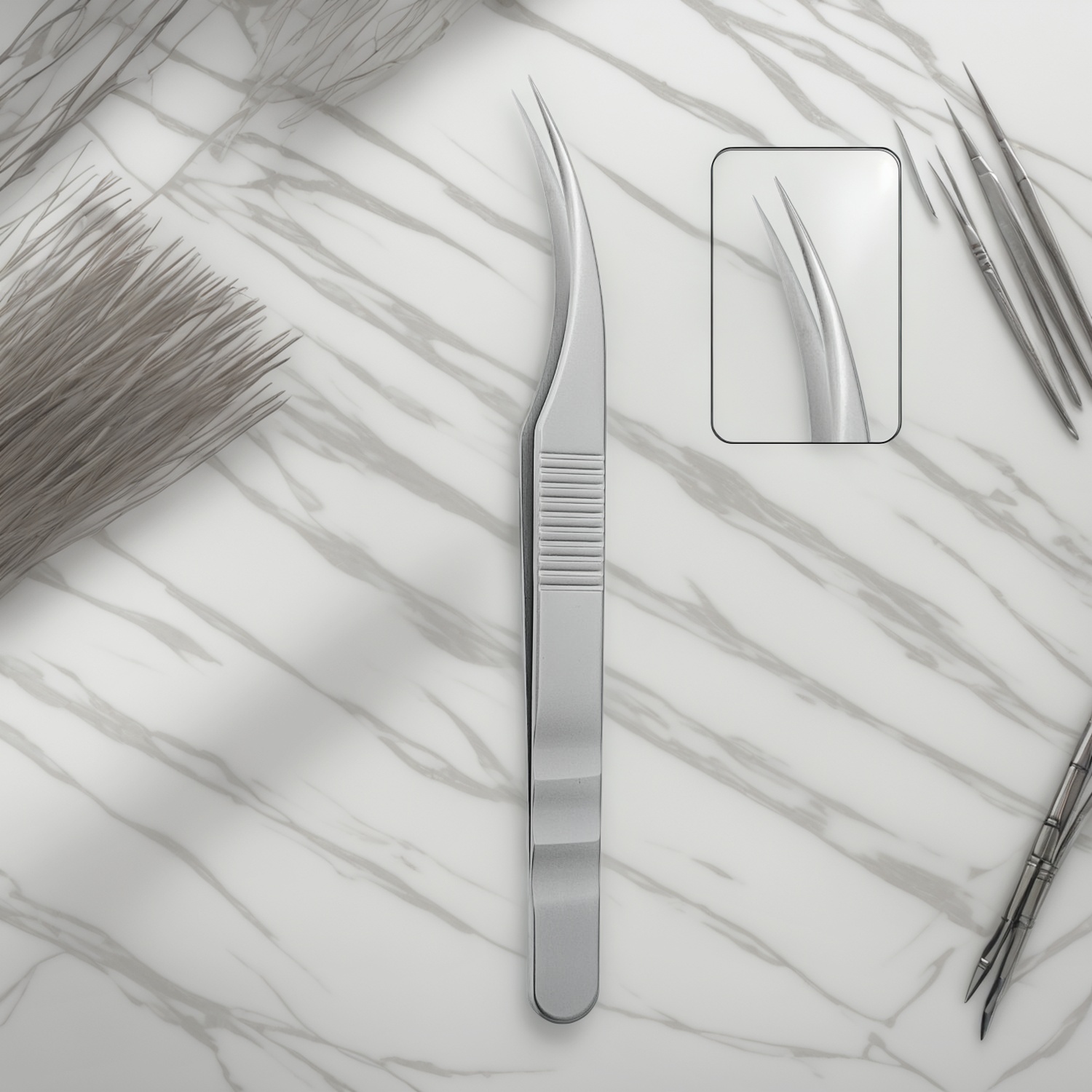
Why Curved Tweezers Matter in Lash Extension Application
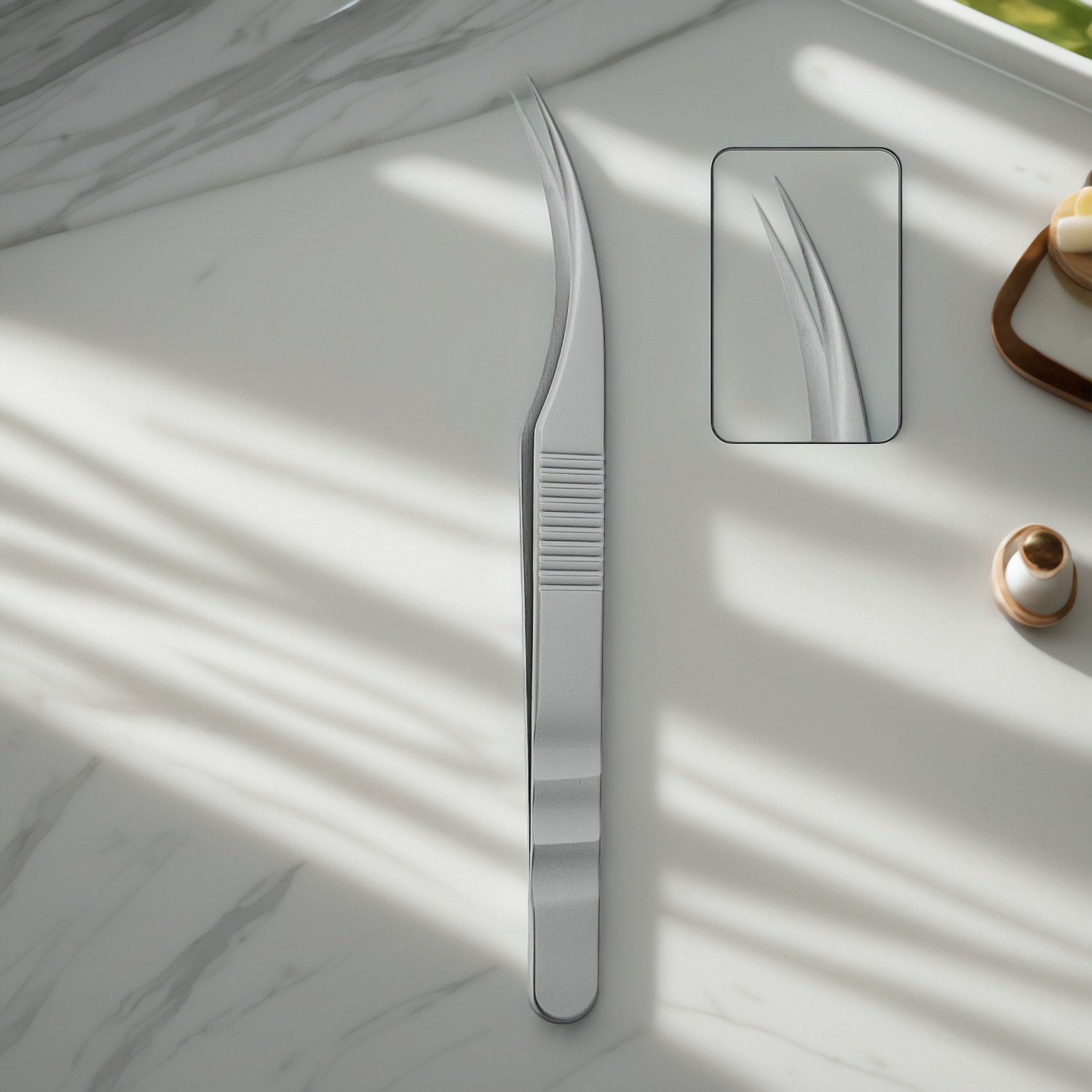
Curved precision tweezers are valued because the tip shape gives the lash artist better access to the lash line. A curved tip can help approach the natural lash from a controlled angle, which is especially useful when working close to the eyelid or when separating fine lashes. In comparison with a straight tweezer, a curved shape may reduce the need to over-rotate the hand, depending on the technician’s method and the client’s eye shape.
During eyelash extension work, even a small slip can affect the look of the finished set. Accurate handling helps maintain clean separation between natural lashes and supports more precise placement of extensions. This is why many salons keep more than one tweezer style on hand, using curved precision tweezers for specific steps that require controlled access and a fine working angle.
Olimor Beauty focuses on B2B beauty supplies for professional users, and these tweezers are positioned for salons and beauty professionals who need durable, precise tools for routine lash services. For buyers comparing beauty tool products, the most important assessment is how the tweezer performs in real working conditions, not only how it appears in a product photo.
Key Selection Criteria for Salon and B2B Buyers
When purchasing lash tools for a team, consistency matters. A single technician may adapt to small differences, but a salon, distributor or training provider usually needs tools that can be evaluated and used across multiple hands. The following points are useful when selecting curved precision tweezers for eyelash extension services:
- Tip alignment: The working tips should meet cleanly so the technician can grip fine lash fibers without excessive pressure.
- Curve shape: The curve should give access to the lash line while still allowing clear visibility during placement.
- Grip comfort: The tweezer should feel stable in the hand and should not require unnecessary force during repeated use.
- Material practicality: Stainless steel is a common choice for professional tweezers because it supports durability and routine salon care.
- Surface finish: Smooth edges and a clean finish help support comfortable handling and reduce snagging during use.
- Role in the tool kit: Decide whether the tweezer will be used mainly for pickup, placement, isolation or general lash work.
The supplied Olimor Beauty Curved Precision Tweezers are described as stainless steel, rust-resistant and ergonomic. Those qualities are relevant for salon environments because tools are handled frequently and must remain comfortable through long service schedules. For procurement teams, these are practical starting points for evaluating whether the tool fits the business’s standard lash workflow.
How Curved Precision Tweezers Support Better Workflow
In a busy salon, small delays add up. A tweezer that does not pick up lashes reliably can slow the technician, increase hand fatigue and interrupt the rhythm of the appointment. Curved precision tweezers can support a more efficient workflow by helping the user approach individual lashes at a controlled angle. This does not replace skill or training, but it gives the technician a more suitable instrument for fine manual work.
For classic lash application, the tweezer may assist with positioning one extension against one natural lash. For volume or textured effects, technicians may use different tweezer preferences depending on their method. The key is to match the tool to the service and the individual hand technique. Salons should avoid assuming that one tweezer shape is ideal for every technician. Instead, curved tweezers should be tested as part of a complete lash tool set.
Training teams can also benefit from standardizing tool types. When learners use similar curved precision tweezers, instructors can more easily explain angles, pressure and lash placement. This is particularly helpful when teaching how to reduce unnecessary movement and maintain a stable hand position.
Questions to Ask Before Adding Tweezers to a Salon Lineup
Whether you are a salon owner, purchasing manager or beauty supply distributor, a structured evaluation makes buying decisions clearer. Before placing a repeat order or adding a tweezer style to a professional range, consider the following checklist:
- What service is the tweezer intended for? Identify whether it will be used mainly for eyelash extension placement, isolation or general precision handling.
- Does the curve match technician habits? Ask experienced users to test the angle and comfort during realistic hand positions.
- Is the grip comfortable over time? A tweezer may feel acceptable for one minute but uncomfortable during a full appointment schedule.
- How will the tool be cleaned and stored? Confirm that your salon has a process for keeping precision tips protected between uses.
- Does the product fit your retail or professional supply range? For distributors, consider how the tweezer will be positioned alongside other lash and brow tools.
These questions help buyers move beyond generic product claims. The best decision is based on fit: fit for the technician’s method, fit for the salon’s hygiene process and fit for the business’s professional beauty supply strategy.
Maintenance and Handling for Longer Tool Life
Precision tweezers should be treated as working instruments. Even when a tweezer is made from stainless steel and described as rust-resistant, care habits still matter. Dropping the tool, pressing the tips against hard surfaces or storing it loosely with other metal tools may affect alignment. Once the tip alignment is compromised, pickup and placement can become less predictable.
After service, salons should follow their established cleaning and hygiene procedures for beauty tools. The tweezer should be dried properly before storage, and the tips should be protected where possible. Many professional teams separate sharp or fine-tip tools from bulkier salon equipment to reduce the chance of bending or surface damage.
It is also helpful to inspect tweezers regularly. Look for visible tip damage, uneven closure, discomfort in the spring tension or residue near the working end. If a tool no longer grips fine lashes cleanly, it may slow the technician and affect service consistency. Regular inspection is a simple habit that supports better appointment quality and helps purchasing teams plan replacement cycles more sensibly.
Sourcing Curved Tweezers as B2B Beauty Supplies
For B2B buyers, eyelash extension tweezers are often part of a wider professional tool purchase. Salons may order alongside other lash, brow, manicure or cosmetic accessories, while distributors may compare categories across product collections. In either case, sourcing should focus on practical buyer requirements: material description, tool shape, packaging suitability, handling comfort and consistency across batches.
Olimor Beauty supplies beauty tools for professional users, including salon equipment buyers and B2B beauty supply customers. If your business is evaluating curved precision tweezers for eyelash extension services, it is useful to prepare clear purchasing details before contacting a supplier. Include the intended application, target users, packaging needs and any inspection expectations your company normally follows.
Because eyelash extension work is so detail-focused, buyers should avoid choosing only by price or appearance. A low-cost tweezer that causes inconsistent pickup can create frustration during appointments. A practical sourcing decision considers the total value of the tool: usability, durability, comfort and how well it supports the technician’s daily work.
When Curved Precision Tweezers Are the Right Choice
Curved precision tweezers are a strong option when lash technicians need controlled access, fine handling and a comfortable approach angle near the lash line. They are especially relevant for salons offering eyelash extensions as a regular service, training providers building starter kits, and B2B buyers creating professional beauty tool assortments.
Olimor Beauty Curved Precision Tweezers bring together several important qualities described for professional use: stainless steel construction, a curved tip for accurate handling, rust-resistant performance and an ergonomic design. For salons and beauty professionals, these features support more controlled lash extension work and more reliable day-to-day operation.
To compare options or discuss sourcing details for your business, explore Olimor Beauty’s beauty tool products or send an inquiry. A clear understanding of your service workflow, technician preferences and maintenance process will help you choose tweezers that genuinely fit professional eyelash extension work.