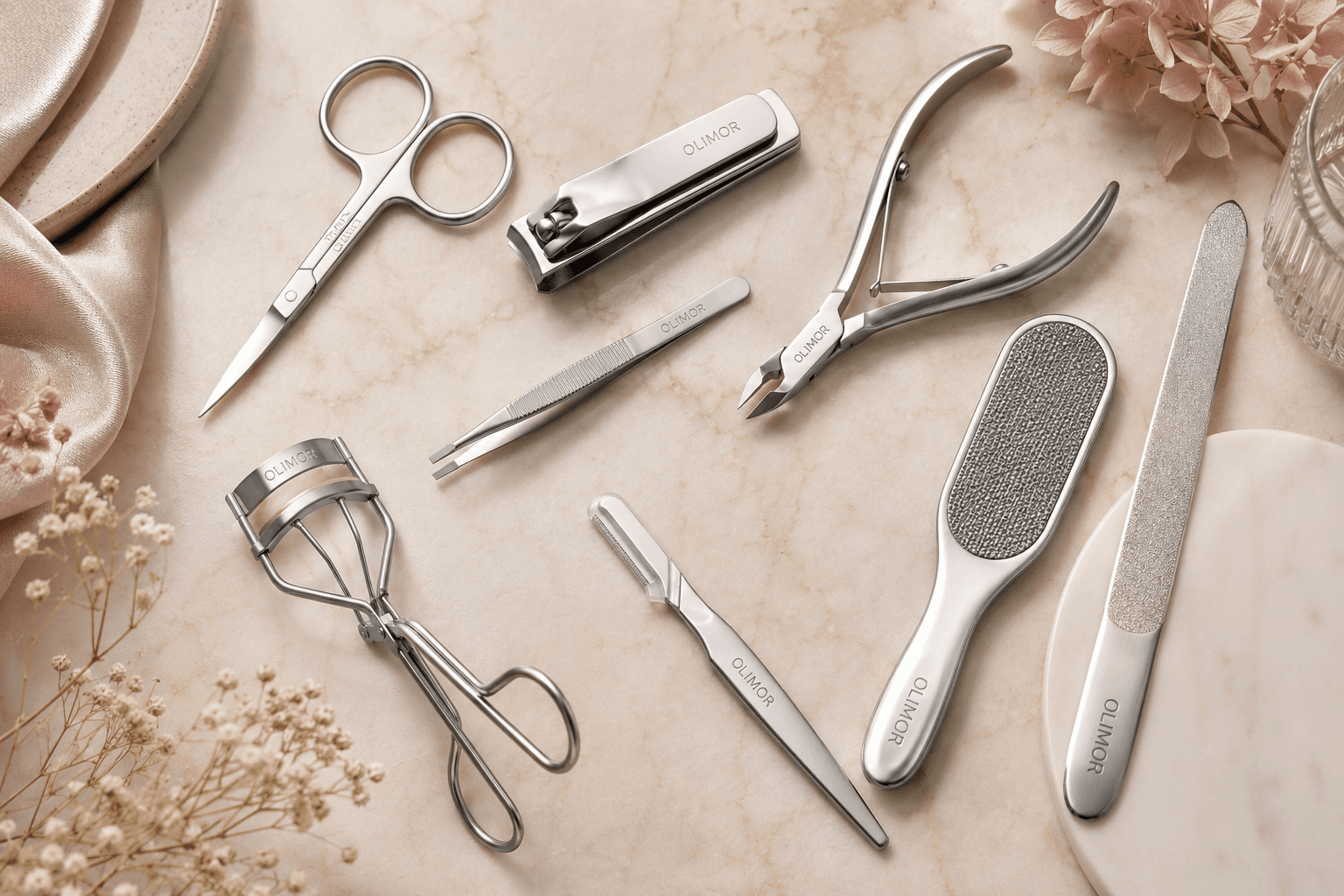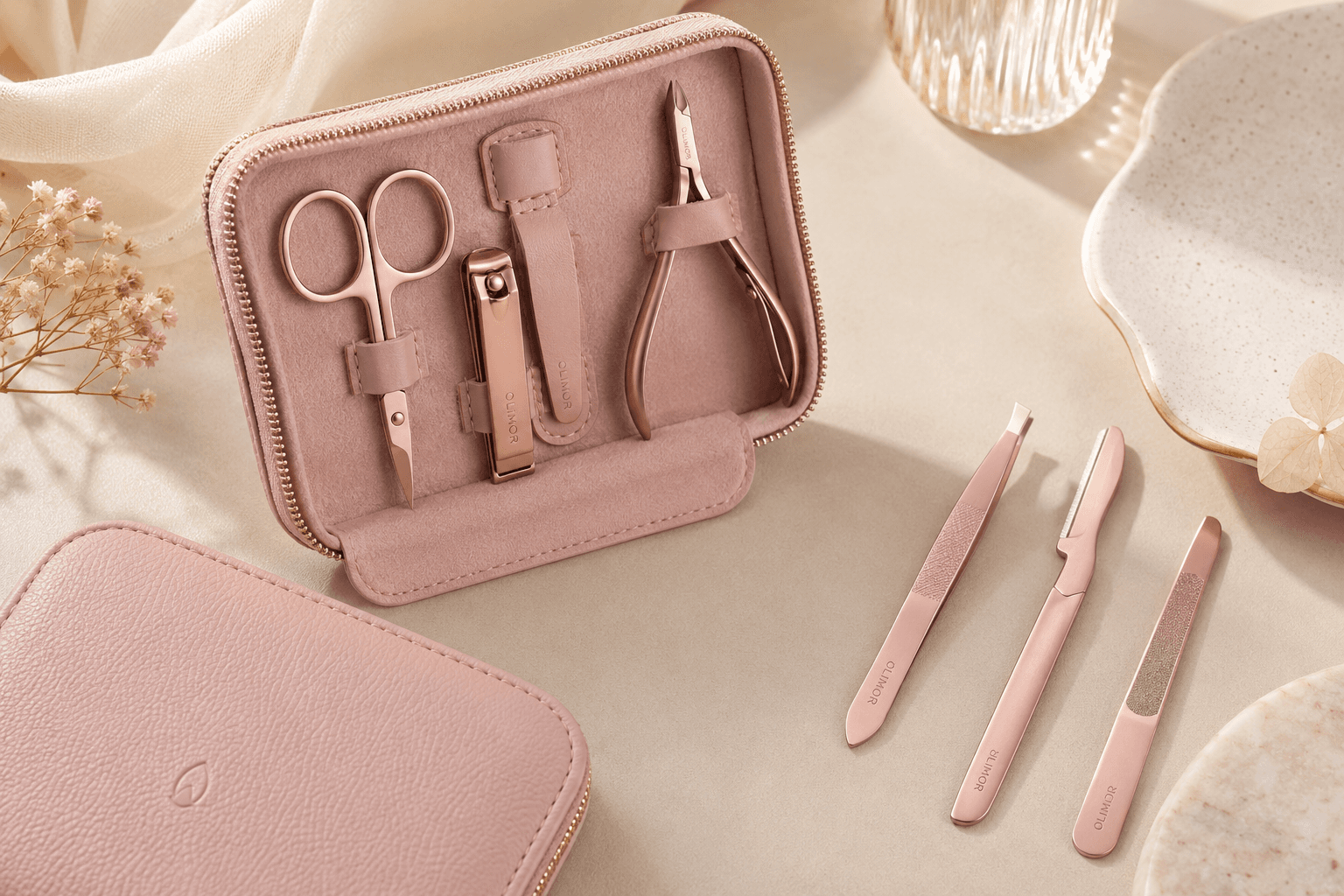
Eyelash Extension Tweezers for Precise Salon Application
Eyelash extension tweezers are working instruments for isolation, pickup, fan control, placement and detail correction. For salons, lash studios, training programs and beauty supply buyers, the best choice is not simply the tweezer that looks attractive in a product photo. It is the tool that feels controlled in the hand, closes predictably at the tip, withstands regular professional cleaning and supports consistent technique across repeated services.
Olimor Beauty supplies professional beauty tools, including stainless steel precision tweezers for lash application. Product details across the Olimor lash tweezer range describe practical features such as stainless steel construction, ultra-fine needle-nose or curved tips, ergonomic handling, textured grip options, corrosion-resistant performance, matte finishes that reduce reflections in bright salon lighting, ombre finishes for a polished workstation appearance and quality checks from raw materials to final packaging. This guide explains how to evaluate those features in real salon use without relying on vague claims.
If you are comparing tools for a single lash artist, a multi-station salon, a training kit or a wholesale beauty assortment, start with one question: will this tweezer help a technician separate, hold and release fine lash fibers accurately throughout a full appointment? The sections below answer the main informational and B2B buying questions professional buyers usually ask before sourcing eyelash extension tweezers.
Why Tweezers Matter in Eyelash Extension Services
Eyelash extension work is built on small movements repeated many times. A technician may isolate one natural lash, pick up an extension, control adhesive placement, create or transfer a fan, position the extension and release it cleanly hundreds of times during one service. When the tweezer is unstable, too stiff or misaligned, the artist may squeeze too hard, drop fibers, disturb surrounding lashes or lose time correcting placement.
Good lash tweezers support three practical outcomes. First, they improve control near the lash line by allowing the artist to grip tiny fibers without blocking visibility. Second, they help reduce unnecessary hand tension during long appointments. Third, they make training and service standards easier to manage because the tool responds more predictably from one workstation to another.
For B2B buyers, this means tweezers should be treated as service-critical salon equipment rather than casual grooming accessories. A distributor, salon owner or training manager needs tools that can be evaluated for tip alignment, grip tension, material, finish, cleaning compatibility, packaging protection and consistency across pieces. Olimor’s beauty tool assortment can be reviewed through the professional beauty tool products page when building a broader salon supply setup.
Core Features to Check Before Buying Lash Tweezers
Professional eyelash extension tweezers may look similar from a distance, but small design details can change how they perform. Before placing a bulk order or standardizing tools for a team, inspect the following features.
Tip alignment and closing point
The tips should meet evenly at the working point. If there is a visible gap, uneven pressure or a weak closing area, the tweezer may slip on fine extensions or crush delicate fibers. For isolation, aligned tips help separate one natural lash without catching neighboring lashes. For pickup, they help hold an extension or fan securely until the artist releases it.
Tip shape for the task
Ultra-fine needle-nose tips are useful for meticulous lash handling because they give the technician visibility and a precise contact point. Curved tweezers can support a different approach angle, which may help artists work around facial contours or reach the lash line with a comfortable hand position. No single shape is best for every artist or technique, so match the tool to the service task instead of buying by appearance alone.
Grip tension and hand comfort
A tweezer that requires excessive pressure can fatigue the fingers and wrist. A tweezer that feels too loose can reduce control. Ergonomic design, comfortable balance and textured grip areas can support steadier handling during long classic, volume or refill services. These features do not replace skill, but they help technicians maintain consistent movements for longer periods.
Stainless steel construction
Stainless steel is widely valued in professional beauty tools because it can offer durability, rigidity, cleanability and resistance to corrosion when maintained correctly. Olimor lash tweezer product information describes stainless steel construction and corrosion-resistant performance. Buyers should still confirm that the material, finish and cleaning process fit their own salon hygiene procedures and local regulations.
Surface finish and visibility
Finish is not only cosmetic. A matte finish can reduce reflections under bright salon lights and magnification lamps, helping the artist focus on very small lashes. An ombre finish can contribute to a professional station appearance and make tools easier to identify in a busy kit. Finish should support the workflow without compromising cleanability or inspection.
Inspection and packaging discipline
Fine tweezer tips are vulnerable to bending if they are dropped or poorly packed. Olimor product details note quality checks from raw materials to final packaging. For B2B sourcing, ask how tools are protected during transport and how visible defects, tip alignment and finish condition are reviewed before shipment. Avoid assuming that similar-looking tools will perform equally across a bulk quantity.
Matching Tweezer Design to Lash Application Tasks
A practical lash station often includes more than one tweezer because isolation, pickup and fan handling do not always require the same tip profile. The table below helps buyers compare tasks before selecting a tool mix.
| Application task | What the tweezer must do | What buyers should evaluate |
|---|---|---|
| Natural lash isolation | Separate one natural lash cleanly from surrounding lashes. | Fine tip visibility, steady closing point, comfortable hand angle and smooth opening action. |
| Classic extension pickup | Grip a single extension fiber and release it accurately. | Tip alignment, closing pressure, grip response and whether the fiber slips or twists. |
| Volume fan handling | Hold multiple lightweight fibers with control during pickup and transfer. | The artist’s preferred pickup area, tension consistency and whether the fan remains stable without crushing. |
| Mega-volume work | Manage larger fans carefully while maintaining placement accuracy. | Reliable grip, ergonomic comfort and testing by experienced technicians before buying in quantity. |
| Training kits | Support repeatable technique for students and new staff. | Predictable feel, clear task assignment and consistency across pieces. |
| Mobile or retail kits | Stay organized, protected and professional in presentation. | Protective packaging, finish identification, cleanability and tip protection during travel. |
This task-based approach is useful when sourcing salon supplies in bulk. Instead of ordering one general tweezer for every use, a buyer can build a more practical assortment: one option for isolation, one for classic pickup, one for volume-style work and backups for busy stations or training rooms.
How to Evaluate Tweezers During Product Review
Hands-on evaluation is the most reliable way to compare lash tweezers. A polished finish and attractive description are helpful, but the working test should focus on repeatable control.
- Hold the tweezer in the real service position. Check whether the shape supports your usual wrist angle and finger placement.
- Close the tips slowly. Look for even contact at the working point, not just at the outer edge.
- Test pickup with fine lash fibers or a comparable lightweight material. Confirm whether the tool grips without slipping or requiring heavy pressure.
- Check the release. The extension or fan should release cleanly when pressure is reduced.
- Evaluate lighting comfort. Under salon lamps, confirm whether the finish causes glare or supports visibility.
- Repeat the motion. Open and close the tool multiple times to judge fatigue, balance and tension.
- Inspect the finish and tips after handling. Look for rough areas, visible misalignment or areas that may trap residue.
For team purchases, ask more than one technician to test the same style. Senior lash artists, new staff and trainers may notice different issues. Their feedback helps determine whether a tweezer is suitable for individual preference only or strong enough to standardize across workstations.
Cleaning, Storage and Maintenance for Professional Use
Lash tweezers are used close to the eye area, so cleaning and storage must be part of the buying decision. Salons should follow local cosmetology board or public health authority requirements and the instructions supplied by cleaning and disinfecting product manufacturers. If a buyer references standards such as ISO 9001 for supplier quality management or ASTM stainless steel material standards, they should verify the applicable version and request relevant supplier documentation. Olimor should not be assumed to hold any certification unless it is specifically documented for the product or facility being purchased from.
Stainless steel tools are practical for salon environments, but corrosion resistance does not mean the tool can be neglected. Moisture, residue and rough storage can still affect appearance and function. A simple care routine helps protect both tool performance and professional hygiene.
- Remove visible residue promptly. Adhesive traces, lint or cosmetic buildup can interfere with grip and tip closure.
- Clean according to salon protocol. Use approved procedures for the service type and region where the salon operates.
- Dry fully before storage. Do not store tools wet, even when they are described as corrosion resistant.
- Protect fine tips. Use a case, holder, tray or separated storage area so tips do not collide with heavier tools.
- Inspect before each service. Check tip alignment, closing feel, rough edges, surface condition and tension.
- Remove damaged tools from service. A dropped tweezer may look acceptable but still lose alignment at the working point.
For salons buying in quantity, a basic maintenance log can help managers track tool condition, replacement needs and whether staff are following cleaning procedures consistently. This is especially useful in training programs where tools are handled by multiple users.
B2B Sourcing Considerations for Salons and Distributors
Commercial buyers have different concerns from individual lash artists. A single artist may choose based on personal feel, while a salon chain, distributor or academy must consider consistency, supply continuity, packaging, communication and after-sale support. Before sourcing eyelash extension tweezers, review these factors.
Use case and assortment planning
Define whether the tools are for classic application, volume services, isolation, student kits, professional retail or multi-station salon use. A buyer sourcing for a training academy may prioritize predictable handling across student kits. A distributor may need a range of tip styles and finishes to satisfy different technician preferences.
Consistency across pieces
In bulk orders, consistency is more important than a single excellent sample. Ask how the supplier checks tip alignment, closing feel, surface finish and packaging condition. Small variations matter because lash work depends on precision at the tip.
Packaging and tip protection
Ultra-fine needle-nose and curved tips can be damaged in transit or storage. Packaging should prevent the working ends from being bent, crushed or rubbed against other tools. For retail or kit assembly, presentation may also matter, but protection should come first.
Customization and branding discussions
Some B2B buyers need tools that fit a salon kit, distributor catalog or branded education program. Instead of assuming availability, discuss finish, packaging, labeling and order requirements directly with the supplier. Olimor buyers can use the bulk lash tool inquiry form to ask about current options without relying on unsupported assumptions.
Cost factors beyond unit price
The lowest quoted price is not always the lowest operating cost. Consider inspection consistency, replacement frequency, packaging protection, communication speed, cleaning compatibility and technician acceptance. A tweezer that reduces dropped fibers, tool-related frustration and premature replacement may offer better value even if the buying decision includes more than the initial price.
For buyers comparing professional salon categories, the Olimor beauty tool collection can help place lash tweezers alongside other instruments used in daily service workflows.
Common Problems and How to Solve Them
If lash technicians report tool problems, diagnose the issue before replacing an entire batch. Many concerns come from tip damage, task mismatch or maintenance habits rather than the tweezer style alone.
- Lashes slip during pickup: Check tip alignment, closing point and whether adhesive or residue is interfering with grip.
- Hand fatigue appears early: Review grip tension, hand position and whether the tool shape matches the technician’s technique.
- Fans collapse or twist: Test the artist’s pickup area and compare different tip shapes for volume work.
- Visibility is poor under lamps: Consider whether a matte finish would reduce reflections in that workstation.
- Tools lose precision quickly: Review storage, dropping incidents, cleaning methods and whether fine tips are protected between services.
A salon that standardizes tool assignment can prevent many of these issues. Keep isolation tweezers separate from pickup tweezers, label trays or kits and train staff to inspect tools before working near the client’s eye area.
When Olimor Lash Tweezers Are a Practical Fit
Olimor eyelash extension tweezers are a practical fit for buyers who need professional stainless steel tools for detailed lash application, salon training or beauty supply assortments. The range described includes precision features such as ultra-fine needle-nose or curved working tips, ergonomic handling, corrosion-resistant stainless steel construction and finish options such as matte or ombre styles. These details are relevant for salons that want controlled handling and a professional workstation appearance.
The right purchasing process is straightforward: define the lash tasks, test the tweezer style, verify material and packaging details, confirm cleaning compatibility with your own protocol and discuss B2B requirements before ordering in quantity. For product questions, sampling discussions or current sourcing options, contact Olimor through Olimor customer support.
FAQ
Can salons request samples before a larger tweezer order?
Sample availability can vary by product and order situation. B2B buyers should contact Olimor with the intended lash task, preferred tweezer shape, finish needs and destination so the team can advise on current sample options.
What is the MOQ for eyelash extension tweezers?
MOQ depends on the specific product, customization request and current supply arrangement. Buyers should avoid assuming a fixed number and confirm requirements directly through an inquiry.
Can eyelash tweezers be customized for salon kits or distributors?
Customization may depend on the selected style, packaging, finish and order details. If you need tools for retail kits, training sets or distributor programs, provide clear requirements so Olimor can review what is feasible.
What quality checks should buyers ask about?
Ask about raw material review, tip alignment, closing feel, surface finish, corrosion-resistant construction claims, packaging protection and final inspection. Buyers should request documentation relevant to their own market and verify any standard or certification requirement before purchase.
How should lead time be confirmed?
Lead time depends on product availability, order quantity, customization, packaging and shipping arrangements. Confirm the schedule directly with Olimor before planning training launches, salon openings or retail promotions.
Tag: