

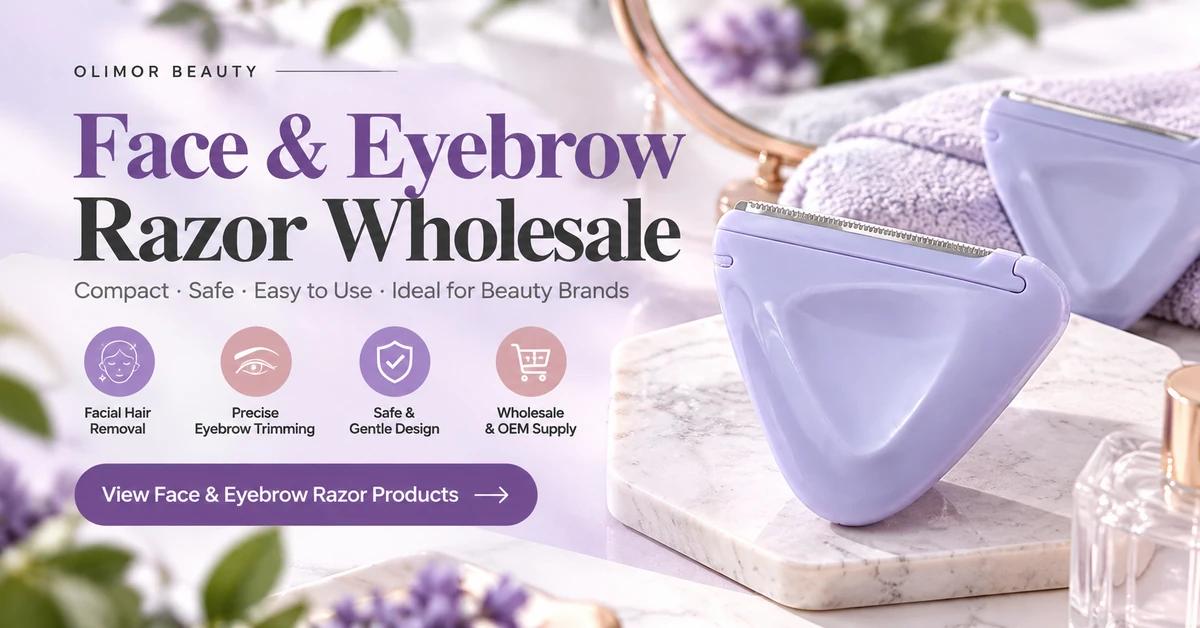
Quick answer: An effective eyebrow razor wholesale program starts by defining the unit of sale, not by accepting the lowest per-piece quote. A single protected razor, a three-piece retail pack and a larger professional-supply case can have different packaging, barcode, inspection, freight and replenishment requirements. Buyers should confirm the razor model and blade protection, cost each complete sellable unit, compare channel-specific margins, and approve a carton and reorder plan before committing to volume.
For cosmetics importers, beauty chains, online retailers and brow-tool distributors, eyebrow razors are compact items that can be easy to add to an assortment but unexpectedly difficult to manage at scale. A supplier may quote one unboxed razor; a retail buyer needs a carded product with its own barcode and instructions. A brand may want three matching razors in one pack, while a salon distributor may need larger protected quantities for frequent replenishment. If the quote, the inventory system and the product page describe different units, the apparent profit can disappear into repacking, returns, incorrect listings or receiving errors.
This article provides a pack-first buying framework for eyebrow razors. It explains how to choose the sales format, compare two documented OLIMOR product references, specify blade and protector requirements, calculate example landed costs, control carton and GTIN data, manage mixed-SKU orders and write a quotation request. It does not repeat a manufacturing-process audit or a custom-tooling development plan. Where numbers are illustrative, they are labeled as hypothetical rather than presented as OLIMOR prices or actual supplier performance.
1. What Is Eyebrow Razor Wholesale—and What Exactly Are You Buying?
Eyebrow razor wholesale is the business purchase of eyebrow and facial-grooming razors in quantities intended for retail resale, professional distribution, beauty kits or brand supply. Unlike a personal retail purchase, a wholesale program must connect a specific physical product to an agreed saleable pack, quality specification, commercial quotation and repeat-order system. “One razor” and “one retail unit” are not necessarily equivalent.
A supplier may sell an individual guarded razor, several units wrapped together or a master carton of separately protected tools. The buyer must know whether the quoted quantity counts blades, razor pieces, retail packs or shipping cartons. This distinction controls revenue, stock records, warehouse receiving, shelf labels and freight calculations.
For example, an order for 3,000 “units” may mean 3,000 individual razors, 3,000 three-packs containing 9,000 razors, or 3,000 cartons. Each interpretation implies radically different cost and production requirements. Your request for quotation (RFQ) should therefore define pieces per consumer pack, consumer packs per inner carton, inner cartons per master carton, and the exact SKU and revision.
Wholesale sourcing is appropriate when a buyer has a channel, a realistic demand estimate and a method for accepting and recording goods. If the project instead needs entirely new blade-holder geometry or a proprietary handle, it may require OEM engineering beyond an ordinary wholesale purchase. Keep that work separate from routine stock procurement so that one-time design expense is not confused with regular unit economics.
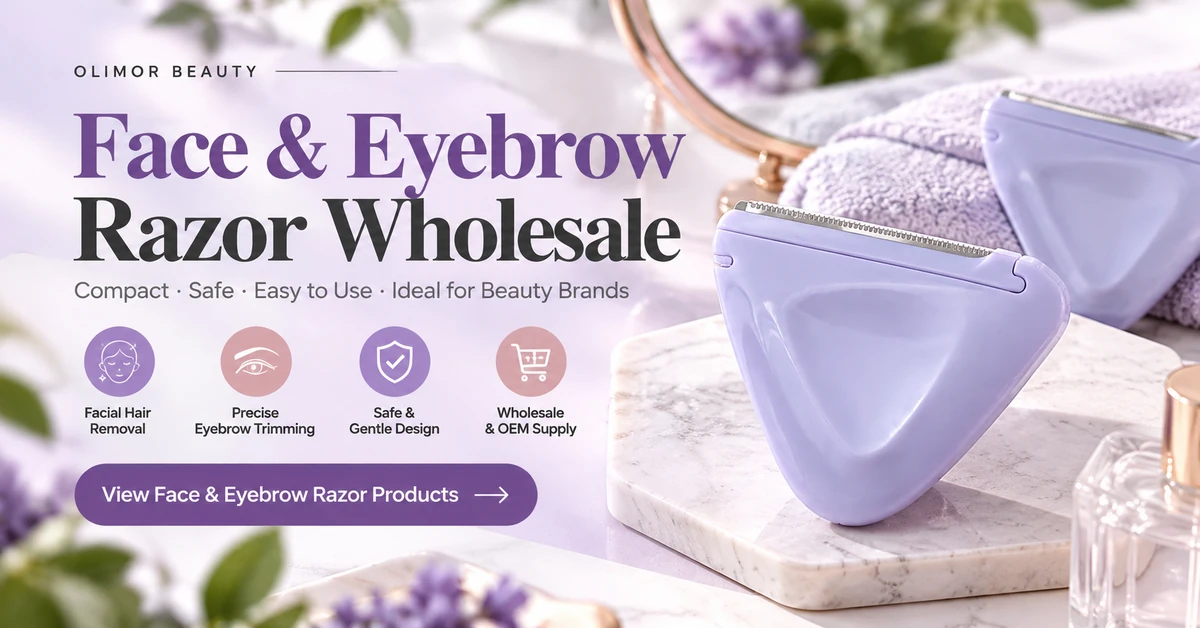
2. Match the Pack Format to the Actual Buyer
There is no universally best eyebrow razor pack count. A drugstore shopper may want one clearly protected tool. An online customer may value a small multipack. A salon or beauty-school distributor may need frequent access to individually protected replacements. The right format depends on the customer, the expected use, shelf or fulfillment constraints, and the margin the channel must earn.
| Buyer / sales channel | Most relevant format to assess | Main commercial question | Operational risk |
|---|---|---|---|
| Drugstores and mass beauty retailers | One retail-ready razor or compact multipack | Does the presentation match shelf space and target price? | Barcode, label and display mismatch |
| Amazon, Shopify and marketplace sellers | Protected three-pack or another tested consumer pack | Does the landed cost include fulfillment and returns? | Packaging damage and inaccurate listing contents |
| Regional beauty-tool distributors | Repeatable standard SKUs in fixed case quantities | Can inventory be replenished by carton without SKU confusion? | Mixed cartons, stockouts and unapproved revisions |
| Brow studios and professional supply businesses | Individually protected tools in a defined larger pack | Does the format support practical storage and inventory control? | Missing guards, inappropriate reuse claims |
| Gift and travel-accessory programs | One approved razor within a coordinated set | Does the blade protector remain secured in the kit? | Unprotected sharp components |
| Private-label beauty brands | Verified existing razor with approved branded packaging | Can one clear hero SKU be repeated consistently? | Decoration cost and packaging minimums |
A buyer serving several channels can build separate pack configurations from one approved razor, but should not assume that the supplier can automatically combine any quantities, colors or printed boxes. Each configuration requires its own product record and final packed sample. Sometimes one core retail pack sold through several channels is more manageable than several nearly identical variations.
3. Two OLIMOR Eyebrow Razor References Worth Comparing
OLIMOR BEAUTY, associated with Bonet Houseware Co., Ltd. in Yangjiang, Guangdong, China, lists eyebrow razors within its beauty and personal-care tool range. Its Eyebrow Razor category is the appropriate starting point for viewing published designs. Two product pages provide specific dimensions and broad material information useful for a preliminary wholesale shortlist.
| Public product reference | Published material | Published length | Published weight | What is still needed for a wholesale quote |
|---|---|---|---|---|
| ERF1030 Eyebrow Razor | Stainless steel + plastic | 104 mm | 4.1 g | Current availability, blade details, guard/cap and final packaging |
| ERF1020 Eyebrow Razors | Stainless steel + plastic | 137 mm | 7 g | Current availability, assembly, pack quantity and customization feasibility |
These are details shown on the relevant OLIMOR product pages, not independently measured specifications or binding bulk offers. Both pages displayed out-of-stock status when reviewed. A new production order may still be possible, but its feasibility, samples and schedule must be confirmed directly. The product listings do not verify the exact blade-alloy grade, cutting-edge profile, plastic resin, factory capacity, MOQ or lead time for an order.
The models also have different published lengths. That may affect how a retail package, display card or travel kit is designed. It does not prove that one performs better, is more suitable for sensitive skin or has a longer service life. The buyer must evaluate the actual working edge, guard and handling against the intended cosmetic grooming task.
Use an exact item number in the first message to the supplier. “Pink eyebrow razor” or “stainless eyebrow tool” is not enough to ensure that a sample, quotation and reorder refer to the same product.
4. Build Three Commercial Pack Architectures
Three pack archetypes can help importers test a category without launching dozens of near-identical SKUs. They are proposed buying formats, not confirmed OLIMOR stock products or standard minimum quantities.
A. Single protected razor
A single retail unit is simple to explain and may support trial purchases or shelf merchandising. The buyer must account for the protector, retail backing or box, instructions, barcode and the space required to display it. The per-razor packaging cost may be relatively high because one tool carries the entire pack cost.
B. Three-piece consumer pack
A three-pack can communicate quantity value and may be suitable for e-commerce or everyday grooming assortments. But it requires checking the contents, color mix, count, individual protection and package stability. If one piece is missing, the entire sellable pack may be incorrect even when the remaining razors function properly.
C. Ten-piece professional-supply pack
A larger case or bagged unit can be relevant for approved professional supply channels if each razor is protected and handling instructions are appropriate. It should not be marketed as sterile or suitable for unrestricted reuse. The purchaser must decide whether the actual unit of sale is ten individually protected razors, ten retail packs or a bulk inner carton.
| Format for evaluation | Pieces per sellable unit | Packaging role | Best-suited channel to investigate | Primary QC risk |
|---|---|---|---|---|
| Single protected razor | 1 | Clear identity and shelf presentation | Retail trial / individual purchase | Exposed blade or weak cap retention |
| Three-piece consumer pack | 3 | Convenience and value presentation | E-commerce / general beauty retail | Inaccurate count or mixed versions |
| Ten-piece professional-supply pack | 10 | Organized storage and repeat purchase | Salon-supply distributor | Missing individual protection or receiving errors |
Avoid treating multipacks as a guaranteed higher-margin format. More pieces per pack can reduce packaging cost for razor, yet the selling price, channel fees and demand may also change. A ten-pack that sits unsold for a year is not more profitable merely because its initial cost per blade is low.
5. Define a Bill of Materials for Each Sellable Pack
A small razor pack can contain more components than a buyer expects. A clear bill of materials (BOM) lists every material and component required for one finished unit. For an eyebrow razor, it may include the base tool, protective cap or folding storage component, sleeve, printed card, carton, insert, instructions, barcode label and master-carton specification. Actual components depend on the selected design.
For a three-piece format, the BOM must make clear whether the package contains three identical tools, three colors or different head styles. If colors vary, record the approved combination and the permitted tolerance for appearance. If spare accessories are advertised, name and count them exactly; do not imply that items are included because they appear in lifestyle photographs.
The quotation should reference the BOM revision. The same BOM should drive package artwork, the purchase order, the inspection checklist and the warehouse receipt. Otherwise, a perfectly acceptable loose tool can become a defective finished retail SKU because the packaging components are inconsistent.
For private-label projects, ask whether decoration and custom-printed materials have different minimum batches. A supplier may be able to quote an established razor while the packaging printer requires a separate order quantity. These constraints need to be exposed before the buyer approves the pack design.
6. Blade Protection Is a Packaging Requirement, Not Just a Product Feature
An eyebrow razor is a sharp cosmetic grooming accessory intended for controlled hair trimming. Protection must be considered during storage, packing, transport, retail handling and consumer use. The relevant approach depends on the tool's blade-holder and guard construction. A protective cap, closed folding mechanism or approved retail insert should match the exact SKU.
Inspect whether the protector remains in place under agreed handling conditions. Check for blade exposure, damaged guard features, rough edges, loose assembly and unwanted movement within the retail package. For multipacks, examine whether one razor can damage another during shipment. For a gift set, verify that sharp components do not contact unrelated tools or the user's hand during ordinary unpacking.
Do not claim that guarded razors cannot nick skin, are sterile or are appropriate for all users. Follow the actual intended use and market-specific product-information requirements. The retailer's product page should not encourage use on irritated or broken skin or describe a cosmetic razor as medical equipment without an appropriate basis.
An inspection checklist for each packaging format
| Check | Single pack | Three-pack | Ten-pack |
|---|---|---|---|
| Correct model, blade and guard | Every approved reference | All three pieces | All pieces within the sampled pack |
| Protector/cap or safe closed position | Confirm fit | Confirm each tool | Confirm individual protection |
| Contents count | One complete unit | Exactly three as specified | Exactly ten as specified |
| Retail or inner packaging fit | Tool restraint | No rubbing or edge contact | Practical storage and separation |
| Identification | Correct SKU / barcode | Correct multipack SKU / barcode | Correct trade-pack reference |
| Carton count and lot identity | Agreed case quantity | Packs per case | Packs or tools per master carton |
A packaged product should be accepted as a complete unit, not just by checking that a blade can trim a test medium. This is especially important for overseas buyers whose distribution route involves several handling steps.
7. Material, Dimension and Model Verification Before Pricing
The public ERF1030 and ERF1020 listings identify “stainless steel + plastic.” That description does not identify the blade steel grade, handle polymer, protective material, coating or assembly method. If one of these properties affects your destination market, product description or quality plan, request the actual model-specific information.
A useful buyer specification includes the item number; agreed product length and key dimensions; component materials; blade and guard reference; handle design; protector or folding action; finish and color; product weight basis; units per sellable pack; packed dimensions; and approved artwork. Add inspection methods and acceptance criteria where they are warranted by the product risk.
Avoid copying technical details from one SKU to another. A 104 mm razor does not automatically share a blade construction with a 137 mm model. Nor should a catalog's “customized” color entry be interpreted as proof that unlimited colors are available at any quantity. Sample the exact requested finish and configuration.
When the supplier sends replacement samples, record whether the product revision changed. Keep one retained, identified sample when practical. That makes later buyer and supplier conversations more objective: the question becomes whether the delivered product matches the approved version, not whether it merely resembles a photograph.
8. Why Published Website Prices Are Not Wholesale Quotations
A product-page price can help buyers identify a listing but may not reflect the price for a specific business order. In the OLIMOR category, publicly displayed amounts vary across products and are not accompanied by a universal confirmed wholesale quotation covering every pack and destination. Buyers should not use them as a binding basis for margin planning.
A proper wholesale quotation should show the exact reference model, quantity per SKU, quantity per pack, protection and packing scope, any branding or color requirements, sampling fees, one-time setup charges, freight basis, delivery term with a named place, expected production stages and validity date.
Ask for feasible quantity breaks. A quote for 5,000 individual loose razors is not directly comparable with 5,000 three-packs containing 15,000 razors. The number of razor pieces, retail units and cartons must be stated independently.
| Quotation field | Why the buyer needs it | Typical error to avoid |
|---|---|---|
| Model and revision | Defines the tool | Comparing unlike models |
| Pieces per pack | Defines consumer contents | Confusing piece and pack prices |
| Quantity per SKU | Controls production and price tier | Assuming mixed colors share one MOQ |
| Protective components | Controls safe storage and fulfillment | Protector excluded from price |
| Printed packaging | Determines market presentation and cost | Comparing loose against boxed goods |
| Inner/master carton data | Drives receiving and freight | Quoting without case dimensions |
| Incoterm and named place | Allocates delivery tasks, cost and risk | Comparing different trade bases |
| Inspection and corrective-action terms | Defines lot acceptance | “High quality” without criteria |
The goal is a quote that purchasing, finance, warehouse and marketing can all interpret in the same way.
9. Worked Landed-Cost Comparison: One, Three or Ten Razors
A pack-first cost model should calculate both landed cost per razor and landed cost per sellable pack. The first is useful for understanding component economics; the second is essential for comparing channel pricing and inventory value.
The following figures are hypothetical teaching assumptions, not OLIMOR quotations, verified industry averages, current freight rates or import duties. Assume, per razor, a base tool cost of US$0.24, an individually approved protector allowance of US$0.03, freight and import allocation of US$0.06, and inspection/inbound allocation of US$0.02. That yields a hypothetical pre-retail-pack cost of US$0.35 per razor. Assume packaging costs of US$0.14 for a single, US$0.23 for a three-pack and US$0.48 for a ten-pack.
| Hypothetical format | Razor pieces | Subtotal before retail packaging | Packaging per sellable pack | Landed cost per sellable pack | Landed cost per razor |
|---|---|---|---|---|---|
| Single pack | 1 | $0.35 | $0.14 | $0.49 | $0.49 |
| Three-pack | 3 | $1.05 | $0.23 | $1.28 | $0.427 |
| Ten-pack | 10 | $3.50 | $0.48 | $3.98 | $0.398 |
Under these assumptions, larger packs allocate less packaging expense to each razor. The calculation does not prove that freight would remain US$0.06 per razor at all pack dimensions or destinations; a real shipping quotation may change the result. It also excludes any additional platform fees, claims testing, marketing, storage, returns, finance costs or unusual packaging development.
For a business buyer, the right conclusion is not “always buy ten-packs.” It is “define each pack clearly, obtain actual input costs and then compare the total cost against the relevant channel price.”
10. Convert Landed Cost Into Channel Margin, Not a False Profit Claim
Gross margin is the portion of sales revenue remaining after the cost of goods sold, before many operating expenses. In a simple wholesale planning example:
Gross margin % = (net selling price − landed cost per sellable pack) ÷ net selling price × 100.
Suppose the hypothetical importer sells the single pack to its retail customer for US$1.05, the three-pack for US$2.35, and the ten-pack to a professional distributor for US$6.80. Using the illustrative landed costs above gives the following example:
| Hypothetical format | Landed cost / pack | Example importer selling price | Approximate gross margin | What remains excluded |
|---|---|---|---|---|
| Single pack | $0.49 | $1.05 | 53.3% | Overhead, promotion, credit risk, returns |
| Three-pack | $1.28 | $2.35 | 45.5% | Platform and fulfillment fees if relevant |
| Ten-pack | $3.98 | $6.80 | 41.5% | Distributor expenses and inventory carrying cost |
These prices and margins are not OLIMOR offers, real market prices or guaranteed returns. A lower gross margin item may still be valuable if it moves quickly and requires little handling. A high-margin single pack may be less attractive if repeated small shipments generate significant processing costs.
Retailers also have their own buying prices, consumer selling prices, promotional discounts and taxes. Do not confuse an importer's wholesale gross margin with a store's retail margin. A sound plan models the business that will actually receive revenue from the product.
For e-commerce, include the marketplace commission, picking/packing, parcel charge, advertising, refunds and damaged-stock allowance. For salon supply, include sales-service and trade-credit costs. This creates a contribution view more useful than a decorative “high margin” statement in a supplier brochure.
11. How to Plan Cartons, Barcode and Inventory Identity
Every different sellable unit needs a clear inventory identity. A single razor and a three-pack are not interchangeable stock items even if the individual razor inside is identical. Their consumer-facing information, barcode, packaging dimensions, receiving quantities and replenishment logic differ.
For retail trade items, follow the relevant GS1 and retailer requirements when allocating a Global Trade Item Number (GTIN). GS1 guidance distinguishes retail trade-item barcodes from symbols used in logistics contexts. Do not invent a GTIN or reproduce another company's barcode. Confirm what identifiers and labels are needed for each individual pack, inner pack and outer carton.
Define carton counts before shipment. A quotation might state “100 units per carton,” but the buyer needs to know whether that means 100 loose razor pieces, 100 single retail packs, 100 multipacks or 100 trade cases. Such ambiguity can distort freight cost and create discrepancies on arrival.
A practical carton record includes the product SKU and revision, pack type, pieces per sellable unit, sellable units per carton, carton dimensions, gross weight, batch/lot identification, destination marks and any required pallet configuration. When cartons are mixed, the supplier should use an agreed and unambiguous label scheme rather than combining indistinguishable products.
The warehouse should be able to receive goods without opening every carton to discover what has arrived.
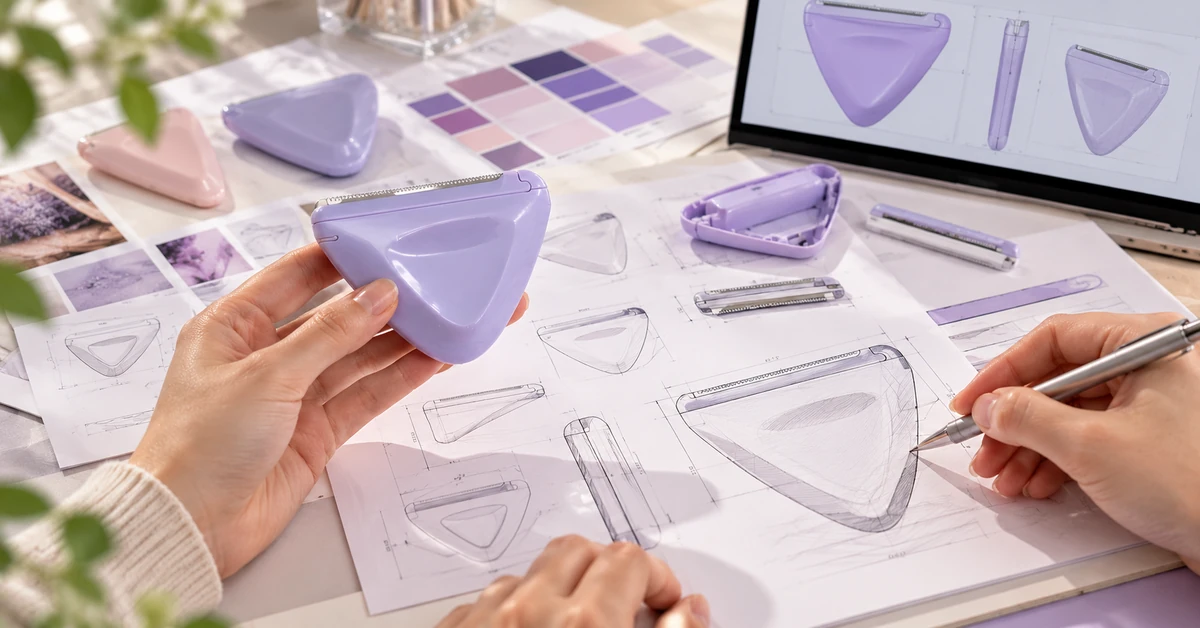
12. Choose a Small Initial SKU Matrix Instead of Guessing Demand
Many buyers create too many colors and pack variants because every option looks commercially attractive in a catalog. But each variant adds an inventory record, possible packaging setup cost, inspection reference and replenishment forecast. For a first order, it is often more useful to start with one or two physical razor models and a clearly justified pack selection.
Consider an illustrative, not recommended-as-universal, 4,000-piece launch made up of 1,200 single packs, 600 three-packs and 100 ten-packs. These equal 4,000 physical razors but only 1,900 sellable packs. The buyer must forecast both numbers correctly. This quantity is an arithmetic demonstration and does not imply that OLIMOR can accept that exact mix or has a corresponding MOQ.
| Assumed SKU | Sellable packs | Pieces per pack | Total physical razors | Operational focus |
|---|---|---|---|---|
| Single-razor SKU | 1,200 | 1 | 1,200 | Retail sampling and shelf placement |
| Three-razor SKU | 600 | 3 | 1,800 | Count accuracy and parcel protection |
| Ten-razor trade SKU | 100 | 10 | 1,000 | Individual protection and trade receiving |
| Total | 1,900 | — | 4,000 | Two different inventory units must be tracked |
The first decision should be based on actual channel demand. A beauty chain may choose primarily single packs; an online distributor may choose multipacks; a professional supplier may prefer a larger clearly defined unit. Do not force every business into the same mix simply because the table makes an appealing presentation.
Keep the physical model and retail-pack configuration independently identified. This allows the buyer to change package strategy without accidentally changing the approved blade and guard specifications.
13. Replenishment: Forecast in Sellable Packs and Components
Reordering requires more than monitoring the total number of razor pieces in the warehouse. A three-pack cannot necessarily be replenished by taking three single retail packs out of stock; different artwork, product identifiers and packing configurations may apply. Forecast demand at the saleable-SKU level, then convert the forecast into physical component requirements for the supplier.
A simplified reorder point is:
Reorder point (packs) = average weekly demand (packs) × (confirmed supply lead time + chosen safety coverage), both measured in weeks.
For example, imagine a retailer sells 85 three-packs per week, its verified planning lead time is 6 weeks and it chooses 2 weeks of safety coverage. The illustrative reorder point is 85 × (6 + 2) = 680 three-packs. That corresponds to 2,040 individual razors before allowance for scrap or supplier pack multiples. Neither the demand nor the lead time is a claim about OLIMOR.
If the store has 420 three-packs on hand, 180 confirmed on order and 30 customer backorders, the stock position is 420 + 180 − 30 = 570 packs, below the 680-pack example reorder point. The next purchase quantity still depends on desired coverage, open purchase orders, MOQ, cash limits, promotions and carton multiples; it is not automatically just the 110-pack difference.
Review actual lead time from the current supplier quote rather than reusing a number from an old order. Ask whether the stated timeline covers sample approval, packaging printing, manufacturing, shipment departure or arrival at destination. A trade term alone does not establish a guaranteed arrival date.
14. How to Prevent Returns and Complaints in Wholesale Razor Programs
Returns can destroy margin in a low-value accessory category. Some are caused by the tool, others by inaccurate listings, missing caps, wrong colors, bent retail cards or mixed cartons. Treat these as different categories; changing the blade cannot fix a warehouse identification error.
Use a two-level inspection system. At the product level, examine the selected razor's working end, guard, handle, blade retention and protector. At the packed-unit level, confirm count, color or configuration, product information, barcode, protection and carton identification. A three-pack passes only when all three tools and the overall pack meet agreed requirements.
Where an agreed attribute-sampling system is relevant, ISO 2859-1:2026 provides methods for lot-by-lot acceptance sampling. This is a sampling standard, not an eyebrow-razor product certification or proof that a supplier is compliant with every market regulation. Buyers still need product-specific acceptance criteria and appropriate action for serious sharp-edge or blade-retention defects.
Save photographs and records tied to the actual lot, pack SKU and product revision. When complaints arise, the buyer can determine whether the issue originated in blade components, packing, transport, online description or the customer's use context. Better categorization makes corrective actions more targeted.
15. Packaging Claims, Market Responsibilities and Appropriate Use
Eyebrow razors should be presented as cosmetic grooming tools for their approved intended use, with suitable instructions and warnings. Do not use phrases such as “100% safe,” “never cuts,” “sterile,” “medical grade” or “guaranteed irritation-free” without evidence relevant to the actual SKU and market. An ordinary stainless-steel component description also does not prove universal corrosion resistance or a particular steel grade.
The importer and brand should review the applicable destination-market rules before artwork approval. For consumer products sold in the European Union, the General Product Safety Regulation (EU) 2023/988 may be relevant to product information and responsibilities; the precise requirements depend on the transaction, product and operator role. The regulation is not a special “eyebrow razor certification.” Consult competent market-specific professionals where needed.
If your retail offer includes a three-pack, the contents and quantity statement should match the actual shipped pack. If a cap is shown or described as included, confirm its presence and retention. If a product photo shows a different blade profile from the approved SKU, update it. Accurate claims improve consumer understanding and reduce avoidable customer-service disputes.
Product pages, printed labels, carton records and warehouse listings should use the same approved model and pack description. Search systems and AI discovery tools also benefit from clear, consistent product information, but such consistency is not a guarantee of ranking or automated recommendations.
16. Freight and Trade Terms: Compare Like With Like
A razor is lightweight, but packaging volume can materially affect freight and storage. Ask for completed pack and carton dimensions, not only the length and weight of an individual razor. A multi-pack in a rigid presentation box may occupy much more volume than the same number of individually protected tools in a compact inner carton.
Use the same commercial basis when comparing suppliers. ICC Incoterms® 2020 clarifies responsibilities for delivery tasks, cost allocation and risk transfer under agreed trade terms. The purchase order should specify the chosen Incoterm and the named place or port, and separately state product quality, inspection rights, packaging, and any remedies required by the agreement.
Request an itemized estimate for manufacturing, custom packaging, pallet or carton handling, freight and other import costs that the buyer needs to budget. Ask whether insurance is included under the proposed arrangement and what records the forwarder requires. The precise landed cost depends on the route, destination, shipment size and applicable legal duties.
A supplier may give a lower unit quotation under one delivery basis but leave more transport responsibility with the buyer. The right decision uses the whole commercial arrangement rather than comparing unit-price columns without context.
17. Select a Supplier That Can Support Repeatable Pack Data
An overseas razor supplier should do more than send samples and a price. For repeat purchasing, the buyer needs a stable product identity, a documented pack configuration, a way to resolve nonconforming deliveries and communication when important components change.
A useful supplier evaluation asks: Who is the contracting company? Which site makes or assembles the specific model? Who supplies blades and protectors? Are package printers controlled separately? How are the samples identified? Can the supplier provide carton dimensions and pack counts? Is there a process for notifying the buyer before the blade, guard, handle or package is changed?
For OLIMOR, the About Us page describes product development and order-related quality checks, while the Contact Us page invites buyers to share product, quantity and customization needs. Those statements are helpful starting points, but they are not substitutes for a model-specific sample, written quotation or independently verified certification.
Do not invent production capacity, guaranteed delivery dates, fixed MOQ, certificate coverage or annual export figures for a particular razor. A reliable buyer discussion identifies what the company can document now and what remains open for review.
18. Request a Quote That Separates Piece, Pack and Carton Quantities
An effective RFQ should identify the intended customer, selected product, saleable pack, expected quantity, destination, decoration, quality and shipping needs. It should distinguish confirmed specifications from options still under supplier review.
| RFQ section | Information the buyer should provide |
|---|---|
| Reference | OLIMOR ERF1030, ERF1020 or exact product link |
| Buyer market | Country, sales channel and intended adult cosmetic use |
| Pack format | Single, three-piece or defined trade pack |
| Pack contents | Razor model, colors, protectors, inserts and instructions |
| Planned demand | Sellable packs and equivalent physical razor count |
| Branding | Logo, color and printed package only if needed |
| Quality | Approved sample, blade/guard checks, pack and carton inspection |
| Logistics | Inner/master carton data, destination and named delivery basis |
| Commercial | MOQ per configuration, price tiers, sampling, lead-time assumptions |
| Replenishment | Expected reorder pattern, change approval and lot records |
Example RFQ:
We are developing an eyebrow razor wholesale assortment for beauty retail and distribution. We would like to compare current OLIMOR ERF1030 and ERF1020 references, subject to confirmation of sample and bulk-order availability. Please quote the feasible single-piece and three-piece protected retail configurations, and advise whether an individually protected trade pack can be supplied. We need the actual model and blade/guard specifications, contents and packaging options, MOQ by pack/SKU, carton quantities and dimensions, current sample and production timing, inspection scope and delivery terms with a named place. Our planned quantities and destination will be provided for a detailed quotation. Please identify any additional setup or printing charges separately from the standard product cost.
This message is more useful than asking only for a “best price for eyebrow razors,” because it allows the sales team to prepare comparable options and identify which requests need additional approval.
19. Why OLIMOR BEAUTY Is a Relevant Product Starting Point
OLIMOR BEAUTY presents a range of beauty and grooming accessories associated with Bonet Houseware Co., Ltd. in Yangjiang, Guangdong, China. The catalog includes eyebrow razors as well as related tweezers, beauty scissors and eyelash curlers. Those neighboring categories may be useful for a coordinated brow-tool range, but each product requires its own specification and approval.
For this wholesale article, the central product references are ERF1030 and ERF1020. Their public listings establish broad material descriptions and size/weight information, not the complete wholesale contract. Buyers should request current samples, the protective arrangement and a quotation reflecting the exact chosen pack.
A buyer can begin with the OLIMOR Eyebrow Razor category, shortlist the products that suit the intended channel, then contact OLIMOR with estimated pieces per pack, quantity, destination and commercial expectations. This helps connect the article's buying advice to a real supplier conversation without implying confirmed stock or prices.
20. Frequently Asked Questions About Eyebrow Razor Wholesale
1. What does eyebrow razor wholesale mean for importers?
It means buying a defined razor product in planned quantities for resale or professional distribution. The purchase must specify the physical model, protective components, sellable pack, carton quantities, quality requirements and commercial terms. A quote for individual loose razors cannot be assumed equivalent to a quote for complete retail multipacks.
2. Is a single pack or three-pack better for beauty retail?
Neither is universally better. Single packs may fit trial purchases and shelf presentation; three-packs may support value-oriented retail or e-commerce. Compare the actual customer, packaging cost, landed unit economics, storage and observed sell-through. A larger count is not automatically more profitable.
3. Can an eyebrow razor wholesale order contain several colors or models?
Possibly, but feasibility depends on the supplier and the exact models. Ask about MOQ by product, color and packaging, whether mixed packing is offered, and how each configuration is identified. Do not assume the combination is available simply because several colors are shown on a website.
4. What are the differences between ERF1030 and ERF1020?
OLIMOR's public pages list ERF1030 as 104 mm and 4.1 g, and ERF1020 as 137 mm and 7 g; both use the broad description stainless steel plus plastic. These data do not establish identical blade geometry, plastic material, guard or packaging. Inspect current samples before selecting a retail format.
5. What MOQ applies to wholesale eyebrow razors?
No universal MOQ has been verified for every OLIMOR eyebrow razor and pack configuration. An existing razor, customized color, printed card and multipack can have different minimum quantities. Ask for current quantities by SKU and separately state pack counts and carton multiples.
6. How can I calculate the landed cost of a razor multipack?
Calculate the base cost and approved protection for every physical razor, add the full retail-pack cost, allocate inspection, freight and applicable import expenses, and divide by the number of sellable packs. If you also want cost per razor, divide the pack cost by its contents. The result must use real quotations rather than hypothetical examples.
7. Which quality checks are essential for razor wholesale orders?
Confirm correct SKU, cutting-edge and guard condition, secure blade assembly, handle integrity, cap or folding protection where applicable, pack contents, artwork, barcode, carton count and lot identification. Safety-related defects need specific control; do not rely only on a generic cosmetic inspection statement.
8. Can a ten-piece pack be sold to professional beauty channels?
It can be evaluated as a commercial format if the supplier and buyer approve its contents, individual protection, use instructions and destination-market obligations. A trade pack must not be described as sterile or suitable for unrestricted reuse without evidence. Professional buyers should confirm how tools are stored and handled in their actual setting.
9. How should I plan reorders for three-pack eyebrow razors?
Forecast demand in three-packs, not loose razor pieces. Estimate a reorder point using actual weekly sales, confirmed replenishment lead time and chosen safety coverage. Convert the planned pack order into equivalent razor pieces and confirm the supplier's MOQ, packaging and carton restrictions before issuing the purchase order.
10. How do I obtain an OLIMOR eyebrow razor wholesale quotation?
Browse the Eyebrow Razor collection and select product references. Then use Contact Us to provide model, target market, pack type, estimated quantity, packaging, destination and any quality or branding requirements. Request current availability, MOQ, detailed pricing and delivery conditions for the exact proposed configuration.
Conclusion
An effective eyebrow razor wholesale strategy starts with clarity about what is being sold: one protected razor, a consumer multipack or a defined trade pack. Those configurations can use similar products, yet they require different unit economics, packaging checks, inventory identifiers and reorder calculations. Without a controlled pack definition, a low unit price is not reliable evidence of a profitable order.
For beauty brands, importers and distributors, the most useful buying sequence is to identify the target customer, shortlist real products, approve the blade and protection system, define the complete sellable pack, compare itemized quotations on the same trade basis and calculate channel-specific margin. Then build receiving checks and a replenishment plan around the actual retail SKU, not an ambiguous piece count. Keep destination-market claims accurate and confirm commercial terms for each order.
OLIMOR BEAUTY's Eyebrow Razor category provides starting references, including published models ERF1030 and ERF1020. If you are planning single-pack, three-pack or professional-supply purchases, contact OLIMOR with your chosen models, target market, pack counts, forecast quantity and delivery destination. A clear specification and an evidence-based quotation offer a stronger foundation for qualified inquiries and repeat wholesale purchasing.
Tag:
Related articles

- Retail & Wholesale Solutions
- Beauty Tools Wholesale
Eyelash Curler Wholesale: A 90-Day Assortment, Margin and Reorder Playbook for Beauty Buyers
- Retail & Wholesale Solutions
- Beauty Tools Buying Guide
Beauty Tools Factory China Product Comparison: Nail Clippers, Tweezers and Eyelash Curlers
- Retail & Wholesale Solutions
- Beauty Tools Buying Guide