Custom Tweezers for Beauty Brands: How to Choose Precision Tools for OEM and Wholesale Programs
Custom tweezers may look simple, but buyers know that small differences in alignment, tip shape, grip texture and finish can change the entire user experience. For brow studios, beauty retailers, private label brands and international distributors, a tweezer is not just a grooming accessory. It is a product that customers judge immediately by how cleanly it catches fine hair, how steady it feels in the hand and how well it keeps its shape after repeated use.
Olimor Beauty works with beauty tools for personal grooming and professional care, including custom tweezers designed for precision hair removal and brow shaping. This guide explains what to evaluate when selecting OEM custom tweezers or building a wholesale tweezer range, using practical criteria that help buyers compare options before moving into sampling, packaging and larger orders.
What Makes a Custom Tweezer Worth Producing?
A good custom tweezer should do more than match a brand color. It should solve a specific grooming need for the customer. Some users want a tool for removing short, stubborn brow hairs. Others need fine control for shaping arches or cleaning small areas without pinching the skin. A wholesale buyer may need one versatile style for broad retail distribution, while a salon-focused brand may prefer a more professional grip and a refined finish.
When planning a custom tweezer, start with the use case rather than the decoration. A tweezer built for brow shaping needs tips that meet evenly and securely. A tool intended for frequent professional use should feel stable and comfortable through repeated hand movements. A beauty gift set may place more emphasis on finish, packaging and visual appeal, but it still needs dependable plucking performance. Decoration can support the product story, but precision is what earns repeat purchases.
Tip Shape, Alignment and Grip: The Details Buyers Should Check
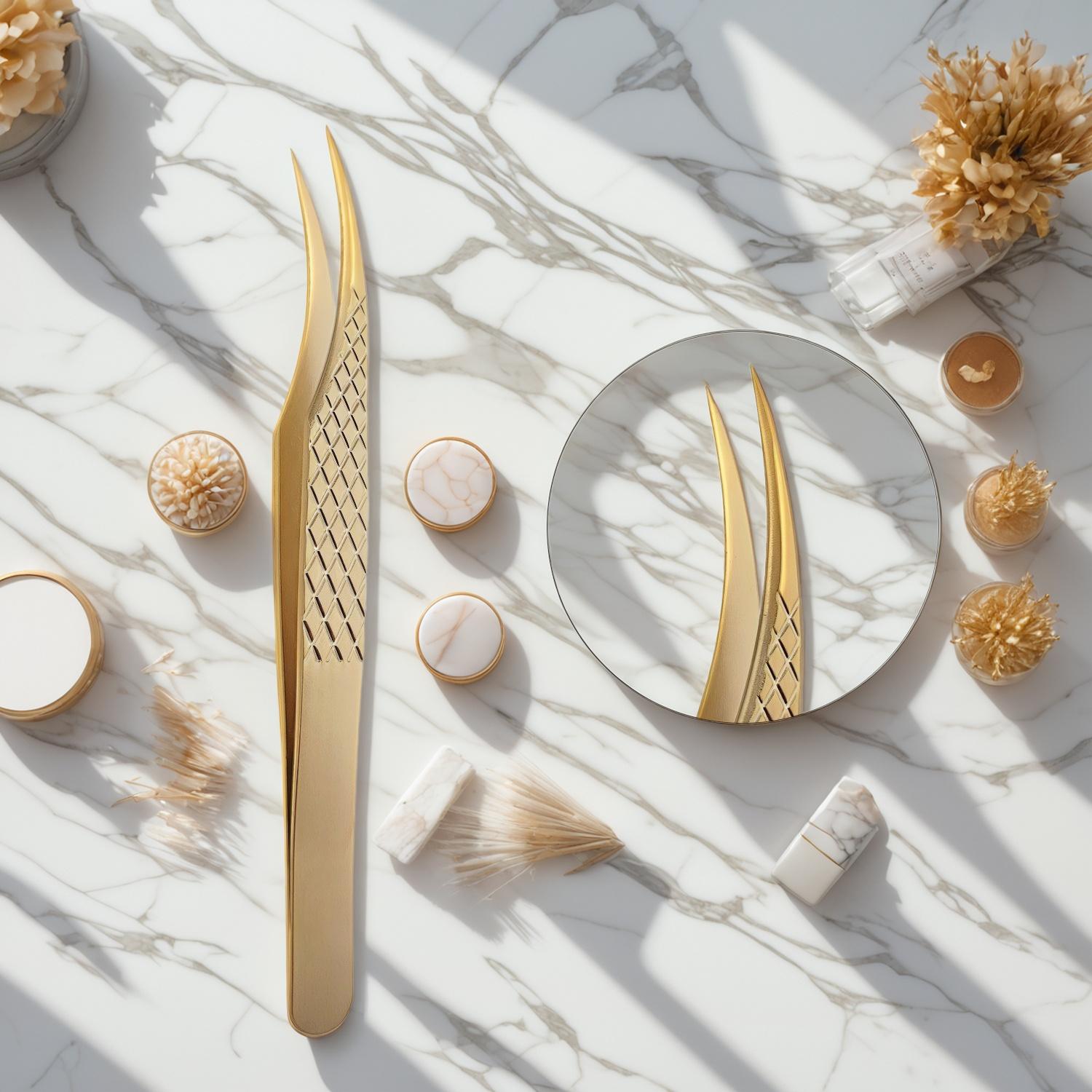
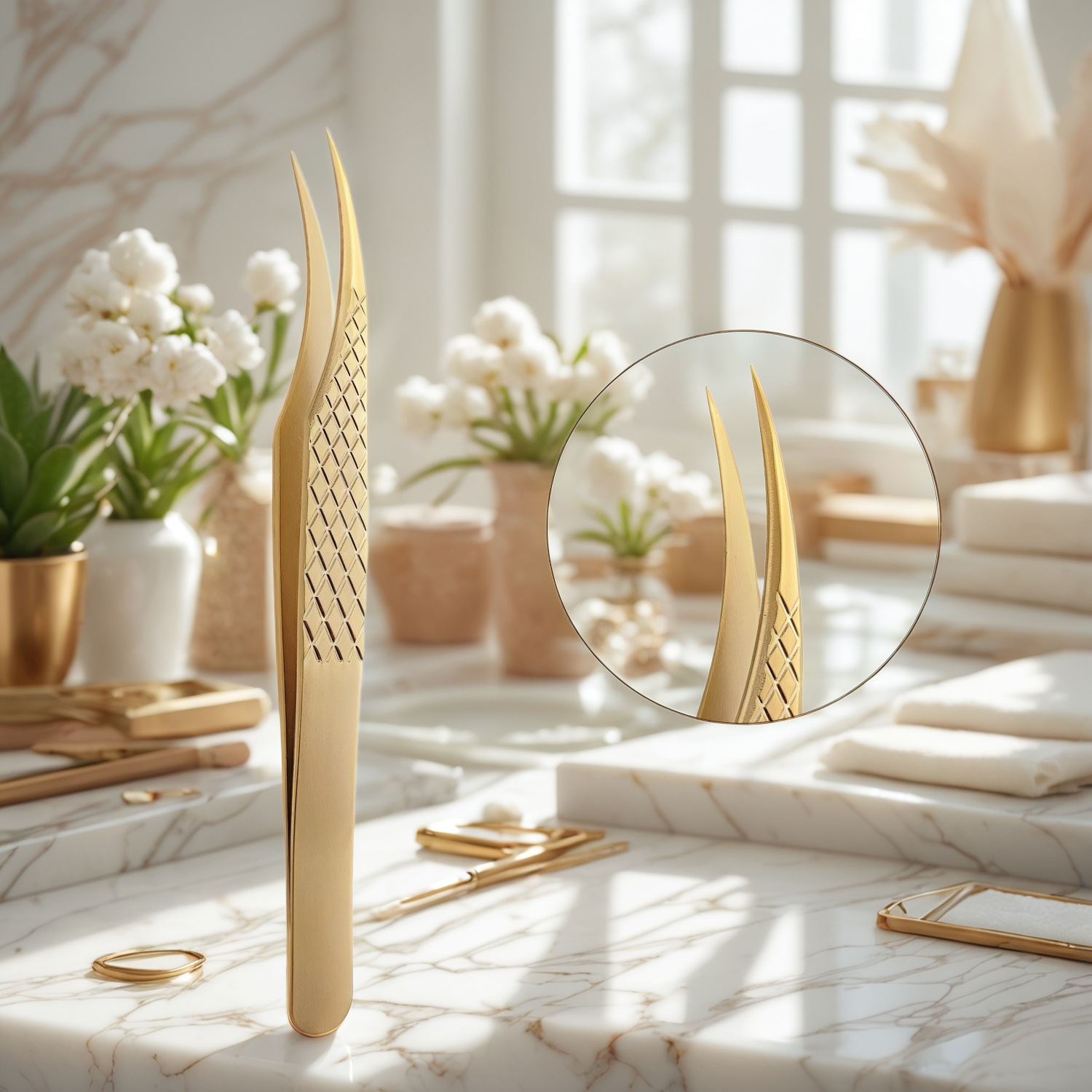
The working end of a tweezer determines whether it feels precise or frustrating. The original Olimor Beauty tweezer description highlights curved tips for grasping fine hairs, a diamond-pattern grip for control and a smooth plucking action. Those are meaningful features because they affect how the tool behaves in real use, not only how it looks in a product photo.
For OEM custom tweezers, review samples carefully and test them against realistic tasks. Try grasping fine brow hair, short regrowth and a single hair close to the skin. The tips should close evenly, without a visible gap, twist or uneven pressure. The grip area should help the fingers stay steady without feeling sharp or uncomfortable. A decorative finish should not make the handle slippery.
- Tip contact: The two sides should meet cleanly at the working edge for controlled hair removal.
- Tip shape: Curved or angled tips can help with fine hair and detailed brow work, depending on user preference.
- Spring tension: The tweezer should open and close smoothly without requiring excessive force.
- Grip texture: A diamond-pattern or similar grip can improve control, especially for professional users.
- Hand comfort: Edges, pressure points and handle width should be checked during repeated use, not only at first touch.
Using Finish and Appearance Without Sacrificing Function
Luxury positioning often begins with appearance. The supplied Olimor Beauty product description refers to a heavy-duty gold finish and a Golden Tweezer with a refined look. A gold-tone finish can work well for beauty brands that want a polished, giftable or premium presentation. However, buyers should treat finish as one part of the product specification, not the entire value proposition.
Finish decisions should be evaluated alongside practical questions. Does the surface feel comfortable during use? Does the finish allow the grip pattern to remain effective? Is the color suitable for the target retail environment, whether that is a salon counter, online marketplace or curated beauty set? A high-visibility finish may help a product stand out, but the customer will still judge it by performance once it is opened.
For a cohesive range, consider how custom tweezers will sit beside other beauty tool products. If your brand sells lash tools, manicure tools or facial grooming accessories, matching finishes and packaging cues can create a more consistent shelf presence. At the same time, each tool should remain purpose-built. Tweezers require precision at the tips; they should not be treated as a generic metal accessory.
OEM Custom Tweezers: Decisions to Make Before Sampling
OEM custom tweezers are useful for brands that want a tailored product without developing every manufacturing detail from the beginning. Before requesting samples, define the target customer, price position and selling channel. A professional salon tool may need a more controlled grip and a serious product presentation. A consumer beauty kit may prioritize ease of use, compact packaging and a finish that photographs well online.
Useful OEM decisions include the working tip style, handle shape, grip pattern, finish, logo placement and packaging format. It is also important to decide whether the tweezer will be sold as a standalone item, included in a brow kit or paired with related products. These choices influence the required packaging space, instructions, visual design and quality inspection points.
- Define the main use: Brow shaping, fine hair removal, retail gifting or salon back-bar use.
- Choose the handling feel: Consider grip texture, spring tension and whether the tool suits beginners or professionals.
- Select the appearance: Gold-tone, minimalist or other finishes should match the brand identity and selling channel.
- Plan packaging early: A precision tool should be protected so the tips remain aligned during transport and display.
- Set inspection expectations: Tip alignment, closing action, finish consistency and packaging condition should all be reviewed.
Wholesale Tweezers for International Buyers
International wholesale tweezers must be consistent across many units, not only impressive in one sample. Retailers and distributors need tools that can be merchandised clearly, shipped efficiently and presented to customers with confidence. When building a wholesale program, buyers should balance visual variety with operational simplicity. Too many minor variations can make inventory harder to manage, while too few choices may limit appeal across different markets.
A practical wholesale range might include one precision-focused tweezer for brow shaping and one more visually premium option for giftable retail. If a gold finish is selected, product photography, packaging color and display layout should support the premium look without overstating the product. Claims should remain accurate and based on observable features such as curved tips, grip texture and smooth action.
Wholesale buyers can also review Olimor’s broader product collections to think about how tweezers fit into a complete beauty tool assortment. A well-planned assortment helps retailers create cross-sell opportunities while keeping the core product promise clear: controlled, reliable grooming tools for everyday and professional use.
Quality Checks That Matter for Tweezer Performance
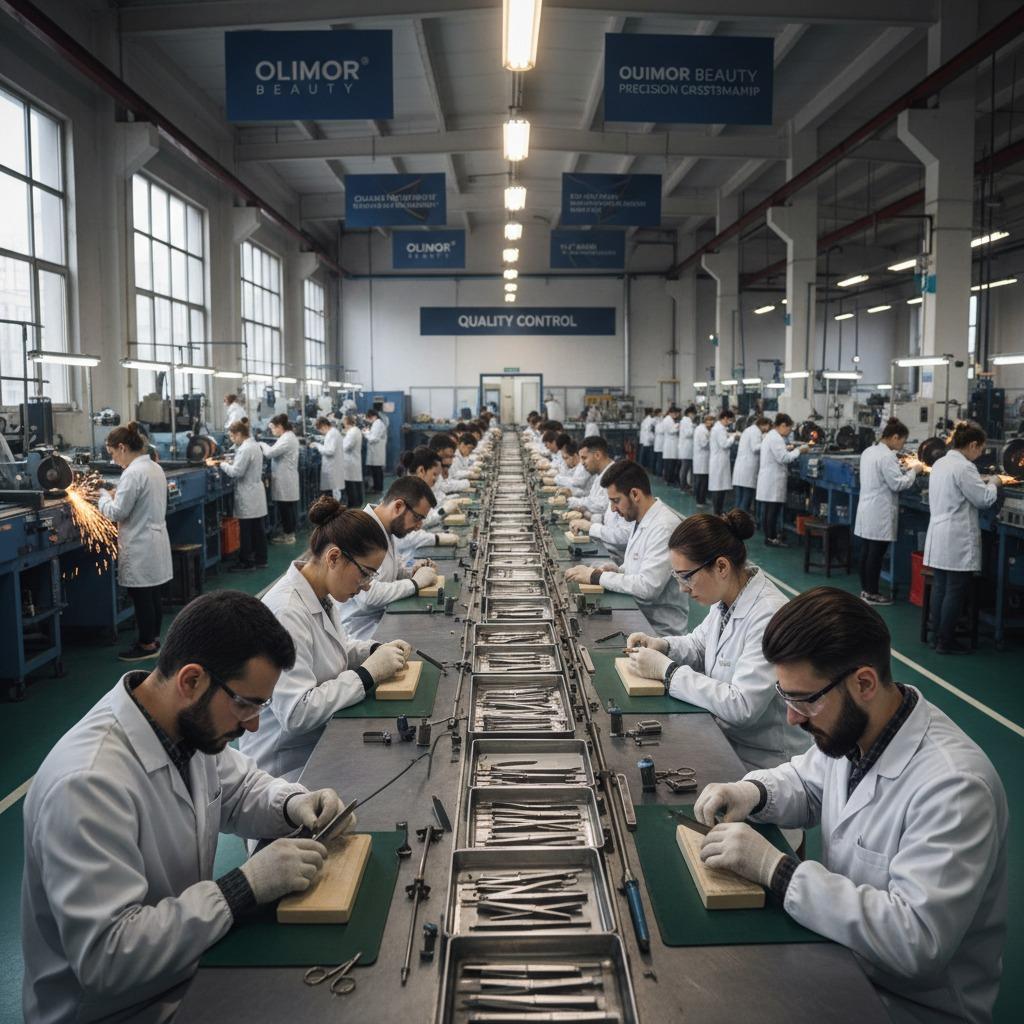
The original product information notes stringent quality checks from raw materials to final packaging and thorough inspection to maintain standards. For tweezers, quality control should focus on the small details that affect performance immediately. A tweezer with uneven tips, rough edges or inconsistent tension can disappoint customers even if the finish looks attractive.
During sample approval or incoming inspection, check multiple units rather than relying on a single piece. Open and close each tweezer several times. Inspect the tip under good lighting. Feel the handle edges. Confirm that the grip pattern is clean and that the finish does not interfere with use. Packaging should protect the tips because even a small bend can reduce accuracy.
| Inspection area | What to look for | Why it matters |
|---|---|---|
| Tip alignment | Even contact when closed | Improves ability to grasp fine hairs |
| Closing action | Smooth movement and balanced tension | Reduces hand fatigue and improves control |
| Grip area | Clean pattern without sharp discomfort | Helps steady handling during brow work |
| Finish | Consistent color and surface appearance | Supports retail presentation and brand quality |
| Packaging | Tip protection and clean presentation | Prevents damage before the customer opens it |
Care Guidance to Improve Customer Satisfaction
Clear care instructions are a simple way to reduce complaints and help customers get better results. Tweezers should be kept clean and dry, stored so the tips are not crushed, and handled carefully to avoid dropping them on hard surfaces. If the tips become bent, the tool may lose precision. For retail packaging or online listings, include concise guidance that explains how to wipe the tool after use and store it safely.
Beauty brands should also describe the intended use clearly. Customers should understand whether the tweezer is designed for brow shaping, fine hair removal or general grooming. Accurate product copy builds trust and avoids unrealistic expectations. For a premium-looking tweezer, plain and useful instructions often feel more credible than exaggerated claims.
Working With Olimor Beauty on Custom Tweezers
For buyers comparing custom tweezers, the strongest product choices combine precision, comfortable handling, suitable finish and consistent quality checks. Olimor Beauty’s custom tweezer offering is positioned for personal grooming, professional use and wholesale beauty tool programs, with attention to features such as curved tips, ergonomic handling, diamond-pattern grip and refined gold-tone presentation where appropriate.
If you are planning an OEM tweezer, a private label grooming tool or an international wholesale assortment, prepare a clear brief that includes target user, preferred finish, packaging direction and inspection priorities. To discuss a project, contact Olimor or send an inquiry with the product type and application you have in mind. A precise brief makes it easier to align samples, branding and quality expectations before moving forward.
Tag: