B2B Beauty Supplies: Choosing Precision Tweezers for Professional Beauty Kits
For salons, beauty retailers, private label brands, and distributors, tweezers are small tools with a large effect on customer satisfaction. A pair that grips cleanly, feels balanced, and holds its tension can support precise brow shaping, lash preparation, facial grooming, and retail add-on sales. A poorly made pair can slip, pinch, rust, or feel uncomfortable after repeated use. That is why sourcing B2B beauty supplies is not only about price or appearance; it is about repeatable tool performance across every unit in an order.
Precision tweezers are especially important because the user notices flaws immediately. Tip alignment, edge finishing, tension, coating, and hand comfort all influence whether a professional can work efficiently. Buyers evaluating a tweezers supplier or a tweezers ODM project should look beyond a product photo and review how the tool will be used, inspected, packaged, and positioned for the end customer.
Why Tweezers Deserve Careful B2B Sourcing
In a professional beauty environment, tweezers are handled many times a day. They may be used by trained estheticians, makeup artists, brow specialists, or retail consumers who expect salon-quality control at home. This frequent use creates several sourcing priorities: the tips must meet evenly, the metal should be durable, the tension should feel controlled, and the body should be comfortable enough for detailed work.
Olimor Beauty focuses on stainless steel tools and internal quality control throughout production. For B2B buyers, this matters because a consistent tool supports a consistent service experience. A salon chain needs staff to receive tweezers that behave the same way from location to location. A retailer needs products that reduce returns and negative reviews. A brand owner building a private label range needs a tool that feels credible as soon as the customer holds it.
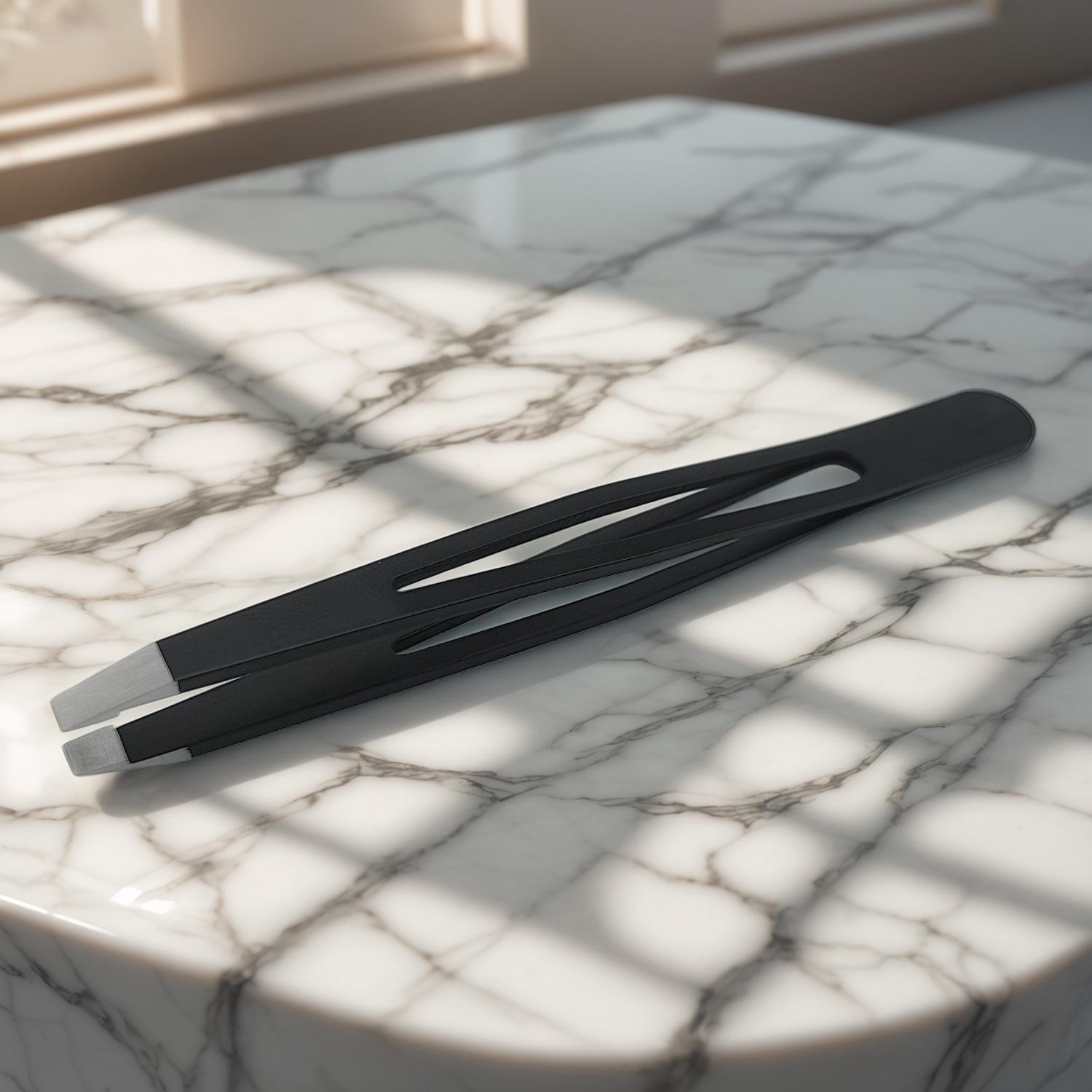
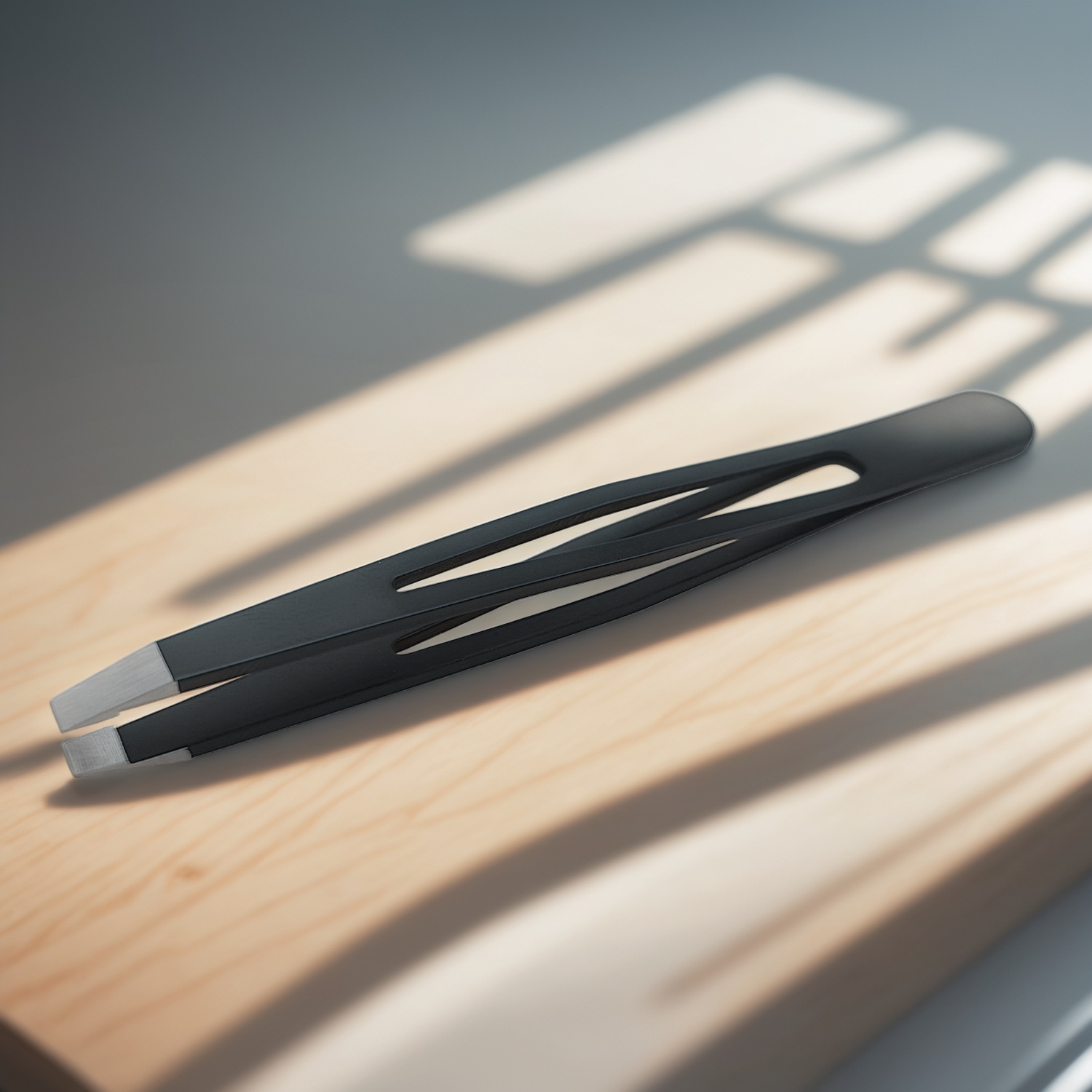
The original product angle here is clear: professional-grade tweezers with features such as slanted stainless steel tips, an ergonomic cutout body, reduced weight, and a matte black appearance. These details make the tool suitable for beauty kits that need precision without unnecessary complexity.
Key Selection Criteria for Professional Tweezers
When comparing B2B beauty supplies, a structured checklist helps separate attractive samples from tools that are practical for repeated commercial use. The following criteria are useful for salons, distributors, e-commerce sellers, and private label teams.
- Tip alignment: The two tips should meet cleanly without visible gaps. Misalignment causes slipping and can make fine hair removal more difficult.
- Tip style: Slanted tips are a versatile choice for brow shaping and general grooming because they provide both a broader gripping edge and a more precise corner.
- Material choice: Stainless steel is valued in beauty tools for durability and a clean professional feel. Buyers should review finish quality and resistance to visible wear in normal handling.
- Tension and control: The tool should close smoothly without requiring excessive hand pressure. Too much tension can cause fatigue; too little can reduce grip confidence.
- Body ergonomics: An ergonomic cutout body can reduce weight and improve comfort, especially for users who perform repeated detailed work.
- Surface finish: A matte black finish can create a professional look, but the finish should be even, smooth, and appropriate for the intended packaging and retail position.
- Edge finishing: Edges should feel refined, not sharp against the fingers. Comfort affects both professional use and consumer reviews.
- Packaging readiness: Consider whether the tool will be sold individually, included in a beauty kit, or supplied to salons in bulk packaging.
What a Reliable Tweezers Supplier Should Help You Evaluate
A reliable tweezers supplier is more than a vendor that can ship a product. The right partner helps the buyer define the tool, confirm practical requirements, and avoid vague specifications that lead to inconsistent results. For B2B purchasing, it is useful to prepare evaluation points before sampling or confirming an order.
Start with the intended user. A professional brow technician may prioritize very precise alignment and a balanced hand feel. A retail beauty kit may prioritize a combination of performance, finish, and packaging presentation. A distributor may need a general-purpose product that works for multiple sales channels. Each use case may require a different balance of design and cost.
Next, evaluate how quality is checked. Olimor Beauty states that it enforces internal quality control with inspections throughout the production process. Buyers should align this type of process with their own acceptance standards. For tweezers, inspection can focus on visible finish, tip meeting, tension feel, overall shape, surface cleanliness, and packaging condition. Defining these expectations early makes communication more efficient and reduces misunderstanding.
Finally, consider business continuity. A professional beauty tool line should not depend on a one-time sample that cannot be repeated. Ask how the design is documented, how packaging artwork is controlled, and how changes are communicated. Even when exact technical specifications are still being finalized, a clear approval process helps protect your product range.
Tweezers ODM: When Customization Makes Commercial Sense
A tweezers ODM project can help a brand stand out when the product needs to match a specific identity, kit concept, or retail price position. ODM does not always mean creating a completely new tool from scratch. It can include customizing an existing design, adjusting the finish, developing brand packaging, or refining features to fit the intended customer.
For example, the described tweezers combine slanted stainless steel tips with an ergonomic cutout body. A buyer might use that type of design direction for a professional brow kit, a makeup artist tool set, or a premium grooming accessory. The cutout body supports reduced weight and comfort, while the slanted tip supports versatile gripping. The matte black appearance can also fit modern salon and retail displays without relying on excessive decoration.
ODM is most valuable when customization supports a real market need. Before requesting changes, define the reason for each choice. Is the finish meant to match other tools in a set? Does the grip need to appeal to professionals who use the tool for long sessions? Will the packaging be displayed on a shelf, sold online, or included in a subscription kit? Clear answers lead to a stronger brief and a better final product.
Buyer Checklist: From Sample Review to Purchase Decision
Many sourcing problems begin when buyers approve a sample based only on appearance. A more careful review should include handling, functional testing, and channel fit. Use the checklist below when comparing professional tweezers for B2B beauty supplies.
- Inspect the tips under good lighting. Check whether the slanted edges meet evenly from corner to corner.
- Test grip on fine material. The tweezer should hold without repeated attempts or twisting.
- Open and close repeatedly. Confirm that the tension feels stable and does not strain the hand.
- Check comfort points. Run a finger along the body edges and cutout areas to identify rough finishing.
- Review finish consistency. A matte surface should look even across the full tool, including edges and inner areas.
- Confirm packaging fit. The tool should sit securely and present well for the intended sales channel.
- Document approved details. Keep records of finish, shape, packaging, and any logo or artwork decisions.
- Compare with your customer promise. The product should match whether you are selling to professionals, beauty beginners, or retail gift buyers.
How Tweezers Fit Into a Broader Beauty Tool Range
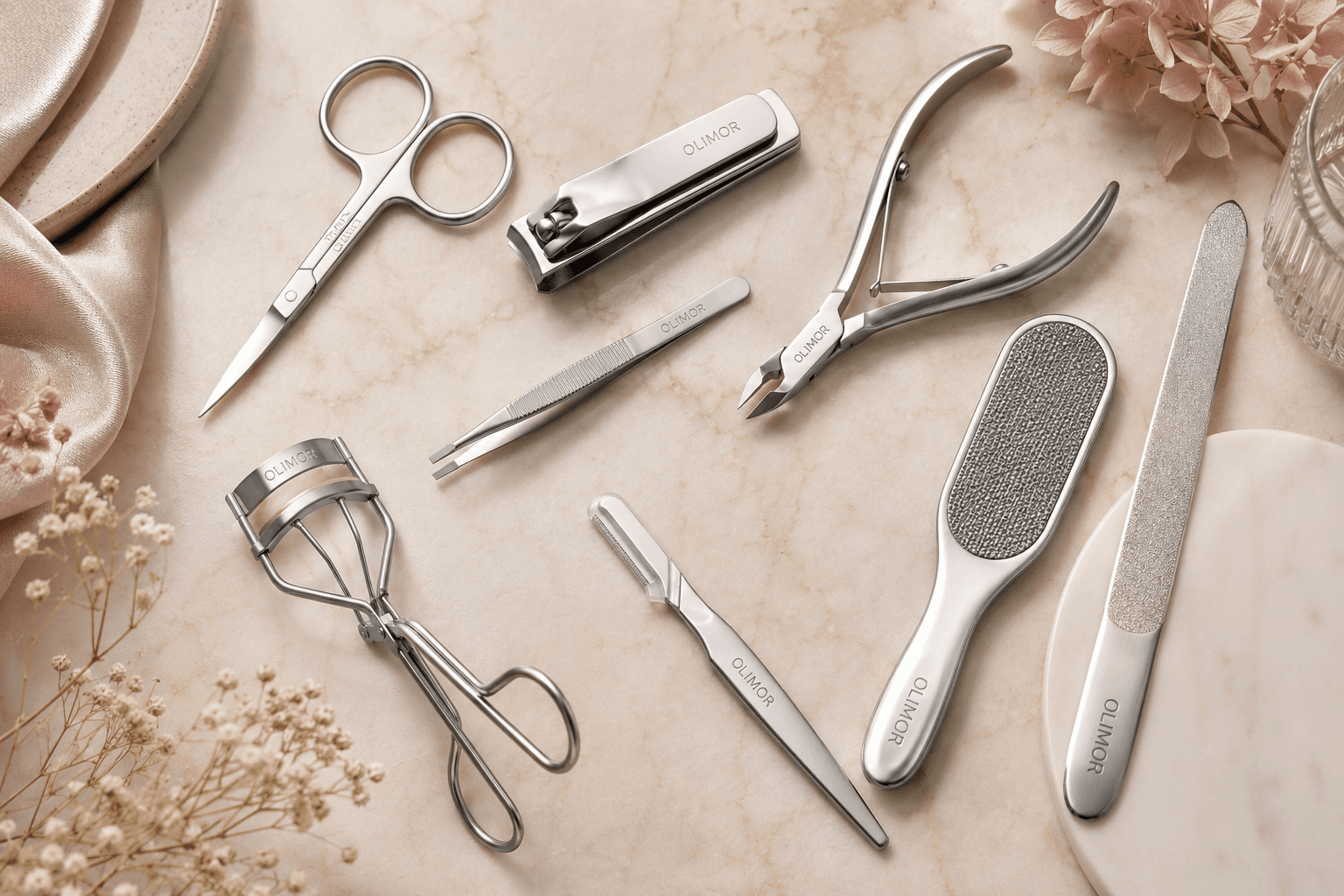
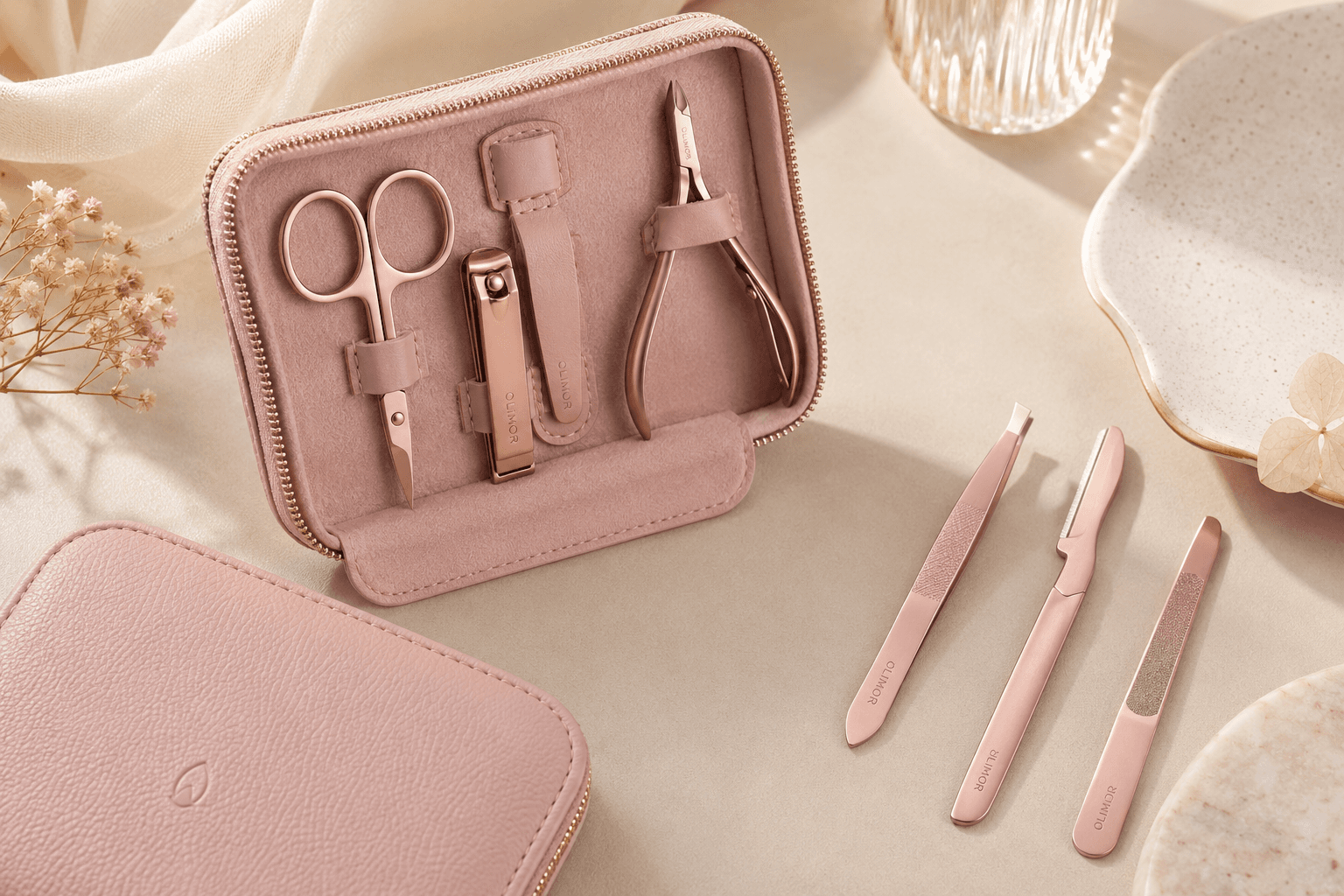
Tweezers are often purchased alongside other grooming and beauty tools, so they should not be evaluated in isolation. A beauty retailer may need cohesive packaging across tools. A salon supplier may prefer products that are simple to reorder and easy for staff to understand. A private label brand may want a consistent visual language across brow, lash, manicure, or skincare accessories.
If you are building a wider range, browse Olimor Beauty beauty tool products to understand how different tools can support a complete assortment. You can also review product collections when planning how tweezers may sit beside related beauty accessories. The goal is not to add more items without purpose, but to create a range where each tool has a clear role and consistent quality level.
For sales teams, tweezers can also work well as an entry product because they are familiar, practical, and easy for customers to compare. If the tweezer performs well, it can build confidence in the rest of the beauty tool line. This makes quality control and design clarity especially important.
Maintenance Guidance for End Users and Retail Communication
Even a well-made tweezer benefits from clear care guidance. B2B buyers should consider including simple use and maintenance instructions in packaging, online listings, or salon training materials. This helps reduce avoidable damage and improves the customer experience.
Basic guidance can include wiping the tips after use, keeping the tweezer dry before storage, avoiding drops that may affect tip alignment, and using a protective cap or sleeve where appropriate. Users should not use precision tweezers as prying tools or general household tools, because bending the tips can reduce grip accuracy. If the product is sold to consumers, plain instructions are often more effective than technical language.
For professional settings, establish a cleaning process that fits local salon hygiene requirements and the business’s service standards. B2B buyers should ensure any claims made on packaging or listings are accurate for the product supplied and supported by the relevant information available to the business.
Working With Olimor Beauty on B2B Beauty Supplies
Olimor Beauty offers professional beauty tools with attention to stainless steel construction, ergonomic design, precise manufacturing steps, and internal quality checks. For buyers sourcing tweezers, the practical advantage is a clearer path from product idea to finished supply: define the use case, evaluate samples, confirm design details, and prepare the product for its channel.
Whether you are sourcing for salons, developing a branded tweezer, or expanding an online beauty tool catalog, the strongest results come from specific requirements. Focus on the features users will feel immediately: grip, alignment, comfort, tension, finish, and packaging. If customization is needed, connect every design choice to a customer benefit or merchandising goal.
To discuss a professional tweezer project or compare suitable sourcing options, contact Olimor. If you already have a product brief, artwork direction, or sample requirement in mind, you can also send an inquiry for the next step.
Tag: