B2B Tweezers Sourcing Guide for Beauty Brands
For beauty brands, salon suppliers, brow studios, lash professionals, and distributors, tweezers are small tools with a large impact on customer perception. A pair that grips cleanly, aligns precisely, and feels comfortable in the hand supports professional work and repeat purchasing. A pair that slips, pulls unevenly, or feels poorly finished can weaken confidence in an otherwise strong product line.
Sourcing B2B beauty supplies is therefore not only about finding a low unit cost. It is about selecting tools that fit the intended use, match the brand position, and can be supplied consistently. Tweezers are especially sensitive because their performance depends on details that are easy to overlook: tip alignment, spring tension, edge finishing, grip shape, and surface treatment. Whether you are building a retail beauty range, supplying salons, or planning a custom design through tweezers ODM, the buying process should be structured and evidence based.

Why Tweezers Matter in B2B Beauty Supplies
Tweezers sit at the intersection of personal grooming and professional precision. They may be used for brow shaping, lash application, hair removal, nail art details, craft-like beauty work, and product kits. Because they are handled directly by the user, they communicate quality immediately. The weight, finish, tension, and tip feel all influence whether the tool seems dependable.
For a B2B buyer, the most important question is not simply whether the tweezers look attractive in photos. It is whether they perform consistently across a production run and suit the customer’s actual working style. A professional brow artist may prioritize narrow, aligned tips and hand comfort during repeated use. A retail consumer may value a clean finish, easy control, and packaging that explains the tool’s purpose. A distributor may need a balanced specification that suits several channels without creating unnecessary complexity.
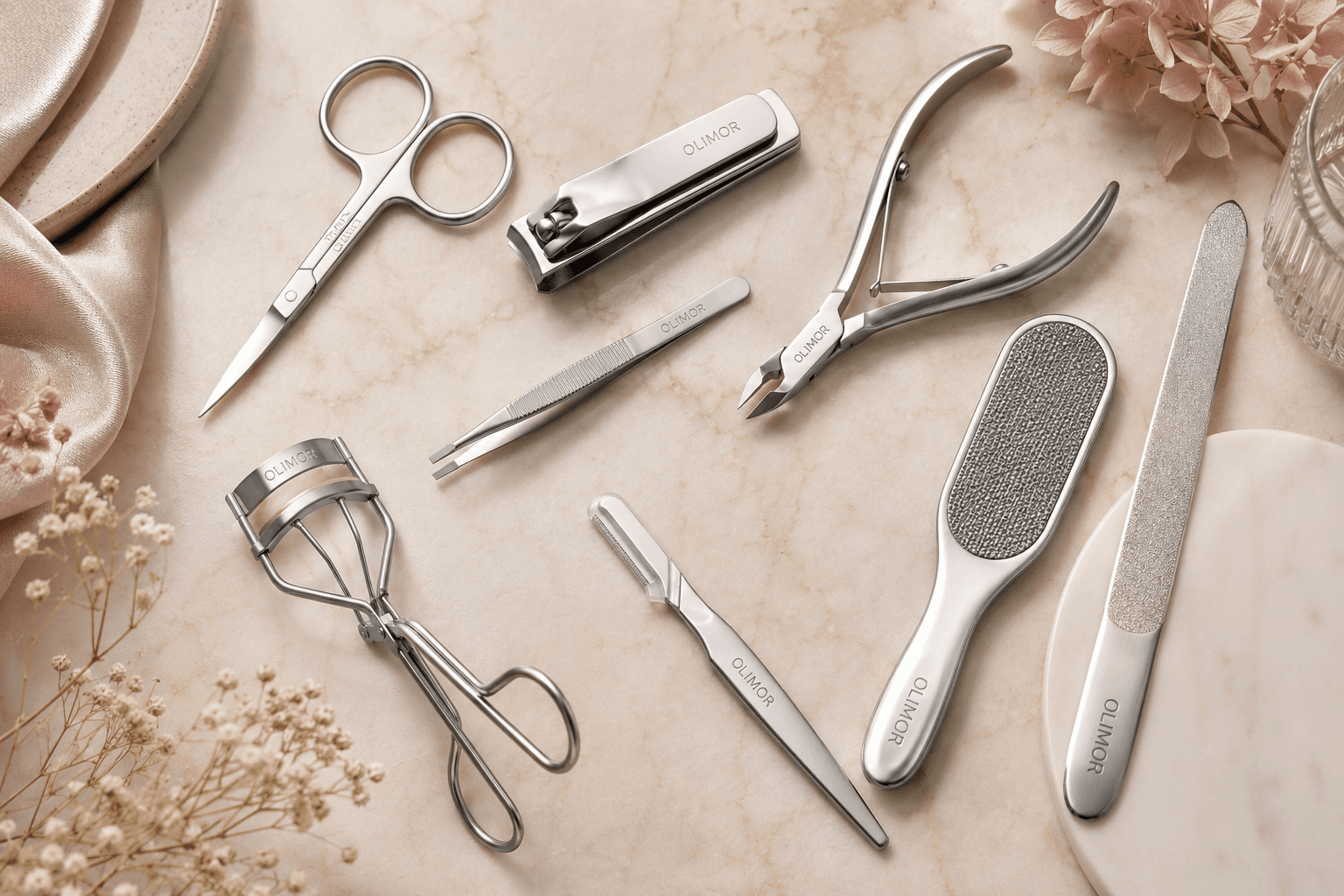
Olimor Beauty supports buyers looking for practical beauty tool options and sourcing conversations. You can browse broader beauty tool products to understand how tweezers may sit alongside other grooming, skincare, or nail-care tools in a complete assortment.
Key Selection Criteria for B2B Tweezers
When comparing a tweezers supplier, create a written checklist before reviewing samples. This keeps the evaluation focused and prevents decisions from being based only on appearance. The following criteria are useful for most beauty brands and professional supply buyers:
- Tip type and use case: Slanted tips are common for brow shaping and general grooming, while pointed or precision tips may be better for detailed work. The correct tip depends on the customer’s task.
- Tip alignment: The two sides should meet evenly. Poor alignment can make the tool slip, cut hair instead of gripping, or feel unreliable.
- Grip and tension: Tweezers should close smoothly without excessive force. Too much stiffness can fatigue the hand; too little tension can reduce control.
- Material choice: Stainless steel is commonly valued in beauty tools for durability and cleanability. Confirm the material and finish options suitable for the product position.
- Edge finishing: Edges should feel smooth to the user. Rough seams or sharp non-functional edges can lower perceived quality.
- Surface treatment: Matte, polished, coated, colored, or textured finishes affect grip, visual identity, and packaging presentation.
- Packaging compatibility: A professional tool may need protective tip covers, cards, boxes, or kit packaging depending on the sales channel.
- Inspection method: The supplier should be able to explain how alignment, closing feel, surface appearance, and packing are checked before shipment.
A helpful sample review includes several units, not only one showcase piece. Check whether the same tip alignment and finish quality appear across multiple samples. If a product is intended for professional use, have actual users test it on realistic tasks rather than only inspecting it visually.
How to Evaluate a Reliable Tweezers Supplier
A reliable tweezers supplier should demonstrate control over both product performance and communication. B2B buyers often focus on the sample stage, but the more important issue is repeatability. Can the supplier maintain the agreed tool feel, finish, packaging standard, and inspection level over time?
Start with clear questions. What materials are available? Which tip shapes are already in production? What custom options are realistic? How are tweezers inspected before packing? What packaging formats can be supported? How are defects, color differences, or finish inconsistencies handled during production review? The supplier’s answers should be specific enough to help you make decisions, while avoiding unsupported claims.
Documentation also matters. For an ODM or customized project, the final specification should include drawings or confirmed dimensions where relevant, material description, finish, logo placement, packaging artwork requirements, tolerance expectations when applicable, and approved sample references. These details reduce the risk of misunderstanding when a project moves from development to production.
Communication speed is useful, but accuracy is more important. A quick response that ignores critical details can create problems later. Choose a supplier willing to clarify use cases, packaging needs, and quality expectations before confirming a path. If you are developing a new tool line and need to discuss sourcing options, you can contact Olimor for a focused conversation.
ODM Tweezers: When Custom Development Makes Sense
Tweezers ODM services can help a brand create a product that fits a specific identity instead of relying only on standard alternatives. ODM may involve shape selection, grip design, finish choice, logo application, packaging development, or a combination of these decisions. The value is strongest when customization serves a real customer need rather than decoration alone.
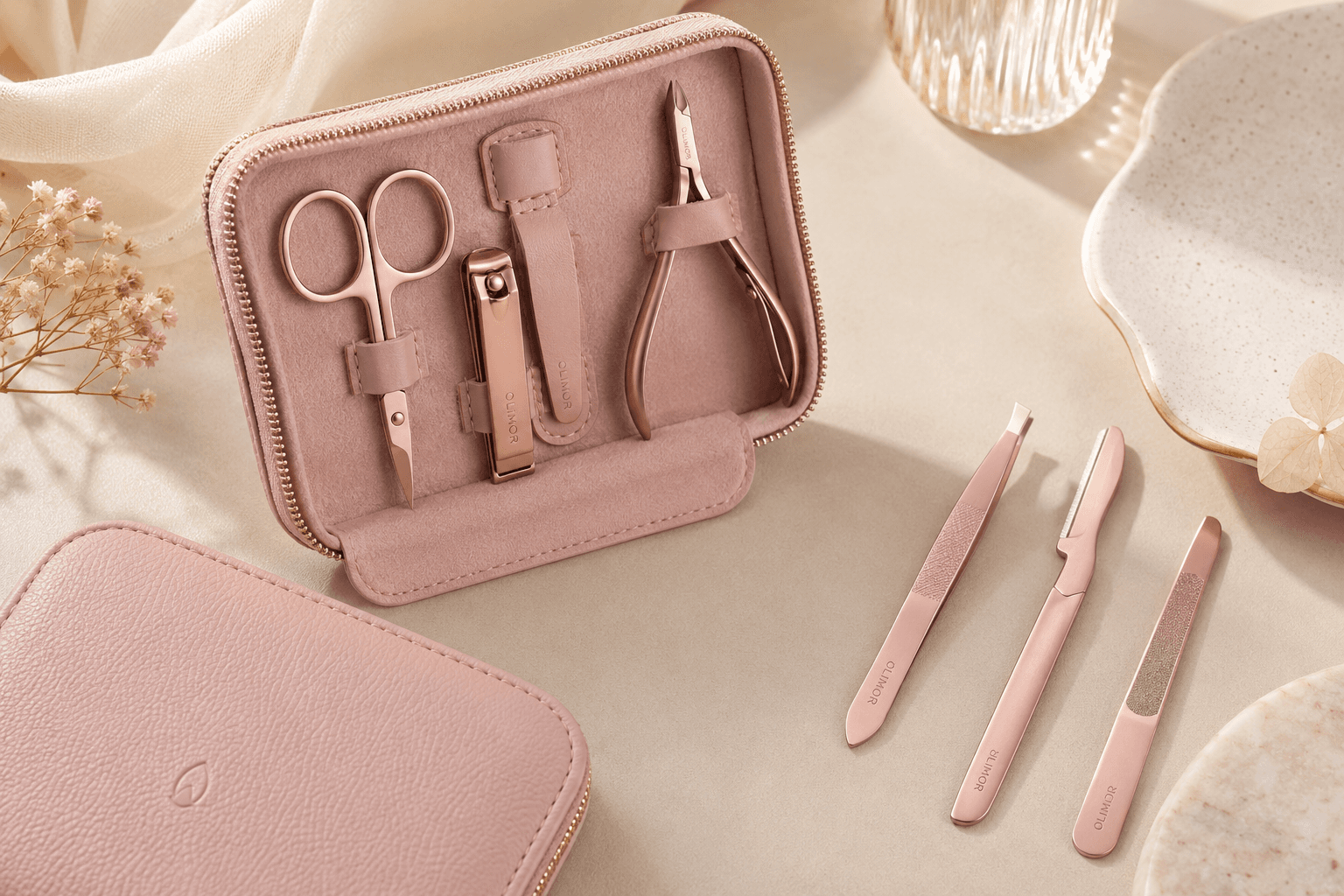
For example, a brow-focused retail brand may want a slanted tweezer with a controlled closing feel, a refined matte finish, and packaging that explains brow maintenance. A lash professional supplier may prefer a narrower precision profile for detail work, with protective packaging to reduce tip damage during transport. A gift set brand may prioritize finish consistency and presentation because the product is sold as part of a curated kit.
ODM is most suitable when you can define the target user, sales channel, and desired product positioning. Without those inputs, customization can add cost and complexity without improving the user experience. Before starting an ODM discussion, prepare answers to these questions:
- Who will use the tweezers: retail consumers, salon professionals, lash artists, brow technicians, or kit buyers?
- What is the main task: brow shaping, lash application, general grooming, detailed beauty work, or multi-purpose use?
- What price and quality position should the tool support in the market?
- Which visual elements are essential: finish, color, logo, packaging format, or surface texture?
- How will the product be inspected and approved before moving to full production?
These decisions make the design process more efficient. They also help avoid over-customization, where a product becomes difficult to produce consistently or does not clearly improve on a simpler design.
Quality Checks Before Approving Production
Quality control for tweezers should be practical and directly connected to how the tool is used. A beautiful finish cannot compensate for tips that do not meet properly. Likewise, strong gripping performance may still disappoint customers if the surface finish scratches easily or the packaging fails to protect the tips.
The following table outlines common checkpoints for B2B tweezer sourcing:
| Checkpoint | What to Review | Why It Matters |
|---|---|---|
| Tip alignment | Whether the two tips meet evenly when closed | Supports clean grip and predictable hair removal or placement |
| Closing tension | How much pressure is needed to close the tool | Affects comfort, control, and professional usability |
| Surface finish | Consistency of polish, coating, color, and texture | Influences perceived value and retail presentation |
| Edges and handling | Smoothness of non-tip edges and overall hand feel | Reduces discomfort during repeated use |
| Logo and packaging | Placement, legibility, color matching, and protective packing | Protects brand identity and reduces damage in transit |
When possible, approve a pre-production sample that reflects the intended material, finish, logo, and packaging. Keep that approved sample as a reference. If later shipments are compared against an undefined expectation, disputes become harder to resolve. A physical approved sample and a written specification make quality discussions more objective.
Packaging and Assortment Decisions for Beauty Brands
Packaging should match the sales channel. A salon supply product may need practical protection and clear identification. A retail product may need more explanation, display-ready presentation, or a cleaner giftable look. For online sales, packaging must protect tips during shipping and photograph well without misleading the customer.
Consider whether tweezers will be sold alone or as part of a wider range. A brand may pair tweezers with scissors, brow tools, lash tools, nail tools, or skincare accessories. Consistent finish choices and packaging language can make the assortment feel organized without requiring every item to be identical. Reviewing product collections can help buyers think about how individual tools work together in a line.
Also decide how much instruction the packaging should provide. Many consumers appreciate simple guidance on use and care, especially for precision tips. Professional users may prefer minimal packaging but still need the product protected. The right balance depends on the customer and the retail environment.
Care, Maintenance, and Customer Education
Even well-made tweezers perform better when users understand basic care. Brands can reduce complaints by including simple handling guidance on packaging, inserts, or product pages. The advice should be realistic and easy to follow.
- Keep tweezer tips clean and dry after use.
- Store precision tips with a protective cap when provided.
- Avoid dropping tweezers, as impact can affect tip alignment.
- Use the correct tip style for the task instead of forcing one tool to do every job.
- Do not use beauty tweezers for hard materials or non-beauty tasks that may damage the tips.
These points are simple, but they help preserve performance and show customers that the brand understands the product. Clear care guidance is especially useful for ODM or private label tweezers, where the tool represents your own brand reputation.
Building a Smarter Tweezers Sourcing Plan
The best B2B tweezers projects begin with a defined customer, a realistic performance standard, and a supplier relationship based on clarity. Instead of asking only for a quotation, prepare the use case, preferred tip type, finish direction, packaging needs, and quality checkpoints. This makes it easier to compare options and prevents the final decision from being driven by surface appearance alone.
For brands developing a beauty tool range, tweezers can be a strong entry point because they are compact, familiar, and closely connected to everyday grooming. However, their small size does not make them simple. Precision, consistency, and finishing all matter. By evaluating samples carefully and documenting expectations before production, buyers can create a product that feels dependable in the hand and credible in the market.
If you are planning B2B tweezers, private label beauty tools, or ODM development, you can send an inquiry with your target use case, preferred style, and packaging direction. A well-prepared sourcing brief helps move the conversation from general possibilities to practical product decisions.
Tag: