Tweezers OEM Services: A Practical Guide for Beauty Brands

Tweezers may look simple, but buyers who source them for a beauty brand know that small details decide whether the product feels professional or disappointing. Tip alignment, grip texture, balance, steel quality, finishing, packaging and inspection all affect the end user’s experience. For brands building a private-label eyebrow, lash, nail or grooming line, tweezers OEM services make it possible to develop tools that match a target market instead of settling for a generic accessory.
Olimor Beauty works with beauty tool buyers who need precision instruments for retail, salon, promotional and kit-building projects. A strong OEM project is not only about adding a logo. It should define the tweezer shape, intended use, handling feel, finishing direction and quality expectations before production begins. This guide explains how to evaluate OEM custom tweezers and what to prepare when comparing a beauty tool products supplier.
What Tweezers OEM Should Include
Tweezers OEM is the process of producing tweezers according to a buyer’s brand, product positioning and practical requirements. Depending on the project, customization may involve product type, surface finish, handle design, color direction, logo placement, packaging format or set composition. The best results come from treating the tool as a functional product first and a branded item second.
For beauty applications, the most important performance factor is the working tip. The tips should meet evenly, grip fine hairs reliably and feel controlled during repeated use. If the tweezer tips are too thick, the tool may not isolate short hairs. If they are too sharp or poorly finished, they may scratch skin or feel uncomfortable. If the arms are too stiff, the user experiences fatigue; if they are too loose, control is reduced.
OEM planning should therefore begin with the customer’s use case. A brow-focused retail product may need a slanted tip for daily grooming. Lash artists may prefer fine and angled tips for isolation or delicate handling. A premium grooming kit may include several shapes so the consumer can choose the right tool for each task. The clearer the use case, the easier it is to select the correct tweezer profile.
Five Tweezer Shapes and How They Support Different Tasks
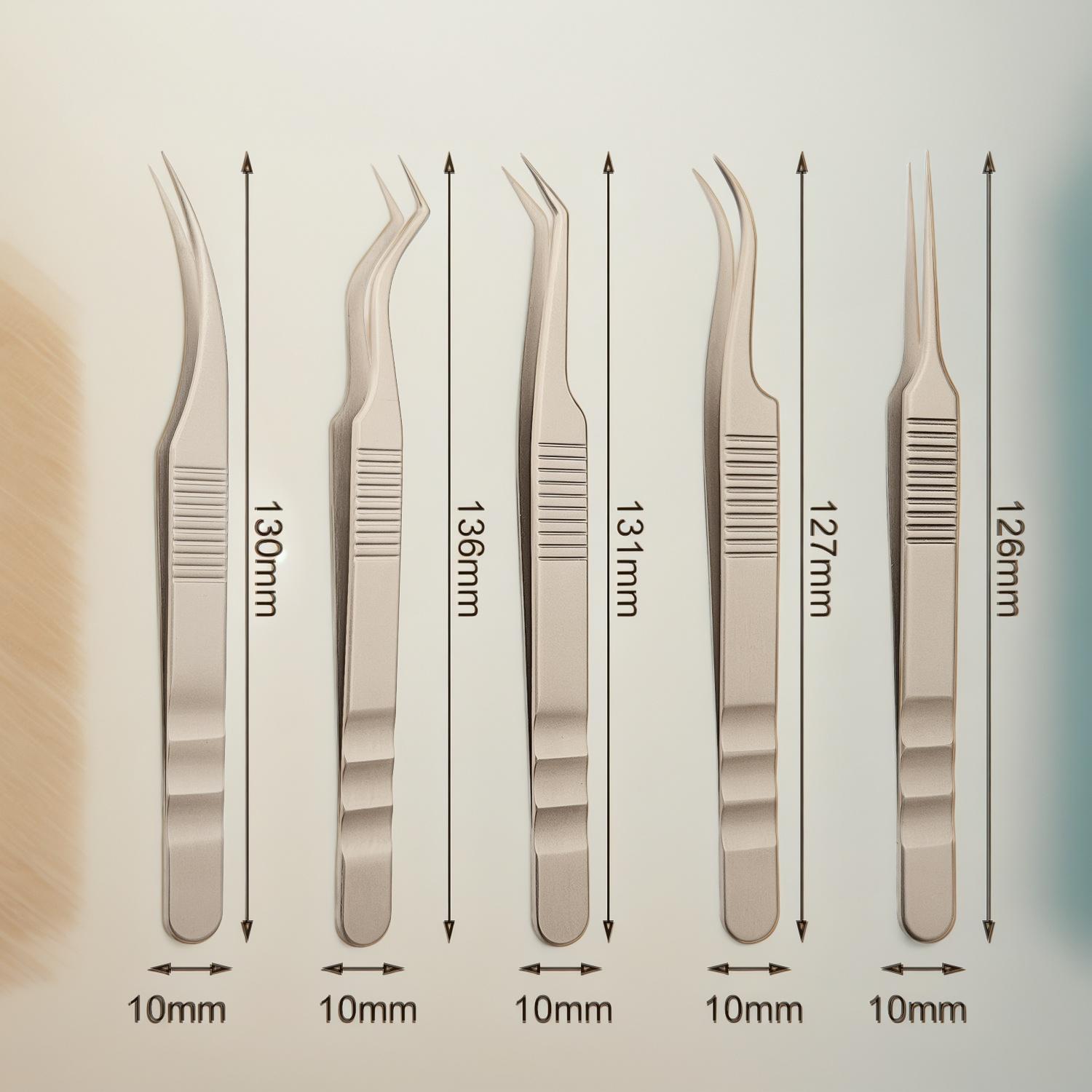
The supplied Olimor Beauty five-piece tweezer set demonstrates how different shapes can serve different precision needs. The set includes curved precision tweezers, slanted angle tweezers, fine tip straight tweezers, angled precision tweezers and fine tip short tweezers. Each piece measures 10mm in width, and the different lengths support different handling styles.
| Tweezer type | Length | Typical selection reason |
|---|---|---|
| Curved precision tweezers | 130mm | Useful when the user needs to approach a small area from an angle and maintain visibility around the tip. |
| Slanted angle tweezers | 136mm | A practical choice for eyebrow shaping and general grooming because the slant helps grip hair close to the skin. |
| Fine tip straight tweezers | 131mm | Suited to high-accuracy tasks where a narrow, direct point improves control. |
| Angled precision tweezers | 127mm | Helpful for detailed work where the hand position and tip access matter. |
| Fine tip short tweezers | 126mm | Designed for controlled precision work in a compact format. |
When building a set, do not assume that more pieces automatically create better value. A set should make sense for the buyer’s target customer. A professional kit may benefit from multiple specialized tips, while a retail brow product may perform better with one dependable slanted tweezer and clear packaging instructions. For brand owners, the goal is to combine practical value with easy-to-understand positioning.
Material, Grip and Finishing Decisions
Olimor Beauty focuses on precision tools crafted from stainless steel. For buyers, stainless steel is commonly selected for beauty tweezers because it offers a clean appearance, durability and suitability for repeated handling. However, material choice alone does not guarantee a good tweezer. The production process, shaping, finishing and inspection determine whether the final product performs consistently.
Grip is another important factor. The original design direction emphasizes slender elegance with anti-slip grips, which is useful for beauty tools that may be handled under bright lighting, with gloves or during detailed grooming work. A grip area should provide control without feeling rough or visually heavy. If the product will be part of a premium kit, the grip pattern and surface finish should also match the brand’s visual style.
Common surface and design decisions to define during OEM development include:
- Tip shape: slanted, straight, curved, angled or fine-point designs for different beauty and precision uses.
- Hand feel: arm tension, spring-back response, grip pattern and overall balance.
- Finish direction: polished, matte or color-treated appearances, depending on what is available for the project.
- Logo placement: a visible but practical area that does not interfere with grip or cleaning.
- Set planning: single tweezer, multi-piece set or beauty kit component.
- Packaging role: retail shelf display, salon supply, gift set or refill item.
Quality Checks That Matter for OEM Custom Tweezers
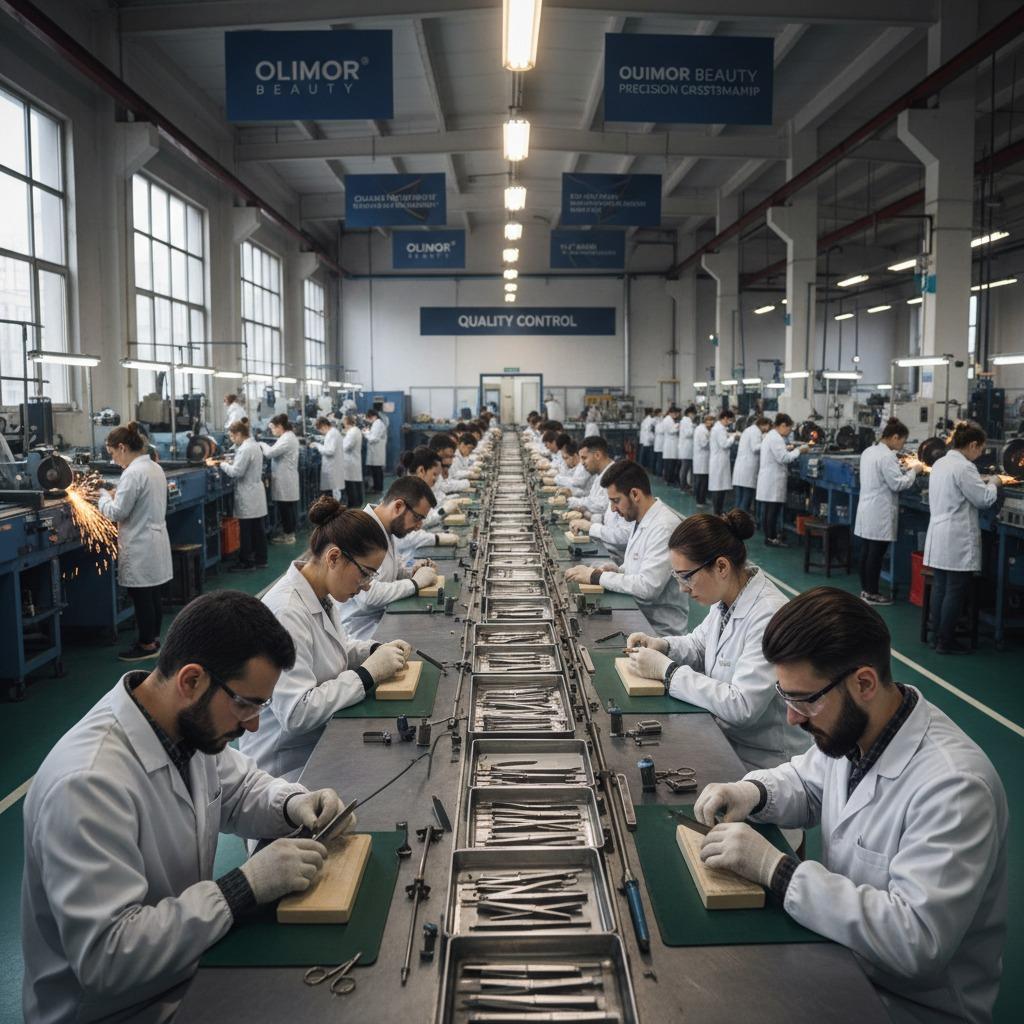
For tweezers, quality control should be specific. A general visual check is not enough, because a tweezer can look attractive and still fail to grip properly. Buyers should evaluate a supplier’s process from raw material handling through final assembly and packing. Olimor Beauty emphasizes quality checks from raw materials to final assembly, which is especially important for tools where millimeter-level details affect performance.
A practical inspection checklist for OEM custom tweezers should include tip alignment, closing consistency, surface smoothness, arm tension, edge safety, logo clarity and packaging condition. If the tweezer is part of a set, the inspection should also confirm that the correct shapes and lengths are packed together. For retail products, barcode placement, instruction cards, protective caps or pouches may also need checking before shipment.
Tip alignment deserves extra attention. The two ends should meet cleanly without a visible gap or uneven contact. For fine tip tweezers, the points should be symmetrical and cleanly finished. For slanted tweezers, the slant edge should feel precise without being harsh. These details help reduce customer complaints and support repeat orders.
How to Brief a Tweezers Supplier
A clear brief saves time and reduces avoidable sampling rounds. Before contacting a tweezers supplier, prepare a concise description of the product’s target user, sales channel and expected presentation. A tweezer sold in a brow kit for beginners may need different packaging and instructions than one sold to professionals who already understand the tool’s function.
- Define the use case. Specify eyebrow grooming, lash work, nail detail work, general beauty use or a multi-purpose kit.
- Select the shapes. Decide whether you need one tweezer type or a set with several functional tips.
- Clarify the brand direction. Share logo artwork, preferred finish, color direction and packaging concept if available.
- Set quality expectations. Identify the inspection points that matter most, especially tip alignment and grip performance.
- Plan the customer experience. Consider whether the product needs a protective sleeve, case, instructions or set labeling.
If your team is still comparing product directions, reviewing related product collections can help you decide whether tweezers should be offered alone or paired with other grooming tools. For a project discussion, you can also send an inquiry with your artwork, intended market and preferred tweezer types.
Choosing the Right OEM Partner
A reliable OEM partner should understand both manufacturing details and the expectations of beauty product buyers. The supplier should be able to discuss practical tool differences, point out risks in a design idea and maintain consistent inspection standards. The right partner will not simply say yes to every request; they will help turn a product concept into a tool that can be produced consistently and used comfortably.
When evaluating Olimor Beauty or any tweezers OEM partner, look for communication that is specific. Useful answers address tip function, grip design, finishing limitations, packaging feasibility and quality control steps. Vague promises about premium appearance are less valuable than a practical explanation of how the tweezer will be checked before packing.
For brand owners, well-made tweezers can become a dependable part of a beauty line because they are small, useful and easy to combine with kits. The strongest OEM projects balance appearance with function: a clean brand presentation, a comfortable grip, accurate tips and packaging that explains the tool’s purpose. If you are planning a custom tweezer set or evaluating a new supplier, contact Olimor to discuss the product direction and the details needed for development.
Tag: