Custom Tweezers for Beauty Brands: A Practical Sourcing Guide
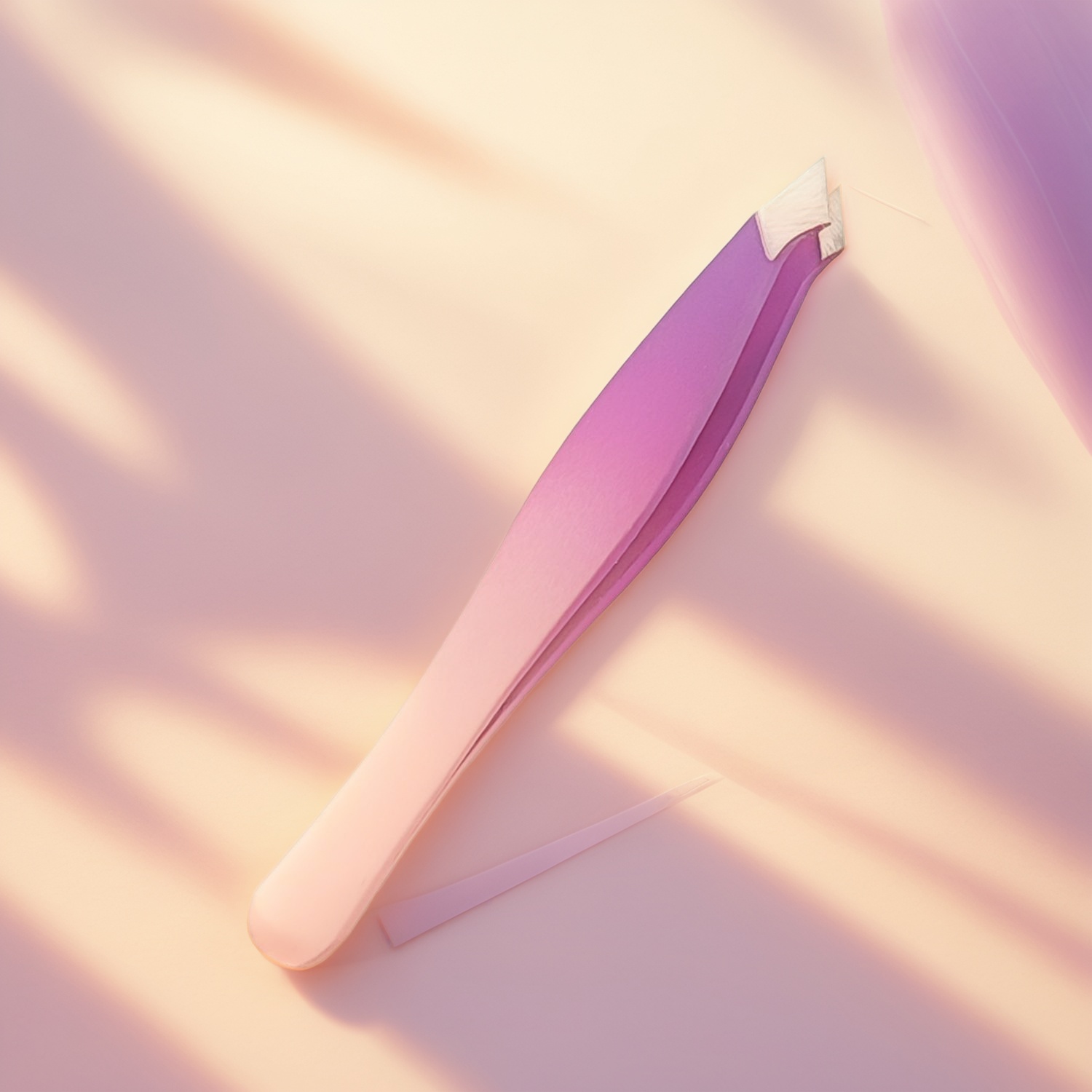
Custom tweezers are small beauty tools, but they influence how customers judge a brand's attention to detail. A tweezer must grip fine hair cleanly, feel controlled in the hand, keep its visual appeal after repeated use and fit the sales channel it is designed for. For beauty brands, salons, retailers, distributors and private-label buyers, the main goal is not simply to add a logo. The goal is to specify a tool that performs reliably while supporting a clear product position.
Olimor Beauty supplies personalized tweezers for buyers developing beauty and grooming assortments. Customization may include color, finish, engraving, tip style, grip direction, packaging concept or a full visual direction that matches an existing line. The strongest projects treat the tweezer as a precision beauty tool first and a decorative accessory second. A gradient finish or attractive logo can help a product stand out, but tip alignment, closing pressure and hand feel decide whether customers continue using it.
What Business Need Should a Custom Tweezer Serve?
Start by defining the role of the tweezer in the assortment. A custom tweezer can be an everyday brow tool, a travel grooming item, a lash application accessory, part of a professional kit, a promotional gift or a retail add-on in a wider beauty range. Each use case changes the priorities for tip style, packaging, finish and customer instructions.
For a retailer, personalized tweezers can help distinguish a private-label line from generic beauty tools. For a cosmetics brand, they can complete a brow, lash or skin-prep collection without introducing an electronic device. For a distributor, color and packaging variations can support different channels, such as salon supply, online beauty retail, drugstore displays or gift sets.
The common mistake is to choose the most eye-catching surface first. A tweezer that looks premium but fails to catch short or fine hairs can lead to returns, weak reviews and low repeat sales. Before discussing colors, buyers should decide who will use the tool, what task it must perform and how the product will be presented at retail.
Personalization Options That Matter in B2B Sourcing
Useful customization connects visual identity with practical use. A brow tweezer, lash tweezer and gifting tweezer may all be personalized, but they should not be specified in the same way. The following options are the most relevant when preparing a supplier brief.
- Color and surface finish: Matte, polished, metallic, coated or gradient effects can align the tool with a brand palette or collection theme.
- Logo or initials: Engraving or other marking methods can support private-label branding, gift programs or promotional beauty sets.
- Tip style: Slanted, pointed and broader or flat-style tips serve different grooming and application needs.
- Grip area: A controlled gripping zone can improve comfort during brow shaping, lash placement or detailed grooming.
- Packaging direction: Retail cards, sleeves, pouches and set packaging should match the price position and sales channel without overpromising performance.
- Collection coordination: Color, logo placement and packaging should work with related beauty tools rather than looking like an unrelated add-on.
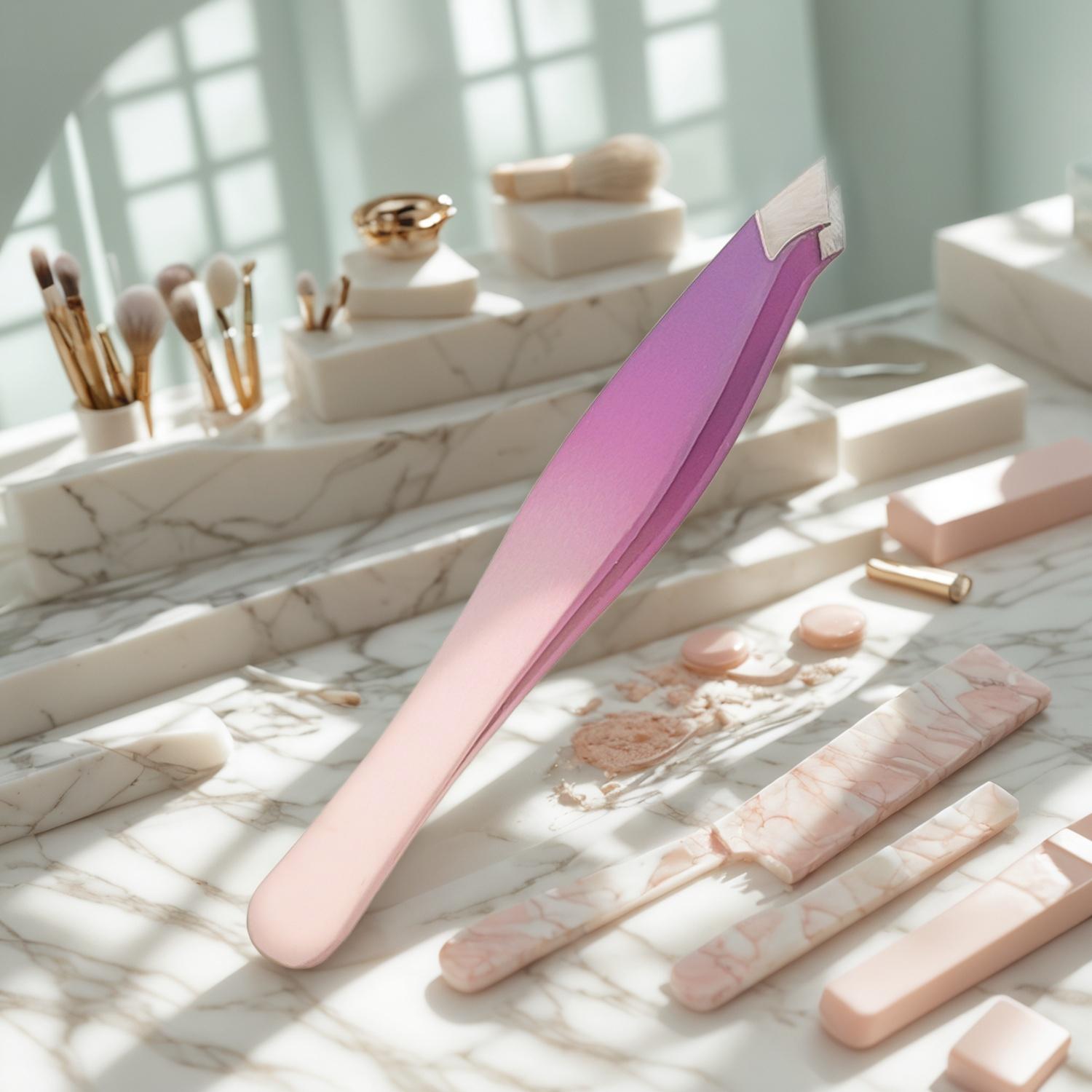
Olimor Beauty's Gradient Elegance Tweezer is an example of a decorative direction that combines a lavender-to-rose-pink gradient with stainless steel construction. It shows how a small grooming tool can carry a strong visual identity while still focusing on precision, ergonomic grip and hand-filed tips. A buyer developing a similar item should decide whether the product should feel playful, minimal, professional, giftable or salon-oriented before confirming artwork and finish.
How to Choose the Right Tweezer Tip Style
The tip is the working part of the tweezer, so it should be selected before the surface decoration. A mismatch between the tip and the end use can make a good-looking product difficult to sell. Brow customers usually expect clean hair removal and good visibility. Lash users may need a tip that helps position false lashes without crushing them. Detail work may require more precision and clearer user guidance.
| Tip direction | Typical use | What buyers should check | Commercial fit |
|---|---|---|---|
| Slanted tip | Everyday brow shaping and general grooming | Check whether the edges meet evenly and grip fine hairs without cutting or slipping. | Often suitable as a core retail item because consumers recognize the shape. |
| Pointed tip | Detailed work, short hairs and precision tasks | Review tip finishing, protective packaging and whether instructions are clear for safe use. | Best for more specialized grooming ranges or professional-style kits. |
| Flat or broader tip | Lash application or gripping wider items | Test closing pressure and whether the tip holds without slipping or damaging the item. | Useful for lash-focused assortments, kits and application accessories. |
Many beauty assortments use slanted tweezers as the main style because they are familiar and versatile. Pointed styles can be more specialized and should be packaged with care to protect the tips and guide the user. Lash-oriented tweezers should be tested with the types of lashes or application tasks the final customer is likely to handle.
Material, Hand Feel and Finish Quality
The supplied product information highlights stainless steel construction, a practical choice for beauty tweezers because it supports durability and a clean, stable feel. Material choice is only one factor, however. Forming, finishing, alignment and coating consistency all influence how the finished tool performs.
When reviewing a sample, do not judge only the front view or color effect. Open and close the tweezer several times. The arms should return consistently without feeling too loose or overly stiff. The tips should meet evenly, with no obvious gap when closed. Edges should feel refined rather than rough. A coated, metallic or gradient surface should look consistent around curves and near the tip area, where uneven finishing can be more visible.
Hand feel is also a commercial issue. A tweezer intended for professional or frequent use should feel controlled during repeated closing. A giftable tweezer may place more emphasis on presentation, but it still needs basic grip performance. If the tweezer is part of a set, compare it with the other tools in the same pack so the weight, finish and perceived value feel coordinated.
Quality Checks Before Approving a Custom Tweezer
A structured inspection process helps buyers compare samples fairly, especially when several finishes, tip styles or logo positions are under review. The following checklist can be used by product managers, sourcing teams and retailers before moving from sample approval to production discussion.
- Tip alignment: Hold the closed tweezer against a light background and check whether both sides meet evenly.
- Fine-hair grip: Test the tweezer in a realistic way instead of relying only on appearance.
- Closing pressure: Confirm that the tool closes with controlled force and does not feel unstable or tiring.
- Surface finish: Look for scratches, color inconsistency, rough areas, marks or uneven coating.
- Logo placement: Make sure branding is readable and does not interfere with grip or function.
- Tip protection: Check whether the packaging protects the working end during handling and shipment.
- Packaging fit: Confirm that the final presentation matches the channel, whether retail card, pouch, sleeve or set box.
- Instruction clarity: Review care, use and safety copy, especially for pointed or precision styles.
For consumer markets, buyers should also consider applicable product safety and labeling requirements. Depending on destination market and product presentation, public bodies such as the U.S. Consumer Product Safety Commission or requirements under the EU General Product Safety Regulation may be relevant. These references should be verified against current versions and local legal advice. Do not rely on general assumptions; request current supplier documents and define any required compliance checks in the purchase specification.
Packaging and Retail Positioning
Packaging does more than hold a tweezer. It explains the use case, protects the tips, communicates value and helps the buyer merchandise the product. A low-cost everyday brow tool may need clear, simple packaging that shows the tip style and brand color. A giftable or premium item may need a pouch, sleeve or coordinated set presentation. A professional kit may need compact packaging that keeps multiple tools organized and easy to identify.
Good packaging copy should be specific without exaggeration. Instead of broad claims, explain the intended use, the tip style and basic care. For example, a slanted tweezer can be positioned for brow shaping and everyday grooming, while a broader lash-oriented style can be positioned for lash placement. If the tweezer has a decorative finish, care instructions can help customers understand how to protect the surface from scratches and impact.
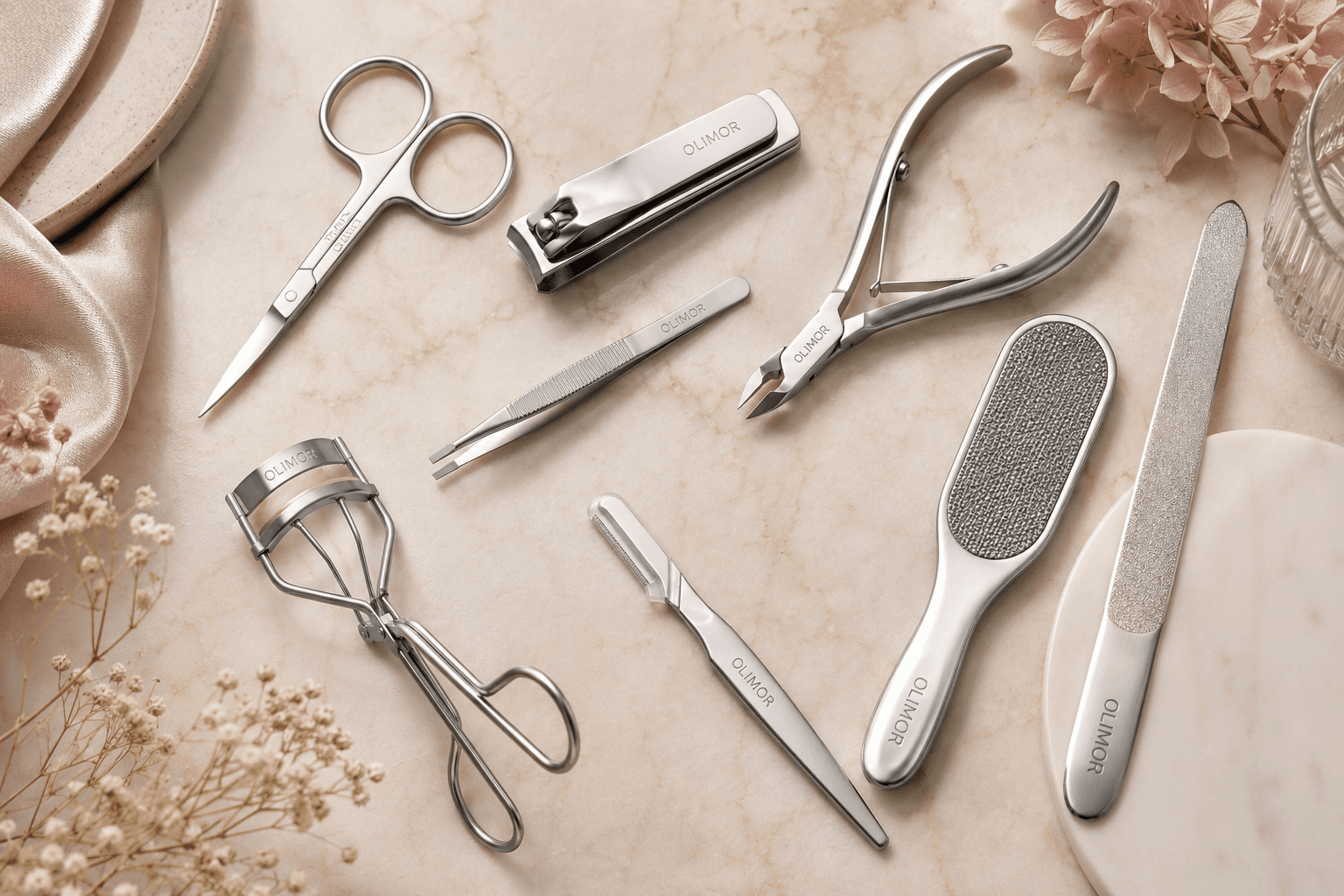
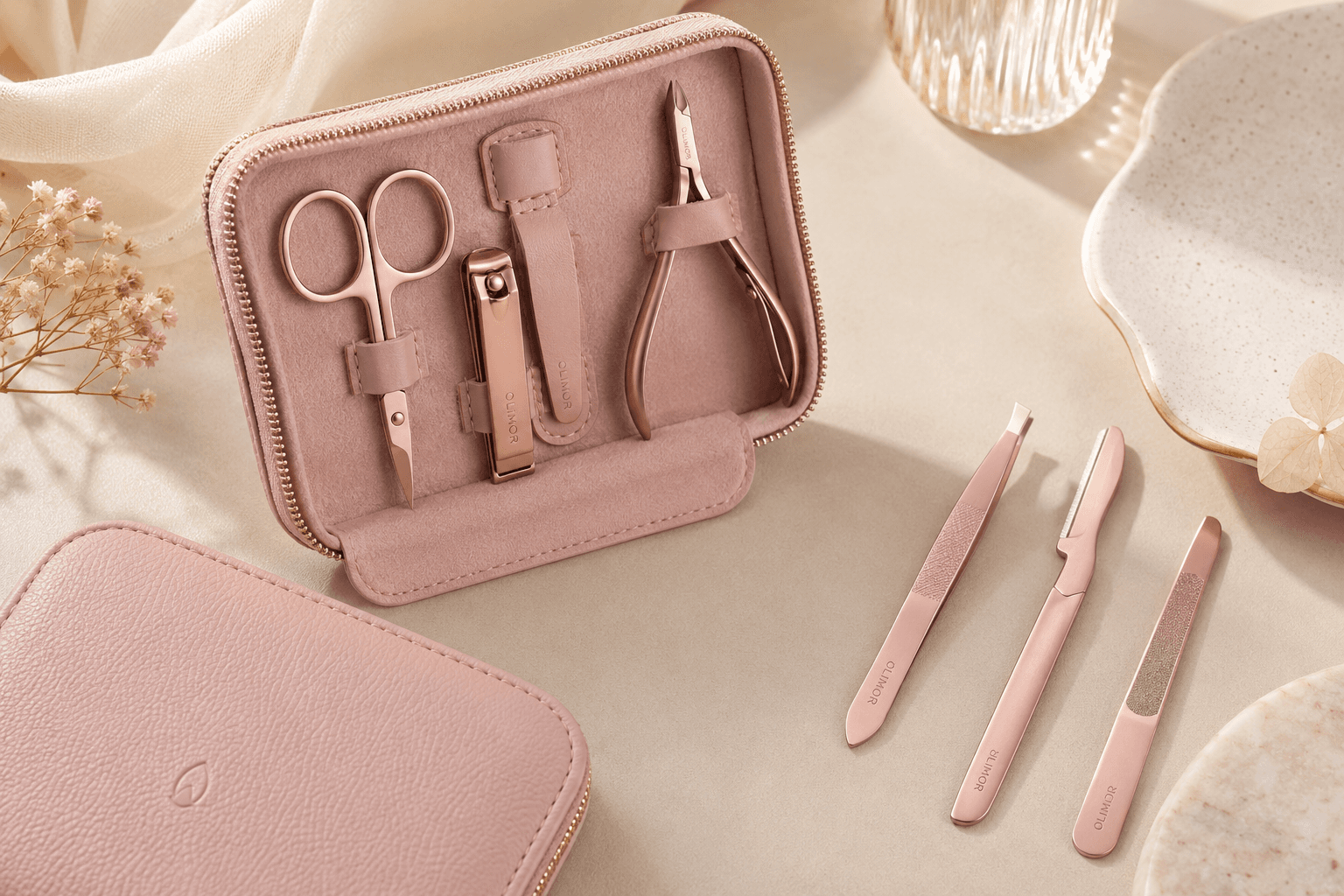
Buyers building a broader range can review related beauty tool products to see how tweezers may sit beside other grooming accessories. For coordinated retail planning, beauty tool collections can help clarify whether the tweezer should match an existing color story, kit format or merchandising concept.
Cost Factors Without Guessing the Price
Custom tweezer cost depends on specification choices rather than one universal price. Buyers should avoid comparing quotes until the functional and visual requirements are clear. A basic finish, simple logo placement and standard packaging will not have the same cost structure as a decorative gradient finish, customized presentation and multiple tip options.
The main cost drivers usually include material and construction requirements, tip style, finishing process, logo method, packaging format, sample revisions, quality expectations and order conditions. Since price, MOQ and lead time can vary by project, buyers should request a current quotation based on a complete brief rather than relying on assumptions.
A practical RFQ should include the intended market, target user, preferred tip style, finish direction, logo artwork, packaging concept, estimated order plan and any retailer documentation needs. If the item will be sold in regulated markets or under a strict retailer quality program, include those requirements from the beginning so the supplier can assess feasibility before sampling.
How to Evaluate a Custom Tweezer Supplier
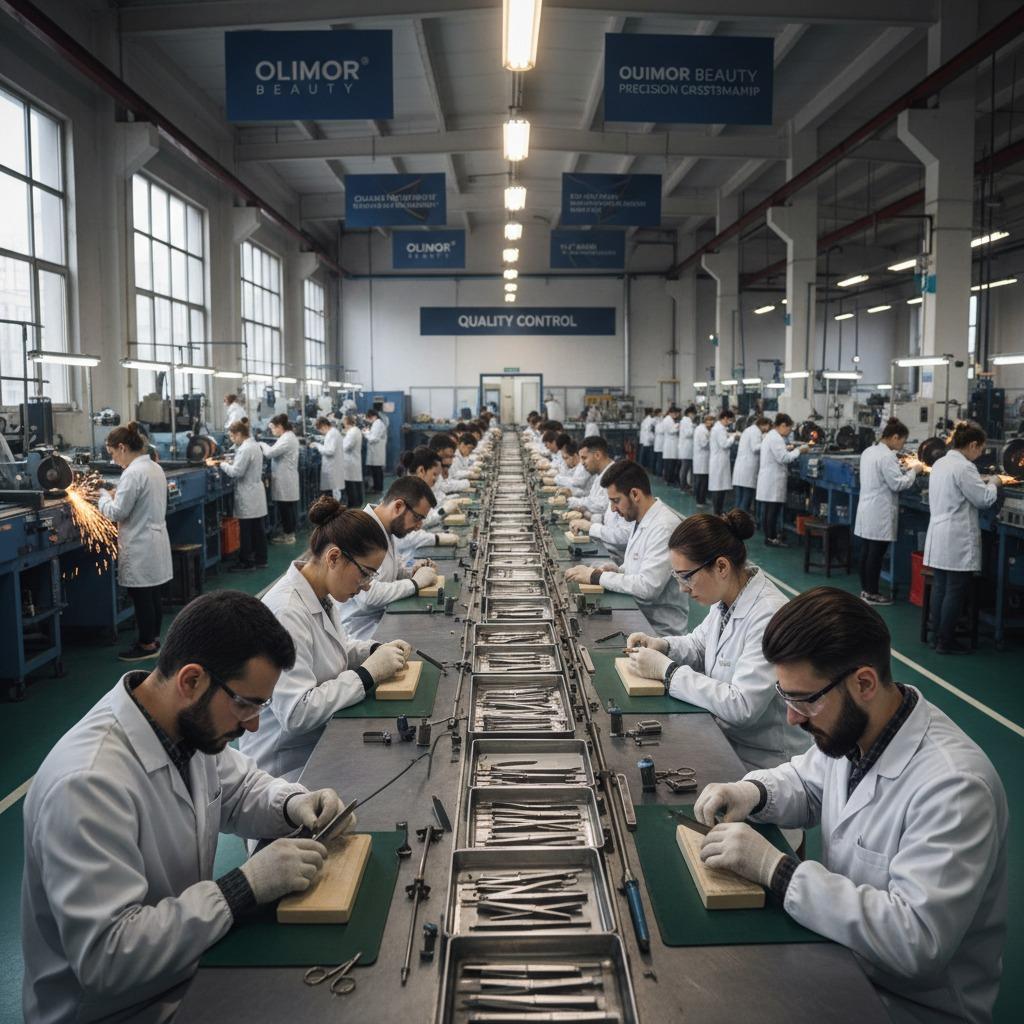
Supplier evaluation should cover both appearance and process. A reliable discussion begins with a clear product brief and continues through sample review, packaging confirmation and production planning. Buyers should ask how the supplier handles sample approval, logo placement checks, finish consistency, tip protection and pre-shipment inspection expectations.
As a China tweezers exporter, Olimor Beauty can support buyers looking to develop personalized grooming tools for international beauty markets. The most useful inquiry includes the business purpose of the product, the target retail channel, the chosen tip style, preferred color or finish, logo requirement and packaging idea. If the tweezer is part of a larger set, share the overall visual direction so the tool does not look disconnected from the rest of the line.
When material grade, test standards, packaging formats, quality documents, order quantities or delivery timing are important for your market, define them in writing and confirm feasibility during sourcing. Clear documentation helps reduce redesigns and makes sample evaluation more objective.
End-User Care Guidance to Include
Good care guidance can improve customer satisfaction and reduce avoidable complaints. Even a well-made tweezer can perform poorly if it is dropped, stored without protection or used for tasks outside its intended purpose. Care copy should be concise and easy to understand.
- Clean the tips after use and dry the tool before storage.
- Store the tweezer with a cap, pouch or protective packaging when available.
- Avoid dropping the tool, because impact can affect tip alignment.
- Use the selected tip style for its intended task, especially with pointed or precision tweezers.
- Keep decorative finishes away from heavy metal tools that may scratch the surface.
These points are especially useful for coated, metallic or gradient tweezers. They protect the look of the product while helping the user maintain grip performance over time.
FAQ for Custom Tweezer Buyers
Can I request samples before confirming a custom tweezer order?
Sample discussions are a normal part of custom beauty tool sourcing. Provide the preferred tip style, finish direction, logo requirements and packaging concept so the sample can be reviewed for both appearance and function.
What MOQ applies to personalized tweezers?
MOQ depends on the customization scope, finish, packaging and production arrangement. Ask for the current requirement based on your exact specification rather than assuming one quantity applies to every project.
Can the color, logo and packaging all be customized?
Customization may include color, finish, engraving or marking, tip choice and packaging direction. Feasibility should be confirmed with artwork, product positioning and retail requirements before final approval.
How should I confirm quality before production?
Review samples for tip alignment, grip on fine hair, closing pressure, surface finish, logo placement and packaging protection. Define inspection expectations and any market documentation needs in the supplier brief.
Start With a Clear Custom Tweezer Brief
A successful custom tweezer balances function, finish and sourcing clarity. Define the task first: brow grooming, lash placement, detailed hair removal, travel use, gifting or kit building. Then choose the tip style, grip feel, surface direction, logo treatment and packaging format that support that role.
Olimor Beauty can support buyers developing personalized tweezers that look distinctive while remaining practical grooming tools. To discuss a project, contact Olimor Beauty with your product direction, or send a custom tweezer inquiry including tip style, finish concept, branding needs and packaging requirements. A clear brief helps move the project from idea to sample with fewer revisions and a better final result.
Tag: