Export Quality Tweezers: What Buyers Should Check Before Ordering
Tweezers are small tools, but buyers rarely treat them as low-importance items once complaints appear. Poorly aligned tips, slippery handles, rough edges or inconsistent finishes can make a tweezer difficult to use and hard to sell. For beauty retailers, salon suppliers, brow professionals, lash technicians and nail-art buyers, export quality tweezers need to combine accuracy, comfortable handling and reliable presentation.
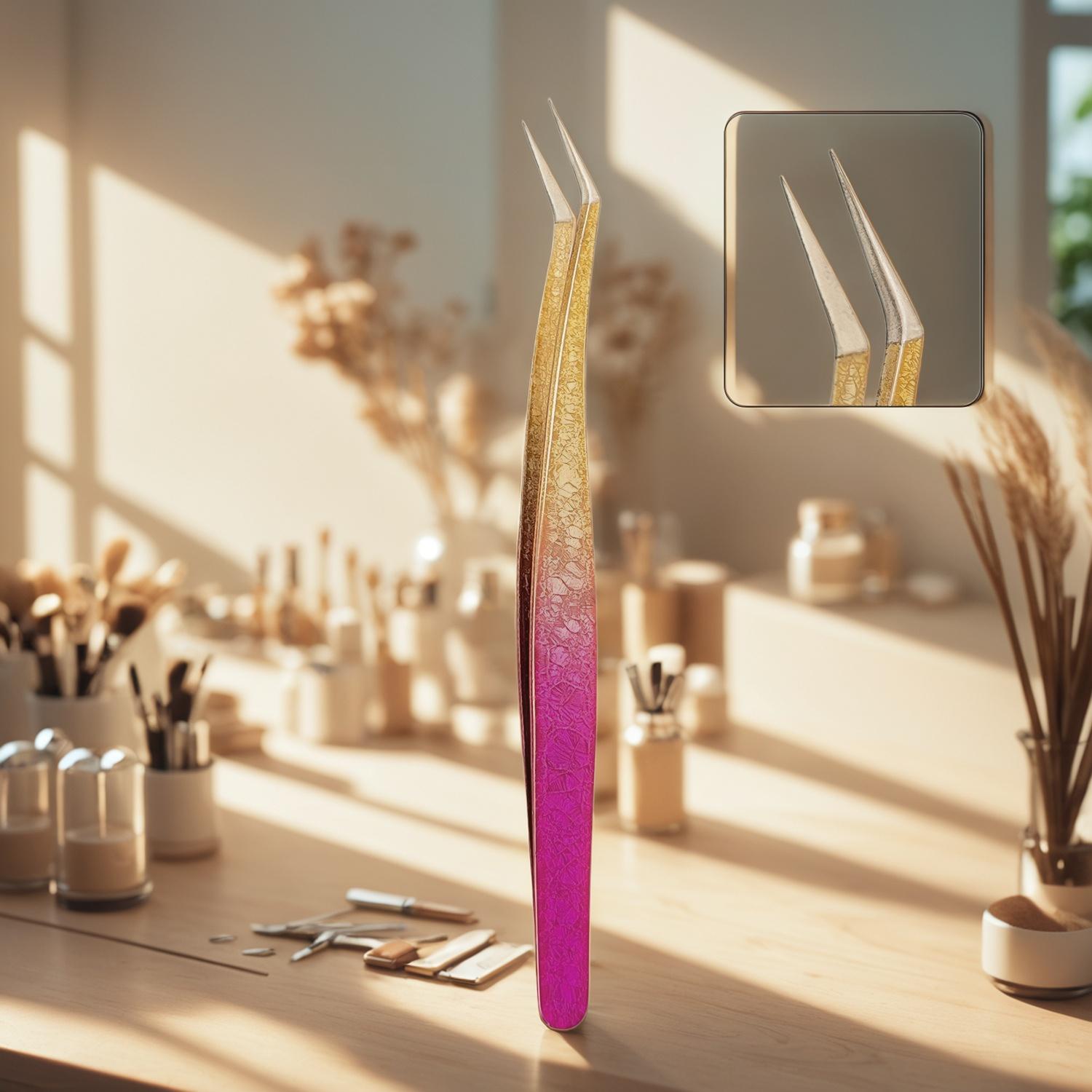
Olimor Beauty supplies tweezers for beauty-tool customers who need a dependable factory-direct source. The product described here is a stainless steel tweezer with angled, super-fine tips and a decorative gradient finish that shifts from lustrous gold to vibrant pink. A textured cracked pattern on the handle adds visual interest and helps with grip. These details matter because a tweezer is judged both by how it performs in the hand and how it looks in retail packaging or professional kits.
This guide explains how to evaluate export quality tweezers, what to look for when buying factory direct, and how to match a tweezer style to brow shaping, lash application, nail art and general grooming use.
Why Export Quality Tweezers Need More Than a Decorative Finish
A striking finish may attract attention, but it cannot compensate for weak tip performance. The most important part of any tweezer is the meeting point of the tips. When the tips close evenly, the user can grip fine hairs, individual lashes, decals, crystals or nail-art elements with less hand pressure. When the tips are uneven, too blunt or overly flexible, the tool may slide off the target or cut instead of grip.
For export buyers, the challenge is consistency. A single sample can look good, but an order needs repeatable performance across cartons. A useful inspection process should consider both the cosmetic appearance and the working function of the tweezer. Buyers should look closely at the following points before committing to a large program:
- Tip alignment: the angled tips should meet cleanly without visible gaps when closed under normal pressure.
- Tip fineness: super-fine tips should be precise enough for detailed work while still feeling stable in use.
- Edge comfort: outer edges should feel smooth enough for safe handling and storage.
- Grip area: the textured cracked pattern should support control without feeling sharp or uncomfortable.
- Finish consistency: the gold-to-pink gradient should look even and intentional, with no obvious discoloration or patchiness.
- Opening tension: the tweezer should spring open smoothly and not feel either too weak or too stiff.
These checks help separate a visually attractive tweezer from one that is ready for regular beauty use.
Best Uses for Angled, Super-Fine Stainless Steel Tips
The angled tweezer format is popular because it gives users a clear view of the working area while allowing controlled contact with small items. Stainless steel is commonly used for beauty tools because it supports durability and a clean, professional feel. In this product, the angled, super-fine tips are especially relevant for tasks where accuracy matters more than force.
For brow shaping, angled tips help isolate individual hairs along the brow line. A user can approach from the side, grip close to the root and remove the hair with controlled pressure. This is useful for shaping arches, cleaning stray hairs and refining the area between salon visits.
For lash application, fine tips help pick up and position individual lashes or small lash clusters. The tool should close securely without crushing delicate materials. A stable tip also helps when positioning lash accents near the lash line.
For nail art, super-fine angled tips can assist with placing small embellishments, decals, foil pieces or other decorative items. Nail work often requires the tool to move precisely in a small space, so visibility and hand control are important. The textured handle can support a steadier grip during these detailed movements.
For retail customers, this versatility is useful. A tweezer that can be described honestly for brows, lashes and nail art gives stores and online sellers broader merchandising options without making unrealistic claims.
Factory-Direct Sourcing: What It Can Improve for Buyers
Buying tweezers factory direct can simplify communication and product development. Instead of working through several intermediaries, buyers can discuss tool feel, finish expectations, packaging direction and inspection priorities more directly with the source. This is especially important for export quality tweezers because small changes in tip shape, surface treatment or tension can affect the user experience.
Factory-direct sourcing may also make it easier to compare sample batches, confirm acceptable appearance standards and align on packing requirements before production. For a beauty tool such as a decorative gradient tweezer, buyers should not focus only on unit appearance. They should also define what counts as an acceptable gradient, how much color variation is reasonable and whether the texture must remain consistent across the handle area.
Olimor Beauty positions its tweezers supply around manufacturing steps and internal quality checks from raw materials to final packaging. For importers, distributors and private-label buyers, that approach is valuable because it encourages early discussion of quality expectations. Buyers comparing different beauty tool products can use tweezers as a practical test case: if the supplier can control a small precision tool, it often indicates careful attention to other hand-held beauty tools as well.
How to Evaluate Samples Before Importing Tweezers from China
Samples should be tested in realistic conditions, not only photographed. A tweezer may look excellent in a catalog image but feel awkward during detailed work. Before importing tweezers from China, buyers can create a short internal sample review that covers function, finish and packaging readiness.
| Check Area | What to Review | Why It Matters |
|---|---|---|
| Tip closure | Close the tips gently and check whether they meet evenly. | Accurate closure helps grip fine hairs, lashes and nail-art pieces. |
| Hand feel | Hold the tweezer for several minutes and repeat common motions. | Comfort matters for professionals and frequent home users. |
| Grip texture | Test the cracked pattern with dry and slightly moist hands. | A secure grip supports precision and reduces slipping. |
| Surface finish | Review the gold-to-pink gradient under normal and bright light. | Consistent appearance supports retail presentation. |
| Tip protection | Check how the tips are protected during packing and transport. | Fine tips can be affected if they are not packed carefully. |
It is helpful to have more than one person test the sample. A brow specialist may focus on hair grip, while an e-commerce buyer may focus on visual consistency and packaging. A warehouse or quality-control colleague may notice whether the product is easy to inspect quickly during receiving.
Retail Presentation and Customer Expectations
Export quality tweezers are often purchased for more than basic utility. The gradient finish and textured pattern on this Olimor Beauty tweezer make it suitable for customers who want a beauty tool that looks polished in a cosmetic bag, salon station or giftable set. However, retail presentation should be accurate. The product should be described as a stainless steel angled tweezer with super-fine tips, a gold-to-pink gradient finish and a textured cracked handle pattern. Avoid vague claims that cannot be checked by the customer.
For stores, photography should show the full tool, the angled tip close-up and the handle texture. Close-up images help customers understand what they are buying and reduce misunderstandings. If the tweezer is sold online, include care instructions and intended uses in the product text. If it is sold in a salon or beauty supply store, display it where customers can compare tip shape and hand feel with other grooming tools.
Buyers building a wider program can review related product collections to plan how tweezers fit with lash tools, manicure accessories, brow-care items or travel beauty kits. A coordinated selection often sells better than a single isolated tool because customers can complete a task with compatible products.
Care, Storage and Maintenance for Longer Service
Even well-made tweezers need proper handling. Super-fine tips are precision points, and rough storage can affect alignment. Beauty users should avoid dropping the tweezer, forcing the tips against hard surfaces or using the tool for non-beauty tasks such as opening packages. Retailers can reduce returns by providing simple care guidance with the product page or packaging insert.
- Wipe the tweezer after use to remove cosmetic residue, oils or adhesive traces.
- Dry the tool before storage, especially after cleaning.
- Use a tip cover or protective packaging when carrying the tweezer in a makeup bag.
- Do not bend the tips outward to adjust tension; this can damage alignment.
- Store separately from heavier metal tools that could hit the fine tips.
For professional settings, cleaning procedures should match the salon or studio’s hygiene requirements. The key point for all users is consistency: a tweezer that is cleaned and protected will remain easier to use than one tossed loose into a drawer.
Questions Buyers Should Settle Before Placing an Order
Before confirming a tweezer order, buyers should document the practical details that affect sales and receiving quality. This does not require complicated language, but it should be specific enough that both sides understand expectations.
- What finish standard will be used for the gold-to-pink gradient?
- How will tip alignment be checked before packaging?
- What packaging method will protect the super-fine angled tips during shipment?
- Will the handle texture remain consistent across the order?
- What product description and care instructions should appear on the retail page or packaging?
- How will buyers review and approve pre-production or reference samples?
Clear answers help reduce avoidable disputes. They also help purchasing teams compare suppliers fairly. If you are sourcing tweezers as part of a new beauty-tool program, you can send an inquiry with your target use, packaging needs and expected inspection priorities. For more specific sourcing discussions, you may also contact Olimor.
Choosing the Right Export Quality Tweezer Partner
A good tweezer supplier understands that buyers need both attractive design and repeatable performance. Olimor Beauty’s export quality tweezers combine a stainless steel build, angled super-fine tips, a grip-supporting textured handle and a distinctive gold-to-pink gradient finish. Those features make the product suitable for brow shaping, lash application, nail art and beauty retail assortments.
The strongest purchasing decisions come from checking samples carefully, defining acceptable quality points and matching the tweezer to a clear customer use case. When buyers treat tweezers as precision beauty tools rather than simple accessories, they are more likely to choose products that satisfy end users and support long-term retail confidence.
Tag: