Nail Clipper Factory Sourcing Guide for Compact Grooming Tools
A nail clipper looks simple, but buyers know that small differences in cutting edge, lever tension, finish and inspection can affect repeat purchases, returns and customer reviews. For retailers, distributors, promotional buyers and private-label grooming brands, choosing the right nail clipper factory is less about finding the lowest unit cost and more about identifying a supplier that can deliver consistent, comfortable and clean-cut tools at scale.
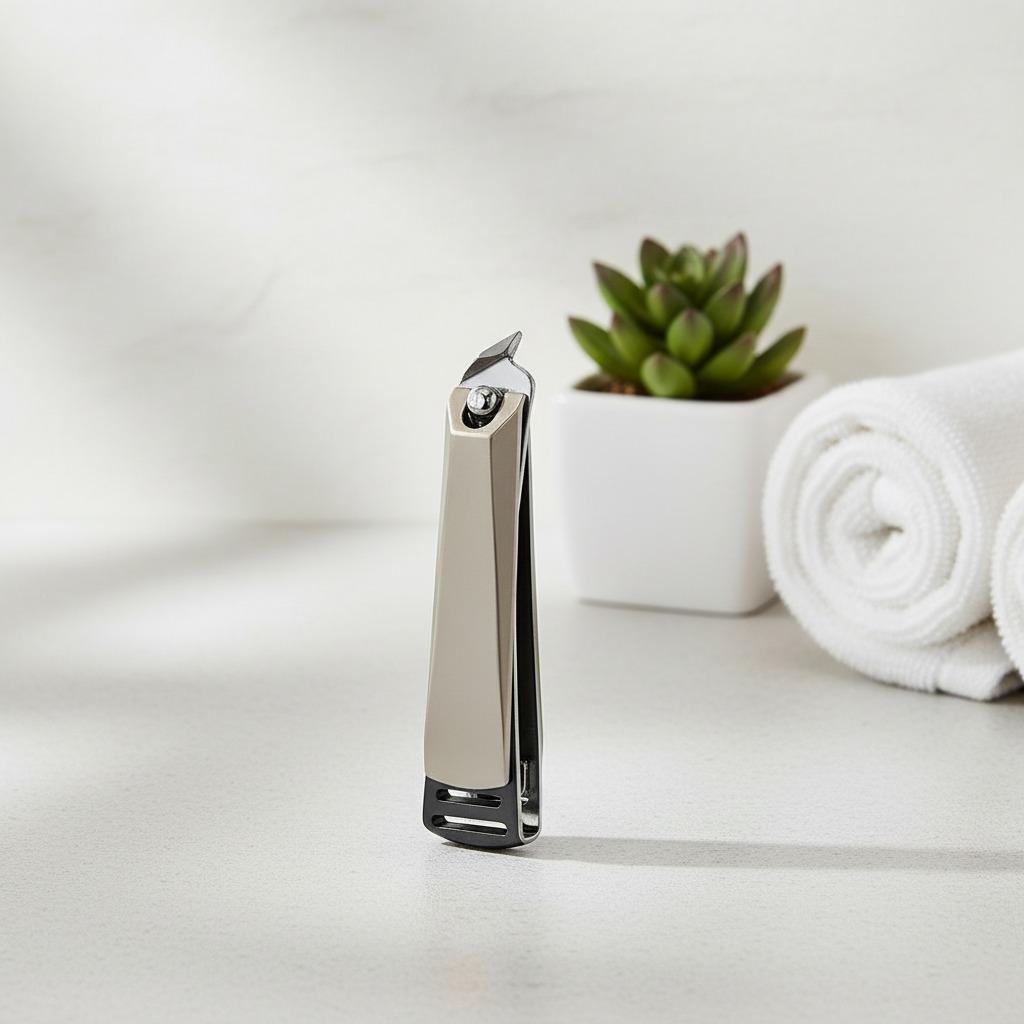
Olimor Beauty offers a compact nail clipper designed for everyday grooming, travel kits, purse storage and retail personal care assortments. The product information available for this tool highlights a 70 mm length, 15 mm width and approximate 30 g weight, giving buyers a useful starting point when comparing portability, handling and packaging fit. Its stainless steel construction, ergonomic grip, metallic finish and sharpened cutting edges position it for buyers who want a practical grooming essential rather than an oversized specialty tool.
Why Compact Nail Clipper Details Matter in Bulk Sourcing
When buying a single clipper, a consumer may choose by appearance. When sourcing hundreds, thousands or ongoing batches, the decision becomes more technical. A 70 mm nail clipper is compact enough for travel kits and point-of-sale grooming displays, yet large enough for many adult users to hold comfortably. The 15 mm width helps buyers assess tray dimensions, blister card layout, gift set compartments or pouch compatibility. At around 30 g, the tool has enough weight to feel substantial without making shipping or kit assembly unnecessarily heavy.
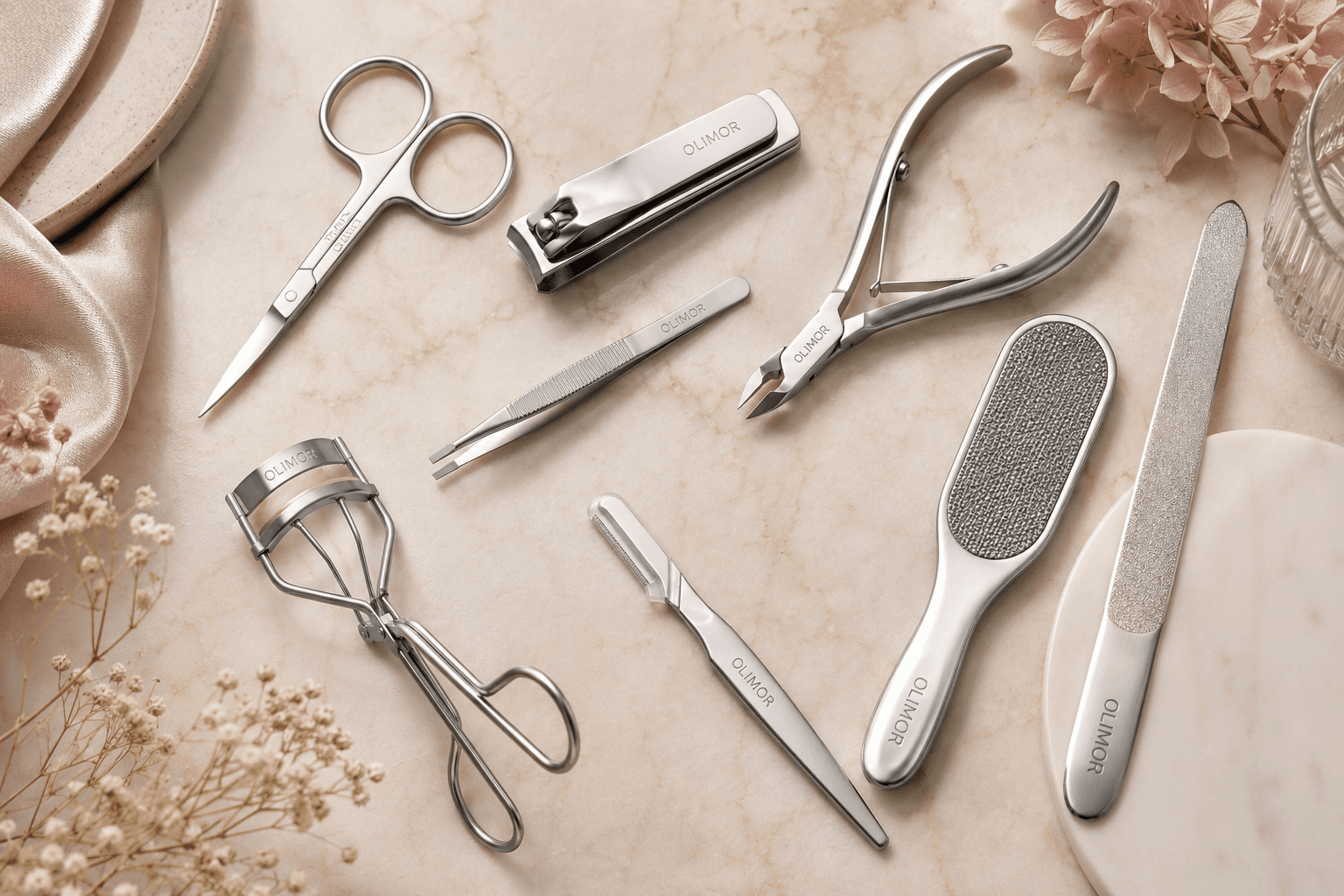
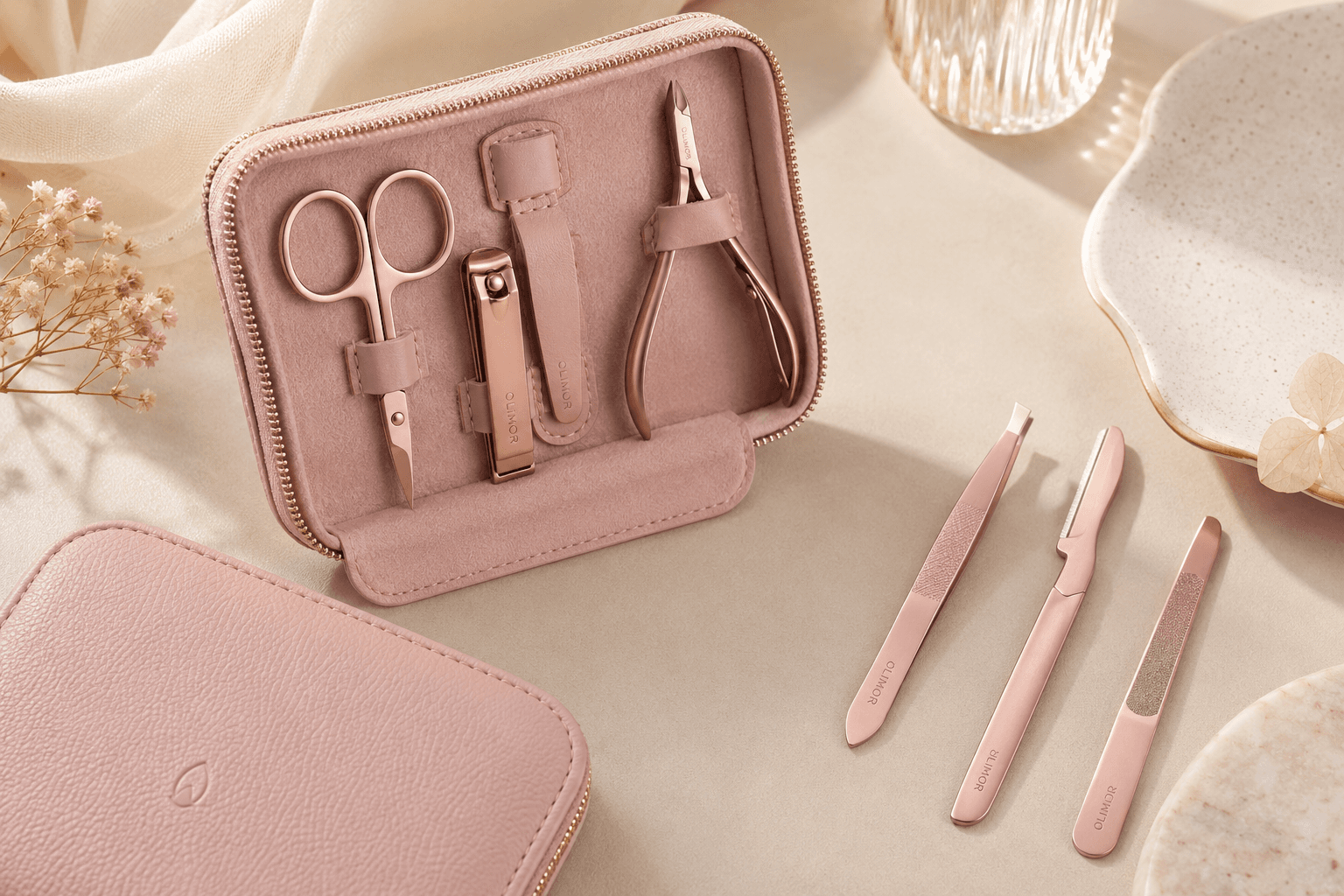
These measurements are especially relevant for businesses building mixed grooming sets. If a nail clipper must sit alongside tweezers, scissors, files or cosmetic accessories, small dimensional differences can affect the entire package design. Buyers browsing Olimor’s beauty tool products can use these figures to compare how a compact clipper may fit within a broader personal care range.
Key Quality Points to Evaluate at a Nail Clipper Factory
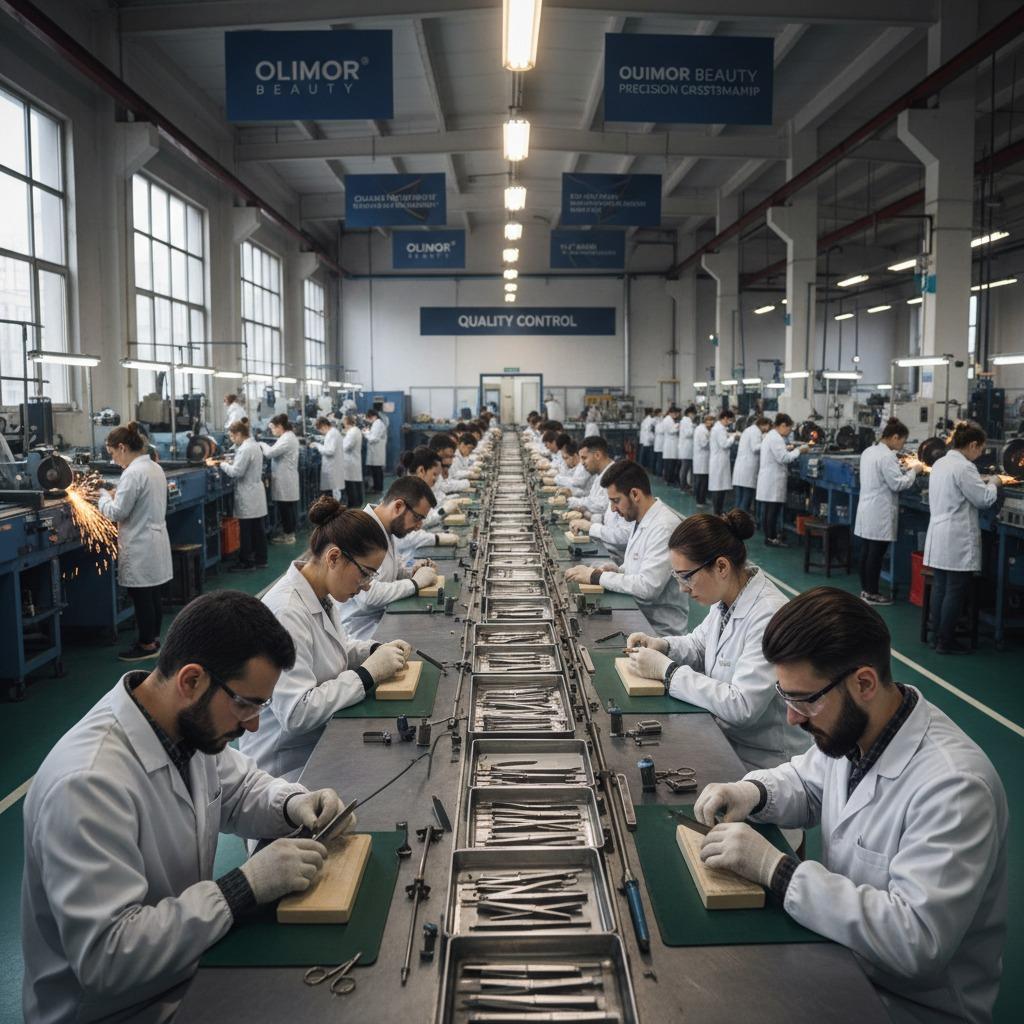
The most important performance issue is the cutting edge. A nail clipper with poorly aligned or dull jaws can crush the nail instead of trimming it, which may cause splitting, tearing or an uneven edge. Factory evaluation should therefore include more than a visual inspection. Buyers should consider how the cutting edges are sharpened, how alignment is checked and how finished pieces are screened before packaging.
For this type of stainless steel grooming tool, a practical quality review should include:
- Jaw alignment: The upper and lower cutting edges should meet evenly across the width, without visible gaps or offset tips.
- Cutting smoothness: The clipper should trim cleanly with controlled pressure, not require excessive force or leave ragged edges.
- Lever action: The lever should open and close smoothly, with stable resistance and no loose wobble that affects control.
- Surface finish: A metallic finish should look consistent, with no sharp burrs, rough edges, discoloration or obvious polishing marks.
- Grip comfort: The user should be able to hold and press the clipper securely, even when performing small, precise trims.
- Packaging condition: Finished goods should arrive protected from scratches, deformation and contamination during transport.
These checks help wholesalers and retailers reduce customer complaints. They also provide a common language for sampling, production approval and final inspection.
Wholesale Buying: Matching the Clipper to the Sales Channel
A nail clipper wholesaler needs to think about where and how the product will be sold. A compact stainless steel clipper can work across several channels, but the priorities differ. A pharmacy or supermarket buyer may focus on dependable function and clear packaging. A travel accessories seller may value the 70 mm size and 30 g weight because portability is central to the purchase. A beauty retailer may pay closer attention to finish, hand feel and how the clipper sits within a grooming display.
Before placing a bulk order, define the exact sales context. Will the nail clipper be sold as a single everyday item, included in a manicure kit, offered as a promotional gift or packed into a travel care set? The answer affects packaging type, labeling space, barcode placement, protective inserts and quality tolerance. A tool that performs well in a salon-style kit may need different packaging than one hanging on a retail peg wall.
Buyers exploring broader assortment planning can review Olimor’s product collections to consider whether a nail clipper should be sourced alone or paired with complementary grooming tools. Coordinated sourcing can simplify merchandising and help build a more complete personal care offering.
OEM Nail Clipper Decisions: What Can Be Customized Responsibly
OEM sourcing is attractive because it lets a business align the product with its market positioning. However, customization should improve the buyer’s offer without weakening the tool’s basic function. With nail clippers, the most important product promise remains clean, controlled trimming. Branding, packaging and finish decisions should support that promise, not distract from it.
Useful OEM discussion points include logo placement, outer packaging format, instruction text, retail display requirements and whether the product will be sold as part of a set. For a compact clipper, buyers should confirm that any branding process does not create rough surfaces, reduce corrosion resistance, interfere with lever movement or make the tool uncomfortable to use.
Packaging is often the most commercially important OEM decision. A minimalist pack may suit value retail, while a carded or boxed presentation may work better for gift sets, beauty aisles or online fulfillment. For e-commerce, packaging must also protect the metallic finish from scratching during parcel handling. For offline retail, the pack should communicate size, use and material clearly without overcomplicating the customer’s decision.
Sample Review Checklist for Buyers
Sampling should be structured. A buyer should not judge a nail clipper from one quick cut or from product photos alone. Use the same process for each sample so comparisons are fair. The following checklist can help procurement, product development and quality teams evaluate compact nail clippers before moving toward bulk production.
| Review Area | What to Check | Why It Matters |
|---|---|---|
| Dimensions | Confirm length, width and approximate weight against packaging plans. | Prevents problems with trays, pouches, cards and shipping calculations. |
| Cutting edge | Test trimming on appropriate sample materials or nails using normal pressure. | Shows whether the clipper cuts cleanly instead of crushing or tearing. |
| Lever feel | Open and close repeatedly to assess stability and smoothness. | Affects user confidence and perceived product quality. |
| Finish | Inspect under good lighting for scratches, burrs and uneven metallic appearance. | Important for retail presentation and safe handling. |
| Grip | Hold the tool in different hand positions and test control during small trims. | Ergonomics influence comfort and repeat use. |
| Packing | Check whether the clipper remains protected during handling and transit. | Reduces cosmetic damage and customer returns. |
Maintenance Guidance That Adds Value for End Users
Retailers and private-label buyers can improve customer satisfaction by including simple care guidance on packaging or inserts. Nail clippers are personal tools, and basic maintenance helps preserve hygiene and cutting performance. The guidance does not need to be long; it should be clear, practical and suited to everyday users.
- Wipe the clipper after use to remove nail dust and residue.
- Keep the tool dry before storing it in a pouch, drawer or travel kit.
- Avoid using the clipper on materials other than nails, as this may affect the cutting edge.
- Do not force the lever if the nail is too thick for a comfortable cut; trim gradually from the edge.
- Store the clipper away from small children and keep the cutting edges protected during travel.
These simple instructions can reduce misuse and support a more positive product experience. They are also useful for brands that want packaging to feel helpful rather than purely decorative.
Questions to Prepare Before Contacting a Supplier
A productive sourcing conversation starts with a clear brief. Instead of asking only for a quote, buyers should prepare details that help the factory or wholesaler understand the intended use and commercial requirements. Important information includes target market, sales channel, estimated order planning, packaging preference, branding needs and any internal quality expectations.
It is also helpful to specify whether the clipper will be sold individually, included in a grooming set or used for promotional distribution. This affects not only packaging but also labeling, carton planning and inspection criteria. If your business is comparing nail clipper OEM options or wants to align the tool with a wider beauty accessories program, you can send an inquiry with the relevant project details or contact Olimor for sourcing communication.
Choosing a Nail Clipper Partner for Long-Term Supply
The right nail clipper factory should make sourcing easier over time. Consistent sharpening, careful assembly, ergonomic handling and stable finishing are all essential for a product that customers use close to the body. For wholesalers, the goal is a reliable item that can be reordered with confidence. For OEM buyers, the goal is to combine dependable function with branding and packaging that fit the market.
Olimor Beauty’s compact stainless steel nail clipper, with its 70 mm length, 15 mm width and approximate 30 g weight, is a practical option for buyers seeking a portable grooming tool for bulk supply or customized programs. By evaluating samples carefully, defining the sales channel and treating packaging as part of the product experience, buyers can source a nail clipper that performs well in daily use and supports a professional personal care assortment.
Tag: