Custom Tweezers by Olimor Beauty: How to Specify the Right Tool for Your Range
Custom tweezers may look simple, but small details decide whether they feel precise, comfortable, and durable in daily use. For beauty retailers, salon suppliers, brow artists, lash professionals, and private label buyers, the goal is not only to choose a tweezer that looks appealing. The tool also needs the right tip geometry, grip tension, surface finish, packaging, and quality expectations for its intended application.
Olimor Beauty supports buyers who are building or refining beauty tool assortments, including tweezers for grooming and professional use. Whether you are comparing suppliers, preparing a new product brief, or checking samples before a production order, a structured specification helps prevent vague requirements and inconsistent results.
Start With the Exact Use Case
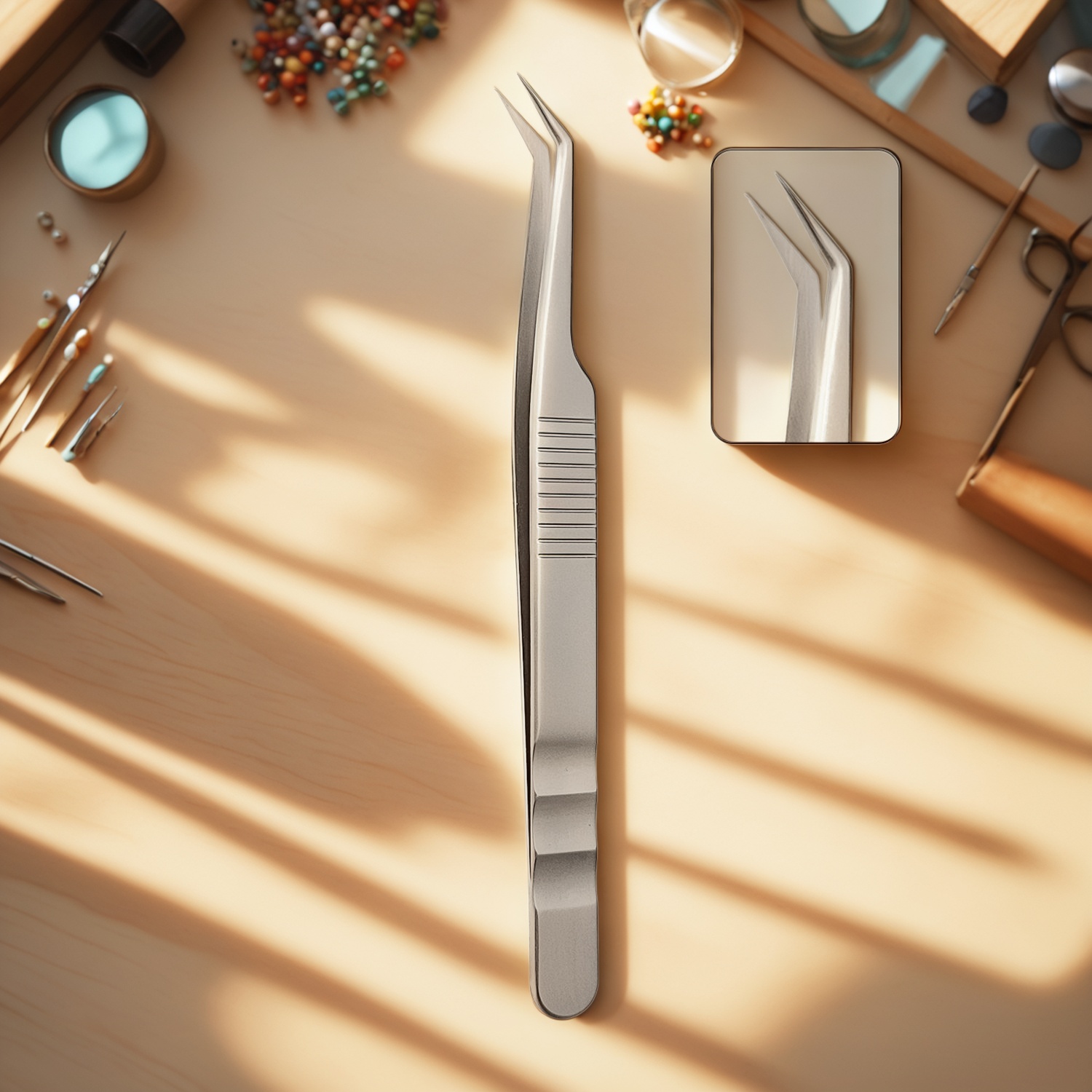
The first decision is not color or logo placement. It is the task the tweezer must perform. A tweezer used for eyebrow shaping has different requirements from one used for lash isolation, fine grooming, nail art, jewelry handling, or beauty kit assembly. If the use case is unclear, the sample may look attractive but fail in performance testing.
For brow grooming, buyers often focus on clean hair removal, accurate grip, and comfortable hand pressure. A slanted tip is commonly selected because it provides a usable edge for shaping and a pointed corner for targeting individual hairs. For lash work, the requirements can shift toward lighter handling, narrow contact points, and consistent alignment at the tip. For multi-purpose beauty kits, durability, easy cleaning, and safe packaging may become more important than an ultra-specialized tip.
Before selecting custom tweezers, define the user and the job clearly:
- Retail beauty consumer: needs intuitive handling, protective packaging, and reliable everyday performance.
- Brow or lash professional: needs repeatable precision, comfortable tension, and tips that meet evenly.
- Gift or travel set buyer: needs compact packaging, safe tip protection, and consistent visual finish.
- Salon distributor: needs a balanced design that can suit multiple service environments.
You can browse related beauty tool products to compare how different tool categories are positioned, packaged, and described within a broader assortment.
Key Custom Tweezers Specifications to Decide Early
A useful custom tweezer brief should include more than a photo reference. The best outcomes come from specifying the functional details that affect the user’s hand feel and the tweezer’s ability to grip fine material. Some details may be finalized after sample review, but they should still be part of the conversation from the beginning.
| Specification | Why It Matters | Buyer Checkpoint |
|---|---|---|
| Tip shape | Controls the type of precision, from angled brow work to fine targeting. | Confirm whether slanted, pointed, flat, or specialty tips match the intended user. |
| Tip alignment | Determines whether the tweezer grips evenly rather than slipping or cutting hair. | Check that both tips meet cleanly under light pressure. |
| Spring tension | Affects hand fatigue and control during repeated use. | Test several samples for comfort, not only appearance. |
| Handle texture | Improves control, especially in professional or humid environments. | Decide whether smooth, matte, textured, or coated handles are suitable. |
| Finish and color | Supports branding and perceived value. | Review finish consistency, scratch resistance expectations, and color matching. |
| Tip protection | Prevents damage during shipping, storage, and consumer use. | Include caps, sleeves, pouches, or box inserts where appropriate. |
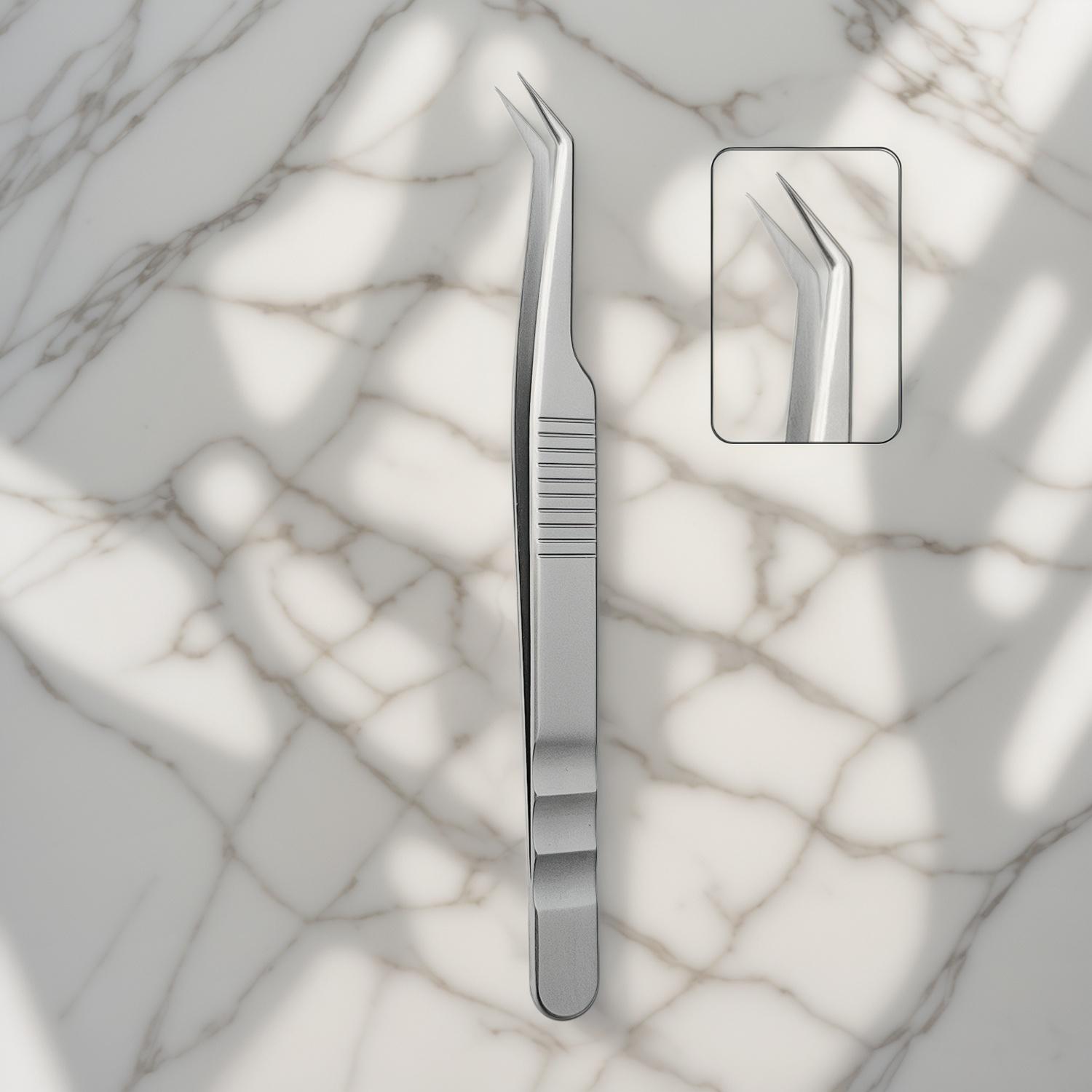
The supplied product information refers to custom tweezers, a China tweezers exporter context, and an example named PrecisionPro Titanium Angled Tweezers. If you are evaluating a titanium or angled-tip option, confirm that the selected design, material claim, and finish are documented clearly in the product brief and packaging copy.
How to Evaluate Samples Like a Professional Buyer
Sample review should be practical and repeatable. A tweezer can look straight in a product photo yet perform poorly when used on fine hair or small beauty accessories. Instead of relying on a single visual inspection, create a simple evaluation routine that different team members can follow.
- Inspect the tips under good light. Look for even contact, burrs, gaps, rough edges, and visible asymmetry.
- Test grip on fine material. Use fine hair or thread-like material to check whether the tips hold without slipping.
- Check tension repeatedly. Open and close the tweezer several times to feel whether the pressure is too stiff, too loose, or inconsistent.
- Assess comfort in real hand positions. A tweezer may feel acceptable for one grip but uncomfortable during longer brow shaping or lash work.
- Review finish quality. Look for uneven coating, scratches, discoloration, sharp handle edges, or inconsistent polishing.
- Check packaging protection. Confirm that the tips cannot be bent or dulled during shipping and storage.
For private label or branded retail programs, include packaging and labeling in the same sample review. The product may be technically acceptable, but if the pouch, sleeve, card, or box does not protect the tips, the end user may receive a damaged tool. A small protective cap can be a meaningful feature for travel kits or e-commerce shipments.
Branding, Packaging, and Range Planning
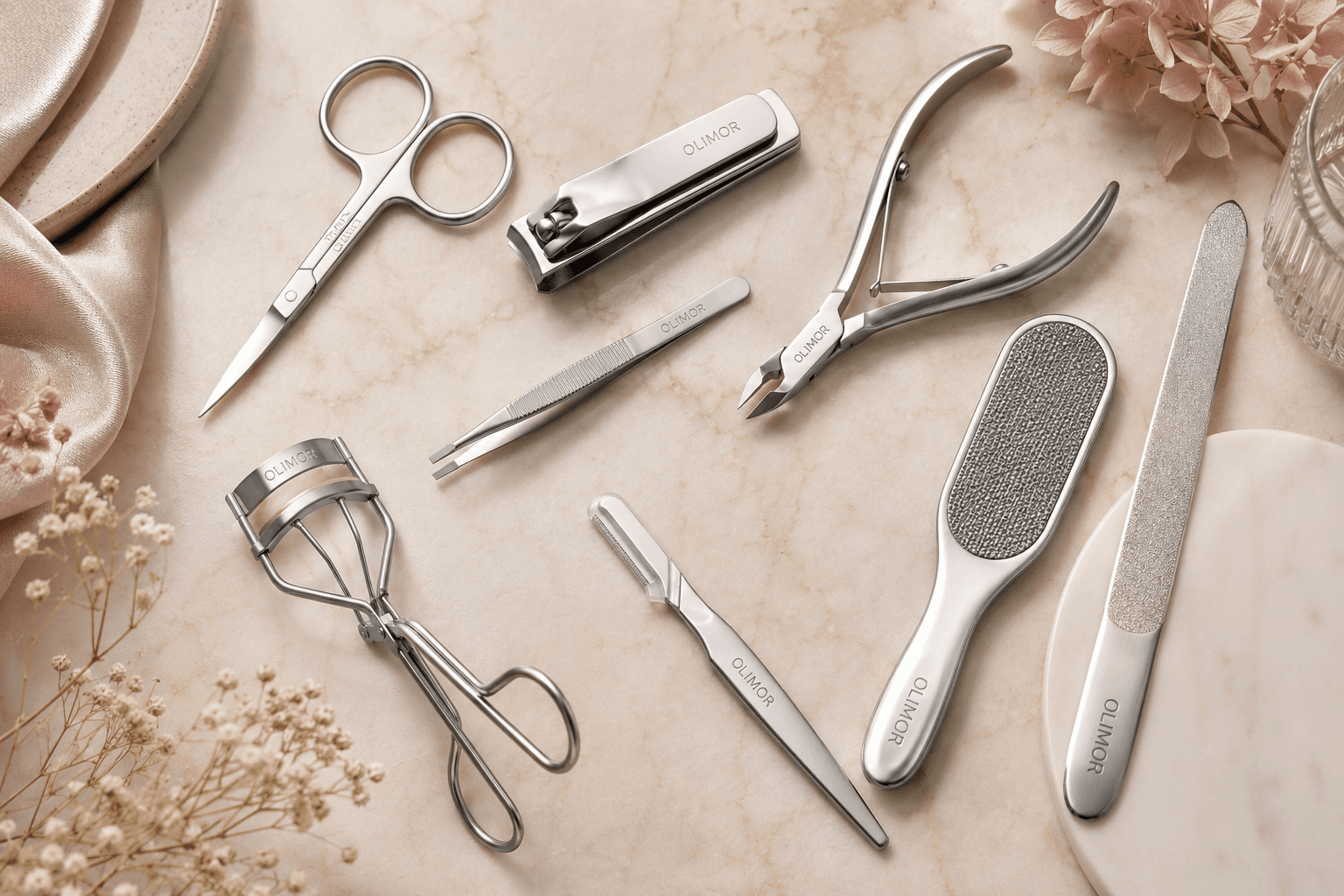
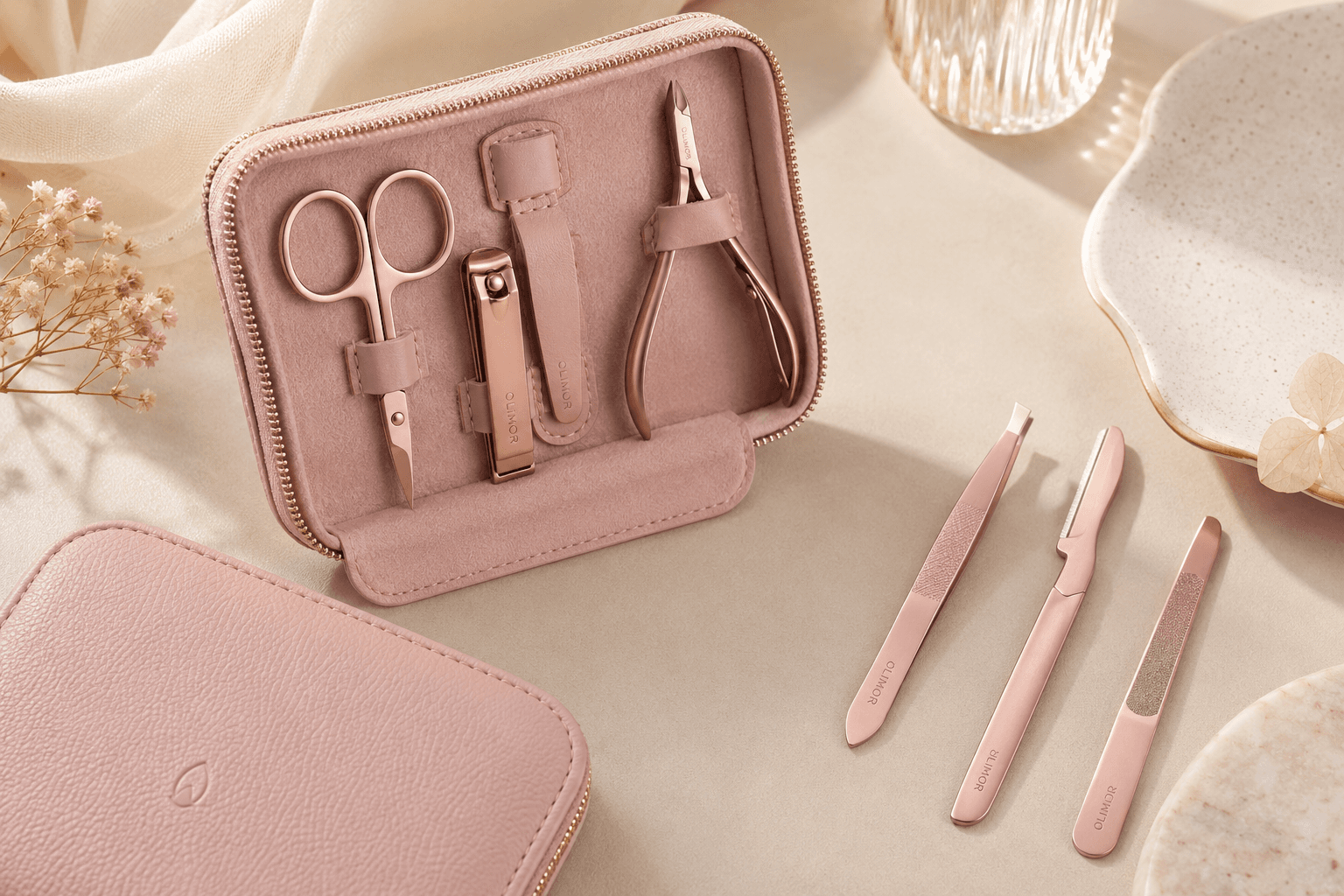
Custom tweezers often sit within a wider beauty tool category rather than selling as a standalone item. They may be paired with scissors, lash tools, brow brushes, nail tools, mirrors, or grooming accessories. For that reason, the visual language should match the rest of the range. A matte black tweezer, a polished metallic tweezer, and a colorful coated tweezer communicate different price positions and retail stories.
When planning a range, avoid adding too many versions without a clear reason. A focused assortment is easier for retailers and consumers to understand. For example, one angled tweezer for everyday brow grooming, one pointed tweezer for precision work, and one mini tweezer for travel may be more useful than several nearly identical styles. Buyers can also review Olimor Beauty product collections for assortment ideas and category structure.
Packaging should match the sales channel. For salon supply, practical protective packaging may be more important than decorative presentation. For retail display, hang cards, window boxes, or compact sleeves may help communicate the tip type and intended use. For online sales, the priority is safe transit, clear product photography, and concise copy that does not overpromise performance.
Questions to Prepare Before Sending an Inquiry
A clear inquiry saves time and helps the supplier understand the product direction. You do not need to know every technical answer before starting, but you should provide enough information to avoid a generic quote that does not fit your market.
- What is the main application: brow shaping, lash work, grooming kit, travel kit, or multi-purpose use?
- Which tip shape is preferred, and is there a reference sample for comparison?
- What finish, color, or surface texture is required?
- Will the tweezer be sold individually or as part of a set?
- What packaging format is expected: cap, pouch, sleeve, retail box, or display card?
- Is logo placement needed on the tool, packaging, or both?
- What quality checkpoints are essential for your market, such as tip alignment, grip test, finish appearance, and packaging protection?
If you are ready to discuss a specific project, you can send an inquiry with your product brief, target use, and any reference images or packaging requirements. For broader questions about sourcing or assortment planning, you can also contact Olimor.
Choosing Custom Tweezers With Long-Term Quality in Mind
The best custom tweezers are not selected only by unit appearance. They are selected by how consistently they perform across samples, how well they suit the intended user, and how clearly their specifications are controlled before production. Tip alignment, controlled tension, protective packaging, and accurate product descriptions all contribute to fewer complaints and stronger repeat purchase potential.
For beauty brands and tool buyers, custom tweezers are a small product with a high level of user scrutiny. Customers notice when tips do not meet properly, when the grip slips, or when the handle is uncomfortable. They also notice when a tweezer feels balanced, cleanly finished, and properly protected. By preparing a practical specification and reviewing samples with performance in mind, you can create a tweezer product that fits your market instead of relying on generic stock assumptions.
Olimor Beauty’s custom tweezers offering is best approached as a collaborative specification process: define the use case, select the appropriate tip and finish, review samples carefully, and align packaging with the sales channel. That preparation gives your beauty tool range a stronger foundation for organic search visibility, retail clarity, and real customer satisfaction.
Tag: