How to Choose a China Tweezers Exporter for Bulk and OEM Beauty Tools
For beauty retailers, salon suppliers, private-label brands and promotional product buyers, tweezers are small tools with a large impact on customer satisfaction. A tweezer that feels balanced, closes evenly and grips fine hairs cleanly can support repeat purchases; one with poor alignment or rough finishing can quickly damage a brand’s reputation. Working with a China tweezers exporter is often attractive because buyers can combine production experience, export support and customization options in one sourcing channel.
Olimor Beauty supplies grooming and beauty tools for global buyers, including stainless steel tweezers for everyday grooming, retail programs and OEM custom projects. The goal is not simply to buy the lowest-cost tweezer, but to define the right tool for the user, verify the quality details that matter, and build packaging and ordering requirements that are realistic for international trade.
What Buyers Should Expect from a China Tweezers Exporter
A qualified exporter should help turn a beauty tool requirement into a workable product specification. For tweezers, that means more than confirming the color and quantity. The exporter should be able to discuss the tweezer shape, tip style, hand feel, surface finish, packaging format and inspection points before production begins.
Stainless steel is commonly preferred for grooming tweezers because it is durable, suitable for repeated handling and appropriate for beauty tool applications. However, buyers still need to evaluate the final product as a complete tool. The metal body, spring tension, finishing, tip alignment and packaging all influence whether the product feels professional or disposable.
When reviewing beauty tool products, buyers should compare samples in the same way their end customers will use them: remove fine hairs, handle the tweezer under bright light, check whether the tips meet consistently, and inspect whether edges feel smooth around the fingers. A good exporter will understand these practical tests and help buyers refine the product before committing to bulk orders.
Bulk Order Tweezers: Selection Criteria That Affect Sell-Through
Bulk order tweezers are often purchased for retail shelves, salon supply channels, e-commerce bundles, gift sets or private-label grooming kits. The best option depends on how the tweezer will be sold and who will use it. A compact, colorful tweezer may work well in a travel kit or impulse retail display, while a clean stainless finish may better suit a professional or minimalist brand identity.
Before placing a bulk order, buyers should define these selection points:
- Tip type: Slanted tips are widely used for eyebrow grooming and general plucking because they provide visibility and control. Pointed or specialty tips may require more user skill and should match the target market.
- Grip and tension: The tweezer should close smoothly without excessive force. Too much tension can tire the hand; too little can feel weak or imprecise.
- Tip alignment: The two tips should meet evenly. Misalignment is one of the most common causes of poor gripping performance.
- Surface finish: A polished, coated or colored finish should be even, clean and comfortable to hold. Decorative finishes should not interfere with the tool’s working edges.
- Packaging purpose: Retail packaging needs shelf appeal and barcode space, while salon or distributor packaging may prioritize protection and efficient handling.
- Market positioning: A low-cost promotional tweezer, a mid-range retail tweezer and a beauty boutique tool may require different finish standards and presentation.
Bulk sourcing is also about consistency. One excellent sample is not enough; the production batch should maintain the same closing feel, tip contact and visual finish across units. Clear pre-production approval and inspection criteria help reduce misunderstandings.
OEM Custom Tweezers for Private-Label Beauty Brands
OEM custom tweezers allow brands to adapt a practical grooming tool to a specific customer segment. Customization may involve color, finish, logo placement, card design, pouch selection or retail packaging. For beauty brands, the challenge is to create a recognizable product without compromising the functional details that make a tweezer useful.
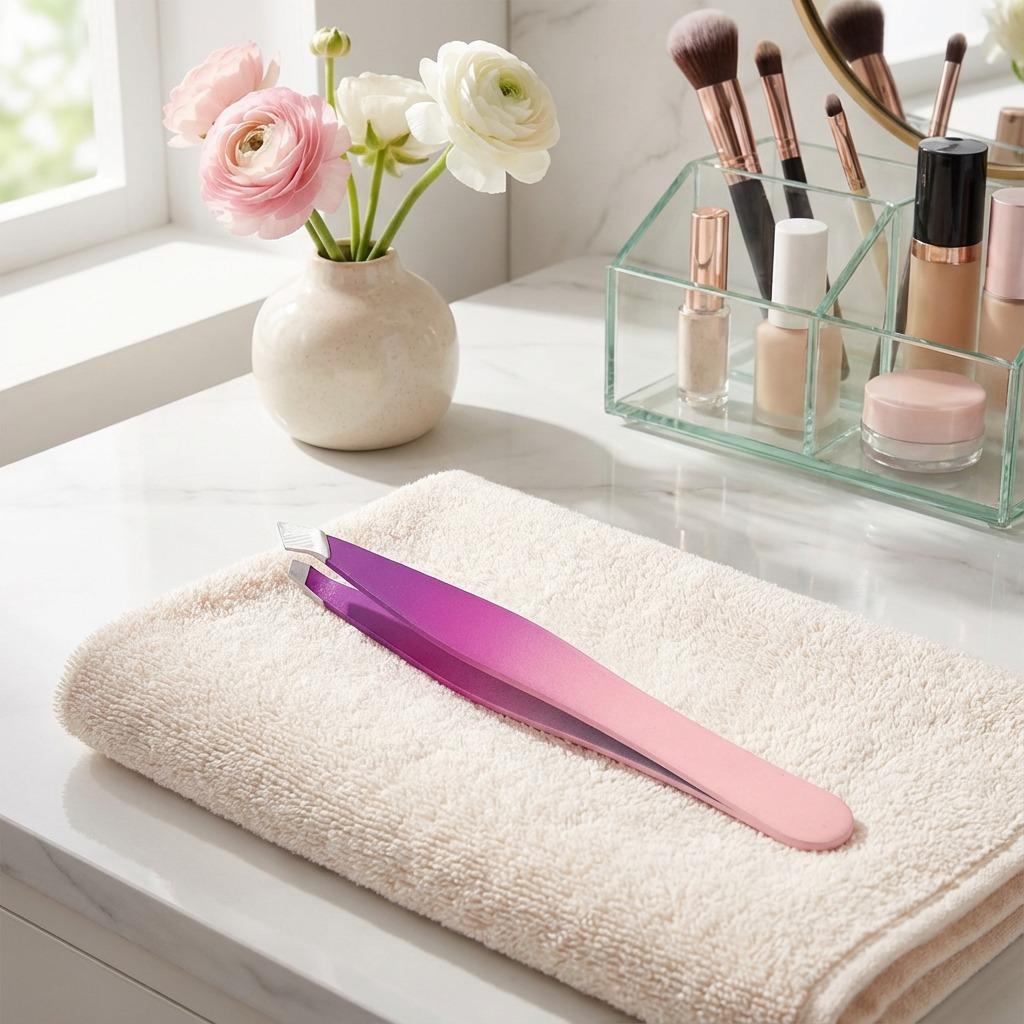
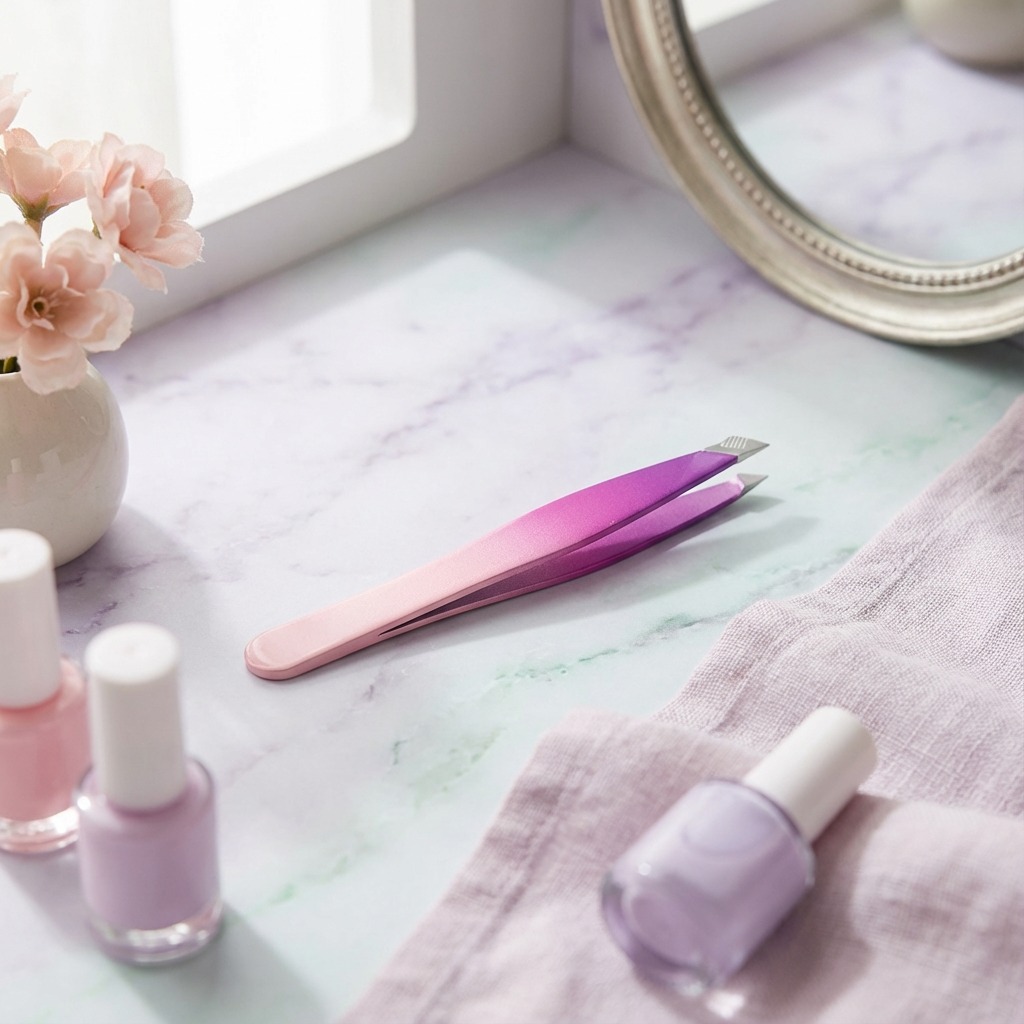
The supplied example of the Gradient Precision Tweezer shows how product identity can be built through appearance and form. Its pink-to-purple gradient finish gives it a distinctive beauty-oriented look, while the slanted tip supports precise plucking. The compact 63mm length is suitable for portability, making it relevant for travel kits, handbags, compact grooming sets or small retail packaging.
For OEM planning, buyers should separate decorative choices from performance requirements. A custom color may attract attention, but the tweezer still needs clean tip contact, comfortable pressure and consistent finishing. If the product will be part of a wider beauty set, the color and packaging should also coordinate with other tools in the line. Buyers developing related items can browse Olimor product collections to consider how tweezers may fit into a broader assortment.
Quality Checks That Matter for Tweezers
Tweezers look simple, but small dimensional differences can change how they perform. A structured quality checklist is useful for buyers comparing suppliers or approving a production run. The following table summarizes practical checkpoints that are relevant to bulk and OEM orders.
| Checkpoint | Why It Matters | What to Review |
|---|---|---|
| Tip alignment | Determines whether the tweezer can grip fine hairs cleanly | Tips should meet evenly without visible gaps or crossing |
| Closing tension | Affects comfort during repeated use | Tool should close smoothly with controlled pressure |
| Edge finishing | Impacts safety and perceived quality | Handle edges should feel smooth, not sharp or rough |
| Surface appearance | Supports retail value and brand presentation | Finish should be even, clean and free from obvious defects |
| Packaging fit | Protects the tips and improves presentation | Tweezers should not shift excessively or damage the pack |
| Logo and artwork | Protects brand consistency | Placement, color and readability should match approved files |
Inspection should consider both appearance and function. A tweezer may look attractive in packaging but fail during use if the tips are not properly aligned. Conversely, a functional tweezer with uneven coating or poor packaging may be difficult to sell in a retail environment. Buyers should define which issues are critical, major or minor before shipment is prepared.
Packaging and Export Planning for International Buyers
Packaging is not only a visual decision. It affects product protection, retail compliance, shipping efficiency and customer experience. For tweezers, tip protection is especially important because the working ends must remain aligned and clean. Depending on the sales channel, packaging may include a simple sleeve, backing card, pouch, blister-style presentation or custom retail carton.
International buyers should prepare artwork carefully. Logo files, color references, ingredient-free product descriptions, warning statements where applicable, barcode placement and import labeling should be reviewed before production packaging is confirmed. If multiple SKUs are involved, item names and color references should be organized in a clear spreadsheet to reduce the risk of mixed packaging.
Export planning also includes carton markings, packing lists and destination requirements. Beauty tool buyers often coordinate tweezers with other grooming accessories, so shipment organization matters. A well-prepared order should be easy to count, easy to identify and easy to distribute after arrival. If you are preparing an OEM brief or need to compare options, you can send an inquiry with your target use, packaging idea and expected order structure.
How to Build a Clear Tweezer Sourcing Brief
A precise sourcing brief saves time and improves quotation accuracy. Instead of asking only for “custom tweezers,” buyers should explain how the product will be used and sold. This helps the exporter recommend a suitable product direction and identify potential production concerns early.
- Define the end user: retail consumer, professional salon, travel kit user, promotional buyer or beauty subscription customer.
- Choose the functional style: slanted tip, compact size, standard grooming shape or another preferred structure.
- Confirm the finish direction: stainless look, colored coating, gradient effect or another approved visual treatment.
- Prepare branding files: logo artwork, packaging design, color references and any required label text.
- Set inspection priorities: tip alignment, surface quality, packaging accuracy and carton organization.
- Plan the assortment: decide whether the tweezer is a standalone product or part of a larger grooming kit.
Providing this information at the beginning makes it easier to compare products and avoid assumptions. Buyers who are still exploring product categories can also contact Olimor to discuss suitable beauty tool sourcing directions.
Choosing the Right Export Partner for Long-Term Programs
The right China tweezers exporter should support both immediate order execution and long-term product consistency. For a first order, buyers may focus on samples, price, packaging and lead-time planning. For repeat programs, the priorities often expand to artwork control, consistent quality standards, seasonal color updates, assortment planning and reliable communication.
Olimor Beauty’s role is to help buyers source tweezers that match real market needs: practical grooming performance, suitable materials, attractive presentation and workable customization. Whether the requirement is a stainless steel tweezer for everyday retail or an OEM custom tweezer with a distinctive gradient finish, the best results come from clear specifications and careful checking before production moves forward.
For brands, distributors and salon supply buyers, tweezers are worth detailed attention because they are handled closely and judged immediately. A well-made tweezer can become a small but dependable part of a beauty line, while a poorly specified one can create avoidable complaints. By focusing on tip precision, hand feel, finishing, packaging and export readiness, buyers can make more confident sourcing decisions and build a stronger beauty tool assortment.
Tag: