Reliable Nail Clipper Supplier Guide for B2B Beauty Supplies
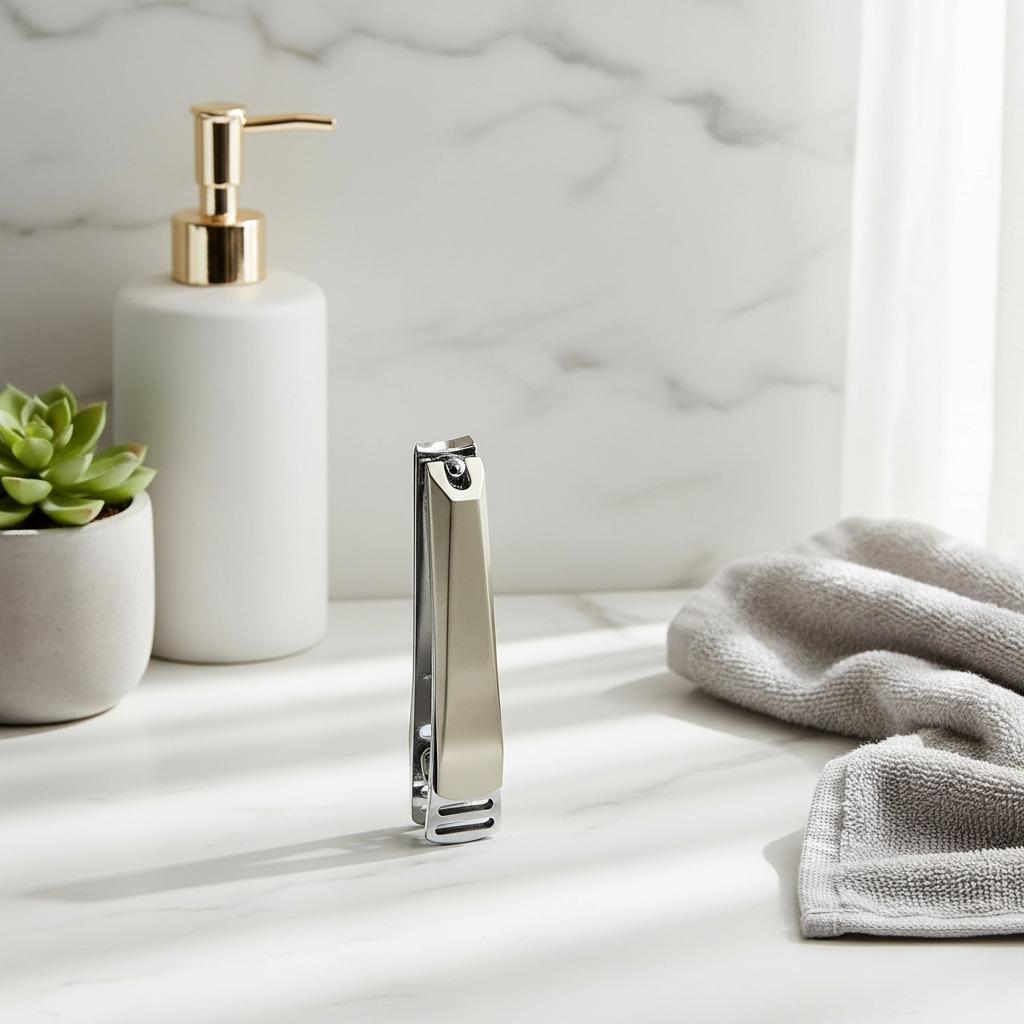
For beauty retailers, salon distributors, hotel amenity buyers, travel-kit brands and private-label grooming businesses, a nail clipper is a small product with a direct effect on customer satisfaction. If the cutting edge feels dull, the lever bends, the finish looks inconsistent or the packaging arrives damaged, customers notice quickly. Choosing a reliable nail clipper supplier is therefore not only a unit-cost decision. It is a sourcing decision about repeatable product quality, practical design, inspection discipline and channel fit.
Olimor Beauty supplies B2B beauty tools for buyers who need dependable grooming products for retail shelves, salon supply programs, personal care kits, travel assortments and customized beauty tool programs. The most useful way to compare suppliers is to evaluate how the nail clipper performs in the hand, how consistently it is finished, whether the packaging suits your sales channel and how clearly the supplier supports sample approval before bulk production.
This guide answers the main informational and commercial questions B2B buyers ask when sourcing stainless steel nail clippers: what to check in samples, how to compare material and finish, which quality checkpoints matter, when customization is useful and how to evaluate a supplier before placing a repeat order.
Start With the Nail Clipper Use Case
A reliable sourcing decision begins with the end use. A nail clipper for a travel pouch is not always evaluated in the same way as a clipper for salon resale, a retail wall display, a promotional grooming set or a private-label kit. Defining the use case early prevents two common mistakes: under-specifying a product that will be judged closely by customers, or overcomplicating a simple everyday item that needs to remain practical and cost-aware.
- Beauty retail: Prioritize clean shelf presentation, consistent finish, clear customer-facing packaging and a product appearance that supports the category price position.
- Salon and grooming supply: Focus on comfortable leverage, clean cutting feel, stable assembly and repeated handling.
- Travel and personal care kits: Check size, weight, protective packaging and whether the clipper fits neatly without damaging other items.
- Hotel amenity or convenience programs: Confirm practical trimming performance, simple presentation and reliable packing for volume distribution.
- Private-label beauty programs: Review customization feasibility, artwork handling, packaging direction and consistency from approved sample to production order.
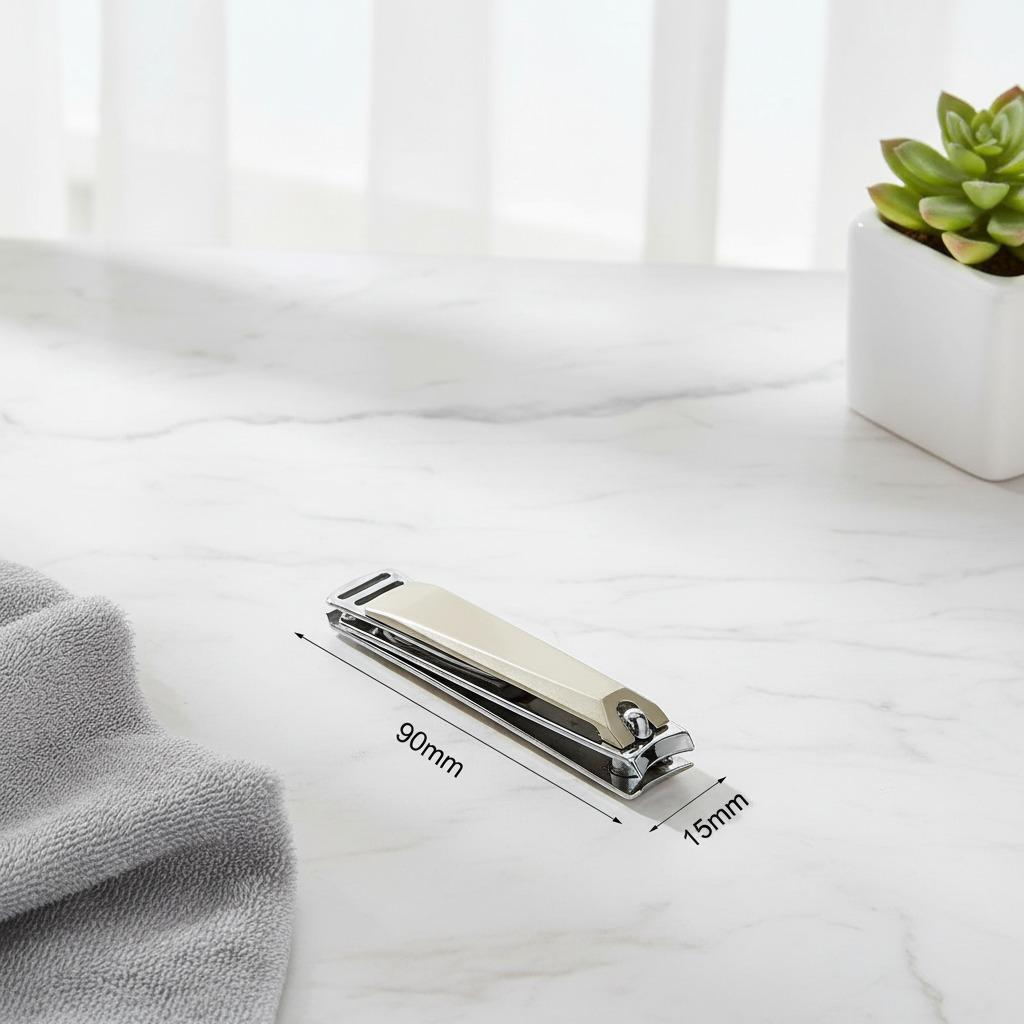
One Olimor nail clipper reference described in the supplied product information measures 90mm in length and 15mm in width, with a stated weight of 60 grams. These figures are useful when buyers compare sample feel and product positioning. A 90mm clipper is compact enough for toiletry bags and travel pouches while still offering more grip control than very small promotional clippers. Weight also affects perceived value: a clipper that feels too light may seem flimsy, while a heavy tool may not suit compact travel packaging. Buyers should confirm which dimensions and weight apply to the exact model under consideration before approving packaging or assortment plans.
What Makes a Nail Clipper Supplier Reliable?
Supplier reliability is not a vague promise. In B2B beauty supplies, it shows up in how consistently the supplier manages materials, forming, blade alignment, lever assembly, finishing, packaging and order communication. A good sample is important, but the real test is whether bulk goods reflect the approved standard.
When comparing a nail clipper manufacturer or wholesale supplier, look for practical evidence rather than broad claims. Ask how samples are selected, how approved samples are recorded, what inspection points are used during production and how packaging is checked before shipment. The strongest supplier for your business is not necessarily the one with the lowest quote; it is the one that can support stable execution for your intended market.
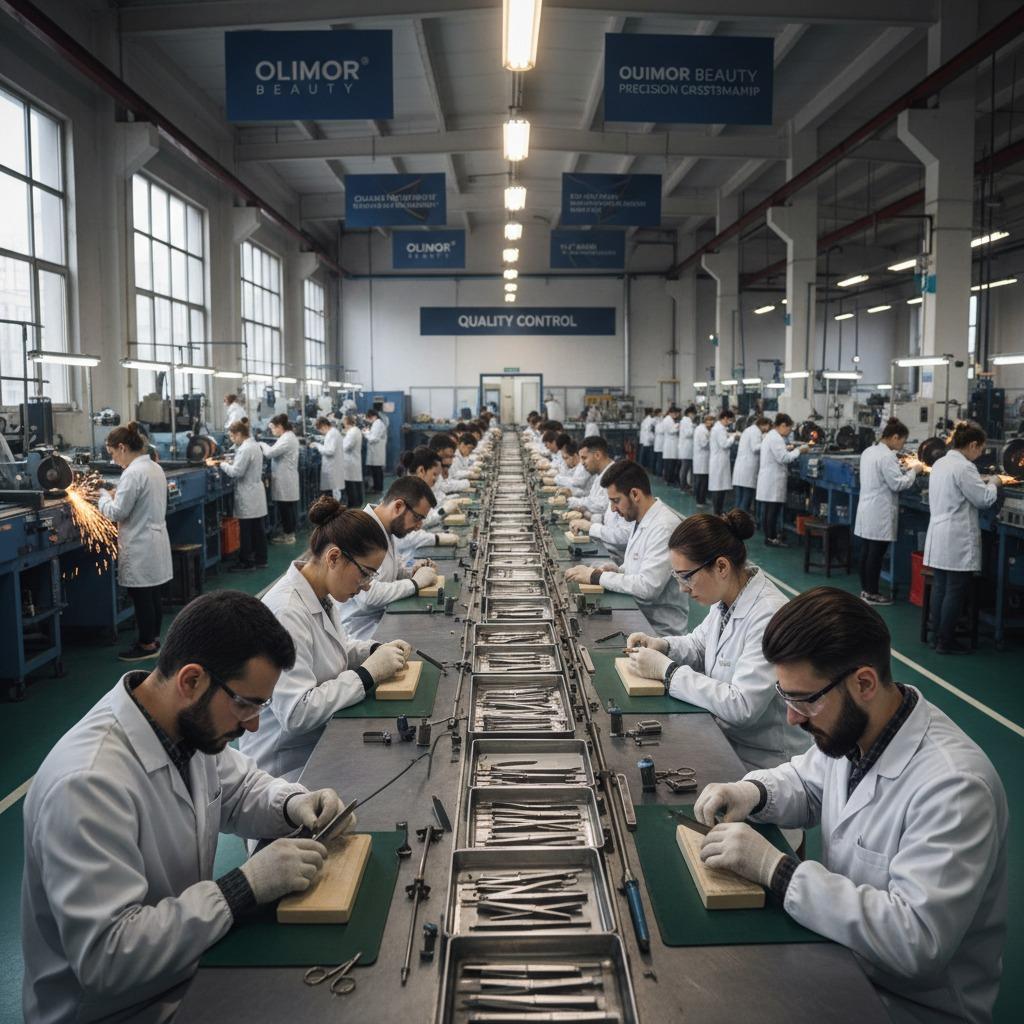
Olimor Beauty emphasizes quality checks from raw materials through final packaging. For buyers, this matters because defects can appear at different stages. Material condition may affect the finished appearance, blade misalignment may affect cutting performance, a weak lever may reduce perceived quality and poor packing may create retail or e-commerce problems even when the tool itself is acceptable.
Key Product Details to Evaluate in Stainless Steel Nail Clippers
Stainless steel is widely used for nail care tools because it supports a clean appearance and can be suitable for repeated handling when properly finished and maintained. However, the phrase stainless steel does not confirm quality by itself. Buyers should evaluate the finished clipper, not only the material name on a quotation.
Blade Alignment and Cutting Feel
The upper and lower cutting edges should meet evenly without visible gaps, crossing or offset. A curved blade can support controlled trimming when it is properly aligned and sharp. During sample review, close the clipper slowly to observe the meeting line, then test the cutting feel with practical trimming motions. The goal is a clean cut with controlled pressure, not a harsh snap, tearing sensation or unstable movement.
Lever Stability and Ergonomic Handling
The lever controls pressure, comfort and perceived quality. It should press smoothly, feel stable under normal use and return without a loose or unreliable sensation. Ergonomic handle design matters because nail clipping requires controlled force in a small motion. If the handle feels slippery or uncomfortable, the user may press unevenly and judge the product poorly even if the blade is acceptable.
Some Olimor nail clipper descriptions include ergonomic handles, a blue gradient pattern, a matte-finished handle, a comfortable lever and sharp curved blades. These are useful design directions for buyers who want a practical grooming tool with visible shelf appeal. Appearance should still be checked together with function. A color treatment, gradient effect or matte finish has value only when it is consistent enough for the intended channel.
Built-In File and Finishing Details
A built-in file can add value if it is positioned conveniently and has enough texture to smooth the nail edge after trimming. Buyers should check whether the file is practical for real use, not only whether it appears in the product description. Also inspect edges, corners, underside surfaces and areas around the rivet or assembly point. Rough edges, burrs, visible scratches, stains or uneven polishing can reduce customer confidence.
Sample Review Checklist for B2B Nail Clipper Orders
Samples should be reviewed with a structured method. Keep one approved sample unused as a visual and functional reference, test several pieces for cutting performance and inspect others for surface and packaging consistency. This makes supplier comparisons more objective and helps define what acceptable means before a bulk order is placed.
| Evaluation Area | What to Check | Why It Matters |
|---|---|---|
| Material and finish | Stainless steel appearance, smooth surfaces, no unintended sharp edges, no visible staining or rough polishing | Supports durability perception, hygiene impression and retail presentation |
| Blade meeting line | Upper and lower edges close evenly without a gap, crossing or offset | Helps the clipper trim cleanly rather than crush, split or pull the nail |
| Cutting test | Controlled pressure, clean trimming feel and no excessive force | Directly affects customer satisfaction and complaint risk |
| Lever action | Stable press, smooth movement and secure return | Improves comfort and perceived product quality |
| Handle design | Grip comfort, color or matte finish consistency, no rough edges | Important for salon use, retail value and private-label appearance |
| Built-in file | Convenient position and usable filing texture, if included | Adds functional value when it genuinely improves grooming after trimming |
| Packaging fit | Product secured, protected in transit and suitable for retail, kit or e-commerce use | Reduces repacking work, product damage and presentation problems |
| Batch consistency | Random pieces match approved sample for movement, finish and appearance | Helps protect repeat-order reliability and brand trust |
Matching Nail Clippers to Retail, Salon, Travel and Private-Label Channels
The same nail clipper design may work across several B2B channels, but the evaluation emphasis changes by sales plan. A beauty retailer may care most about shelf appeal and easy customer explanation. A salon distributor may prioritize repeatable trimming performance. A travel-kit brand may need a compact tool that sits securely in a pouch. A private-label buyer may focus on coordinated design and packaging.
For retail programs, review how the clipper will be displayed and what information the package needs to communicate. Stainless steel construction, size, handle appearance and intended use can help shoppers understand the item quickly. For salon programs, repeated handling matters. The lever should remain comfortable, the grip should feel secure and the finish should look professional. For travel kits, confirm that the clipper does not damage surrounding items and that any protective packaging is suitable for transport.
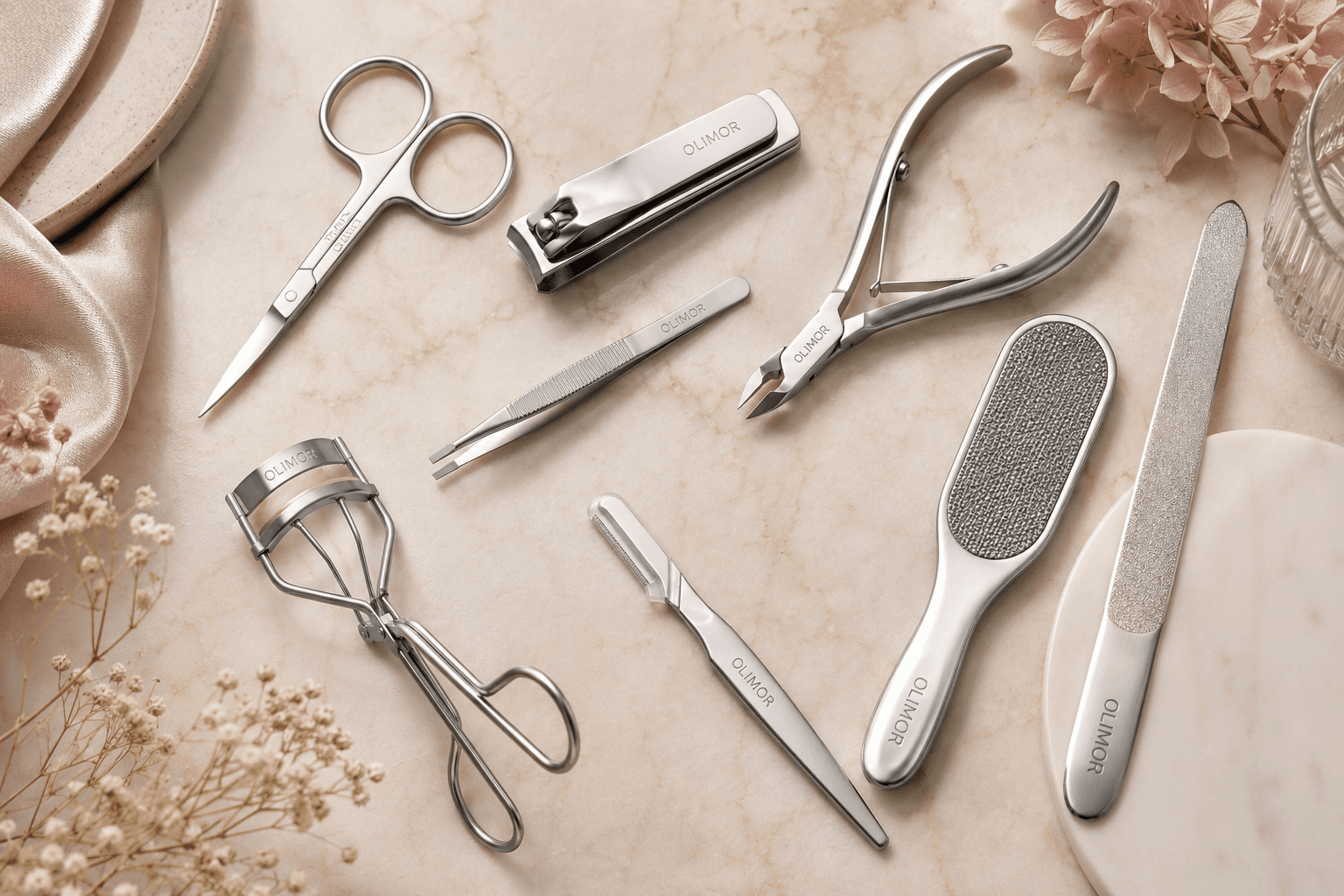
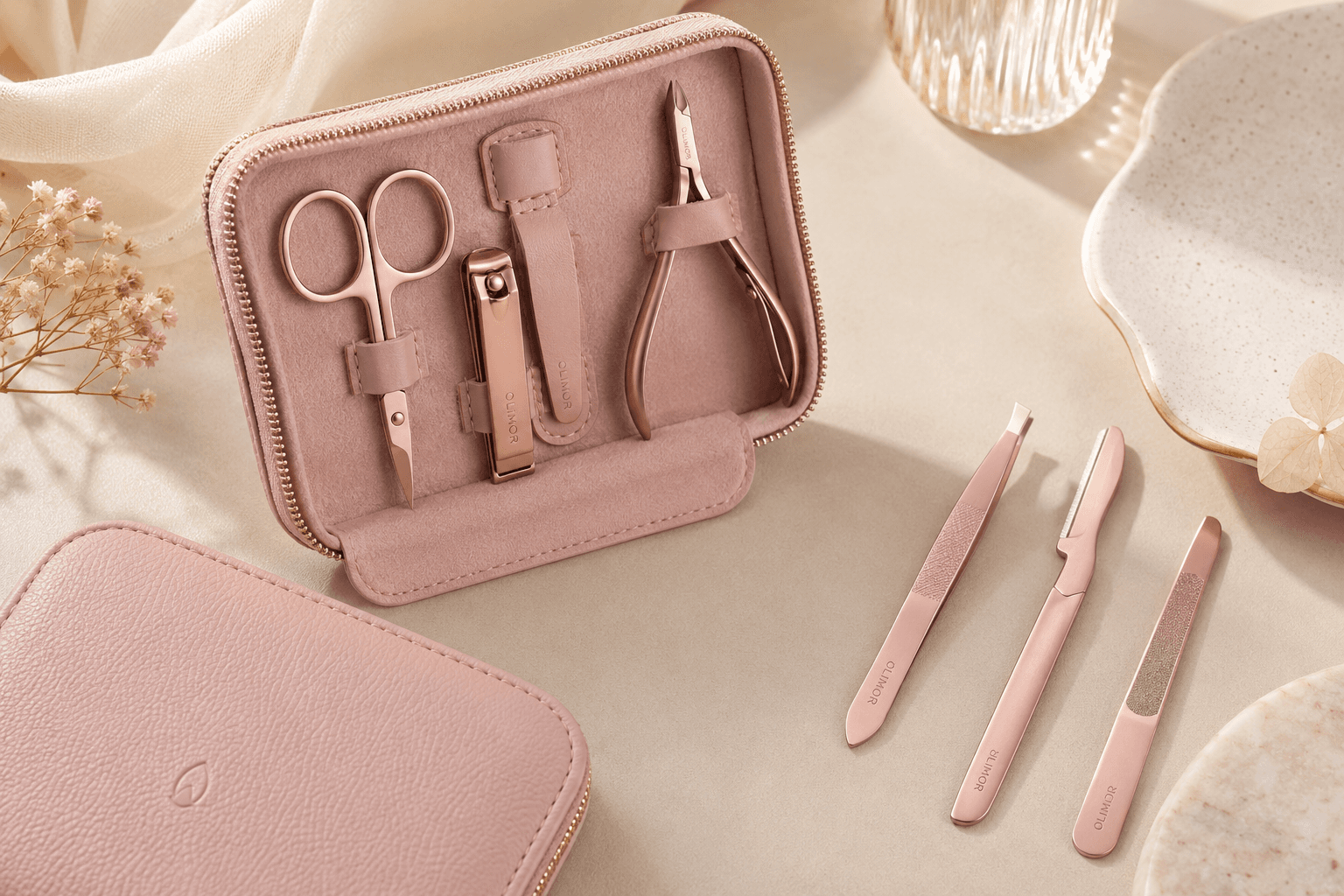
Buyers building a wider grooming assortment can compare related beauty tools through Olimor beauty tool products or browse the product collections to plan how nail clippers may pair with tweezers, scissors, files or manicure accessories. Pairing products thoughtfully can improve set consistency and make the final retail or promotional offer easier to understand.
Custom Made Nail Clipper Options Without Overcomplication
A custom made nail clipper can support a brand program when customization serves a clear commercial purpose. Customization is not only about adding a logo. It may involve the visible finish, handle appearance, packaging structure, insert card, color direction or how the clipper fits with other grooming tools in a set.
Before requesting custom samples, prepare a clear brief. The brief should describe the sales channel, target customer, desired visual style, packaging preference, brand identity requirements and any functional priorities such as comfortable leverage or travel-friendly packing. Separate essential requirements from nice-to-have ideas. Essential requirements usually include stable cutting performance, comfortable handling, acceptable finish and protective packaging. Nice-to-have ideas may include a special color direction, decorative finish or coordinated retail presentation.
This approach keeps development focused. It also helps the supplier advise whether a requested customization affects tooling, sample review, packaging layout or production complexity. Buyers should avoid approving a design based only on a rendering. A physical sample is important for checking hand feel, finish, blade alignment and packaging fit.
Quality Control Questions Before Placing a Bulk Order
Quality assurance is one of the main reasons to choose a reliable nail clipper supplier instead of buying only by appearance or quote. Nail clippers are mechanical tools, so inspections should include both visual and functional checkpoints. Buyers should define acceptable and unacceptable defects before production, especially for visible finish, movement, blade contact, color variation and packaging condition.
- Raw material review: How is material appearance and condition checked before production continues?
- Forming and assembly inspection: How are body shape, blade area, lever movement and file placement checked for consistency?
- Cutting performance review: Are samples tested to confirm clean trimming and stable pressure?
- Surface and edge inspection: Are burrs, scratches, rough corners, stains and uneven finish treated as defined defects?
- Packaging check: Is each product protected, presented correctly and packed according to the agreed direction?
- Final order review: Are random packed goods compared with the approved sample before shipment?
Some purchasing teams reference public standards such as ISO 2859-1 for sampling procedures or ISO 9001 as a general quality management framework when building supplier documentation expectations. These references can be useful, but buyers should verify the applicable version, scope and supplier documentation for their own market and product category. Do not assume that a supplier holds a certification unless it provides valid documentation for review.
How to Compare Cost Without Choosing the Wrong Supplier
Lowest unit price can be misleading if it leads to higher defect rates, repacking work, returns or inconsistent replenishment. A practical nail clipper sourcing comparison should include the visible product cost and the hidden cost of problems after delivery. Poor blade alignment, unstable levers, rough finishing or inconsistent packaging can make an inexpensive clipper costly for a distributor, retailer or private-label program.
When reviewing quotations, compare what is included: sample standard, material and finish expectations, packaging method, customization requirements, inspection process, communication before shipment and reorder support. If two quotes are very different, ask what product or service differences explain the gap. A reliable supplier should be able to discuss these points clearly rather than only repeating that the product is good quality.
Supplier Evaluation Checklist for B2B Buyers
- Define the sales channel and end user before comparing quotations.
- Request samples that reflect the expected production standard, not only a selected showcase piece.
- Check blade alignment, cutting feel, lever action, handle comfort and surface finish.
- Confirm whether dimensions, weight and packaging fit your retail, salon, travel or kit plan.
- Prepare a defect checklist for scratches, burrs, stains, uneven coating, loose movement and packaging damage.
- Discuss customization only after functional requirements are clear.
- Ask how approved samples are recorded for bulk production reference.
- Review final packing expectations, carton organization and shipment communication.
- Keep approved samples and inspection notes for repeat orders.
Work With Olimor on B2B Nail Clipper Sourcing
If you are evaluating stainless steel nail clippers for retail, salon supply, travel kits, hotel amenities or a private-label grooming program, Olimor Beauty can support a practical sourcing discussion around product selection, sample review, packaging direction and customization needs. Buyers can send project requirements through the B2B inquiry page or contact the team through Olimor Beauty contact support.
A clear brief will help the process move efficiently. Include the intended sales channel, preferred product style, packaging idea, branding needs, target positioning and any sample evaluation concerns. Olimor can then discuss suitable options without forcing unnecessary complexity into a simple but important everyday grooming tool.
FAQ
Can B2B buyers request nail clipper samples before ordering?
Yes. Samples are important for checking blade alignment, cutting feel, lever stability, finish quality, handle comfort and packaging fit. Buyers should confirm sample availability, sample cost and shipping details directly with Olimor before planning internal approval.
Does Olimor provide custom made nail clipper options?
Customization may be available depending on the selected product, finish, packaging concept and branding requirements. Buyers should share a clear brief and confirm feasibility before assuming a specific logo, color, package or design direction can be produced.
What MOQ applies to wholesale nail clipper orders?
MOQ can depend on the product model, customization level, packaging requirements and production plan. Buyers should ask Olimor for the applicable MOQ for the exact nail clipper and order specification under review.
What quality checks should buyers request before shipment?
Useful checks include blade contact, cutting performance, lever action, surface finish, handle appearance, file usability if included, packaging condition and comparison with the approved sample. Buyers should agree on inspection expectations before production.
How should buyers confirm lead time?
Lead time can vary by sample approval, order quantity, customization and packaging preparation. Buyers should confirm the current schedule with Olimor after the product specification and packaging requirements are defined.
Tag: