

Why buyers search for cuticle nipper wholesale in the first place
People usually start looking for cuticle nipper wholesale options when they need a steady supply of a small tool that looks simple but is surprisingly unforgiving in use. In a salon, a manicure kit, or a private-label beauty line, the nipper is one of those items customers notice immediately if it feels loose, dull, or awkward in the hand. For sourcing teams, the challenge is not just finding a low unit cost. It is finding a tool that trims cleanly, looks consistent across a batch, and does not create problems once it reaches a professional table.
That matters because cuticle nippers sit at the intersection of appearance, ergonomics, and repeat use. The tool must be compact and precise, but also durable enough to survive daily handling. When buyers compare wholesale cuticle nippers, they are often deciding between a basic commodity tool and a product that can support a salon’s reputation or a retail brand’s shelf appeal.
What this tool actually does, and why the details matter
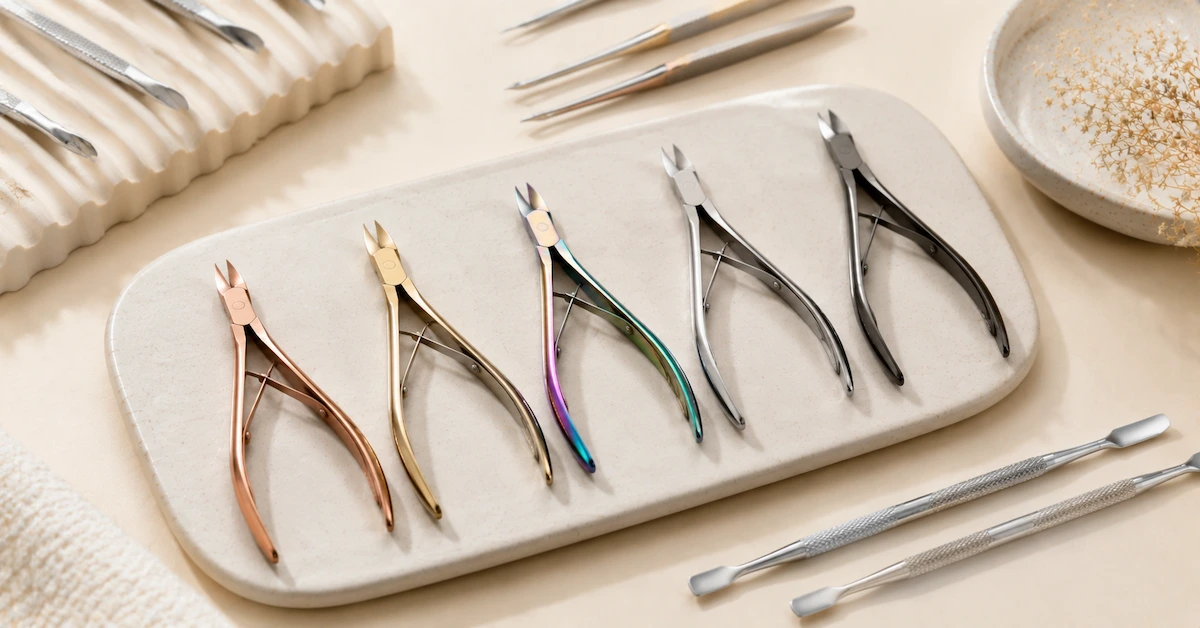
A cuticle nipper is a small hand-operated cutting tool with plier-like handles, a pivot joint, a spring mechanism, and narrow angled jaws. The geometry is the whole point. The tips need to reach fine skin around the nail without feeling bulky, and the return spring should help the jaws reopen smoothly during repetitive work. That spring-assisted action may sound minor, but it affects fatigue over a long service day.
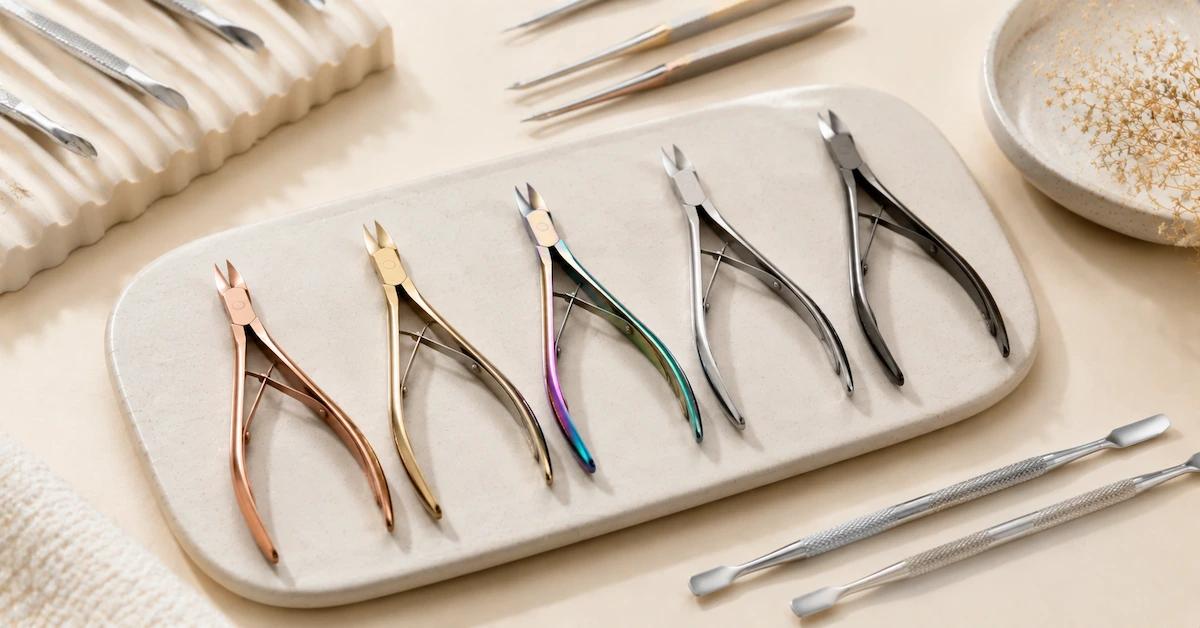
The visible product style here suggests compact metal construction, most likely stainless steel, with finishes ranging from polished silver to decorative color variants such as rose gold, gold, rainbow, and black. Buyers in this category should not assume those finishes are identical in chemistry or wear behavior. The photos show options, not a full technical spec. That is typical in manicure tools: appearance is obvious, metallurgy is not.
Quick reference: what buyers usually compare
When sourcing bulk cuticle nipper inventory, most teams narrow the decision down to a few practical points:
1. Jaw precision: the cutting tips need to align cleanly and remain stable under hand pressure.
2. Handle comfort: curved handles are common because they sit naturally in the hand during repeated trimming.
3. Surface finish: polished, matte, plated, or colored finishes can change how the tool is positioned in salon kits and retail displays.
4. Batch consistency: a nipper that looks sharp in one sample but uneven in the next batch is a procurement headache.
5. Use case: salon service, retail resale, travel kits, or OEM/private-label packaging all ask for slightly different priorities.
None of those points is glamorous, but they determine whether the tool performs as a professional item or ends up as a low-trust accessory.
How cuticle nippers are typically made
For manufacturing teams, a manicure nipper is a familiar but exacting metal part. The process usually involves metal stamping or forming for the arms and basic geometry, followed by grinding and polishing on the cutting faces. The pivot area must be assembled with enough accuracy to avoid wobble. Then comes the surface finish, which may be plain polished metal or a decorative coating or plating of some kind.
The visible variants in this product family suggest a finish-driven market as much as a function-driven one. That is useful for private label buyers. A salon brand may want the same base tool offered in several colors so the kit looks coordinated, or so different trims can be separated by finish. Still, buyers should be cautious about assuming a colored coating automatically means superior corrosion resistance or longer life. Those claims depend on the actual process, which is not specified here.
Base design versus finish variant
The core design is simple: two arms, one pivot, one spring, and a narrow cutting head. What changes from one wholesale cuticle nipper to another is usually the edge preparation, handle geometry, and cosmetic finish. In procurement terms, that means a buyer should separate the functional requirements from the decorative ones. If the cutting performance is poor, a beautiful finish will not save the SKU.
Where wholesale buyers use these tools
These nippers fit several buyer profiles. Nail salons and spas need dependable day-to-day tools. Beauty distributors may want low-friction stock that can move through retail channels. OEM and private-label brands may be more interested in matching a product line visually, especially when offering manicure kits or grooming sets.
There is also a practical difference between a professional-service buyer and a retail buyer. A salon wants consistency and handling. A retail brand cares about shelf appeal, packaging, and how the product feels when a customer opens the box at home. The same bulk cuticle nipper can serve both markets, but the spec sheet should not be written as if they are identical use cases.
Selection criteria that save trouble later
Procurement teams often get drawn into price comparisons too early. That is understandable, but for a small precision tool, the first filter should be build quality. Look at how the jaw tips meet, how the spring feels, and whether the handles open and close without a gritty sensation. If the sample feels stiff or misaligned, the production lot may not improve on its own.
Buyers should also think about packaging and handling. A manicure nipper with a polished surface can scratch if tossed together with other tools. If the order is going into retail bundles, the packaging should protect the jaws and preserve the finish. That seems basic, yet it is one of the most common oversights in beauty-tool sourcing.
For wholesale cuticle nippers, ask suppliers what is actually fixed and what can be customized. Some vendors may support finish color, logo marking, or packaging changes. Others may only offer standard stock shapes. It is better to know that early than after a product page is already written.
Common mistakes buyers make
One mistake is treating all cuticle nippers as interchangeable. They are not. Slight differences in jaw length, handle tension, or spring feel can change the user experience more than expected. Another mistake is overemphasizing finish color while ignoring the cutting edge. A rose gold tool may look premium, but if the jaw geometry is poor, professional users will notice immediately.
Another caution: do not assume every color variant comes from the same finishing process. Rainbow, gold, and black appearances can be produced in different ways. Some processes are more durable than others, but without verified production details, that is not something to guess at. A buyer should request clarification rather than build assumptions into the order.
What to ask before placing a bulk order
Before committing to cuticle nipper wholesale inventory, a buyer should ask a few direct questions:
What material is used for the tool body and cutting head?
What finish process is applied to the color variants?
Are the samples representative of production quality?
Can the supplier support private-label branding or custom packaging?
How is the batch inspected for alignment and appearance consistency?
These are straightforward questions, but they separate a serious supplier relationship from a one-off transaction. If the vendor cannot answer them clearly, that is useful information too.
Practical notes for salon and retail buyers
For salons, the main issue is usability under repetition. A spring-assisted nipper that opens smoothly can reduce hand strain over a long shift. For retail, the main issue is perceived value. Metal finish, clean alignment, and compact presentation all contribute to the customer’s impression that the tool belongs in a professional grooming kit.
If you are sourcing a bulk cuticle nipper for a mixed channel strategy, it may be worth standardizing the base tool and varying the presentation. A common stainless steel structure can support several brand expressions through finish and packaging. That is often more efficient than managing entirely different tools for every channel.
FAQ for wholesale sourcing teams
Are all wholesale cuticle nippers the same?
No. Even when the silhouette looks identical, jaw alignment, spring action, finish quality, and packaging can vary a lot.
Is a colored finish automatically better?
Not necessarily. Color can improve presentation, but it does not prove better cutting performance or durability.
Can these tools be used in salons and retail kits?
Yes, the same core design can serve both, though the packaging and appearance strategy may need to differ.
What should I prioritize if I only have time to check one sample detail?
Check the jaw alignment and the feel of the spring mechanism. If those are off, the rest matters less.
A sensible next step
If you are comparing cuticle nipper wholesale options, start with the sample in your hand, not the product photos. Look at the jaw tips, the spring return, the handle balance, and the finish consistency across variants. Then decide whether you are buying a working salon tool, a retail-facing beauty accessory, or a private-label product line component. That distinction will shape everything from pricing discussions to packaging.
For sourcing teams, the best result is usually not the fanciest tool on the page. It is the one that arrives consistently, performs predictably, and fits the brand story without creating avoidable quality complaints later.
Tag:
Related articles
- Beauty Tools Sourcing Guide
- Manicure & Nail Tools
Cuticle Nipper Wholesale: How Importers Plan Mixed-SKU Lots, Case Packs and Reorders
- Beauty Tools Sourcing Guide
- Manicure & Nail Tools
Professional Nail Tools Manufacturer: Building a Salon-Ready Supply and Reorder Program for Distributors
- Manicure & Nail Tools
- OEM & Private Label