Quick Answer: Before approving a cuticle nipper manufacturer, give the team one clear manicure job and one model to review. Watch the two jaws meet, feel how the spring reopens, and record where the hand rests. Ask how the tool is formed, finished, inspected, protected, and packed. Only then compare a quote for the same model, decoration, inspection scope, and retail pack. This sequence gives a nail brand a practical reference for its first order and its next reorder.
Blog Summary: Nail-care brands, salon distributors, importers, and retailers can use this guide to examine a cuticle nipper before committing to a production run. It follows the decisions that affect a branded tool: jaw and blade behaviour, steel and spring, OEM or ODM development, logo and pack, inspection records, quotation scope, pilot approval, and replenishment.
Introduction: A small jaw can create a large brand problem
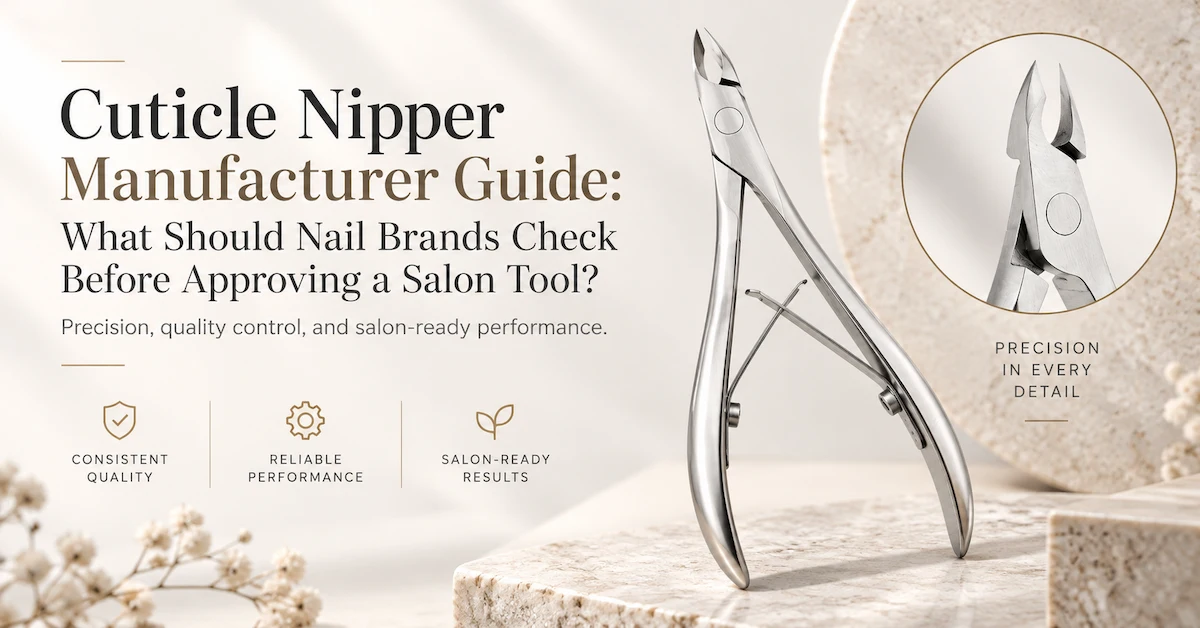
Cuticle nippers occupy a narrow part of a manicure tool, yet customers notice their behaviour immediately. A jaw that closes unevenly can pull instead of making a controlled trim. A spring that returns inconsistently can make a technician change grip. A polished handle may look premium in a listing but feel slippery during a close movement. These details affect returns, reviews, training time, and whether a salon keeps the tool in daily use.
For a purchasing team, the challenge is that many suppliers use the same words: sharp, ergonomic, stainless steel, professional, and salon quality. Those words do not identify the jaw angle, cutting-edge meeting, spring design, finish process, or inspection reference. They also do not show whether a supplier is the actual producer, a trading company, or a coordinator of several processors.
The useful sourcing question is not simply "which factory is cheapest?" It is whether the quoted tool can be defined, checked, packed, and repeated. The notes below are for brands building a manicure range, importers selecting a factory, and distributors preparing replenishment. OLIMOR BEAUTY pages are used as model references only; one product page cannot establish the material grade, tolerance, MOQ, schedule, or compliance position of every nipper.
What is a cuticle nipper manufacturer?
A cuticle nipper manufacturer makes or manages the conversion of metal components into a hand-operated tool for trimming small areas of excess cuticle or hangnail during nail care. The route may include stamping or forming, heat treatment where applicable, grinding, blade preparation, polishing, spring installation, assembly, inspection, surface finishing, decoration, and packaging. The exact sequence must be confirmed for the selected SKU.
The manufacturer is responsible for turning a product brief into a repeatable object. That brief should state the intended user, the working area, the jaw or blade style, the desired hand feel, the material description, the finish, the logo, the protector, and the retail pack. A request for a "sharp nipper" leaves the factory to guess what sharp means and leaves the inspector without a pass or fail reference.
In a purchase file, manufacturer also means responsibility. Ask who owns the current drawing, where the jaw relationship is established, who installs or adjusts the spring, who releases the finished tool, and how outside finish or packing partners are checked. The answer should describe the model on your quotation, rather than repeat a general factory introduction.
1. Define the manicure task before choosing the jaw
Start by describing the action the user performs. A salon technician may make repeated, small trims and need a balanced handle with a predictable opening. A retail customer may need a compact tool with clear instructions and a protector. A pedicure-oriented range may require a different access discussion from a fine manicure tool. The buyer should define the job without making medical or therapeutic claims.
Write the use statement in a way a reviewer can reproduce: who holds the tool, what excess material is being removed, where the hand sits, how much visibility is available, and how the tool is stored after use. This statement guides jaw length, handle shape, spring position, and packaging. It also keeps different SKUs from being presented as interchangeable when they are not.
| Range position | Buyer question | Design discussion | Evidence to approve |
|---|---|---|---|
| Everyday manicure | Will the user make short, controlled trims around the nail? | Jaw access, handle balance, spring response | Repeated hand review on a coded sample |
| Salon workstation | What grip and reopening action suit repeated service? | Handle surface, opening, adjustment, maintenance | Several samples compared by the same reviewer |
| Pedicure assortment | Does the tool need a different access angle or body size? | Jaw reach, body clearance, pack protection | Task-specific review, not a copied manicure check |
| Travel or gift kit | How will the jaws stay protected after opening and repacking? | Cap, sleeve, pouch, or insert position | Complete packed-unit inspection |
When comparing a professional cuticle nipper manufacturer, turn the adjective professional into a list of observable decisions. The tool should be judged by the work it is intended to support, the way it is held, and the evidence the buyer expects before release.
2. Look past the silhouette to the working jaws
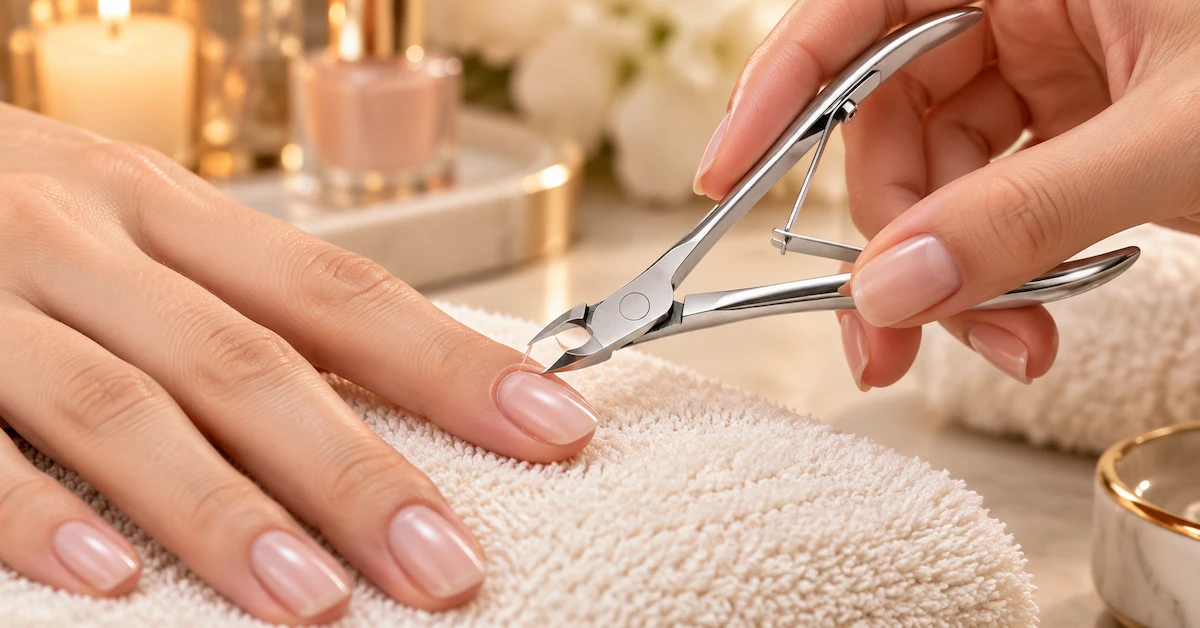
A nipper can have a familiar outline while its working end behaves differently. Review the jaw from the side, above, and in the closed position. Identify whether the cutting edges meet along the intended region or touch first at one corner. Check whether the jaws cross, leave a visible gap, or change position when the handle is squeezed further.
For a narrow cuticle jaw, the buyer should discuss access and visibility. For a broader jaw, discuss how much material the user can see before closing. If the tool includes a curved or angled cutting edge, record which portion is intended to work. Do not call a tool safer or more precise simply because the blade looks thin.
Ask the supplier how the jaw relationship is established and checked. The answer may involve forming control, grinding, adjustment, fixtures, operator checks, or a physical reference. The buyer does not need to prescribe an unverified factory method, but does need to know how a sample result will be reproduced and how a miss will be detected.
Use a marked working region
When a sample slips, crushes, or leaves an uneven edge, mark the location on a photograph and describe the attempted action. "The blade is bad" is less useful than "the right side contacts first when the handle is closed at the stated grip position." A precise observation helps the supplier separate jaw alignment, edge preparation, spring behaviour, and user technique.
3. Review blade meeting and edge preparation
Blade meeting is the centre of a cuticle nipper specification. Close the tool slowly and observe where the edges first meet, whether the meeting travels evenly, and whether the handles remain stable. Review the same points on several samples rather than relying on one impressive piece.
Edge preparation also deserves a defined boundary. A sharp edge should not mean an unfinished burr or an exposed corner that catches the user. Ask how the working edge is protected during later polishing, coating, assembly, and packing. If a surface finish is applied after edge preparation, ask whether the edge is checked again.
Do not transfer a blade result from one model to another. A BNB3045 sample, for example, is a product-page reference for that SKU, not evidence that every cuticle nipper in a catalogue has the same jaw or edge. Keep the model code visible in photographs, reports, and approvals.
A custom cuticle nipper manufacturer should be able to discuss what can be changed in the working end and what those changes affect. A smaller jaw, a different angle, or a longer body can influence tooling, hand clearance, spring action, finishing, protector design, and inspection.
4. Compare spring action and hand comfort in context
Spring action is not a decorative feature. It controls how the handles reopen after a cut and how much the user must manage between movements. Review where the fingers rest, how far the handles open, how the spring returns, and whether the tool becomes difficult to control at the end of a longer session. Use the same grip position when comparing candidates.
Some models use a double spring or another reopening arrangement. Ask the supplier to identify the selected mechanism, its assembly position, and the reference used to check movement. Avoid promising a fixed service life unless a model-specific test and method support the statement. A smooth sample does not, by itself, prove a universal cycle count.
Handle finish changes the experience too. A polished surface may feel different from a satin or coated grip. Ribs, curves, or a coloured coating may help a brand create a visual family, but they should be checked for pressure points, coating contact, and cleanability within the intended use. The right choice depends on the customer job and market positioning.
5. Ask what the material statement actually covers
When a buyer asks a stainless steel cuticle nipper supplier for details, the answer should identify the material used on the selected model and the records available for it. The phrase "stainless steel" alone does not name an alloy grade or prove a hardness, corrosion, sterilization, or regulatory result.
Ask which material characteristics matter to your destination and claim. If the tool will be wiped after personal use, the care wording may differ from a salon environment. If a retailer requires a particular material statement, match the product file, pack copy, and quotation. Have qualified parties review any market-specific requirement.
Material and finish should be approved together. A silver tool, a coloured tool, and a coated tool can have different visual references and packaging risks. Review logo contrast, surface texture, edge coverage, and contact with the protector. Request reinspection after finishing if the process can affect the working area.
6. Decide between OEM, ODM, and private label routes
OEM development
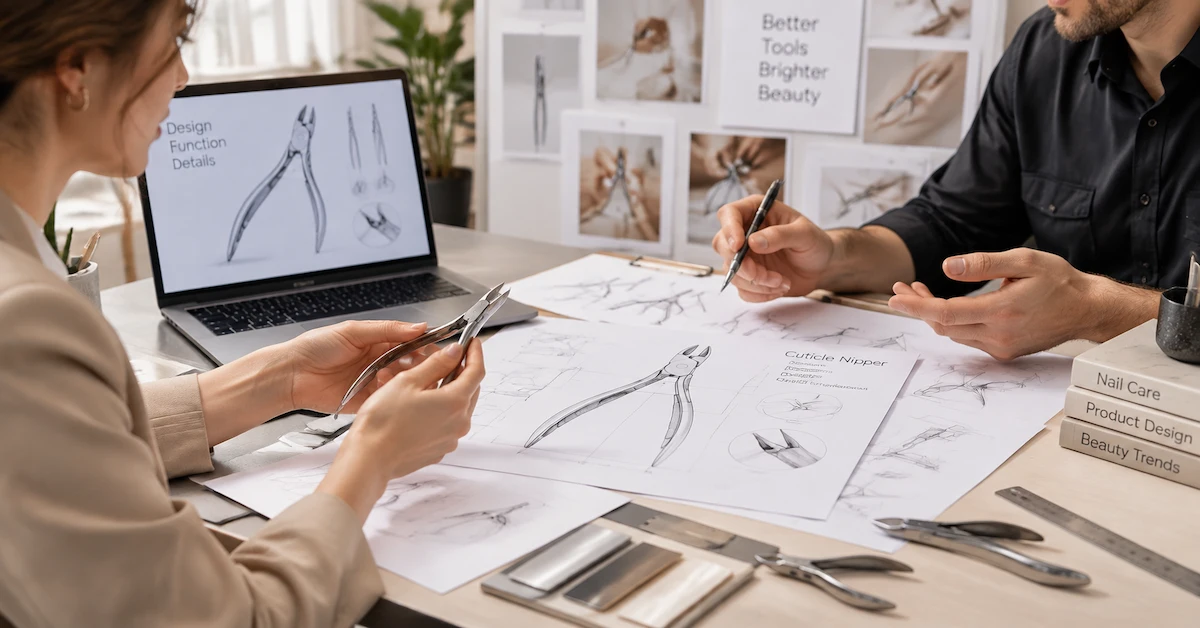
An OEM cuticle nipper manufacturer can work from a drawing, physical reference, dimensional envelope, or written brief. This route suits a brand that needs a distinct jaw, handle, body proportion, or pack architecture. Identify the fixed features and the areas where the manufacturer may propose a technically practical alternative.
Before artwork approval, ask for feasibility feedback. A new handle can change spring placement. A new jaw can change grinding and protector dimensions. A narrower profile may create a different hand position. Put these relationships into the development discussion so the final logo and box are based on a realistic product.
ODM selection
An ODM cuticle nipper manufacturer can shortlist existing platforms for a brand that wants a faster route to a differentiated finish, logo, colour, or pack. Ask what is standard, what can change without new tooling, what requires development, and what evidence exists for the selected model.
Compare candidates against the same manicure task. Do not compare one finished coloured sample with another bare-metal sample and treat the visual difference as a functional result. Keep the reason for selection in the project record.
Private-label release
Private label cuticle nippers connect a chosen tool with a buyer's brand identity. The scope may include model selection, finish, colour, logo, protector, pouch, card, insert, box, instructions, and carton. The final packed unit should be the object that marketing, purchasing, inspection, and the supplier all call the same SKU.
Discuss Your Private Label Nipper Concept
7. Build samples that answer one question at a time
Sampling works best when each stage has a purpose. A form sample can settle body proportions. A functional sample can settle jaw meeting, edge behaviour, spring response, and hand position. A decorated sample can settle colour, logo, and surface. A packed sample can settle protection, printed information, component count, and shelf presentation.
Label what each sample proves and what remains open. A bare steel piece should not silently approve a coloured coating. A digital logo should not silently approve a physical mark. A retail mock-up containing a substitute tool should not become the reference for the released product.
For each round, record the model, date, purpose, open points, requested changes, owner, and next gate. The number of rounds depends on the project. Do not promise a universal sample period before the manufacturer has reviewed the scope and quantity.
Golden sample discipline
When the final unit is approved, assign a code and date. Link it to the drawing, material statement, finish reference, logo artwork, pack files, inspection plan, and accepted exceptions. Protect it from casual use, sharpening, bending, or adjustment. If a single sample cannot show every requirement, state which file governs each characteristic.
8. Turn branding into a controlled production file
Provide vector logo artwork with orientation, preferred location, maximum area, colour reference, method preference, and revision number. Review the mark on the actual handle, not only on a flat layout. A long wordmark may need a smaller size on a narrow body. A mark under the fingers may disappear in use or create a pressure point.
Ask how printing, etching, stamping, or another method interacts with the selected surface. Do not promise scratch resistance, chemical resistance, or permanence without a model-specific record. Check logo legibility after finishing and after the tool has been placed in its protector.
Keep ownership and confidentiality clear. If a reference comes from another brand, confirm the right to use it and do not request protected logos or packaging. Define who owns new drawings, tooling, artwork adaptations, and developed files under the contract. Ask whether the supplier may show the completed product publicly.
9. Design packaging around the jaw and the sales channel
Packaging must protect the working end and explain the product. A cap, sleeve, pouch, card, tray, or box should keep the jaws from colliding with another metal tool. An insert that grips the wrong area can apply pressure. A tight sleeve can drag across a finished edge. A loose set can arrive with cosmetic damage even when the factory inspection passed.
Test the actual nipper in the actual pack. Open and close it repeatedly. Check removal, replacement, protector contact, logo rubbing, printed names, barcode position, and item count. If the product is sold as a manicure or pedicure option, make sure the pack wording matches the approved use and does not make unsupported safety or treatment claims.
- Jaw protection: test a cap, sleeve, recess, or pouch through removal, replacement, and carton movement. The working end should not touch another tool or the carton.
- Retail card or box: check model name, brand hierarchy, barcode area, languages, fit, and legibility. The copy must match the actual jaw and included items.
- Set insert: give each nipper a stable position and check count, orientation, and separation so loose components cannot rub the finish.
- Outer carton: confirm SKU marks, count, carton reference, and shipping basis. Retail packaging should not be mistaken for export protection.
10. Put the important checks where they can prevent waste
Start the quality plan with the reason the customer buys the tool. For controlled trimming, check jaw meeting, edge condition, spring response, and handling surfaces. For a branded retail item, also check model identity, finish, logo, pack, and components. Keep these checks separate; a clean-looking handle cannot compensate for a working jaw that fails its review.
Place checks where they can prevent added value from being wasted. Material and formed parts can be reviewed before decoration. First pieces can be compared before a run continues. In-process checks can catch drift. Final inspection can verify finished tools. Packed-unit checks can catch a missing protector, wrong insert, or incorrect printed model.
For buyers discussing lot sampling, ISO 2859-1:2026 is an official reference for acceptance-sampling schemes indexed by acceptance quality limit. It does not choose the inspection level, defect class, AQL, or legal requirement for your nipper program. Agree those choices with competent parties and record them in the purchase file.
| Stage | Question | Record | Release decision |
|---|---|---|---|
| Incoming | Does the material or component match the model requirement? | Receiving record and document reference | Release, hold, or investigate |
| First piece | Does the jaw, spring, finish, and identity match the current sample? | First-piece approval by revision | Start, adjust, or stop |
| In process | Are the working and visual characteristics stable? | Patrol inspection record | Continue, contain, or correct |
| Final tool | Does each nipper meet function and appearance requirements? | Final inspection report | Accept, sort, rework, or reject |
| Packed unit | Are the correct tool, protector, print, and quantity together? | Pack release record | Release or correct packing |
Ask a cuticle nipper factory China candidate how it identifies, separates, reviews, and rechecks nonconforming work. Sorting may protect a shipment but does not explain why the defect occurred or how recurrence is reduced.
11. Put supplier answers beside the evidence
Give each candidate the same brief, sample method, packaging scope, and commercial basis. Ask where it sits in the process, which model it is quoting, what can be customized, how samples are released, what inspection evidence exists, and who handles export. A clear answer still needs checking, but an answer that changes from one message to the next is already a risk.
If several colleagues are involved, use a scorecard and keep the evidence beside every mark. A low number on the quotation does not make up for an unapproved jaw, a missing protector, an undefined logo process, or a retail pack that was left out.
- Product fit: request the model code, jaw description, task sample, and hand-feel notes.
- Manufacturing role: ask for the process route, in-house steps, and coordinated partners.
- Customization: separate drawing review, finish, colour, logo, and pack options from standard features.
- Quality: request inspection points, records, and the nonconforming-product process.
- Commercials: align quantity basis, one-time charges, unit cost, and trade term.
- Continuity: ask who owns change control, repeat-order review, and communication.
12. Make the quotation describe the item you will sell
Ask for a quotation that names the model, jaw, material wording, finish, colour, logo method and location, tooling or setup, sample scope, packaging, inspection, quantity, currency, trade term, destination assumptions, and validity. Keep one-time development charges separate from recurring unit costs.
There is no responsible universal MOQ, price, or lead time for every nipper. The minimum and schedule depend on the platform, jaw, material, finish, decoration, tooling, packaging, quantity, approvals, and shipment route. Ask what event starts each schedule and what buyer revision would change it.
A wholesale cuticle nippers supplier should be able to quote the same product scope across different order bands. If a mixed assortment is planned, request the quantity condition for each model and the combined pack. Do not compare a standard tool in a pouch with a private-label set in a printed box.
For international orders, state the Incoterms rule and named place. The International Chamber of Commerce publishes official Incoterms resources. The trade term allocates defined costs, tasks, and risks; it does not replace the product specification, quality agreement, insurance decision, or destination-market review.
Request a Model-Specific Nipper Quote
13. Prepare export and market documentation carefully
Confirm who prepares the commercial invoice, packing list, carton marks, shipping instructions, and model descriptions. If the order combines nippers with other manicure tools, keep SKU and carton references synchronized. Clarify the exporter, consignee, named place, and review owner under the agreed trade term.
Destination compliance is claim-specific. A company-level ISO or BSCI statement does not automatically certify every nipper or every market. Request current certificates or test documents where relevant, check the holder, site, scope, validity, product identity, and method, and have qualified parties review the destination requirements. Avoid unsupported terms such as medical grade, FDA approved, or CE certified.
Care instructions should match the selected material and finish. Do not copy a sterilization or chemical-resistance statement from another tool. A personal manicure item and a product marketed for a regulated setting can require different evidence and wording.
14. Run a pilot order as a customer-experience test
A pilot order should test the complete brand system. Review the nipper, jaw, spring, finish, logo, protector, insert, printed copy, barcode, carton, and shipping records. Ask a receiving colleague to open a carton without factory assistance. Can they identify the SKU? Can they remove and replace the tool without contacting the jaw? Does the finish remain protected?
Use the pilot to test communication too. Did the current drawing travel with the artwork? Did the inspector have the task method? Did the pack line know which protector belongs to which model? Did the team know which deviations were approved? These questions reveal process gaps before a larger replenishment.
At pilot close, record accepted deviations and unresolved questions. If the logo moved away from the grip, update the artwork. If the insert needed more clearance, update the pack file. If one jaw needs different public wording, update the listing. The pilot is useful when its lessons change the controlled release package.
15. Protect repeat orders with change control
Keep a product file containing the model code, current drawing, golden sample, jaw and spring notes, material wording, finish master, logo artwork, pack files, inspection plan, accepted exceptions, and change history. Before a repeat order, ask whether material source, forming, grinding, adjustment, spring, coating, decoration, protector, insert, or carton has changed.
A change does not always require a new design, but it should trigger an impact review. Decide whether the working action, hand feel, appearance, protection, quantity, or public copy could be affected. Define when a new sample or first-piece approval is required.
Synchronize the product page, photographs, sales sheet, and carton copy with the released product. Consistent model names, images, material wording, use statements, and pack contents make the product easier for people and answer engines to understand. Contradictory descriptions weaken confidence and create avoidable customer questions.
16. What should the first inquiry contain?
Send the supplier a brief that can be answered. Include your target market, customer type, manicure or pedicure task, reference product or drawing, jaw preference, handle notes, material request, finish, logo files, packaging direction, quantity range, launch window, required documents, and shipping destination.
Mark fixed requirements and open decisions separately. If you are unsure about jaw geometry, ask for two or three model options for one use case. If the pack is conceptual, explain the protective job and selling channel. If a test method is open, describe the risk that must be controlled and ask for a proposed verification method.
Do not hide uncertainty behind a copied number. It is more useful to request model-specific MOQ, sampling, and production conditions than to publish a generic promise that may not apply to the selected nipper.
Frequently Asked Questions
How do I choose a cuticle nipper manufacturer?
Define the intended nail-care task, compare coded samples, review jaw meeting and spring response, confirm material and finish, inspect the final pack, and compare complete quotations. Check who controls the production route and how changes are approved.
What should a professional cuticle nipper feel like?
It should feel stable for the intended grip, reopen predictably, and allow the user to make small controlled movements. The exact feel is model- and user-specific, so use the same task and hand position when comparing samples.
Are stainless steel nippers automatically better?
No. Material is one part of the product. Jaw alignment, edge preparation, spring action, handle comfort, finish, care instructions, and packaging also influence the result. Request model-specific evidence for any property that affects your claim.
What is the difference between OEM and ODM nippers?
OEM usually begins with stronger buyer-controlled input such as a drawing, reference, or defined geometry. ODM usually begins with an existing supplier platform that is selected and adapted. Both routes need a final specification and approved packed sample.
Can I order private label cuticle nippers with my logo?
Private-label scope may include a selected model, finish, colour, logo, protector, pouch, card, box, and instructions. Approve the physical decorated tool and final packed unit. Confirm quantity conditions and artwork ownership in the project file.
How should I inspect the blades?
Use the intended task, grip position, orientation, and a defined review material. Check where the edges meet, whether they cross or leave a gap, whether the tool pulls or crushes, and whether the result is consistent across coded samples.
What is the MOQ for custom cuticle nippers?
MOQ depends on model, jaw, material, finish, colour, logo method, tooling, packaging, and order configuration. Request the minimum for the complete written SKU instead of assuming one number covers the category.
How much do wholesale cuticle nippers cost?
Cost depends on product geometry, material, finish, decoration, development, packaging, inspection, quantity, and trade terms. Compare quotations only after those assumptions are aligned, and separate setup charges from recurring unit cost.
How long does an OEM nipper project take?
Timing depends on feasibility, development scope, samples, buyer approvals, material and finish readiness, production, inspection, packing, and dispatch. Ask for milestones and the event that starts each period.
Can a factory make different colours in one range?
Colour variations may be feasible, but each finish should have a physical reference and review. Check shade, surface, logo contrast, handling, pack contact, quantity conditions, and whether another first-piece approval is needed.
What documents should accompany a bulk order?
Documents depend on the contract, destination, product, and claims. Commercial records commonly include an invoice, packing list, and shipping documents. Request model-specific quality or compliance evidence where relevant and have qualified parties review market requirements.
How do I protect nippers during shipping?
Use a protector, insert, pouch, or pack structure suited to the jaw. Test removal, replacement, carton movement, and contact with printed surfaces. Approve the complete packed unit rather than assuming a retail mock-up protects the tool.
Turn a nipper idea into a controlled nail-care SKU
The right supplier decision is built from the working end outward. Define the task, choose the jaw, review blade meeting and spring action, confirm material and finish, select OEM or ODM input, approve branding and protection, write inspection criteria, and compare quotations for the same complete product.
OLIMOR BEAUTY provides cuticle nipper references including BNB3045, BNS1020, and BNB3044 for buyers evaluating different shapes, finishes, and manicure or pedicure directions. Send the target market, intended user, model reference, customization needs, quantity range, and packaging idea. The team can discuss feasible options, sampling information, and a configuration-specific quotation.