











Custom Tweezers for Business: Quality, Precision and Smarter B2B Sourcing
For beauty brands, salon suppliers, resellers and private-label buyers, tweezers are small tools with a large impact on customer trust. A pair that grips cleanly, aligns well and feels stable in the hand can support repeat sales. A pair that slips, rusts or pinches unevenly can quickly create complaints, returns and poor reviews. That is why sourcing custom tweezers for business should be treated as a quality decision, not only a purchasing task.
The market includes many low-cost, generic tweezers, but the lowest bulk price does not always create the best margin. If customers cannot remove fine hairs easily, if the tips lose alignment after limited use, or if the finish feels rough, the product can damage the reputation of the brand printed on the package. Olimor Beauty focuses on B2B beauty tools where precision, quality control and reliable presentation matter for commercial buyers.
Why Tweezers Matter More in B2B Than They Appear
Tweezers are often purchased as part of a wider beauty range, a brow kit, a retail accessory line or a salon supply program. Because the unit is compact, buyers may be tempted to focus mainly on price, packaging count and shipping convenience. However, the end user judges the tool directly by touch and performance. The first test is usually simple: does it grip a single fine hair without slipping?
For resellers, this makes tweezers a practical test of brand credibility. Customers may forgive simple packaging, but they are less likely to accept tips that do not meet evenly or handles that feel flimsy. A dependable pair can become a low-risk repeat item in a retail assortment. A poor pair can create negative feedback that affects the rest of a beauty tool line.
Businesses sourcing B2B tweezers should think about the buying context. A salon buyer may care about control during detailed brow work. A retail customer may compare the tool with familiar personal-care accessories. A gift-set buyer may place more weight on finish consistency and presentation. In each case, the tweezer must still perform the basic function precisely.
Key Quality Factors to Check Before Bulk Ordering
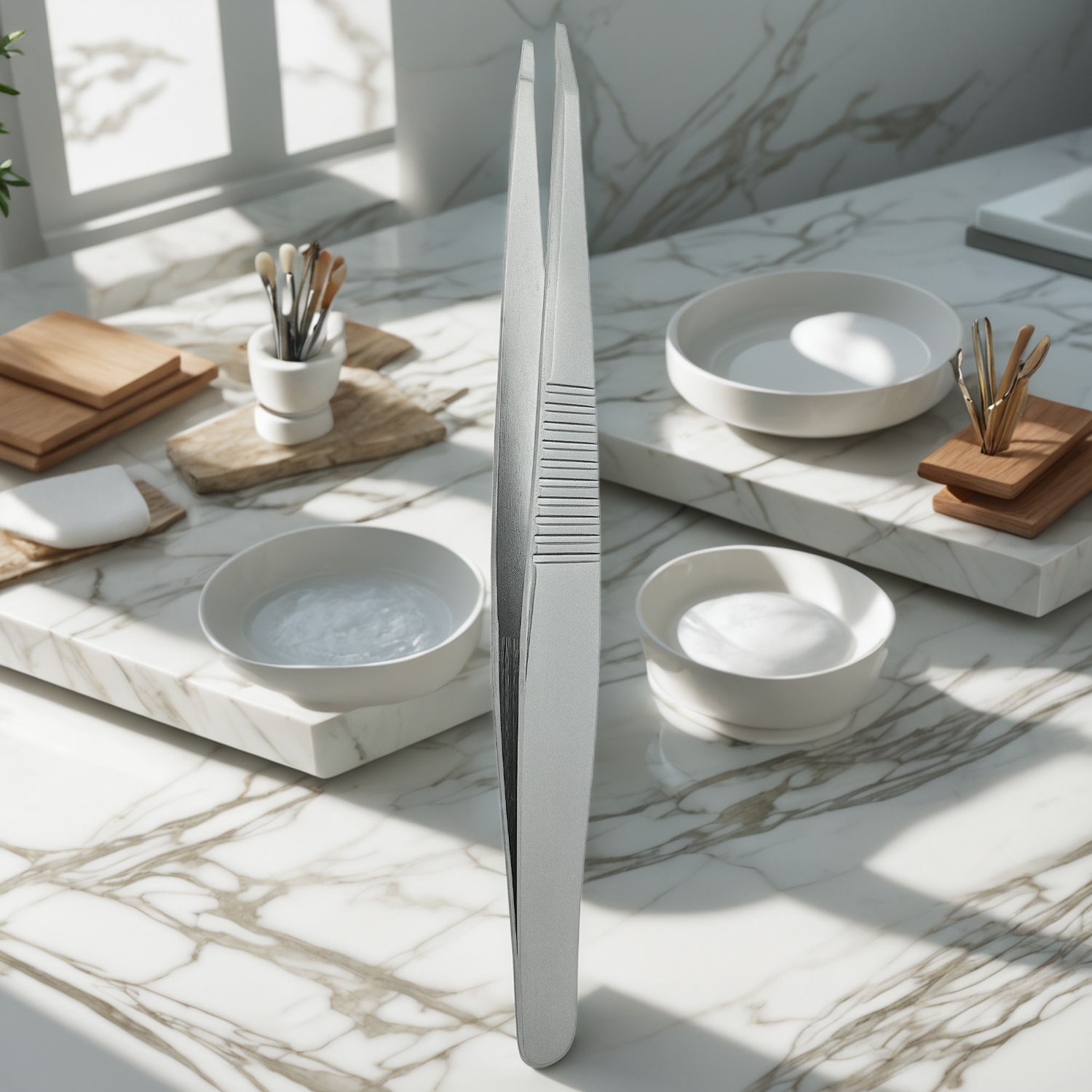
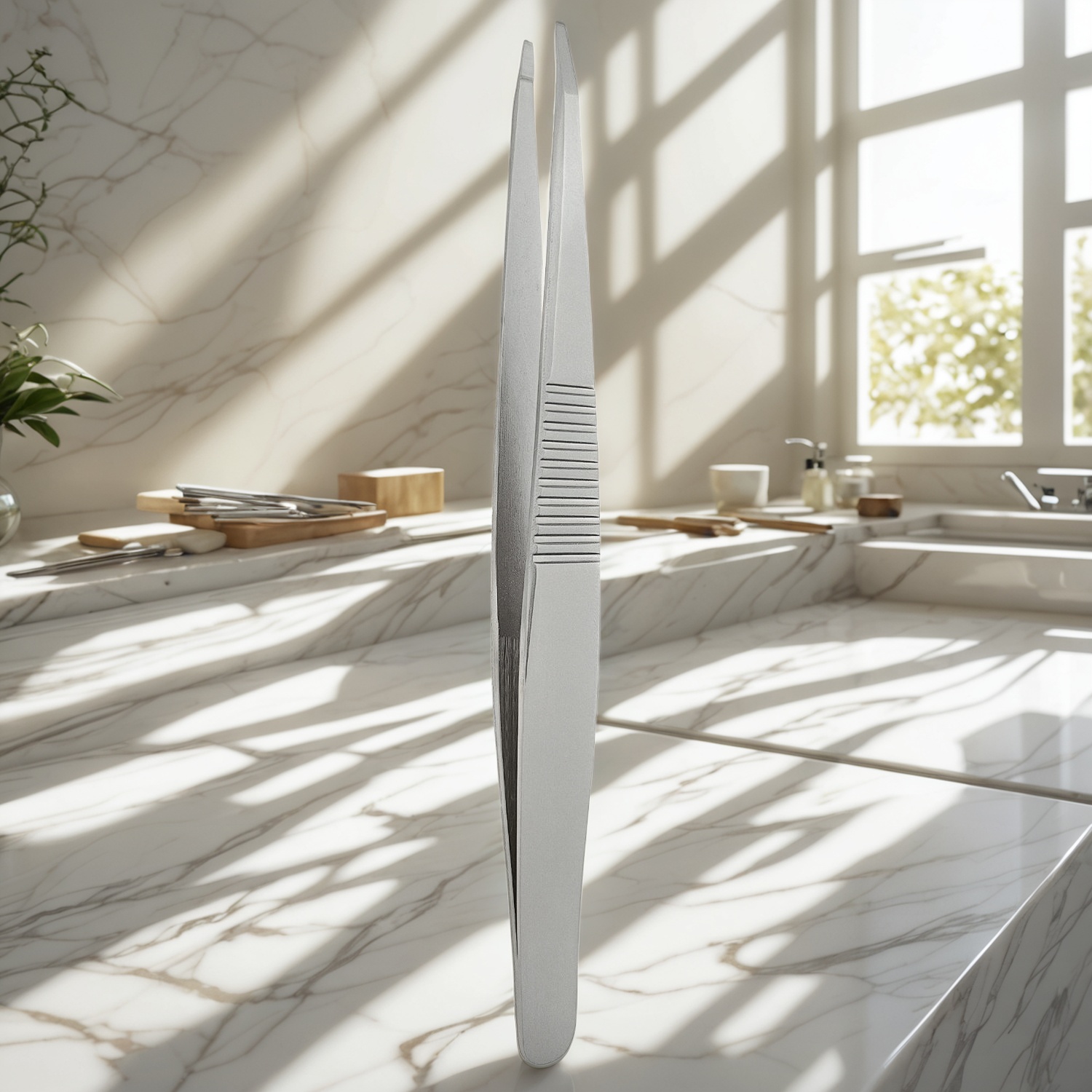
When comparing suppliers or samples, evaluate the tweezer as a working instrument. The most useful checks are practical and repeatable, allowing a buyer to compare samples from different sources in the same way. Olimor Beauty emphasizes quality control, and buyers should also have their own inspection expectations before confirming bulk production.
- Tip alignment: The two tips should meet evenly without visible twisting or gaps. Poor alignment is one of the most common causes of slipping.
- Grip performance: Test on fine hair or a thin fiber to see whether the tool can hold securely without excessive pressure.
- Material choice: Stainless steel is commonly valued in beauty tools for durability and resistance to everyday bathroom or salon conditions.
- Edge comfort: The arms should not feel sharp against the fingers, and the finish should not have rough areas.
- Tension and control: A tweezer that is too stiff can fatigue the hand; one that is too loose may feel weak or imprecise.
- Finish consistency: Color, polish and surface treatment should look uniform across samples, especially for retail presentation.
- Packaging fit: The tool should sit securely in its packaging so the tips are protected during storage and transport.
These checks are especially important for tweezers for resellers, because the reseller may not control how customers use or store the product. Strong initial quality reduces the chance of avoidable dissatisfaction after purchase.
Understanding Bulk Tweezers Price Versus Real Value
A low bulk tweezers price can look attractive on a spreadsheet, but buyers should compare total value rather than unit cost alone. A product that requires more sorting, creates higher return rates or weakens brand perception may be more expensive in the long run. The right question is not simply “Which supplier is cheapest?” but “Which product supports reliable sales with fewer quality problems?”
The following comparison can help purchasing teams evaluate offers more clearly:
| Buying Factor | Low-Price Generic Focus | Quality-Focused B2B Focus |
|---|---|---|
| Tip precision | May vary between batches | Checked for consistent meeting and gripping |
| Customer experience | Higher risk of slipping or uneven use | Designed to feel controlled and dependable |
| Brand impact | Can feel disconnected from a premium range | Supports a more professional product impression |
| After-sale risk | Potential for more complaints or returns | Lower risk when specifications are confirmed clearly |
| Long-term value | Short-term savings may be offset by issues | Better suited for repeat orders and customer loyalty |
This does not mean every business needs the most expensive option. It means the buyer should define the required level of performance, appearance and packaging before comparing prices. Bulk sourcing works best when the specification is clear enough that suppliers are quoting on the same expectations.
Customization Decisions That Affect the Final Product
Custom tweezers can support a brand identity, but customization should be planned around function first. A beautiful finish will not compensate for weak gripping performance. Before discussing decoration or packaging, decide what role the tweezer will play in your line. Is it a standalone retail item, part of a brow care set, a salon supply item or a promotional beauty accessory?
Useful customization planning points include:
- Target user: Define whether the buyer is a professional, everyday grooming customer, beauty retailer or gift-set recipient.
- Tip style preference: Different tip shapes can suit different use cases, so samples should be evaluated for the intended task.
- Handle feel: Ergonomically designed tweezers can improve control, especially during detailed work.
- Surface and color: Confirm that the finish supports the brand image while remaining practical for handling and cleaning.
- Logo and packaging placement: Branding should remain readable and should not interfere with comfort or tool performance.
- Protection during shipping: Tip covers, inserts or secure packaging can help maintain alignment before the customer opens the product.
For buyers building a wider assortment, it is worth reviewing related beauty tool products and product collections to keep materials, colors and packaging direction consistent across the range.
How to Evaluate a Tweezer Sample Like a Professional Buyer
Sample review should be systematic. If several team members test a product casually, feedback may be inconsistent. Instead, create a simple checklist and compare each sample under the same conditions. This approach helps purchasing, product development and sales teams make decisions based on evidence rather than first impressions.
Start with visual inspection. Check whether the arms are symmetrical, whether the tips meet evenly and whether the finish has scratches, dents or color variation. Then test the gripping action. A good tweezer should catch fine material without requiring excessive force. Next, hold the tool for a longer period and note whether the tension feels comfortable. Finally, place the tweezer in its intended packaging and check whether the tips remain protected.
If the product will be sold under your brand, keep one approved sample as a reference. This gives your team a comparison point for future production or repeat orders. It also helps avoid vague quality discussions later, because the approved sample shows the expected level of appearance and performance.
Questions to Clarify With a B2B Tweezer Manufacturer
Before confirming an order, buyers should align on specifications and inspection expectations. The goal is to reduce ambiguity. Rather than relying on general claims such as “premium quality,” document the details that matter for your market and sales channel.
- What material and finish options are available for the tweezer style being considered?
- How is tip alignment checked during production and before shipment?
- Can pre-production samples be reviewed before bulk production begins?
- What branding and packaging options are suitable for the selected tweezer?
- How are tweezers protected so tips do not shift or become damaged in transit?
- What visual or functional defects should be defined as unacceptable?
- How should repeat orders be matched to the approved sample?
These questions are useful whether you are launching a new beauty brand, expanding an existing retail line or comparing suppliers for salon tools. If you are ready to discuss a project, you can send an inquiry with your intended use, quantity planning, packaging needs and any reference requirements. For broader sourcing support, you may also contact Olimor.
Building a Better Tweezer Line for Resale
Successful B2B sourcing is not about finding a product that looks acceptable once. It is about building a repeatable supply path for a tool that customers can trust. Custom tweezers for business should combine precise gripping, durable construction, comfortable handling and packaging that protects the product before use. Stainless steel, ergonomic design and careful quality control all contribute to that goal when matched with clear buyer specifications.
For resellers, the best tweezer is one that fits the brand promise and performs consistently after purchase. For salons, it is a tool that feels controlled in the hand. For retail brands, it is a small item that can strengthen the overall impression of the beauty line. By comparing real performance, not only price, businesses can choose B2B tweezers that support customer satisfaction and long-term value.