Custom Tweezers for Business: How to Choose Branded Tools That Customers Keep Using
Custom tweezers for business are not only a small accessory in a beauty tool assortment. For salons, brow studios, skincare retailers, gift-box companies and beauty resellers, they are a product customers handle closely, judge quickly and often use for months or years. That makes the sourcing decision more important than choosing the lowest bulk tweezers price. A tweezer that pinches poorly, loses alignment or feels uncomfortable can damage customer trust even if the packaging looks attractive.
The better approach is to evaluate custom tweezers as both a precision tool and a brand touchpoint. The right product should support accurate hair removal, feel steady in the hand, suit the intended retail or professional setting and provide enough branding space to make the tool recognizably yours. This guide explains how business buyers can compare generic tweezers with higher-quality options, what to check before ordering and how resellers can build a stronger assortment around dependable tools.
Who Should Source Custom Tweezers for Business Use?
Different buyers look for tweezers for different reasons, and the best specification depends on how the tool will be sold or used. A professional brow technician may care most about tip alignment and grip consistency during repeated service use. A beauty retailer may focus on appearance, packaging and customer-perceived value. A reseller may need a product that is easy to explain, easy to bundle and less likely to generate returns.
Custom tweezers are commonly suitable for:
- Salons and brow studios that want tools matching their service standards and visual identity.
- Beauty retailers that need branded accessories for online stores, boutiques or curated kits.
- Resellers and distributors looking for B2B tweezers with a stronger quality story than generic marketplace items.
- Promotional and gift businesses that require a compact, useful product suitable for beauty-themed campaigns.
- Private-label beauty brands adding tools to complement skincare, lash, brow or grooming ranges.
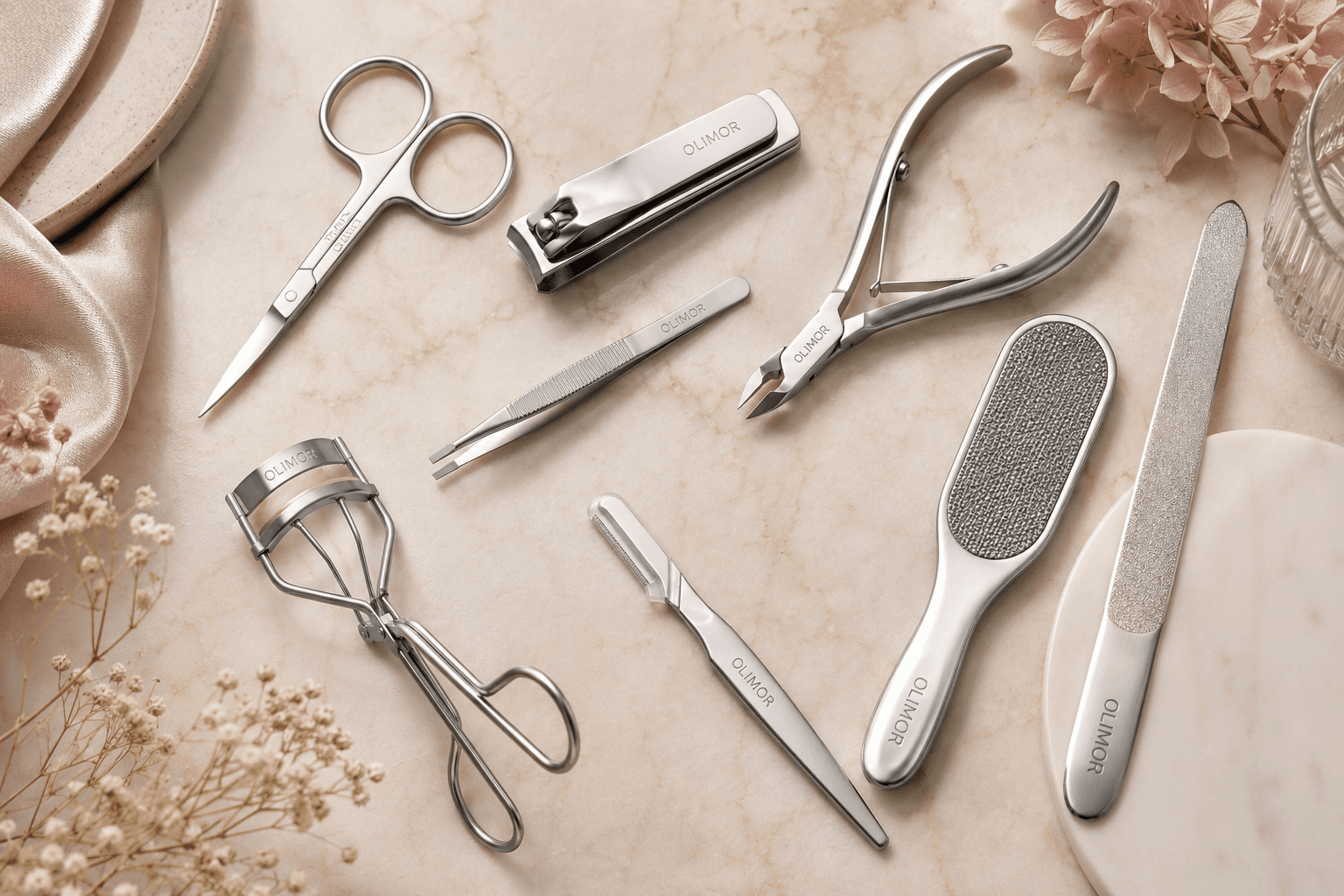
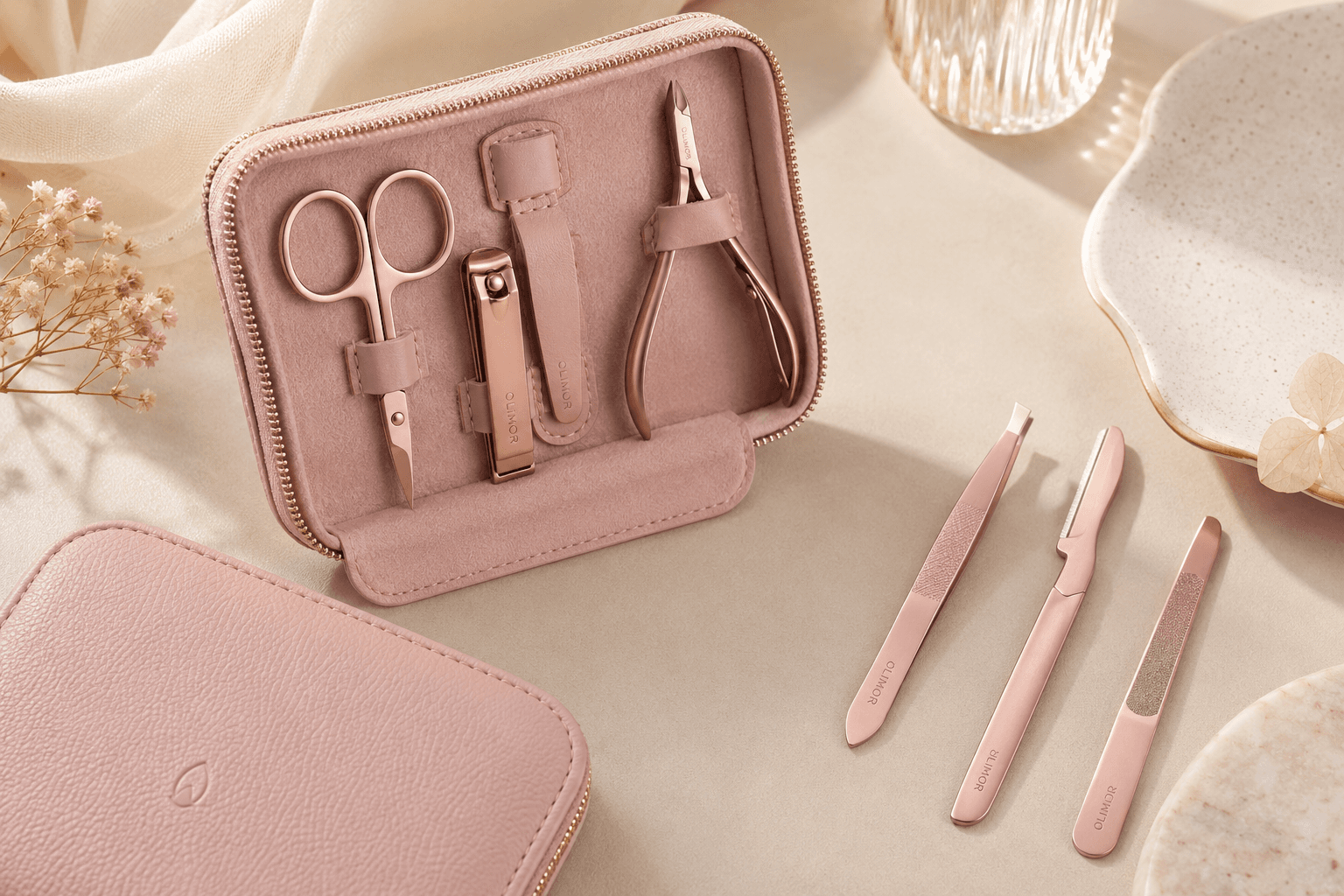
If you are building a broader assortment, it can help to compare tweezers with other beauty tool products so the finish, packaging style and quality level feel consistent across the range.
Generic Tweezers vs Premium B2B Tweezers
Generic tweezers can look acceptable in a listing photo, but buyers should evaluate what happens after real use. Low-cost mass-produced tools may vary from piece to piece, especially around tip contact, spring tension and edge finishing. These differences are easy for end users to notice because tweezers are judged by one simple action: can they grip fine hair cleanly without slipping or cutting it?
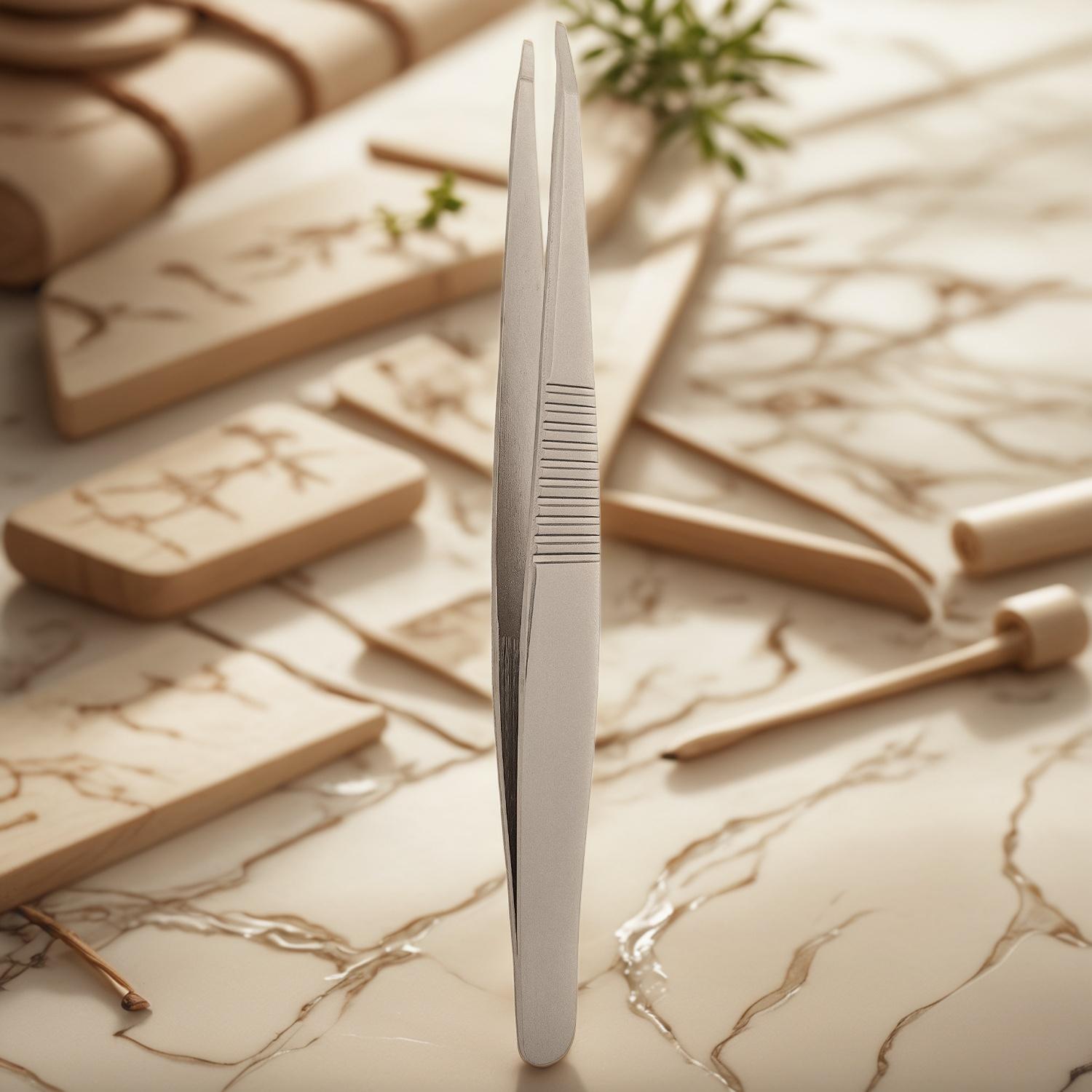
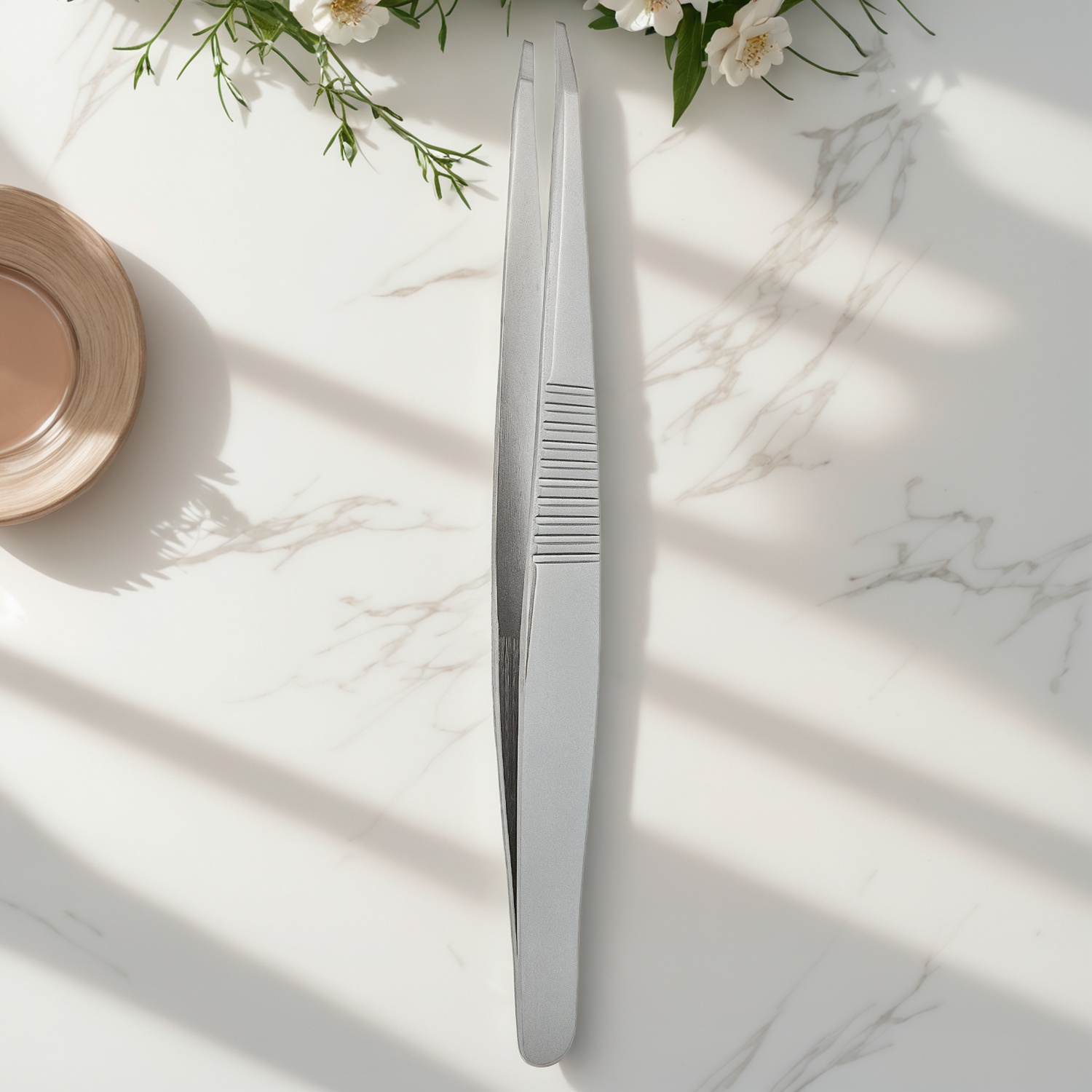
A premium option should be assessed on the details that affect use. The Armada Precision Tweezers from Olimor Beauty are described as being crafted from 100% surgical-grade stainless steel, with a focus on longevity and accuracy. The supplied product information also notes strict internal quality control and ergonomic design. These are the kinds of points business buyers should pay attention to because they connect directly to customer satisfaction.
The table below shows practical differences to review when comparing samples:
| Buying factor | Generic low-cost tweezers | Higher-quality custom tweezers |
|---|---|---|
| Tip alignment | May vary between units, causing missed grip or uneven pressure. | Should close evenly so the customer can grasp fine hairs with better control. |
| Material impression | Can feel light, soft or unfinished depending on production quality. | Stainless steel construction can support durability and a cleaner professional feel. |
| Brand value | Often competes mainly on price and may be hard to differentiate. | Can support private label branding, retail presentation and a stronger quality message. |
| Reseller risk | Higher chance of inconsistent feedback if quality varies across batches. | More suitable for repeat sales when inspection and finish are consistent. |
Selection Criteria That Matter More Than Bulk Price
Bulk tweezers price matters, but it should not be the only sourcing filter. A cheaper tool can become expensive if it leads to complaints, poor reviews, replacements or discounting. For custom tweezers for business, the best value usually comes from matching the tool to the customer’s expectations and the selling channel.
When reviewing samples, examine the tweezer with the same care your customer will use after purchase. Open and close the arms repeatedly. Check whether the tips meet cleanly from edge to edge. Test grip on fine hair or a thin fiber rather than only looking at the shape. Feel whether the tweezer gives enough tension for control without hand fatigue. Look for rough edges, visible burrs, uneven finishing or inconsistent color. If the product will be sold at retail, also consider how it sits in packaging and whether the branding remains legible at normal viewing distance.
A useful buyer checklist includes:
- Define the use case. Decide whether the tweezer is for professional brow service, home grooming, travel kits, resale bundles or promotional gifts.
- Review sample consistency. Compare several pieces, not only one sample, to see whether alignment and finish remain stable.
- Check the grip action. The tweezer should pick up fine hairs or fibers without excessive pressure.
- Evaluate comfort. Consider edge smoothness, hand feel and whether the design supports repeated use.
- Confirm branding placement. Make sure the logo position does not interfere with handling and remains visible after packaging.
- Match packaging to channel. Online retail, salon resale and gift sets may require different presentation choices.
Branding Choices for Private Label and Reseller Programs
Branding a tweezer should do more than place a logo on metal. It should make the product easy to recognize, easy to describe and appropriate for the audience. A salon may prefer a minimal, professional look. A beauty retailer may want a finish and packaging concept that photographs well for e-commerce. A reseller may need a neutral design that fits multiple sales channels without looking too generic.
Before finalizing a branded tweezer, think about the entire customer journey. The product image should communicate precision. The packaging should protect the tips. The product name or description should explain who it is for. The logo should be present but not so large that it makes the tool look promotional rather than retail-ready. For business buyers, a successful custom tweezer is one that feels intentional at every touchpoint.
If you are comparing related items, browsing Olimor product collections can help you think about how tweezers fit within a wider beauty tool line. A coordinated assortment can make a private-label program feel more complete and easier for customers to understand.
Why Quality Matters for Tweezers for Resellers
Resellers face a specific challenge: if the product is generic, the customer can compare it with dozens of similar listings. That pushes the sale toward price competition. When quality is stronger and the brand presentation is clearer, the reseller can compete on trust, repeat use and perceived value instead.
This is especially important with tweezers because buyers often remember whether the tool works. A customer may forgive a simple accessory if it is basic, but they are unlikely to reorder from a brand if the tweezer cannot grip properly. For resellers, fewer quality complaints can also mean less time spent handling returns, replacement requests and negative feedback.
A strong reseller listing or sales sheet should explain practical benefits in plain language. Instead of relying on vague claims, describe the material when known, the intended application, the grip purpose, the finish, the packaging format and the brand customization options being considered. The more clearly a reseller can explain the product, the less the sale depends on discounting.
Maintenance Guidance to Reduce Customer Complaints
Even well-made tweezers need proper care. Including simple maintenance guidance in packaging inserts, product pages or salon retail displays can improve the customer experience. It also helps protect the perceived quality of the branded tool after purchase.
- Keep tweezer tips protected during storage to avoid drops or misalignment.
- Wipe the tool after use to remove oil, residue or cosmetic buildup.
- Avoid using precision tweezers for non-beauty tasks such as opening packages or scraping surfaces.
- Store in a dry place and separate from loose metal tools when possible.
- Do not force the arms beyond their natural tension, as this can affect alignment.
These instructions are simple, but they matter. Many performance issues come from damage after purchase rather than the original product design. For professional environments, teams should also follow their own hygiene and sanitation procedures based on local requirements and service protocols.
Questions to Resolve Before Placing a Business Order
Because custom tweezers involve both function and branding, buyers should prepare clear requirements before moving into production. This avoids misunderstandings and helps samples represent the final product more accurately. Focus on measurable expectations rather than broad phrases such as “high quality” or “luxury.”
Useful points to define include the tweezer shape, target user, logo placement, finish direction, packaging style, inspection expectations and how the product will be presented in your sales channel. If exact technical details are not already confirmed, evaluate samples and documents carefully before committing to a larger order. The goal is to make sure the product you approve is the product your customer receives.
For companies planning a custom or reseller project, you can send an inquiry with your intended use, branding needs and target channel. If you need help clarifying options before a purchase decision, you may also contact Olimor for business support.
Building a Better Custom Tweezer Program
Custom tweezers for business are most successful when buyers treat them as precision products, not disposable add-ons. The right tweezer can support professional confidence, strengthen retail presentation and give resellers a product with a clearer value story. The wrong choice may save money upfront but create problems through inconsistent grip, weak differentiation and customer dissatisfaction.
By focusing on material, alignment, comfort, branding, packaging and inspection, business buyers can make a more informed sourcing decision. Whether you are adding tweezers to a salon retail shelf, building a private-label beauty tool range or supplying tweezers for resellers, quality should be part of the brand promise. A small tool can leave a lasting impression when it works reliably every time it is picked up.
Tag: