

Custom Tweezers for Beauty Businesses: A Practical B2B Sourcing Guide
Custom tweezers are small beauty tools, but they can have a large effect on customer satisfaction, repeat orders and brand trust. For beauty retailers, salons, brow studios, lash professionals, distributors, subscription boxes and private-label brands, the right tweezer is not only a logo item. It must grip cleanly, align properly, feel comfortable in the hand and arrive in packaging that fits the sales channel.
A sourcing decision should start with function: who will use the tool, what task it must perform and how the buyer will evaluate consistency before ordering in bulk. Appearance, finish and branding matter, especially for retail presentation, but a tweezer that slips, pinches unevenly or has rough edges can quickly create complaints. Olimor supports beauty tool buyers planning custom tweezer programs for professional use, retail display and reseller distribution.
Why Tweezers Matter in a Beauty Tool Assortment
Tweezers are often treated as add-on products, yet customers judge them immediately by feel and performance. They are used for eyebrow shaping, facial hair removal, false lash application, nail art detail work and other precision grooming tasks. A consumer wants a tool that works without a steep learning curve. A professional needs consistent control during repeated service use. A distributor needs dependable products that can move through different sales channels without creating avoidable returns.
For a business buyer, tweezers are practical because they are compact, easy to merchandise and suitable for many selling formats. They can be sold as single retail items, included in brow or lash kits, added to manicure or grooming sets, offered in salon retail areas or supplied through distributor catalogs. When selected carefully, custom tweezers can support entry-level and professional product lines without requiring complicated consumer education.
Buyers building a wider accessory range can review related Olimor beauty tool products when planning coordinated kits, display programs or private-label assortments.
Start With One User and One Use Case
The strongest custom tweezer programs are built around a clear end user. A retail consumer may value simple packaging, an easy-to-understand tip shape and a comfortable grip. A brow professional may focus on alignment, hand fatigue and reliable tension. A lash or nail user may need a more specialized tip. A reseller may need a broad design that photographs well online and suits several customer types.
This choice affects everything that follows: tweezer style, finish, packaging, instructions, inspection checks and price comparison. A highly specialized tweezer may be attractive in a product image, but it is not always the best option for a general retail customer. Likewise, a basic general-purpose tweezer may not satisfy a professional buyer who needs more control for repeated use.
Choose the Right Tweezer Style for the Task
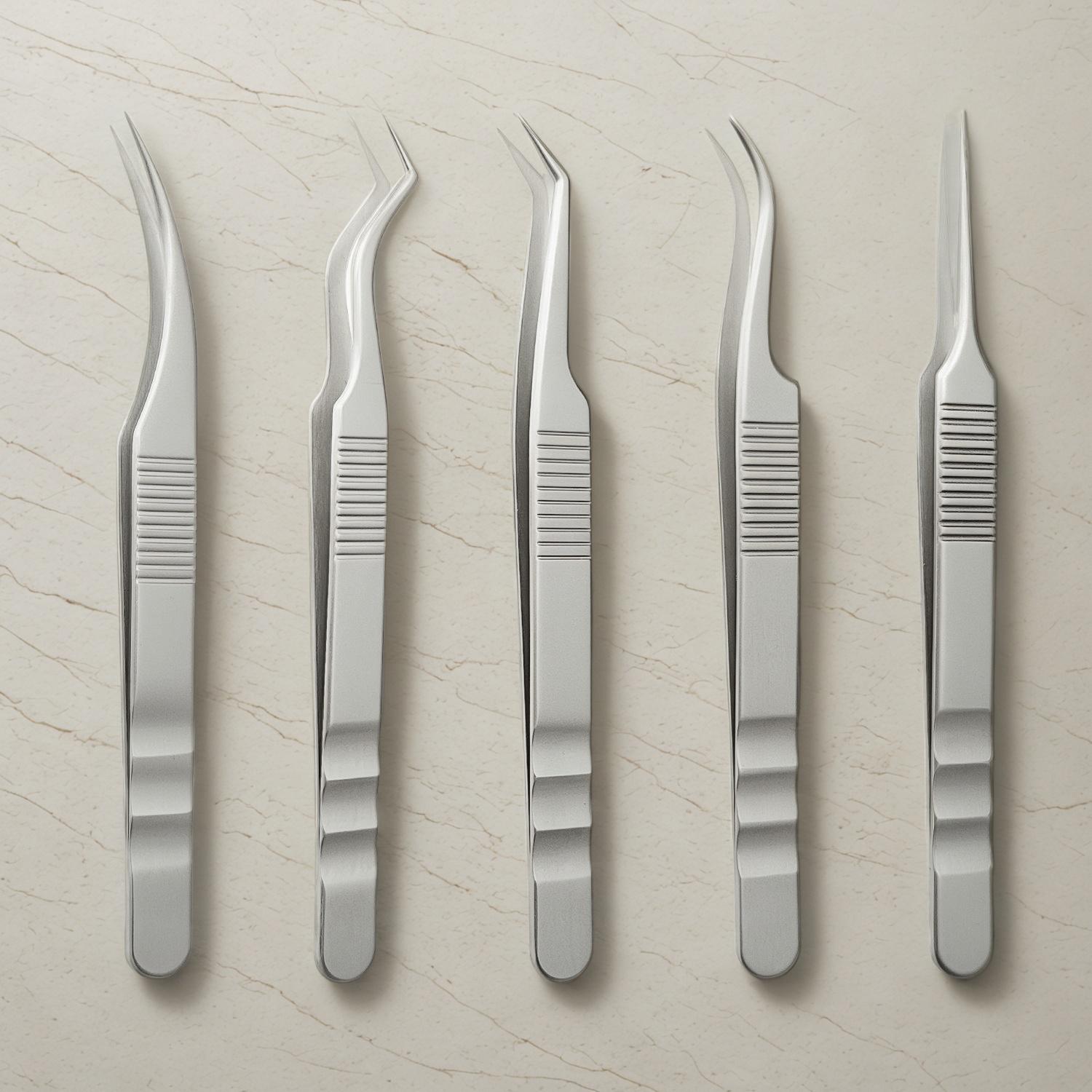
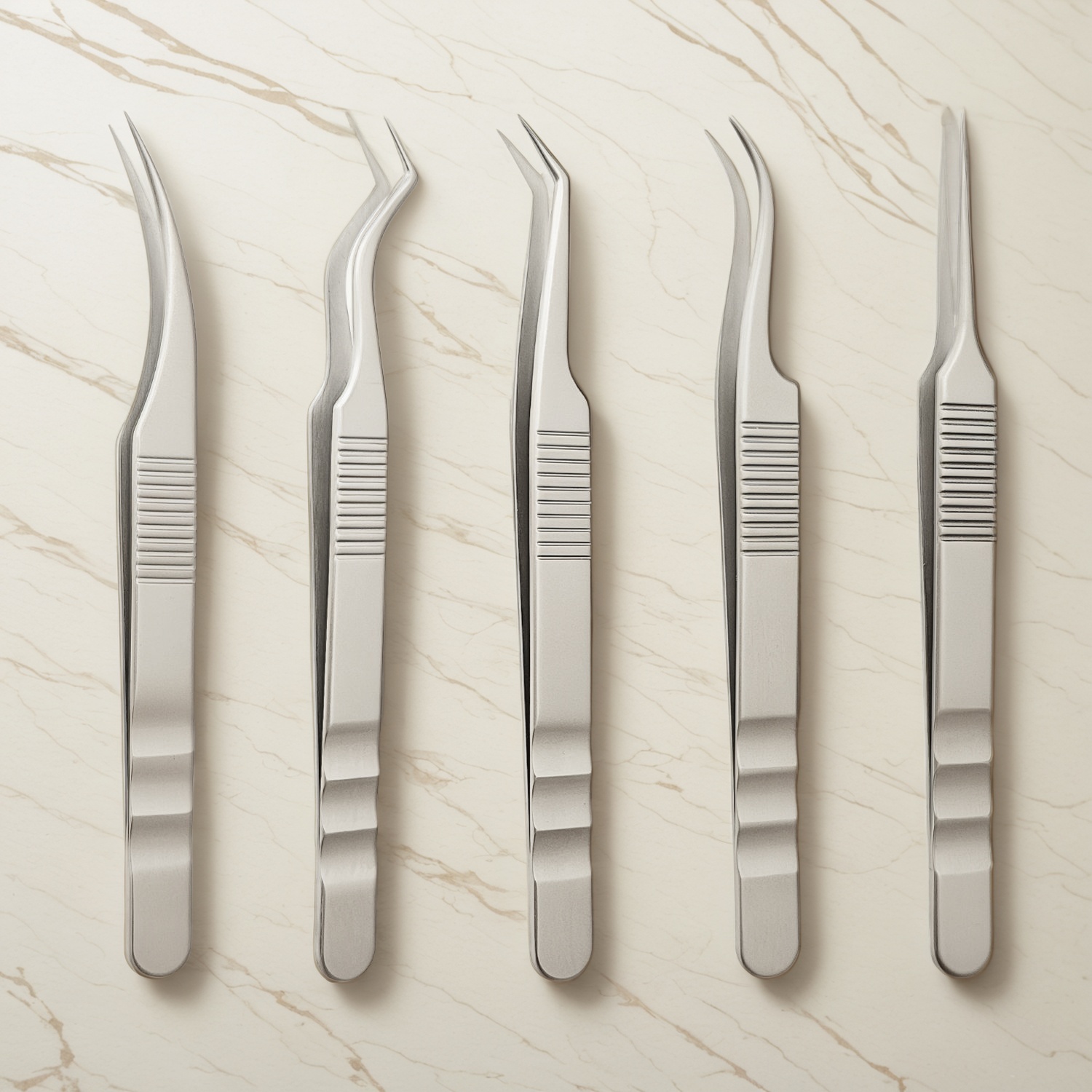
Different tweezer shapes support different beauty tasks. A bulk order should begin with the intended application rather than color or logo placement. Olimor works with tweezer options such as straight, curved, angular, hook and pointed styles, and buyers may also compare common slant, flat or specialty tip designs depending on the product brief.
| Tweezer style | Common beauty use | Best fit for business buyers |
|---|---|---|
| Slant or angular tip | Eyebrow shaping and general hair removal | Versatile for retail assortments, brow kits and salon retail where alignment and clean tip contact are important. |
| Straight or flat tip | General gripping, lash handling or holding small cosmetic items | Useful for everyday beauty ranges, lash kits or broader gripping tasks where controlled holding matters more than fine hair removal. |
| Pointed tip | Fine detail work and careful precision handling | Better for advanced users or professional kits; requires protective packaging and clear handling guidance. |
| Curved tip | Access around contours, lash work or detailed placement | Good for lash, brow and precision beauty assortments where users understand the application. |
| Hook or specialty tip | Specialized grip position for detailed work | Best for niche professional kits, training programs or targeted beauty tool lines. |
If your audience is broad retail, a well-made slant or angular option is often an approachable starting point. If you supply salons, lash artists or training academies, a wider range can help cover specialized services. Distributors may benefit from a balanced selection: one general-purpose tweezer, one brow-focused option and one precision or specialty option.
Quality Details to Review Before Ordering B2B Tweezers
Because tweezers are precision tools, small production differences can change the user experience. A polished or colored finish cannot compensate for tips that do not meet evenly. Buyers should inspect physical samples in hand and, where possible, test them in realistic use situations before confirming a bulk order.
Stainless steel is commonly valued in beauty tools for durability and a clean professional feel, but material wording alone is not enough. Buyers should still evaluate the finished product: the tip contact, surface finish, arm tension, grip area and packaging fit all matter. Olimor applies internal quality control to tweezer production, and business buyers should also define their own approval and inspection expectations before production.
Sample Review Checklist
- Tip alignment: The two sides should meet cleanly without twisting, crossing or leaving a visible gap at the gripping point.
- Grip performance: Test whether the tweezer can hold fine hair or small beauty items without requiring excessive pressure.
- Spring tension: The arms should close smoothly with enough resistance for control, but not so much that repeated use feels tiring.
- Edge comfort: Outer edges should feel smooth in the hand and should not scratch during normal handling.
- Surface appearance: Check for scratches, uneven coating, inconsistent color, rough areas, marks or finish variation.
- Grip area: If the design uses texture, coating or shaping, confirm that it supports control and does not interfere with cleaning or handling.
- Packaging protection: Tip guards, sleeves, inserts or inner packaging should help prevent damage during storage, shipping and display.
These checks are especially important for tweezers for retailers, where customers judge the product both on shelf and after purchase. For tweezers for distributors, consistency across cases or cartons is equally important because products may pass through several accounts before reaching the final user.
Customization Decisions Beyond a Logo
Custom tweezers are often discussed as branded tools, but the strongest programs consider the full presentation. The tool should communicate its purpose, match the price position and arrive in packaging that protects the tip. A logo should be visible, but it should not interfere with the grip area, cleaning or the professional look of the tool.
Finish selection affects how the product reads in the market. A polished, matte, colored or coated appearance can support different sales strategies. A professional salon supply range may prioritize a clean, practical look. A retail beauty line may use color to separate brow, lash or grooming categories. When exact technical details are not listed for a product, buyers should compare samples and assess finish appearance, print clarity and hand feel before approving.
Packaging is equally important. A simple sleeve may suit professional bulk supply, while hang cards, boxes or pouches may be better for retail. For e-commerce, packaging should protect the tip during fulfillment and arrive looking presentable. For gift sets or curated kits, the tweezer should match the color, typography and structure of the wider range.
Useful Packaging Information to Confirm
- The tweezer style and intended application, such as brow shaping, lash placement or detail work.
- Simple care guidance, including keeping tips clean and storing the tool safely.
- Appropriate handling guidance for sharp or pointed tips.
- Barcode, product naming and batch identification needs for the sales channel.
- Artwork requirements, brand colors and display structure for retail presentation.
If custom tweezers will be part of a wider beauty accessory program, browse Olimor product collections to consider how tools can be grouped for retail, salon or promotional assortments.
Local B2B Sourcing or Tweezers Export From China
Beauty businesses often compare local purchasing with international manufacturing. Local suppliers may be convenient for urgent stock items or small replenishment needs. International sourcing, including tweezers export from China, can provide broader customization possibilities and competitive production economics when buyers need private-label styling, multiple finishes, coordinated packaging or larger programs.
The decision should not be based on unit price alone. For a precision tool, a cheaper quote has limited value if tips are inconsistent or packaging allows damage in transit. Buyers should compare communication, sampling, artwork confirmation, quality control process, packaging protection and logistics planning.
| Sourcing factor | What to evaluate | Why it matters |
|---|---|---|
| Customization scope | Tip style, finish, logo, packaging and set configuration | Determines whether the tweezer fits the market position and sales channel. |
| Sample approval | Hand feel, grip, tip contact, finish and packaging fit | Helps identify performance issues before bulk production. |
| Quality checks | Alignment, tension consistency, surface defects and package condition | Protects customer satisfaction and reduces avoidable complaints. |
| Communication | Product brief, artwork files, specifications and confirmation records | Reduces misunderstanding during custom production. |
| Logistics planning | Carton protection, delivery requirements and shipment coordination | Helps goods arrive in sellable condition. |
How to Compare Bulk Tweezers Price Without Sacrificing Usability
Bulk tweezers price is important for distributors, chain retailers and growing private-label brands. However, the lowest quote is not always the lowest real cost. If a shipment includes inconsistent tips, weak packaging or visible cosmetic defects, the cost of replacements, markdowns and customer service can outweigh the initial savings.
When comparing quotations, separate the factors that influence cost. Material selection, tweezer style, finish, customization method, packaging format, order quantity, inspection requirements and shipping approach can all affect the final price. A simple unbranded tool in basic packaging should not be compared directly with a retail-ready custom tweezer with printed packaging and a more complex finish.
It is also helpful to compare samples from the same style category. A pointed tweezer should be evaluated against another pointed tweezer, not against a general slant tweezer with different use expectations. Buyers should ask what is included in the quote and confirm whether the packaging supports the intended channel. A low-cost package may work for salon backbar use but may not be suitable for retail display. A more polished package may be unnecessary for internal professional kits.
How Resellers Can Avoid Competing Only on Price
For resellers, generic tweezers can be difficult to defend because many sellers offer similar shapes and colors. Customization can create a clearer product story: a brow grooming tweezer for beginners, a compact tool for beauty kits, a salon-style tweezer for professional retail or a coordinated accessory for a gift set.
To avoid competing only on price, define the selling angle before production. Product pages and packaging should explain who the tweezer is for and why the design is practical. A brow tweezer, for example, should communicate its intended grooming use. A precision tweezer should make the user skill level and handling expectations clear. A lash or nail tool should be positioned for the correct task rather than marketed as a universal solution.
This approach also helps with inventory planning. Instead of carrying many similar colors without a clear purpose, buyers can build a focused range around end uses, customer types and channel needs.
Inspection Standards and Compliance Considerations
For bulk beauty tool sourcing, buyers may use recognized inspection methods as part of their supplier evaluation process. ISO 2859 sampling procedures are commonly referenced in product inspection programs, and ISO 9001 quality management principles may be useful when discussing supplier process control. These references do not mean a specific supplier or product is certified. Buyers should verify the applicable version, market requirements and supplier documentation for their own order.
Consumer product rules can also vary by market, especially for tools with sharp or pointed tips and for packaging or labeling requirements. Buyers should confirm applicable requirements with their internal compliance team, importer, testing partner or local authority before launch. The goal is to avoid assuming that a general beauty tool description is enough for every retail market.
A Practical Sourcing Process for Custom Tweezers
- Define the user and use case. Decide whether the tweezer is for brow shaping, lash placement, general grooming, nail detail work or professional service kits.
- Select the tip style. Match slant, straight, curved, angular, hook, pointed or specialty options to the task and user skill level.
- Prepare a product brief. Include finish direction, logo placement, packaging format, sales channel and any artwork requirements.
- Review samples in hand. Check alignment, grip, tension, edge comfort, surface appearance and package protection.
- Confirm commercial details. Discuss customization scope, order requirements, packaging, inspection expectations and shipping needs without relying only on unit price.
- Document approval criteria. Keep agreed samples, artwork files and acceptance points clear for purchasing, design and quality teams.
For buyers ready to discuss a custom program, Olimor can review product direction, intended sales channel and packaging needs. You can contact Olimor for sourcing support or send a project request through the custom tweezer inquiry page.
FAQ: Custom Tweezers for Business Buyers
Can I request samples before placing a bulk custom tweezer order?
Yes. Sample review is recommended because photos cannot fully show tip alignment, tension, hand feel or packaging protection. Buyers should test samples against the intended use case before approving bulk production.
Can tweezers be customized with logo, finish and packaging?
Custom options may include tip style, finish direction, logo placement, packaging format and set configuration, depending on the selected product and project requirements. Buyers should provide artwork files and confirm details during sampling.
What affects MOQ, price and lead time?
Minimum order requirements, pricing and lead time can vary based on tweezer style, customization method, finish, packaging, order quantity, inspection needs and shipping plan. Confirm these details with Olimor for the specific project rather than relying on general assumptions.
What quality checks should buyers request?
Important checks include tip alignment, grip performance, spring tension, edge comfort, surface finish and packaging fit. Buyers may also define sampling and acceptance expectations before production.
Are custom tweezers suitable for both retail and professional channels?
Yes, but the design should match the channel. Retail programs often need clear packaging and simple use communication, while professional programs may prioritize handling comfort, consistency and practical storage.
Tag: