Custom Logo Tweezers for Beauty Brands: Factory Sourcing Guide
Custom logo tweezers are small beauty tools with a large branding role. They are handled closely, used repeatedly and often kept in makeup bags, brow stations, salon kits, travel sets and retail beauty boxes. For a beauty brand, salon buyer, distributor or promotional product team, the goal is not simply to add a logo. The goal is to source a precise, comfortable and consistent tweezer that supports the brand every time a customer uses it.
This guide explains how to evaluate custom logo tweezers before ordering from a factory or beauty tool supplier. It focuses on practical sourcing questions: tip style, stainless steel construction, grip comfort, finish selection, logo placement, quality inspection, packaging and supplier communication. Olimor works in the beauty tools category, where details such as tip alignment, surface finish, ergonomic handling and final packaging presentation can affect both user satisfaction and repeat B2B orders.
Who Should Source Custom Logo Tweezers?
Custom tweezers make sense when the product supports a clear commercial purpose. They can be sold as individual beauty accessories, included in eyebrow grooming kits, paired with mirrors or scissors, added to lash and brow sets, used in training kits, or offered as a practical promotional beauty item. Because they are compact and useful, branded tweezers can avoid the disposable feel of many giveaway products.
- Beauty brands: Add a functional tool that complements brow pencils, lash products, skincare accessories or grooming ranges.
- Salons and brow bars: Create a more consistent professional workstation and offer branded tools for retail sale.
- Distributors: Build a recognizable private-label assortment instead of selling generic beauty accessories.
- Retail buyers: Develop shelf-ready tools, gift sets or multipacks with coordinated colors and packaging.
- Training academies: Provide consistent tools for students learning brow shaping or detailed beauty preparation work.
Before comparing suppliers, define the intended user. A salon technician may care most about tension and tip closure. A retail buyer may prioritize finish consistency, packaging appeal and barcode accuracy. A distributor may focus on repeatability, labeling and export documentation. A clear use case helps prevent overdesigning the logo while under-specifying the working tool.
Start With the Base Tweezer, Not the Logo
A logo cannot fix a poor tweezer. Product photos may make many tweezers look similar, but performance depends on the working details. Buyers should request and compare physical samples before approving artwork, packaging or a larger production plan.
Stainless steel is commonly used for beauty tweezers because it supports durability, routine cleaning and a professional feel. However, buyers should not assume all stainless steel tweezers perform the same way. The material, surface finishing, alignment process and final inspection all influence how the tool feels in the hand and grips fine hairs.
Core sample checks
- Tip alignment: The two tips should meet evenly with no obvious gap at the intended gripping area.
- Tip finish: The gripping edges should feel controlled, not rough, burred or unsafe.
- Tension: The tweezer should close with enough resistance for control but not so much that repeated use causes hand fatigue.
- Surface feel: Handles and edges should feel smooth enough for frequent handling.
- Weight balance: A tool that feels too light may seem flimsy, while one that is too heavy may be tiring for precision work.
- Cleanability: Decorative patterns, coatings and logo methods should not create unnecessary traps for residue.
- Batch consistency: One approved sample is not enough; buyers should confirm that multiple pieces feel and perform similarly.
For a quick overview of related beauty tools that can be coordinated with tweezers, buyers can review Olimor beauty tool products and consider whether a tweezer should stand alone or form part of a broader private-label program.
Choose the Right Tweezer Tip Style
The tip is the working end of the tweezer. Decoration, color and packaging help presentation, but tip geometry determines whether the product feels precise or frustrating. Angled and pointed tips are two common choices for beauty applications, and each serves a different purpose.
| Tip style | Best suited for | What buyers should check | Commercial fit |
|---|---|---|---|
| Angled tip | Eyebrow shaping and general hair removal | Even slant contact, controlled gripping edge and smooth closure | Versatile option for salons, retail beauty ranges and brow kits |
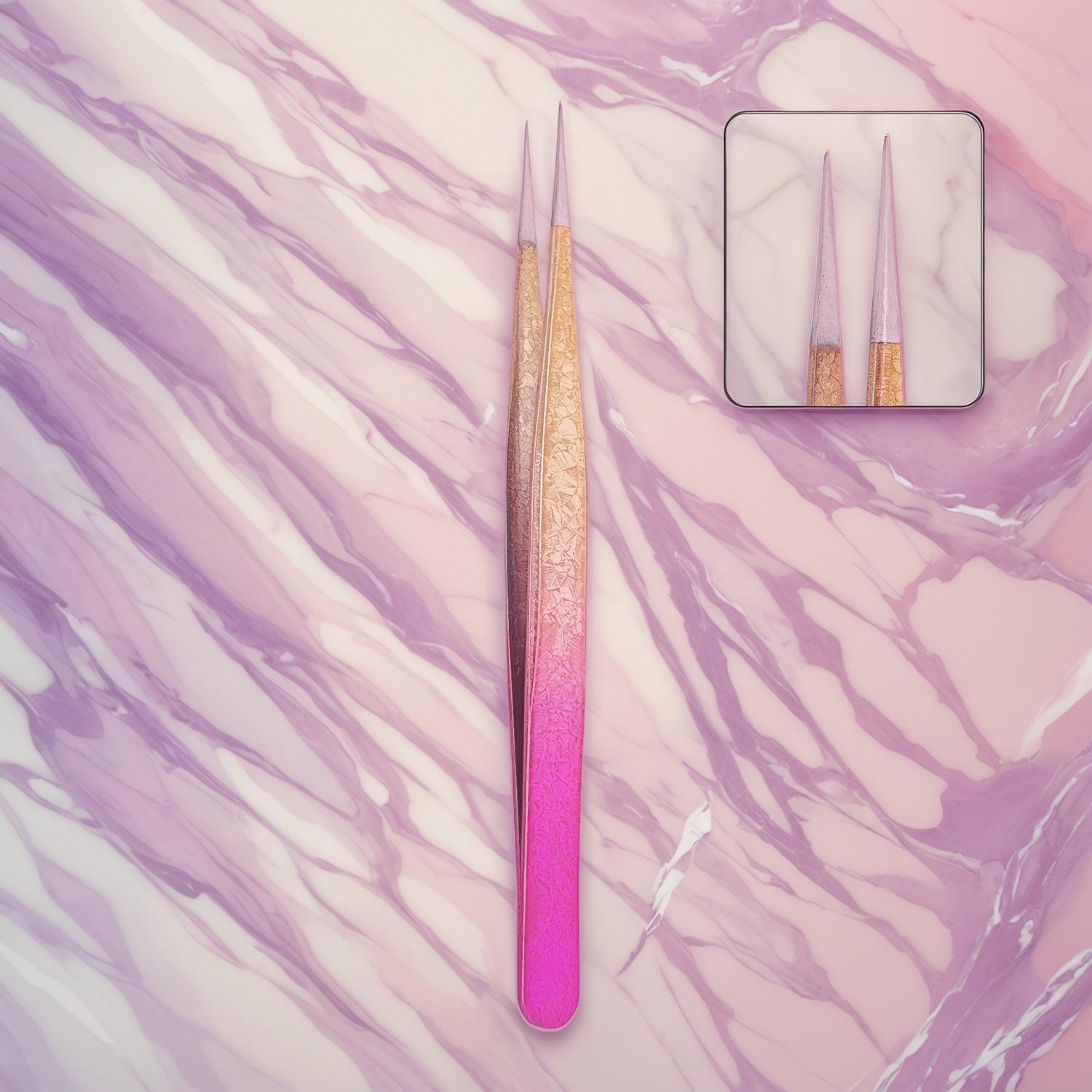
| Pointed tip | Fine hair isolation and detailed work | Accurate point meeting, safe finishing and clear user instructions | Useful for precision-focused sets, training kits and detailed grooming tools |
| Textured or embossed handle | Repeated handling and salon use | Comfort, slip resistance and ease of cleaning around the texture | Good where grip comfort and professional handling matter |
| Decorative finish with logo | Retail display, gift sets and brand campaigns | Color consistency, logo readability and resistance to visible wear in normal handling | Good for private-label lines and promotional beauty assortments |
When reviewing samples, open and close the tweezer several times under good light. The tips should return to the same meeting point. Try gripping a fine test material to understand whether the tweezer catches cleanly or slips. If the tweezer will be used close to the face, packaging and instructions should be clear about safe use, especially for sharper pointed designs.
Logo Placement, Finish and Visual Design
Custom logo tweezers need to balance visibility with practical appearance. A large logo may stand out in an online listing, but it can look crowded on a narrow metal tool. A smaller mark may feel more premium, but it must remain readable after production and normal handling.
Prepare artwork in a clean vector format and confirm size, position and orientation before production. Thin lines, tiny taglines and complex gradients may not translate well onto a narrow tweezer body. A simple wordmark, icon or short brand initials often works better than a detailed full graphic.
Finish selection should match the sales channel. A minimalist professional brand may prefer a subtle mark and a clean surface. A trend-led retail product may benefit from a colorful ombre or gradient effect, such as vibrant transitions from fuchsia to gold. Embossed or etched patterns can add grip and visual interest, but buyers should check whether the pattern remains comfortable and easy to clean.
Design questions to settle early
- Will the logo appear on one side or both sides?
- Should the logo face outward in the package or face the user during handling?
- Is the intended look professional, colorful, minimal, promotional or giftable?
- Will the tweezer finish coordinate with scissors, mirrors, lash tools or manicure accessories?
- Does the packaging need a window or insert card that shows the logo clearly?
- Will fingers rub directly over the logo during use, and is the marking method suitable for that position?
For retail programs, design the tool and packaging together. A strong private-label result usually comes from a consistent system: tool color, logo color, card design, product name, safety information and assortment labeling should work as one presentation.
Factory-Direct Sourcing and Cost Factors
Factory-direct sourcing can reduce unnecessary communication layers and give buyers more control over product details. The value is not only a lower unit cost. Direct discussion can help align the sample, logo position, surface finish, packaging style and inspection expectations before a larger order is placed.
Several cost factors can influence a custom tweezer project. Buyers should discuss these openly rather than asking only for the cheapest quotation.
- Base tweezer structure: Tip style, handle shape, tension and surface details can affect production requirements.
- Material and finish expectations: Stainless steel surface finishing, decorative coatings, ombre effects or patterns may change the process complexity.
- Logo method: The chosen marking process, logo size and number of print positions can influence cost and setup.
- Packaging: Simple bulk packing, individual sleeves, retail cards, boxes or gift-set packaging all create different requirements.
- Inspection level: More detailed checking of tip closure, logo placement, finish and packaging may require additional handling.
- Assortment planning: Multiple colors, tip styles or kit combinations can improve merchandising but add coordination work.
Olimor presents custom beauty tools for buyers who need branded items and coordinated product ranges. If tweezers are part of a larger program, the beauty tool collection can help buyers think about matching items before confirming packaging or artwork.
Quality Control Checks for Export-Ready Tweezers
Quality control should cover both performance and brand presentation. A tweezer is a precision hand tool, so small differences can affect the user experience. Buyers should define inspection expectations in writing and compare production against the approved sample.
| Inspection point | What to check | Why it matters |
|---|---|---|
| Raw material and surface | Visible stains, burrs, uneven finishing or obvious defects | Supports durability, appearance and comfortable handling |
| Tip contact | Tips meet evenly with no visible gap at the gripping area | Determines whether fine hairs can be gripped cleanly |
| Tension and spring feel | Smooth opening and closing without stiffness or looseness | Affects control, fatigue and professional usability |
| Logo position | Consistent placement, direction and readability across the batch | Protects brand presentation and retail consistency |
| Finish consistency | Color, shine, pattern and coating appearance match the approved sample | Prevents mixed-looking stock, especially in sets or displays |
| Edge comfort | No sharp handle edges, rough sides or uncomfortable texture | Improves user comfort and reduces complaints |
| Packaging match | Correct labels, quantities, color names, barcodes and warning text where applicable | Supports retail readiness and distributor receiving checks |
Some buyers use internationally recognized sampling approaches, such as ISO 2859-1, when planning inspection of larger lots. Regulatory requirements can also depend on destination markets; for example, buyers selling into regions with chemical substance restrictions may need to review applicable rules such as REACH. These references do not replace professional compliance advice. Buyers should verify the applicable version, destination-market requirements and supplier documentation for their own product and market.
Packaging and Private-Label Presentation
Packaging should protect the tweezer, explain its use and present the brand clearly. For sharp or pointed tips, protective packaging and clear handling information are especially important. Retail buyers should also consider how the product will hang, stack, ship and scan in the sales channel.
Common packaging considerations include product name, tip type, color reference, logo visibility, barcode placement, quantity, warning statements where needed and consistency with other items in the line. For gift sets, the tweezer may need to match mirrors, scissors, eyebrow brushes, lash tools or manicure items. For distributor assortments, clear labeling helps warehouse teams separate similar SKUs.
If the product will be photographed for e-commerce, ask for a package mockup or pre-production sample. A logo that looks clear on the tool may be hidden by an insert, sleeve or window position. Confirming this before production reduces the risk of packaging that weakens the branding effect.
Supplier Evaluation Checklist
A good supplier discussion should be specific. Instead of asking only for custom logo tweezers, prepare a sourcing brief that describes the buyer, user, channel and inspection priorities. This helps the factory recommend practical options and reduces back-and-forth after sampling.
Questions to ask before placing an order
- Which tweezer tip styles are available for brow shaping, fine hair isolation or general grooming?
- What stainless steel and surface finish options can be offered, and what are the limitations of each?
- Can samples be provided with the intended logo position, finish and packaging concept?
- How should artwork be supplied, and what logo details may need simplification?
- What quality checks are performed for tip alignment, tension, surface finish, logo placement and packaging?
- How are approved samples recorded and compared with later production?
- What customization options are available for color, packaging, assortments or sets?
- What information is needed to confirm MOQ, lead time and quotation for the specific project?
- Which documents can be provided for export, shipment or destination-market review?
Buyers who already have a specification can send project details through the Olimor custom product inquiry page. If the project still needs clarification, contacting the team through Olimor contact support can help align samples, artwork and packaging expectations before quoting.
Practical Buying Advice
The best custom logo tweezers are built from the working function outward. Start by deciding who will use the tool and what task matters most. Then confirm tip style, tension, stainless steel surface quality and comfort. Only after the base tweezer is acceptable should the project move to logo placement, finish effects and retail packaging.
For B2B buyers, the strongest sourcing process is sample-led and inspection-led. Request samples, compare more than one piece, check the tips under good light and confirm how the final production will be inspected. Keep the logo simple, make the packaging practical and ensure the approved sample becomes the reference for production.
Olimor can support custom logo tweezer discussions for beauty businesses that need branded tools, private-label accessories or coordinated beauty sets. A clear brief with intended user, tip preference, logo artwork, finish direction and packaging goal will make the sourcing process faster and more accurate.
FAQ
Can I request samples before ordering custom logo tweezers?
Yes. Samples are important because photos cannot fully show tip alignment, tension, edge comfort or finish quality. Buyers should review the base tweezer first and then confirm logo and packaging details where possible.
What MOQ applies to custom tweezers?
MOQ depends on the tweezer style, logo method, finish, packaging and customization scope. Buyers should provide artwork, target packaging and order requirements so the supplier can confirm the applicable MOQ for that project.
Can the logo, color and packaging all be customized?
Customization may include logo placement, tool finish, ombre or decorative effects, packaging format and set coordination. The final options depend on the selected tweezer structure and production process, so they should be confirmed during sampling.
What quality checks should buyers request?
Important checks include tip closure, tension, surface finishing, logo position, finish consistency, edge comfort and packaging accuracy. The approved sample should be used as the reference for production review.
How should lead time be discussed?
Lead time can vary with sampling, artwork approval, customization, packaging and order quantity. Buyers should ask the supplier to confirm timing after the specification, sample requirements and packaging details are clear.
Tag: