Why buyers look for a custom grooming kit manufacturer
A custom grooming kit manufacturer is usually brought into the conversation when a standard manicure set no longer fits the job. Maybe the target market wants a travel-ready case with a cleaner retail look. Maybe a hotel chain needs a branded amenity item that feels more thoughtful than a loose packet of tools. Or a private-label brand wants a compact grooming set that looks consistent on a shelf and simple in a fulfillment carton.
That is the real decision buyers are making: not just which tools go inside, but how the kit presents, protects, organizes, and sells itself. A grooming kit is a small product, but the sourcing questions around it are surprisingly broad. Case structure, lining, zipper quality, tool finish, layout, and packaging all affect the perceived value. For engineers and sourcing teams, the challenge is to balance appearance, durability, and assembly practicality without overcomplicating a low-cost item.
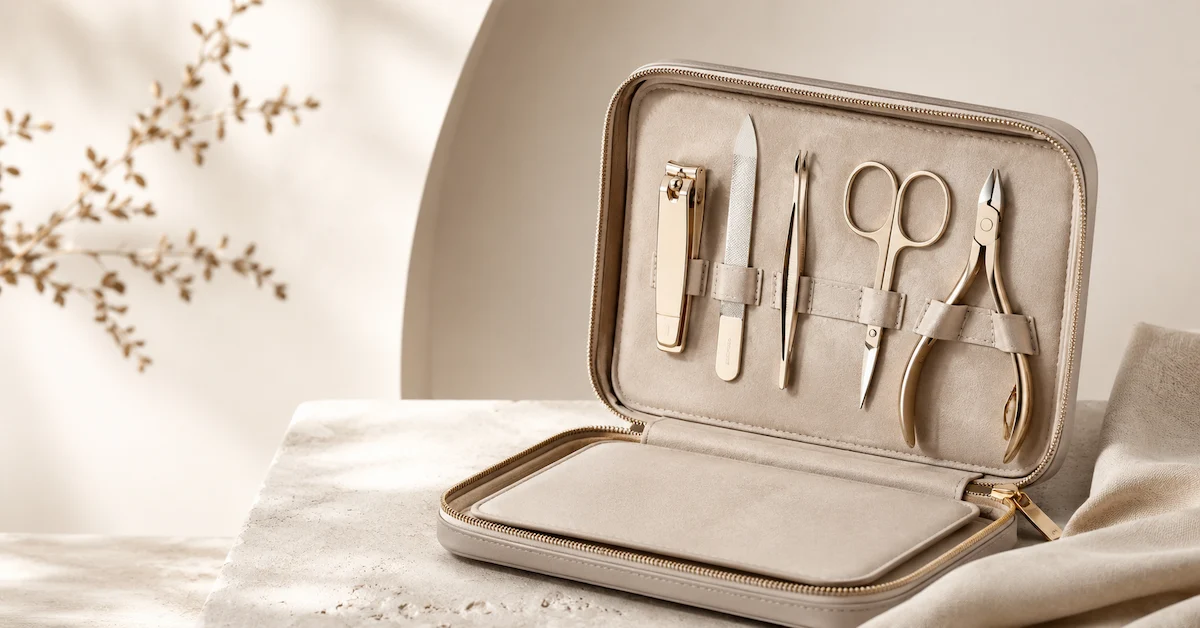
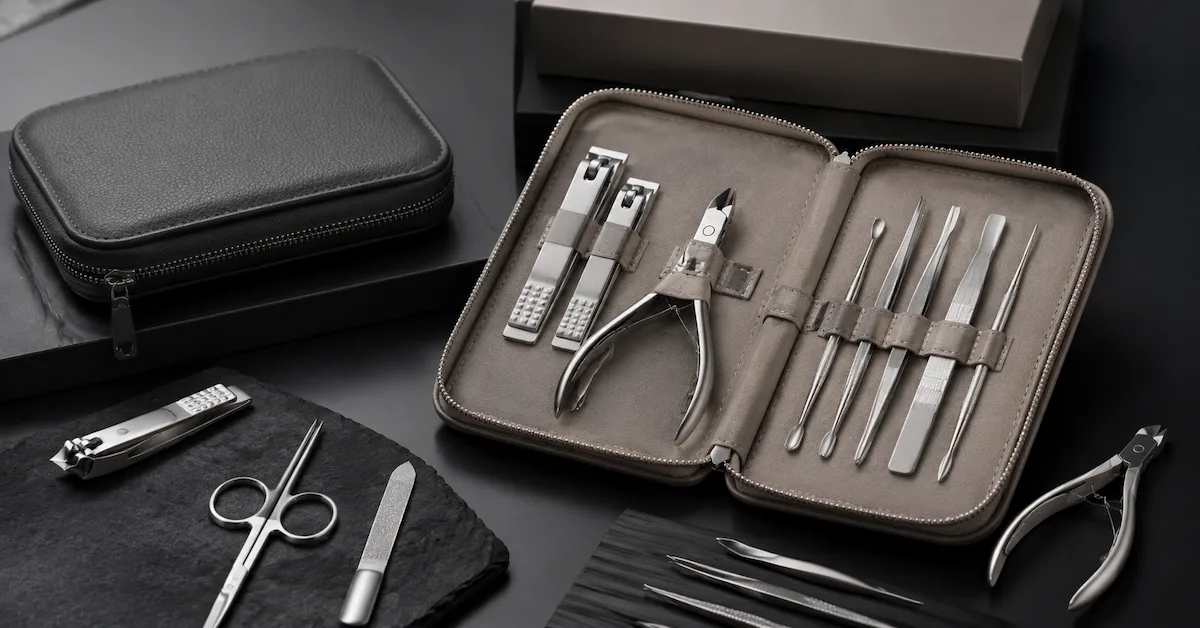
The product style described here is a portable personal grooming kit in a zippered carrying case. Visually, it follows a familiar clamshell format with rounded corners, a black textured exterior, and a beige suede-like or microfiber interior with stitched straps or loops. The tool mix appears to include nail clippers, a cuticle nipper, small scissors, tweezers, and several metal implements for cuticle care and light grooming. That layout is common for retail, travel, and promotional applications because it keeps the set compact while making the contents easy to see and use.
What a private label grooming kit usually needs to do well
When buyers source a private label grooming kit, the product has to do a few jobs at once. It must hold tools securely, travel without rattling apart, and look neat enough to justify a branded purchase. A well-executed case can make modest tools feel premium. A poor one does the opposite; even a decent clipper set can feel disposable if the zipper snags or the interior straps are loose.
For this category, the case is not just packaging. It is part of the product system. A rectangular clamshell case with a full zipper closure helps keep tools contained during transport. The stitched interior slots or loops are also important because they reduce movement and make the set easier to use after repeated opening and closing. For anyone planning retail distribution, that organization matters more than it may first appear. Customers notice whether the tweezers always return to the same pocket and whether the scissors sit flat instead of scraping against other pieces.
Typical structure of a custom grooming kit
Case construction
From a sourcing point of view, the outer shell is often the first item to define. The visible version here appears to use a black synthetic leather or PU-like exterior with a semi-rigid form. That gives the kit enough structure to hold its shape in a bag or drawer, while still staying lightweight. Some factories may build this kind of case with a cut-and-sew outer shell and stitched interior panels. Others may use molded or reinforced components. The exact method depends on price target and styling requirements, and buyers should ask early rather than assume one construction route.
The zipper is a small detail with outsized impact. In personal-care kits, a smooth closure is part of the user experience. A sticky zipper on a compact case feels worse than it sounds, especially when the product is sold as a gift or travel accessory. If the kit is intended for hospitality, airlines, or promotions, this is one of the first places to tighten the specification.
Tool assortment
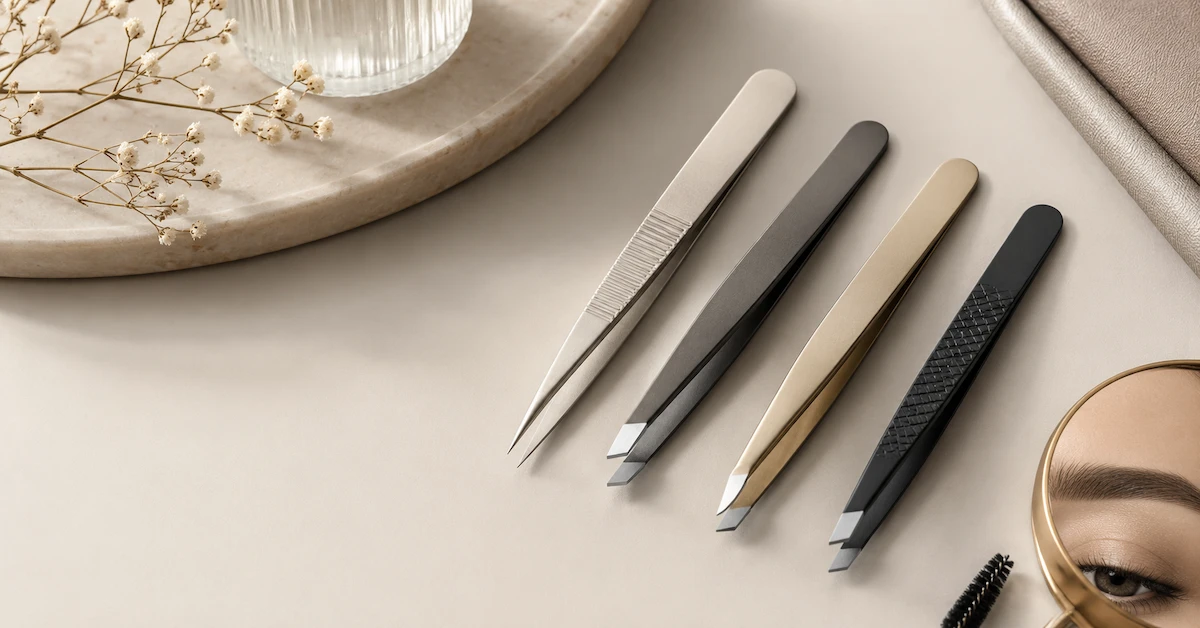
The visible tool mix is practical rather than ornamental. Nail clippers cover the most basic use case. Cuticle nippers and pushers address detail work. Tweezers and scissors broaden the kit’s utility. The presence of several slim metal implements suggests the set is intended to cover hand and foot grooming, not just nail clipping. That broader assortment is useful for e-commerce listings because it gives the buyer a clearer reason to choose a kit instead of a single tool.
Still, more tools are not automatically better. Some kits become crowded, and the user ends up ignoring half the contents. A good custom grooming kit manufacturer will usually help a buyer define the actual task set first: travel grooming, daily nail care, hotel amenity use, or gift retail. The right assortment follows from that decision.
Finish and presentation
The polished silver look on the metal tools is standard for this category, but the finish still matters. Consistency across the set creates a cleaner impression, especially when the tools are displayed against a light interior lining. Knurled or textured grip sections can be useful for handling, though they should not make the parts look mismatched. If the kit is being sold under a private label grooming kit program, that visual consistency becomes part of the brand language.
Where this product fits in the market
This is not a medical device and not a professional salon instrument kit in the strict sense. It sits in the broad consumer personal-care space: home grooming, travel use, gifting, and promotional retail. That makes it flexible, but also means the positioning has to be clear. Buyers need to decide whether they are targeting value shoppers, gift buyers, hospitality procurement, or online consumers looking for a compact everyday set.
In retail, a tidy case can support a higher perceived value than a loose blister pack. In hospitality, the case can be branded and paired with other amenity items. In e-commerce, the convenience story matters: one small case, several useful tools, easy storage. That is usually the strongest selling angle for a grooming kit with this form factor.
Selection criteria buyers should not skip
When evaluating a custom grooming kit manufacturer, buyers often focus on the tool list and forget the less visible risks. That is a mistake. The product may be small, but it still has multiple failure points.
Start with the case. Check whether it holds its shape when closed, whether the zipper tracks cleanly, and whether the interior lining is stitched securely around the tool retainers. Then look at tool fit. Tools that are too loose will shift during shipping. Tools that are too tight may be annoying to remove, which is just another form of bad design.
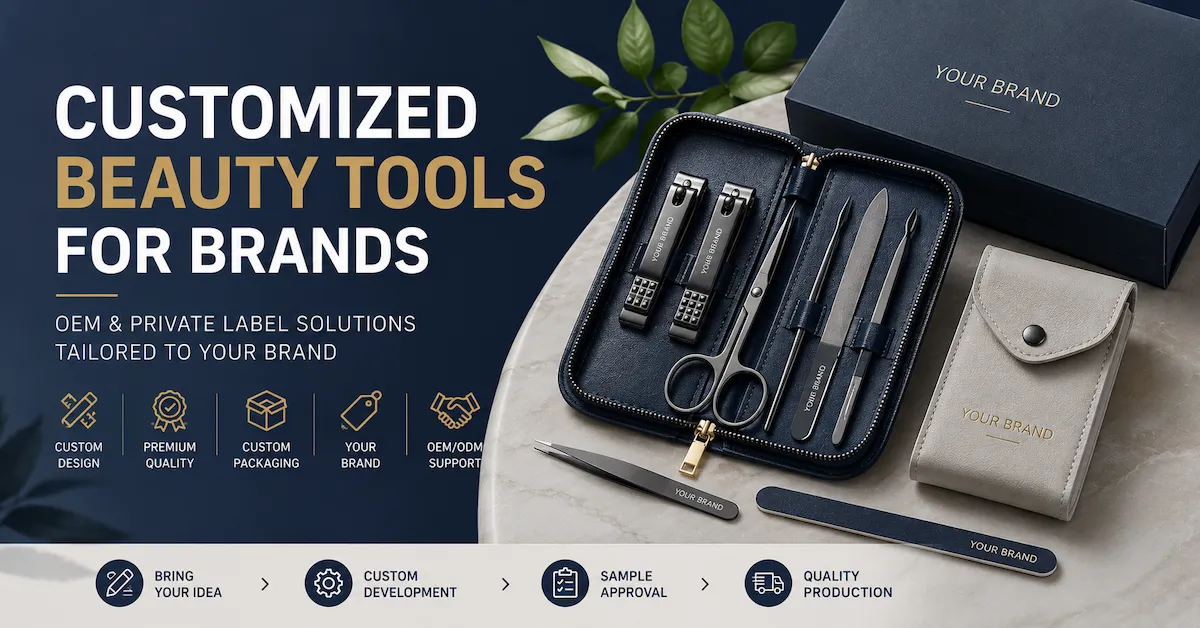
Next, review the branding method. Private label work can involve logo placement on the case, on the zipper pull, or on the outer packaging. Not every surface is suitable for every decoration method, and it is better to confirm that before tooling begins. Buyers should also ask how the kit will be packed for shipment. A neatly arranged grooming set can still arrive looking careless if the transit packaging allows the contents to move around.
Common mistakes in grooming kit sourcing
One common problem is over-specifying the set without checking whether the factory can assemble it efficiently. Extra parts, unusual holders, or mixed-metal finishes can slow production and raise the defect rate. Another is assuming that all “stainless-looking” tools are identical. In reality, surface finish, corrosion behavior, and tactile feel may vary, and those differences matter when the product is handled daily.
Another trap is treating the case as generic packaging. For a portable set, the case is part of the product’s value proposition. If it looks flimsy, the whole kit looks cheaper. If it is too bulky, it loses the travel advantage. Getting the balance right often means reviewing samples, not just catalog photos.
Buyers should also be careful with unrealistic claims. Unless a supplier has provided documentation, do not assume exact steel grade, durability numbers, or lifetime performance. For this category, the safest path is to specify the function, the visual standard, and the assembly requirements clearly, then verify them during sampling.
Practical advice for sourcing teams
If you are comparing a custom grooming kit manufacturer with a generic catalog supplier, ask which parts of the product are truly customizable. On some projects, the case shape, lining color, tool count, and logo treatment can be adjusted while the core tools remain standard. That can be a useful middle ground. It allows private label differentiation without reinventing every component.
If your goal is gifting or hospitality, spend more attention on the presentation finish than on adding one extra tool that nobody uses. If your goal is e-commerce, product photography and tool organization matter a great deal. Buyers online want to see what each item is and how the case closes. The visible compartments and organized layout do some of the selling for you.
For higher-volume programs, it is worth asking the factory how the tools are inserted, how the straps are sewn, and whether the case can be packed consistently at scale. Assembly labor can quietly shape the final unit economics more than expected. That is one of those practical details procurement teams learn to value after the first run, not before it.
FAQ
Is this type of kit suitable for travel?
Yes. The zippered case and compact layout make it suitable for travel, provided the tools are secured properly and the case is not overloaded.
Can this be sold as a private label item?
Very likely, yes. A private label grooming kit typically allows branding on the case and sometimes on the outer packaging, depending on the supplier’s setup.
What kind of buyers use these kits?
Common buyers include retail brands, e-commerce sellers, hotel and hospitality programs, and promotional gift buyers. Personal use is also a major market.
Should I prioritize the tools or the case?
Both matter, but the case often determines first impression and portability. The tools determine utility. A weak case can undermine a good tool set.
What to request before you place an order
Before committing to a production run, ask for a sample that reflects the final layout, not just a loose collection of similar parts. Confirm the case material description, the interior structure, the tool arrangement, and the branding location. If the order is meant for retail, review the product from a shelf-distance perspective as well as up close. Small grooming kits sell on compactness and clarity, not just on feature count.
For buyers who want a custom grooming kit manufacturer that can support private-label work, the smartest next step is to define the use case first: travel, gifting, hotel amenity, or e-commerce retail. Once that is fixed, the case format, tool mix, and packaging choices become much easier to control. If you are evaluating suppliers, start with a sample brief that lists the required tools, desired case style, branding method, and any packaging constraints. That gives manufacturers something concrete to quote against and reduces the usual back-and-forth later.