How to Choose a Custom Beauty Tools Manufacturer for Wholesale Grooming Kits
Choosing a custom beauty tools manufacturer is not only about finding a factory that can make tweezers, nail clippers, scissors or manicure accessories. For a retailer, salon supplier, private-label brand or distributor, the decision affects product consistency, user comfort, packaging presentation and repeat purchase confidence. Olimor Beauty works in the beauty-tools field with a focus on grooming tools that combine stainless steel construction, ergonomic design and internal quality control. If you are comparing sourcing options for manicure tools, grooming kits or custom beauty accessories, the most useful approach is to evaluate how well a supplier can support your product purpose, target customer and quality expectations.
This guide explains what to review before placing a wholesale beauty tools order, how to think about custom grooming kits, and which questions help separate a short-term supplier from a reliable manufacturing partner.
Start with the user: salon, retail or personal care?
Before discussing packaging, colors or assortment, define who will use the tools and how often. A salon buyer may prioritize durability, easy cleaning and precise performance. A retail customer may compare the kit by appearance, perceived value and portability. A personal-care brand may need a balanced set that looks consistent across several grooming items. These use cases lead to different sourcing decisions.
For example, a compact grooming kit for travel should focus on a practical selection of tools, secure storage and simple organization. A manicure-focused retail set may require clippers, cuticle tools, nail files and tweezers arranged clearly in minimalist packaging. A salon supply program may place more weight on tool feel, repeatable finish and inspection standards. Clarifying the use case early helps prevent a common mistake: adding more tools than the customer needs while neglecting the details that affect everyday use.
What quality means in stainless steel beauty tools
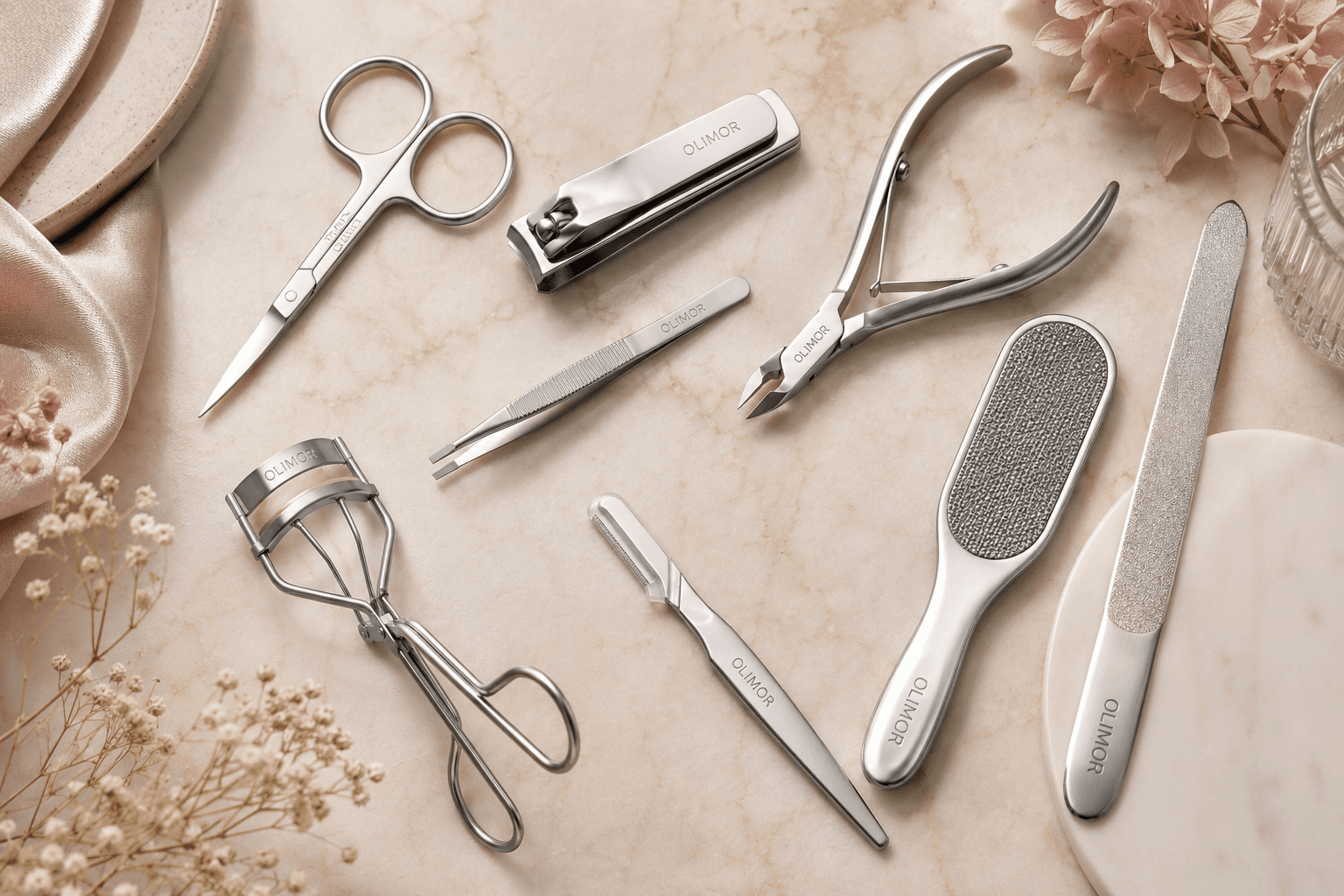
The original purpose of most grooming tools is simple: they must cut, trim, grip, file or shape cleanly and comfortably. Stainless steel is commonly valued in beauty tools because it supports a clean appearance and can be manufactured into precise working edges. However, buyers should look beyond the material name alone. A strong sourcing review considers how each tool feels in the hand, whether edges are finished safely, whether moving parts open and close smoothly, and whether the visible surface meets the standard expected by your market.
When comparing wholesale grooming tools, review samples under realistic conditions. Open and close clippers repeatedly. Check whether tweezers meet evenly at the tip. Inspect nail tools for burrs, rough corners or inconsistent polishing. Hold each item as an end user would. Ergonomic design is not only a marketing phrase; it affects whether a tool feels controlled, balanced and suitable for repeated use.
- Grip and comfort: Tools should be easy to hold without sharp or awkward pressure points.
- Working function: Cutting, trimming or gripping parts should align properly and operate smoothly.
- Surface finish: Look for consistent polishing, clean edges and no visible contamination.
- Kit consistency: Items in the same set should look like they belong together in finish and proportion.
- Packaging fit: Each tool should stay organized and protected during normal handling and shipping.
Custom beauty tool kits: decisions that shape the final product
Customization should make a beauty tool kit more relevant to your customers, not more complicated than necessary. Useful customization usually begins with assortment. Decide whether the set should focus on manicure, general grooming, eyebrow care, travel use or a broader personal-care routine. A focused kit often communicates value better than a large kit with duplicate or rarely used items.
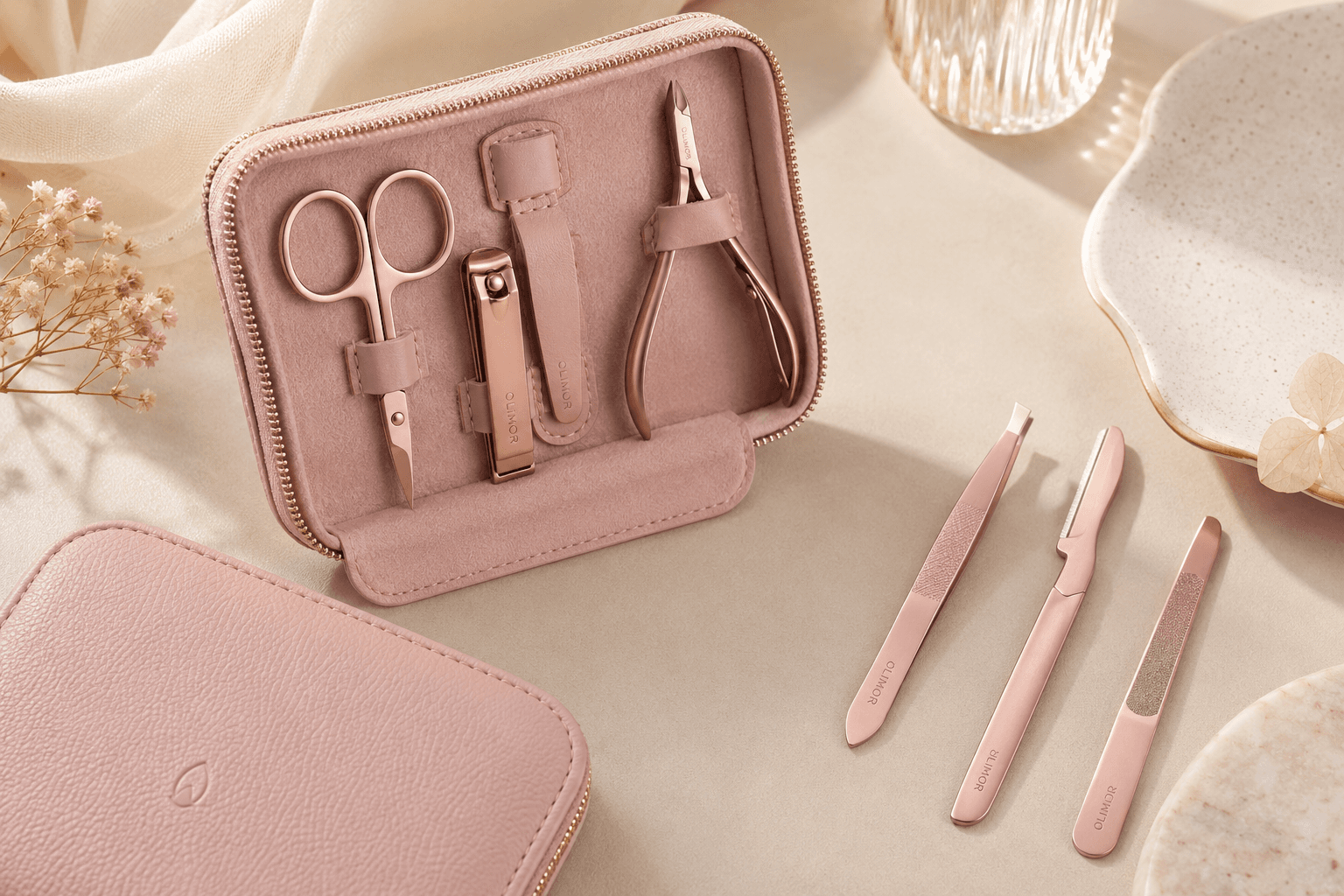
Packaging is another important decision. The supplied article notes sleek, minimalist packaging, which can work well for modern retail environments because it keeps attention on the tools and avoids visual clutter. Still, packaging should match the sales channel. E-commerce packaging must protect the product and photograph well. Retail shelf packaging should communicate contents quickly. Salon supply packaging may prioritize efficient storage and easy identification.
For branding, keep practical limitations in mind. A buyer checklist should include logo placement, packaging artwork, finish preferences, instruction inserts, barcode needs and market language requirements. These are not decoration-only choices; they affect production planning, inspection and the customer’s first impression when opening the kit.
How to compare grooming tools wholesale suppliers
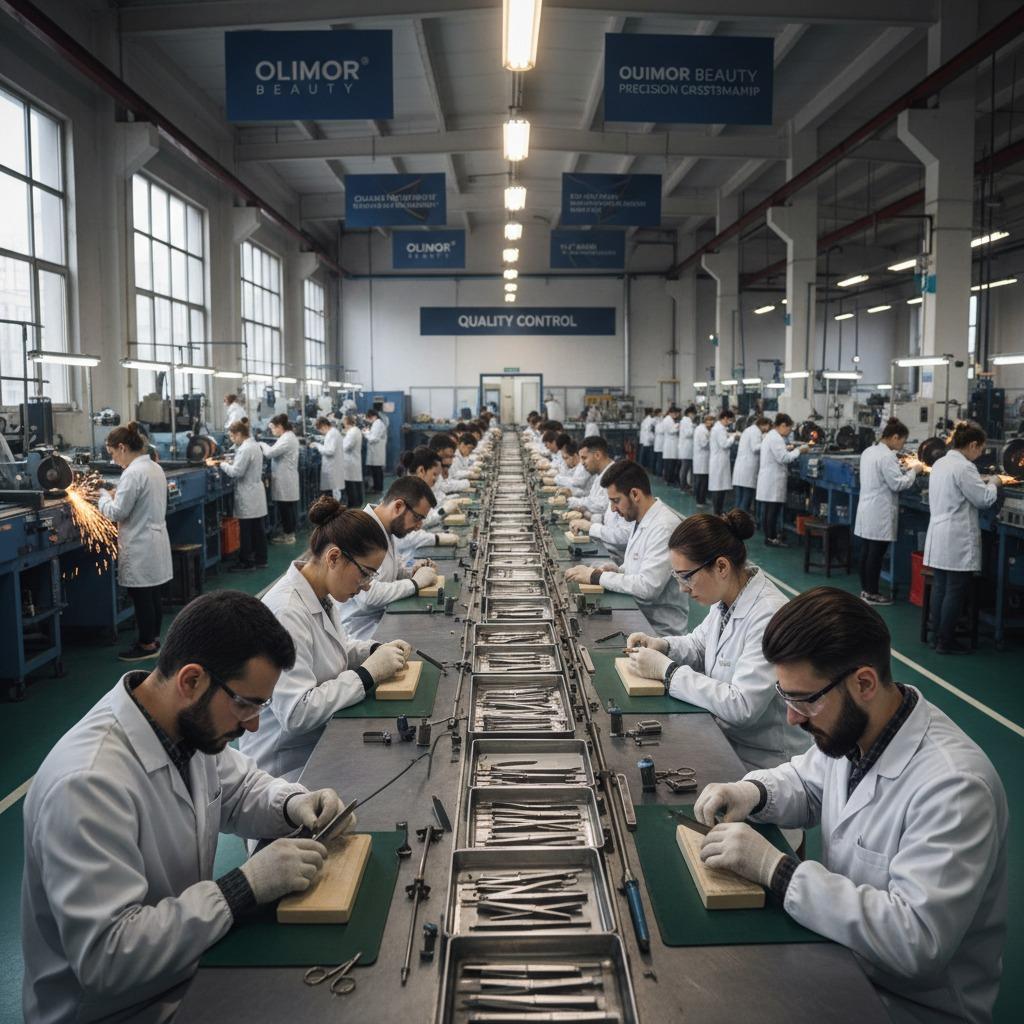
A beauty tools supplier from China can be a strong sourcing option when the supplier has clear production control, sample review processes and a practical understanding of wholesale buyer needs. Olimor Beauty positions quality assurance as part of each production step, from raw materials through final packaging inspection. For buyers, the important point is to translate that commitment into reviewable checkpoints before an order is confirmed.
The table below outlines sourcing criteria that help structure supplier comparisons without relying on vague claims.
| Review area | What to check | Why it matters |
|---|---|---|
| Tool function | Cutting feel, tweezer alignment, hinge movement and edge finishing | Determines whether customers experience the tool as precise and comfortable |
| Material and finish | Stainless steel appearance, polishing consistency and visible defects | Supports product presentation and perceived reliability |
| Ergonomics | Grip, hand fit and ease of control during normal use | Reduces frustration and improves repeat use |
| Packaging | Tool placement, closure security, artwork clarity and protection | Affects retail appeal, shipping condition and unboxing experience |
| Inspection process | Incoming material checks, in-process review and final packaging inspection | Helps reduce inconsistent shipments and after-sale complaints |
Quality control questions to settle before production
Quality control is most effective when expectations are clear before manufacturing begins. Instead of using only broad terms such as “high quality,” define the acceptance points that matter for the exact tool set. For a manicure kit, the buyer may need to specify acceptable surface condition, packaging cleanliness, tool quantity per kit, logo placement and how functional defects will be identified. For tweezers, tip alignment may be critical. For nail clippers, cutting performance and lever action may matter most.
A practical pre-production checklist can include the following steps:
- Confirm the tool assortment and intended use case for the kit.
- Review physical samples for function, finish, comfort and packaging fit.
- Approve artwork, logo position and any printed packaging details.
- Define inspection points for tool function, surface finish and complete set assembly.
- Confirm how finished goods will be packed to protect the kit during transport.
This process helps both sides work from the same standard. It is especially important for custom beauty tools because the final product is usually a combination of metal tools, packaging materials and brand presentation. A weakness in any one part can affect the buyer’s overall perception of the product.
When Olimor Beauty is a relevant sourcing fit
Olimor Beauty is relevant for buyers looking for custom beauty tools, high-quality grooming tools wholesale and beauty tool supply from China. The product direction described for Olimor Beauty emphasizes stainless steel tools, ergonomic design, salon-quality grooming use and strict internal quality controls. That makes the company a suitable point of comparison for businesses building retail grooming kits, manicure tool assortments or personal-care product lines.
If you are still defining your assortment, review the broader range of beauty tool products to understand possible tool categories before finalizing a kit. If your project requires a curated selection for a specific channel or audience, browsing product collections can help organize your sourcing brief around real product groupings rather than abstract ideas.
Building a stronger sourcing brief
A clear sourcing brief saves time and improves sample quality. Include your target customer, sales channel, desired tool assortment, packaging direction, expected finish style and any compliance or labeling needs for your market. Avoid sending only a competitor photo without explaining what you want to keep or improve. A manufacturer can respond more accurately when the brief explains the product goal, not just the appearance.
For a retail grooming kit, your brief might describe a minimalist case, a practical manicure-focused selection, stainless steel tools and clean packaging suitable for online product photography. For a salon supply kit, you might emphasize grip comfort, functional precision and durable organization. For a giftable personal-care set, visual consistency and packaging presentation may become more important.
When you are ready to discuss a custom grooming tools project, you can send an inquiry with your assortment, packaging and quality expectations. For broader questions about sourcing direction, use contact Olimor to start a conversation with the team.
Final thoughts for wholesale buyers
The best custom beauty tools manufacturer for your business is the one that can match tool function, packaging, inspection and customer expectations in a repeatable way. Stainless steel construction, ergonomic design and internal quality control are valuable starting points, but buyers should still review samples carefully and define standards before production. By focusing on the user, selecting a practical tool assortment and setting clear inspection criteria, you can source grooming kits that feel coherent, useful and ready for your market.
Tag: