

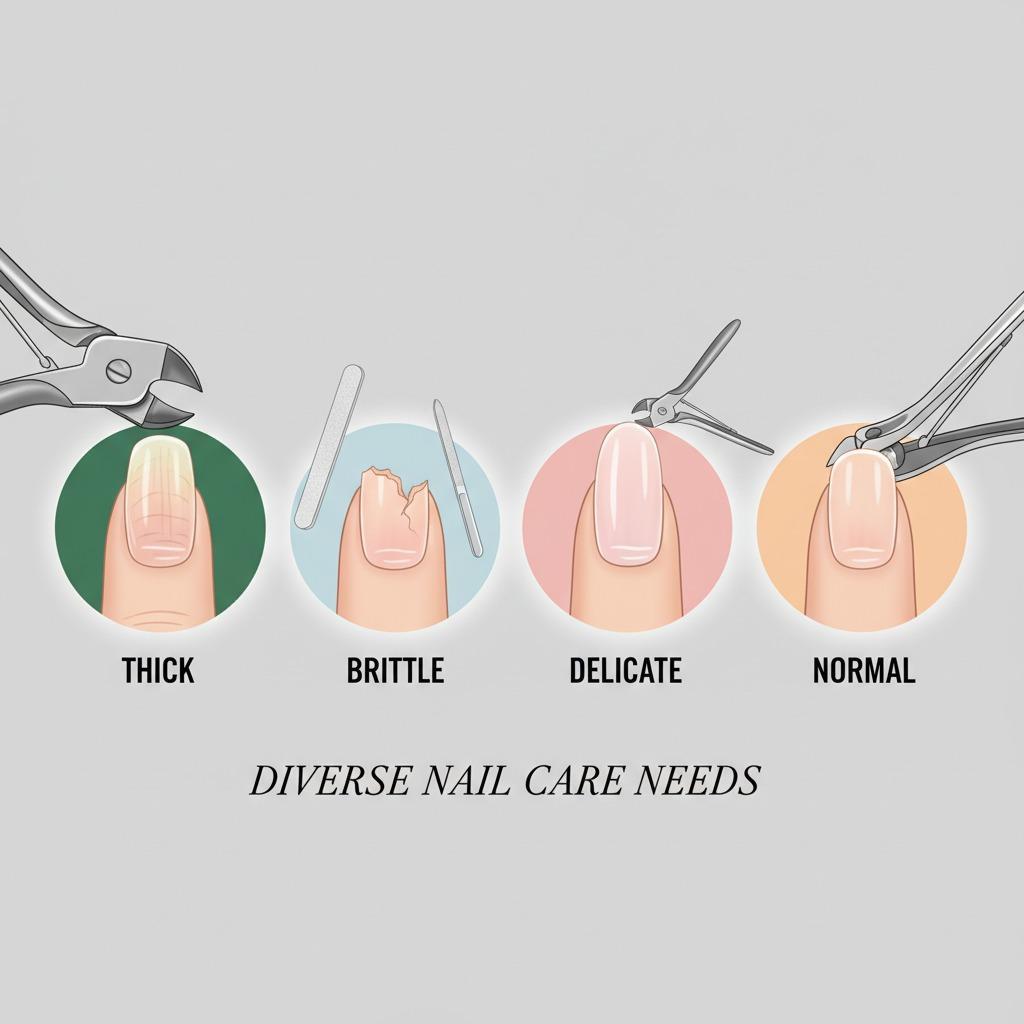
Choosing Nail Clippers for Different Nail Types
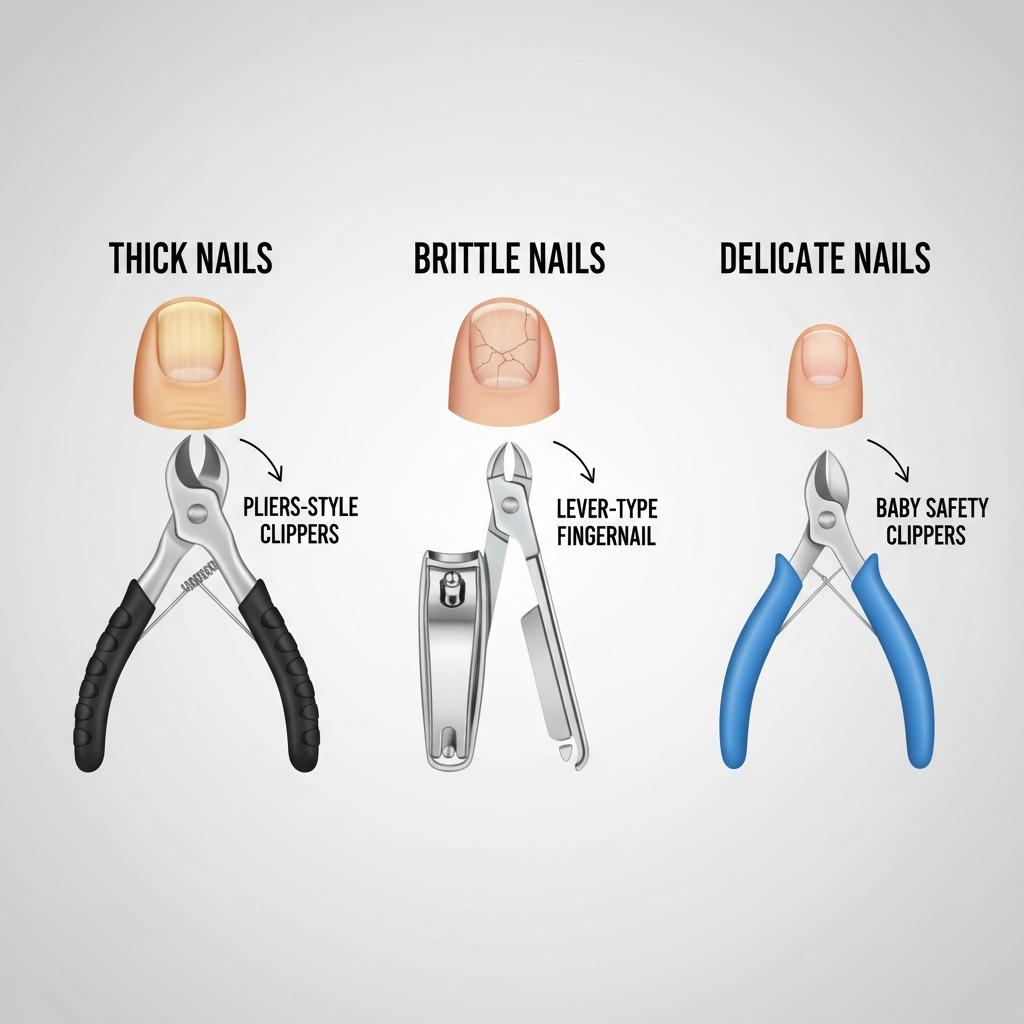
The right nail clipper is not only about sharpness. Nail thickness, brittleness, curvature, hand strength, and whether you are trimming fingernails or toenails all affect how cleanly the blade cuts. A clipper that works well on thin fingernails may struggle on dense toenails, while an overly aggressive tool can worsen splitting on fragile nails. For buyers comparing nail clippers, the best choice is the one that matches the nail type, feels controlled in the hand, and is easy to keep clean between uses.
Olimor Beauty focuses on practical beauty tools for daily grooming and sourcing needs. If you are selecting tools for personal use, retail assortments, salons, travel kits, or promotional grooming sets, this guide will help you evaluate nail clippers in a more specific way than simply choosing the smallest or cheapest option. You can also browse broader beauty tool products to compare related grooming items.
Start with the Nail Type, Not the Clipper Size
Many people choose nail clippers by size first: small for hands, large for feet. That rule is useful, but incomplete. Nail structure matters just as much. Thick nails need a clipper that can apply even pressure without twisting. Brittle nails need a blade that cuts cleanly without crushing the free edge. Delicate or thin nails need control, because too much leverage can take off more nail than intended.
Before buying, look at the nails the tool will be used on most often. Are they soft after bathing, hard and dry, naturally curved, prone to peeling, or difficult to reach? For family grooming kits or retail shelves, it can be sensible to offer more than one clipper format so different users are not forced to use the same tool for every job.
- Thick nails: require stable alignment, strong leverage, and a blade opening that fits the nail edge comfortably.
- Brittle nails: benefit from precise, sharp cutting edges that reduce crushing and ragged edges.
- Thin or delicate nails: need a controllable clipper with a comfortable grip and moderate cutting pressure.
- Curved nails: require careful trimming in small cuts rather than one deep cut across the full nail.
- Toenails: usually need a larger, sturdier tool than fingernails because the nail plate is denser.
Best Clipper Features for Thick Toenails
Thick toenails are the most demanding use case for a standard nail clipper. The tool should feel stable when pressure is applied, and the lever should not flex excessively. A clean cut is important because repeated squeezing can leave rough edges that catch on socks or shoes. Stainless steel is a common choice for nail clippers because it offers durability and is suitable for regular cleaning when cared for properly.
For thick nails, avoid making one large cut from corner to corner. Instead, trim in several small sections. This reduces stress on the nail and helps the clipper stay aligned. If the nail is extremely hard, trimming after a shower or foot soak can make the process easier. The goal is to shorten the nail evenly while leaving enough edge to avoid cutting into the skin.
When evaluating clippers for thick nails, check whether the jaw opening accommodates the nail without forcing it in. Also examine how the blade tips meet. They should close evenly; uneven contact can cause tearing or partial cuts. For product sourcing, this is a practical inspection point because a clipper may look polished but still perform poorly if the blade alignment is inconsistent.
Choosing Clippers for Brittle, Splitting, or Peeling Nails
Brittle nails need a different approach. The priority is not maximum force; it is clean separation. A dull or poorly aligned clipper can compress the nail before cutting it, which may leave layers split at the edge. People with brittle nails should trim in small increments and finish with a gentle file rather than trying to create the final shape with the clipper alone.
For this nail type, blade refinement and control matter. The clipper should close smoothly without requiring sudden pressure. If the lever action feels jerky, the user may overclip. A secure grip is also important because slipping can turn a simple trim into a jagged edge or a cut too close to the nail bed.
Retailers and beauty buyers should consider how the product will be described to customers. Instead of vague claims, focus on selection criteria: stainless steel construction, comfortable handling, smooth lever movement, and clean blade contact. These details help customers understand why one clipper may be more suitable for fragile nails than another.
Delicate Fingernails Need Control and Visibility
Thin fingernails are easier to cut, but they are also easier to overtrim. A compact clipper can be helpful because it allows the user to see the edge clearly and make small adjustments. The cutting motion should feel predictable, especially for users maintaining short nails, children’s nails under adult supervision, or detailed manicure shapes.
For delicate nails, avoid using a large toenail clipper just because it is nearby. Larger tools often create more leverage than needed and can remove too much nail quickly. A smaller clipper with a comfortable lever gives better control around corners and helps maintain a smooth free edge.
If nails are thin and flexible, clipping straight after soaking may make them bend rather than cut cleanly. In that case, waiting until the nails are dry can improve precision. After clipping, a light filing step can smooth any tiny corners that might snag.
How to Compare Nail Clippers Before Buying
A good nail clipper buying decision combines material, blade alignment, ergonomics, intended use, and maintenance. The table below summarizes practical selection points for different users and nail conditions.
| Nail or user need | Clipper feature to prioritize | Why it matters |
|---|---|---|
| Thick toenails | Sturdy lever and suitable jaw opening | Helps the blade cut without twisting or repeated squeezing |
| Brittle nails | Clean blade contact and smooth action | Reduces crushing, rough edges, and splitting |
| Delicate fingernails | Compact size and controlled grip | Improves visibility and lowers the risk of overtrimming |
| Travel grooming | Portable format and easy cleaning | Makes the tool practical for toiletry kits and repeat use |
| Retail or salon sourcing | Consistent finish, alignment, and packaging suitability | Supports customer satisfaction and easier assortment planning |
For business buyers building a grooming category, it is also useful to compare nail clippers alongside other product collections. This can help create a more complete manicure or personal care offering without mixing tools that serve very different user needs.
Ergonomics: Comfort Is Also a Safety Factor
Ergonomic nail clippers are often discussed in terms of comfort, but the bigger benefit is control. A lever that is easy to press helps users avoid sudden force. A grip that does not slip helps keep the cutting edge where it belongs. This is especially important for toenails, older users, or anyone trimming with less hand strength.
When assessing ergonomics, hold the clipper as it would be used, not just as it appears in packaging. The pressure point should feel natural under the thumb or finger. The tool should not require awkward wrist angles, and the body should remain steady when the blades close. For sourcing, sample evaluation should include actual trimming tests where appropriate, because visual inspection alone cannot show how the clipper performs under pressure.
A compact tool may be ergonomic for small hands but less comfortable for users with larger hands. Conversely, a larger clipper may be easy to press but too bulky for precise fingernail work. The best assortment may include both formats so customers can select by use case.
Care, Cleaning, and Replacement Habits
Even a well-made stainless steel nail clipper performs better when it is kept clean and dry. Nail dust and residue can collect near the hinge or blades, affecting the cutting feel over time. After use, remove visible debris, wipe the tool dry, and store it away from constant moisture. If the clipper is shared, clean it between users according to appropriate hygiene practices for the setting.
- Trim nails in small cuts rather than forcing one deep cut.
- Wipe the clipper after each use, especially around the blade and hinge.
- Dry the tool before storage to reduce moisture exposure.
- Do not use nail clippers to cut wire, tags, or hard non-nail materials.
- Replace the clipper when the blades feel dull, misaligned, or rough during cutting.
For salons, retailers, and distributors, maintenance expectations should influence product selection. A clipper that is difficult to clean may not be ideal for repeated use. A tool with a simple, durable structure can be easier for customers to understand and care for.
Questions for Bulk or Private-Label Sourcing
If you are buying nail clippers for a retail line, gift set, salon supply program, or promotional kit, the purchase decision extends beyond the blade. Think about the target user, packaging environment, and how the clipper will be positioned. A travel kit may need compactness, while a foot care set may need a stronger toenail-focused format. A manicure set may require visual consistency with other tools.
Useful sourcing questions include: What nail type is the clipper intended for? How consistent is the blade alignment across samples? Does the lever feel smooth after repeated opening and closing? Is the finish appropriate for the price point and sales channel? Does the packaging protect the cutting edge during shipping and display? These questions are more valuable than relying on broad claims.
To discuss available options for nail clippers or related grooming tools, you can send an inquiry with your intended use, target market, and packaging needs. For general questions about product selection, you can also contact Olimor.
The Bottom Line: Match the Tool to the Nail
Choosing nail clippers for different nail types is a practical decision. Thick toenails need strength and stable alignment. Brittle nails need clean cutting edges and a smooth action. Delicate fingernails need control, visibility, and moderate pressure. Across all nail types, stainless steel construction, comfortable handling, and easy cleaning are sensible criteria.
Whether you are replacing a personal grooming tool or comparing options for a product assortment, start with the nail problem the clipper must solve. A well-chosen clipper makes trimming cleaner, reduces unnecessary stress on the nail edge, and gives users more confidence in everyday nail care.
Tag: