How to Choose a Tweezers Supplier for Professional Lash Work
For lash artists, beauty distributors, salon owners, and private-label tool brands, tweezers are not a minor accessory. They directly affect pickup control, fan creation, isolation, hand comfort, application speed, and the consistency of the finished lash set. A dependable tweezers supplier should therefore be evaluated on more than appearance or catalog variety. The right partner must understand precision lash work, offer stable manufacturing control, and support practical customization without compromising tool performance.
Olimor Beauty supplies high-precision eyelash extension tweezers crafted from premium stainless steel, with attention to durability, tip accuracy, and ergonomic handling. For businesses considering tweezers OEM projects or custom tool development, the most important step is knowing what to evaluate before placing an order. This guide explains the selection criteria that matter when sourcing professional lash tweezers and planning a custom design.
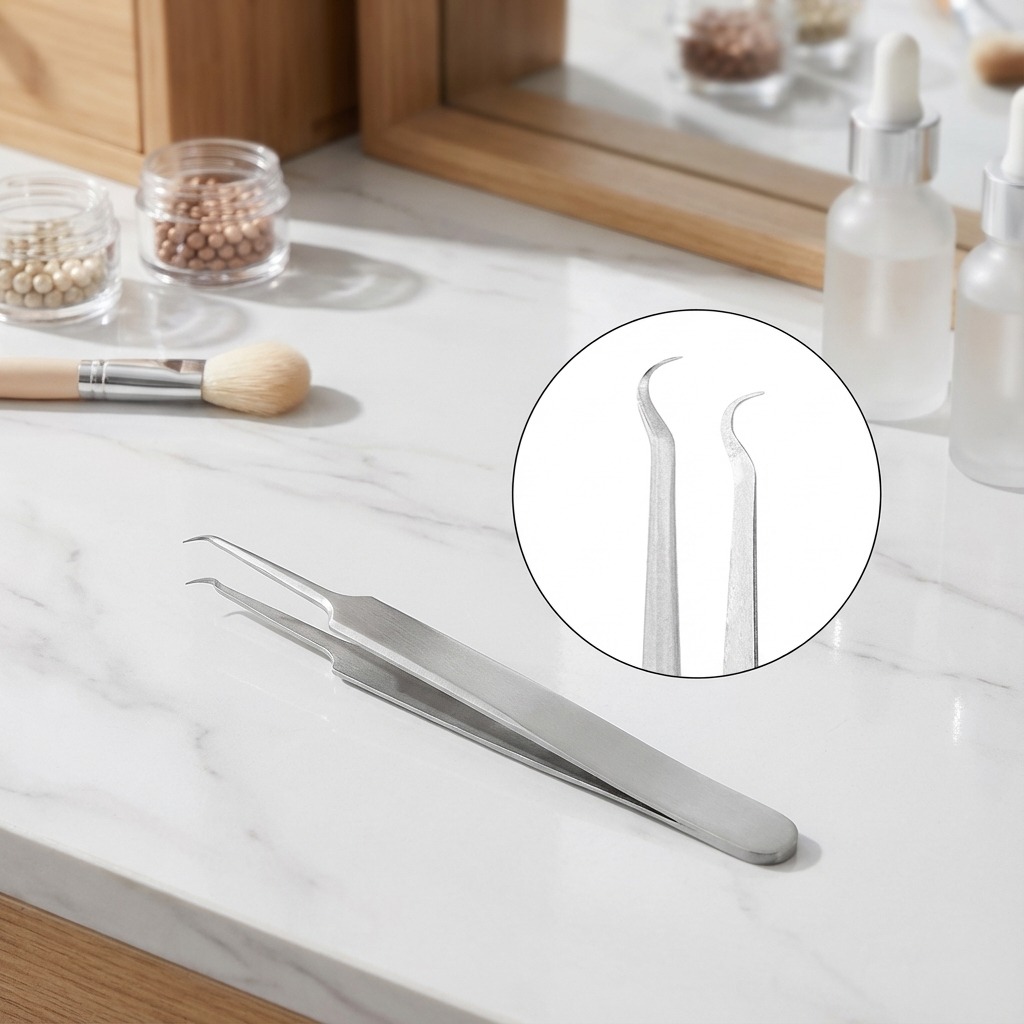
Why Lash Tweezers Require a Specialist Supplier
Lash extension tweezers are used for repeated, detailed movements: isolating natural lashes, picking up fine extensions, making handmade fans, and placing lashes close to the lash line. A small flaw in tip alignment or closing tension can make a tool unreliable in daily salon use. For that reason, sourcing lash tweezers from a general beauty tool vendor may not provide the level of consistency a professional team needs.
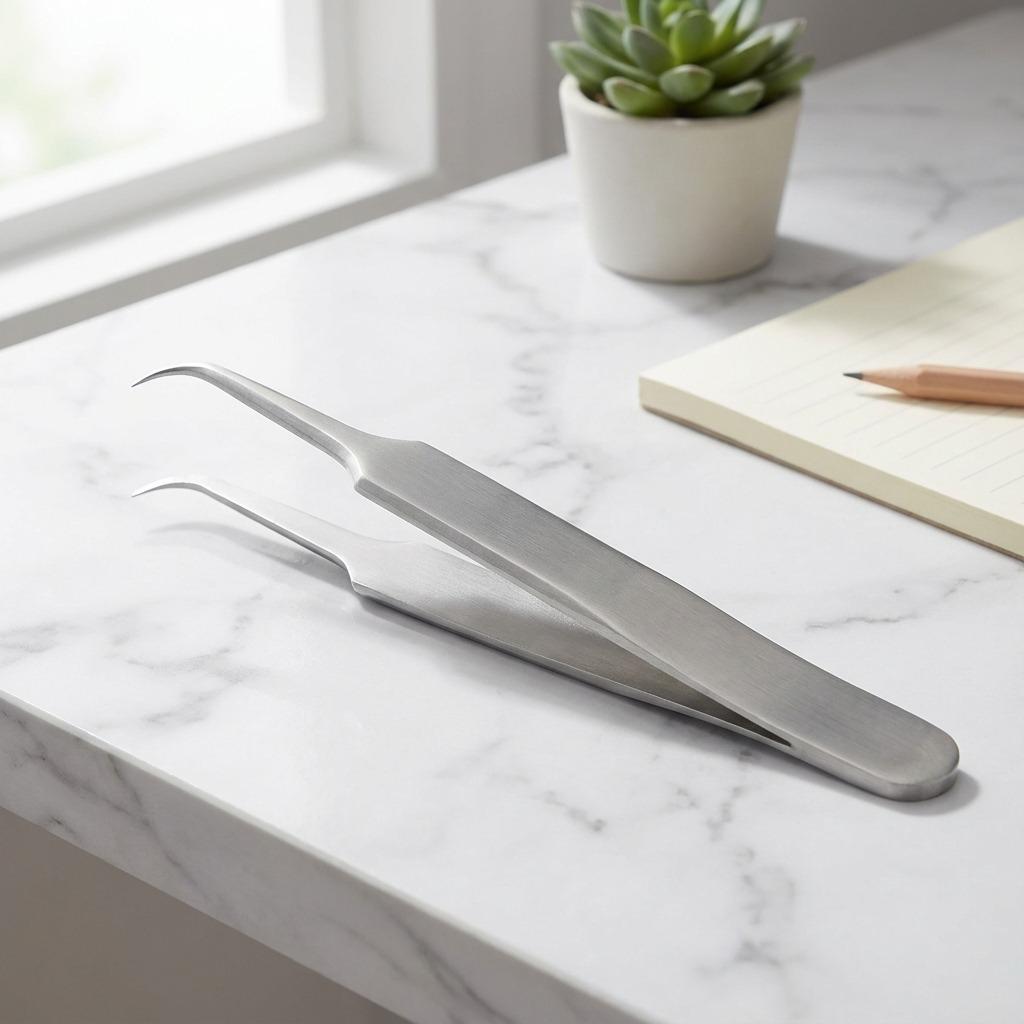
A specialist tweezers supplier should understand how different applications affect tool choice. Isolation tweezers need clean separation and visibility. Volume tweezers require a dependable grip point for fan pickup. Curved tweezers must balance reach, stability, and hand position. Olimor Beauty focuses on high-precision eyelash extension tweezers, including designs with slender, curved tips for superior grip and ergonomic comfort to help reduce hand fatigue during extended sessions.
When evaluating any supplier, look beyond the product photo. A well-polished tweezer can still perform poorly if the tips do not meet evenly or if the grip area is inconsistent. Professional users need tools that feel predictable across multiple pairs, especially when stocking teams, training new technicians, or selling under a private label.
Key Performance Factors to Compare Before Buying
Before choosing a tweezers supplier, create a clear checklist based on real working conditions. The best tweezer is not necessarily the sharpest-looking one; it is the one that gives the lash artist control, repeatability, and comfort across a full appointment schedule.
- Tip alignment: The tips should meet cleanly so fine lashes can be gripped without slipping or crushing.
- Closing tension: Tension should feel stable enough for control but not so stiff that it causes hand fatigue.
- Grip point consistency: Volume lash artists often rely on a specific area of the tip to pick up fans. Inconsistent grip points create frustration.
- Tip shape: Straight, curved, angled, and slender tips support different tasks. Choose based on application technique rather than appearance alone.
- Material and finish: Premium stainless steel supports durability and a professional finish, but buyers should still review surface quality and edge finishing.
- Ergonomics: A comfortable handle shape and balanced weight can reduce strain during long lash sessions.
- Inspection and packaging control: Reliable tweezers need quality checks from raw materials through final packaging, not only a quick visual review before shipment.
For established salons and resellers, it can help to test tweezers with more than one technician. Hand size, working angle, and preferred lash technique can change how a tweezer feels. A tool that performs well for classic isolation may not be the best choice for volume fan pickup, so build your sourcing decision around actual use cases.
Understanding Tweezers OEM Services
Tweezers OEM services are useful for beauty brands, distributors, training academies, and salon chains that want tools aligned with their own product identity. OEM work may involve design preferences, packaging direction, finish decisions, or tool selections that match a professional audience. The goal is not only to add a logo; it is to create a tool line that feels coherent and performs reliably in use.
Olimor Beauty provides tweezers OEM options for businesses seeking customized solutions while maintaining internal quality control from raw materials to packaging. This matters because customization should not weaken the fundamentals of the tool. A tweezer can have attractive branding, but if the tip closure is unstable or the tension varies from pair to pair, customers will notice quickly.
When planning an OEM tweezer project, prepare information that helps the supplier understand the target user. For example, are the tools intended for beginner lash students, experienced volume artists, salon retail, or professional distributors? Will the line focus on isolation, classic application, volume pickup, or a mixed toolkit? Clear usage goals help guide shape selection, finish decisions, and packaging expectations.
You can also review related beauty tool products to compare how different tool categories are presented and organized. If your brand needs a broader sourcing plan, browsing product collections can help you think about how tweezers fit alongside other lash and beauty tools.
Design Your Own Tweezers: Practical Choices That Matter
The phrase “design your own tweezers” should be treated as a functional process, not just a visual customization project. A successful design starts with the work the tool must perform. For eyelash extensions, details such as tip length, curve, handle width, closing resistance, and contact point can all change the user experience.
For intricate eyelash extension work, Olimor Beauty supports customization concepts that include slender, curved tips for better grip and ergonomic design for improved dexterity. These characteristics can help minimize slipping and support more efficient lash placement. However, the best design depends on the intended technique. A curved tweezer may support certain pickup angles, while another shape may be preferred for isolation or close-area control.
Use the following planning sequence before finalizing a custom tweezer concept:
- Define the main application. Decide whether the tweezer is for isolation, classic placement, volume fan pickup, or mixed professional use.
- Choose the tip profile around technique. Match straight, curved, angled, or slender tips to the way artists hold and position the tool.
- Evaluate hand comfort. Consider session length, grip pressure, and whether technicians may use the tool for multiple appointments per day.
- Review branding needs carefully. Custom appearance should not interfere with surface finish, cleaning, packaging, or daily handling.
- Confirm inspection priorities. Tip alignment, closure, finish, and packaging condition should be part of the quality review.
This approach helps prevent a common OEM mistake: choosing a tweezer primarily because it looks distinctive, then discovering that the working grip does not suit the target customer. For professional lash tools, performance should lead the design process.
Quality Control From Materials to Packaging
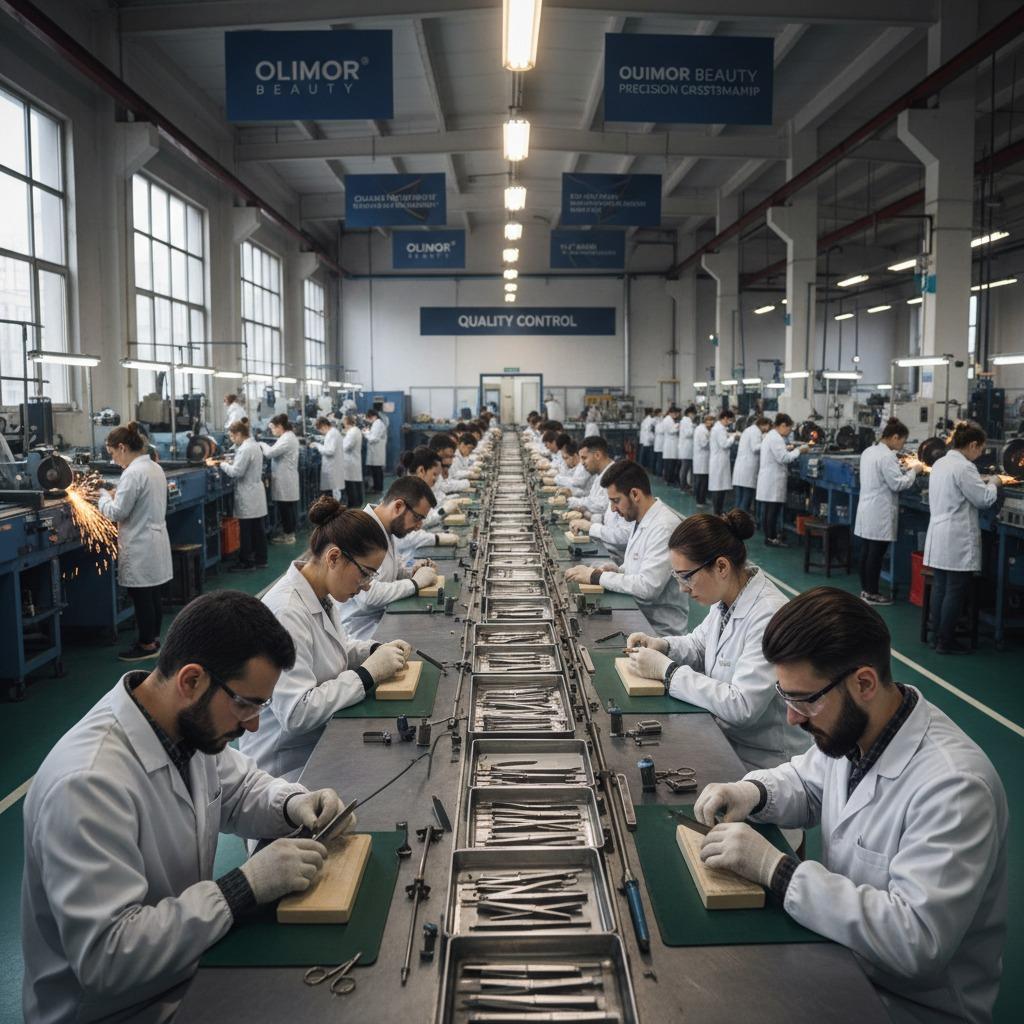
In tweezer sourcing, quality control must be systematic. Olimor Beauty emphasizes stringent internal quality control from raw materials to packaging, which is important for brands that need dependable repeat orders. Buyers should think about quality in stages: material selection, forming, tip finishing, polishing, tension feel, final inspection, and protective packaging.
Packaging is sometimes overlooked, but it matters for both protection and customer experience. Tweezers have fine tips that can be damaged by poor handling or inadequate packaging. If a pair arrives with misaligned tips, the tool may be unusable even if the manufacturing was originally correct. For brands selling to salons or end users, packaging also communicates care and professionalism.
Because exact requirements vary by market and product positioning, build a neutral inspection checklist rather than relying on assumptions. Useful checkpoints include whether the tips meet evenly, whether the surface finish is smooth, whether the tool opens and closes cleanly, whether the tension is comfortable, and whether packaging protects the tips during storage and transport.
Sourcing Questions for Salons, Distributors, and Private-Label Brands
The best sourcing conversations are specific. Instead of asking only for “good tweezers,” describe the application, buyer profile, and expected use. A salon owner may need a reliable set of tools for daily appointments. A distributor may need consistent product presentation across repeat orders. A private-label brand may need OEM support and customization guidance.
Before you compare suppliers, prepare answers to these questions:
- Which lash technique will the tweezers support most often?
- Do users prefer curved, straight, angled, or slender tip styles?
- Will the product be used by beginners, experienced artists, or both?
- Is the priority isolation, pickup control, fan making, or all-around utility?
- What branding or packaging elements are necessary for the sales channel?
- What inspection points are most important for your customers?
- How will the tweezers be stored, displayed, and shipped after purchase?
These questions make it easier to compare suppliers on capability rather than only price. A low-cost tweezer that causes slipping, fatigue, or frequent complaints can become expensive through returns, replacements, and customer dissatisfaction. A professional supplier should help you align tool selection with real working needs.
Why Work With Olimor Beauty for Tweezers Supply
Olimor Beauty is positioned for beauty professionals and businesses that need precise, durable eyelash extension tweezers with customization support. The company’s focus on premium stainless steel tools, ergonomic comfort, slender curved tip options, and internal quality control makes it a practical partner for salons, distributors, and OEM beauty tool projects.
If you are building a professional lash toolkit, expanding a beauty tool line, or planning a private-label tweezer range, start with the performance requirements first. Define the technique, hand-feel expectations, tip shape, and packaging needs before finalizing the design. This creates a stronger foundation for both daily salon performance and long-term customer trust.
To discuss tweezers OEM options or a design your own tweezers project, you can contact Olimor with your intended application and customization goals. If you are ready to share sourcing details, you may also send an inquiry for further communication about suitable beauty tool solutions.
Tag: