Buy Tweezers in Bulk: A Practical Wholesaler Guide for Beauty Buyers
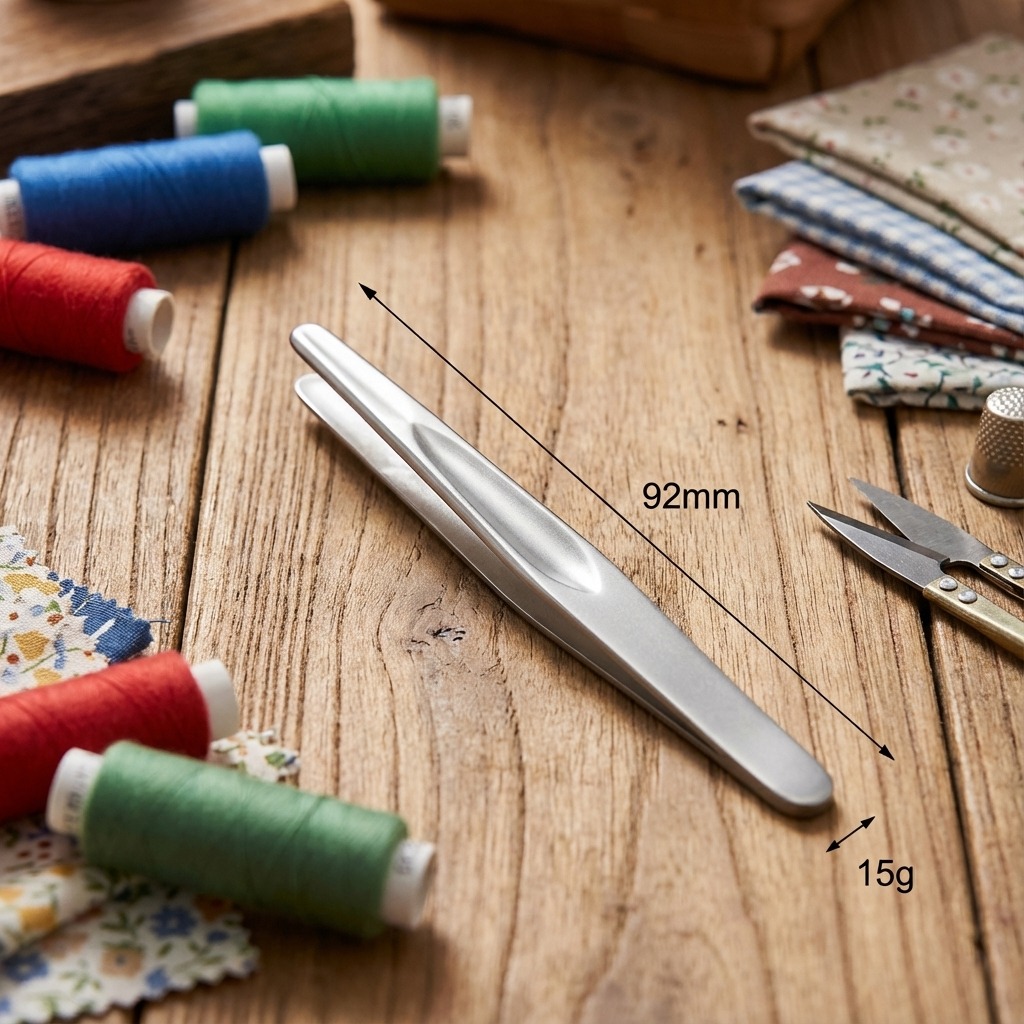
Buying tweezers in bulk is a quality decision before it is a price decision. For salons, brow bars, lash artists, beauty retailers, grooming kit assemblers and distributors, a tweezer must grip accurately, feel stable in the hand and arrive with consistent finish and packaging. A low-cost tool that misses fine hairs, pinches unevenly or loses alignment can create returns, service complaints and waste that outweigh any unit-price saving.
This guide explains how to evaluate bulk tweezers for beauty and grooming use, how to compare wholesaler and factory-linked supply options, and what questions to ask before placing a commercial order. Olimor supplies stainless steel beauty tools for professional and wholesale buyers, including tweezers described with slanted tips, inward-curved designs, glossy metallic finishes, corrosion-resistant finishes and practical size options. Buyers should still approve samples and documentation for the exact version they plan to purchase.
Who Should Buy Tweezers in Bulk?
Bulk purchasing makes sense when tweezers are used repeatedly, resold as part of a beauty assortment or included in a branded kit. A single consumer may only need one dependable pair, but a business buyer needs the approved sample, the production pieces and the replenishment orders to feel consistent.
- Brow bars and salons: Teams need hygienic rotation, backup stock and a familiar hand feel across workstations.
- Lash and makeup professionals: Tweezers support fine placement, brow work and detailed adjustments where tip control matters.
- Beauty retailers: Compact grooming accessories can work for counter displays, online listings, travel sets and everyday personal care ranges.
- Distributors and wholesalers: A dependable tweezer can sit alongside manicure tools, grooming tools and beauty accessories in a broader assortment.
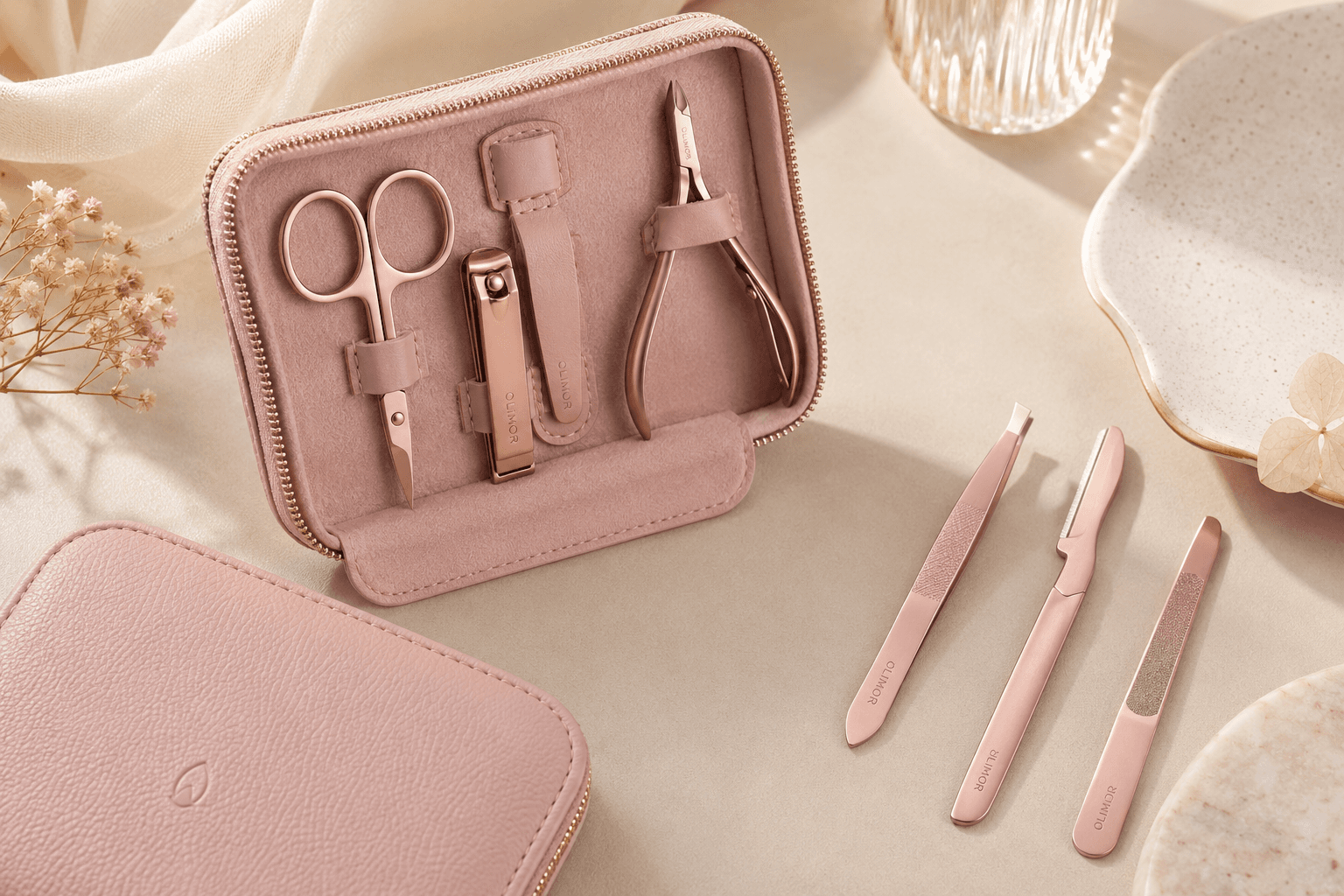
- Kit assemblers and promotional buyers: Tweezers may be added to grooming pouches, spa amenities, subscription boxes or private-label sets.
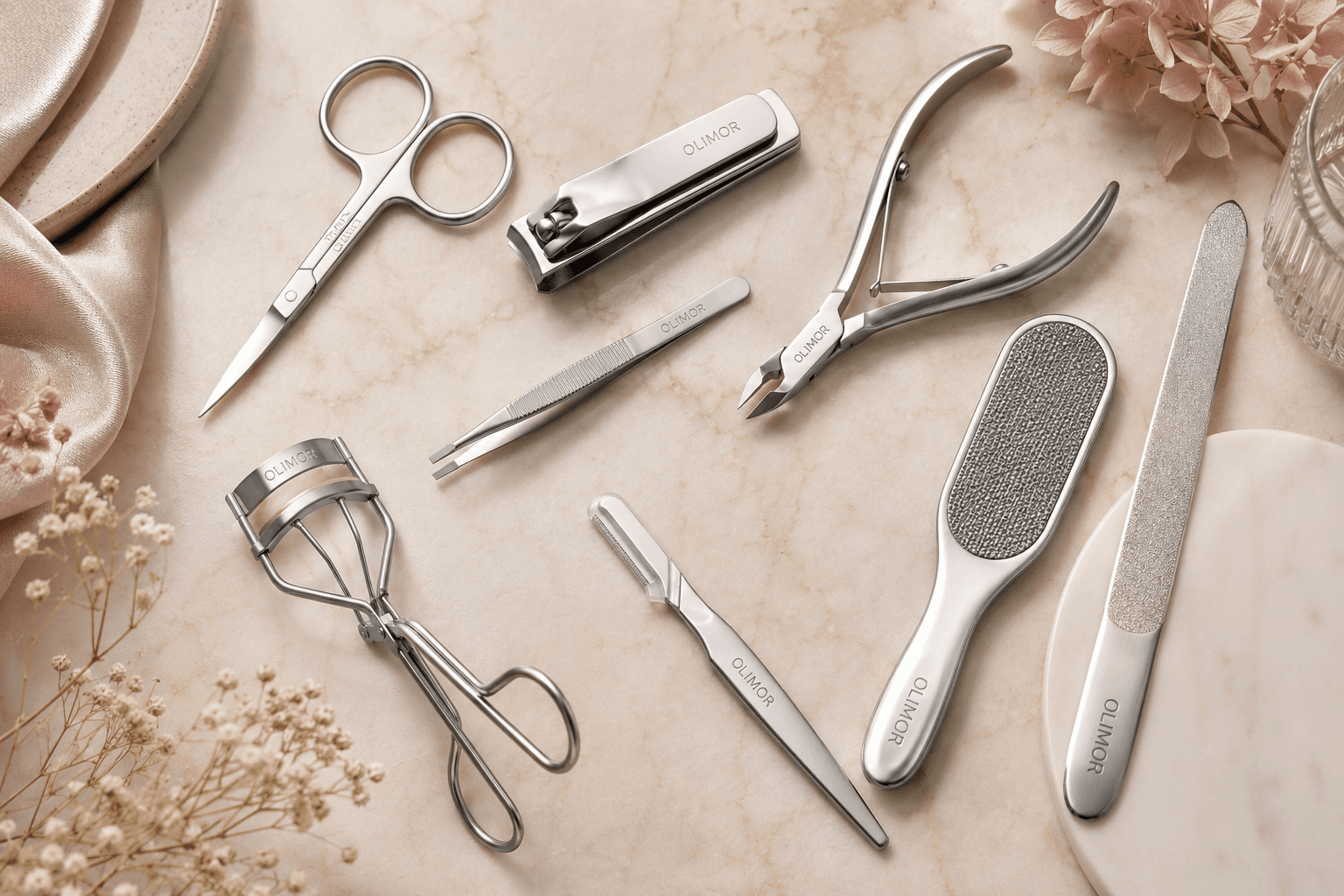
Before comparing suppliers, define the intended user. A brow specialist may prioritize crisp slanted tip alignment for isolating fine hairs. A retailer may care more about consistent appearance, protective packaging and a finish that photographs well. A kit assembler may need the tool length and packaging format to fit a pouch or box. If your buying team is reviewing related beauty categories, Olimor product options can be explored through the beauty tool product range.
Match Tweezer Design to the Use Case
The word precision can mean different things depending on the job. For beauty buyers, precision usually means clean tip contact, controlled tension and a comfortable grip for hair removal or detailed grooming. Source product information also references kitchen variants with serrated tips for secure handling of fine ingredients, but beauty buyers should not assume that a culinary tweezer is automatically suitable for brow shaping.
| Buying scenario | What to prioritize | Why it matters |
|---|---|---|
| Professional brow shaping | Slanted tip alignment, stable closing tension and comfortable hand feel | Fine or short hairs require even contact and control without excessive pressure. |
| Lash and detail work | Clean finish, predictable tip geometry and balanced handling | Small adjustments near delicate areas require a tool that feels stable and precise. |
| Retail grooming accessories | Consistent appearance, corrosion-resistant finish and suitable packaging | Customers judge value through both tool performance and product presentation. |
| Grooming kits and travel sets | Practical length, protected tips and a format that fits the kit | The tool must be useful while fitting neatly into the planned packaging. |
| Culinary precision handling | Serrated tips, cleanability and secure grip on delicate ingredients | Food handling and plating require controlled grip rather than hair-removal geometry. |
Olimor source information includes grooming tweezers measuring 92 mm in length and 15 g in weight, as well as beauty tweezer lengths from 120 mm to 136 mm with weights described as optimized for comfort during extended use. Those details show why samples should be handled by the actual user group. A compact tool may feel nimble for personal grooming, while a longer tool may feel more controlled for some professional users.
Precision Features That Matter More Than Appearance
A polished photo does not prove that a tweezer will perform well in bulk. Performance comes from tip alignment, edge control, closing tension, finish quality and consistency from one unit to the next. Slanted tips are common for eyebrow shaping because the angle helps approach short hairs near the skin while still offering a usable contact area.
Tip Alignment and Contact
Close the tweezer gently and check whether both sides meet evenly at the working edge. A small gap, twist or uneven corner can make fine hair removal unreliable. The tip should grip without sliding off or cutting hair unnecessarily. For retail buyers, this check also helps reduce the risk of customer dissatisfaction after sale.
Spring Tension and Hand Fatigue
The arms should not feel too stiff or too loose. Excessive resistance can tire the hand during repeated salon use, while weak tension can make the tool feel imprecise. Inward-curved designs and balanced weight distribution may support comfort, but the only reliable way to judge is to open and close the sample repeatedly as the end user would.
Edge Comfort and Surface Finish
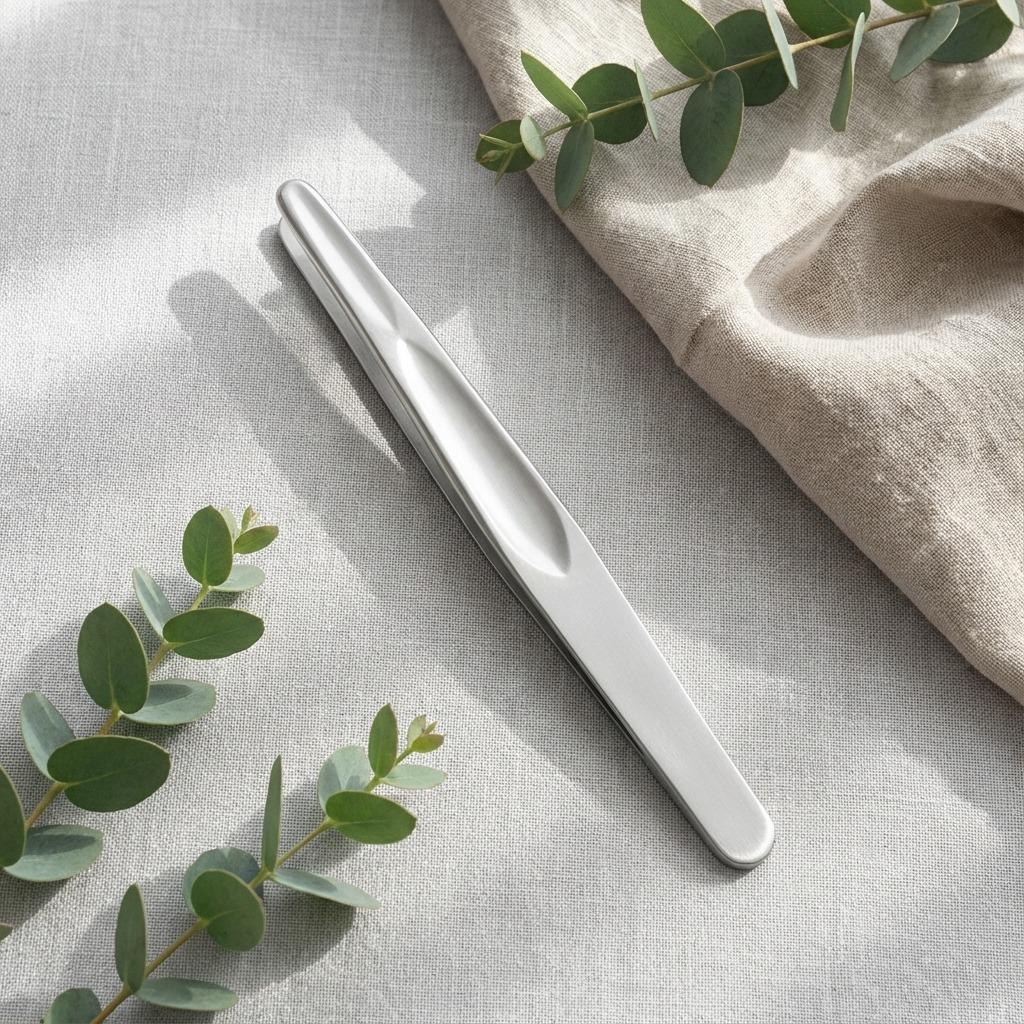
The tip must be precise without feeling jagged during normal beauty use. Stainless steel tools should feel smooth, clean and comfortable, with no rough edges that affect handling or presentation. A glossy metallic finish can suit salons and retail sets, but it should not replace functional checks. Surface marks, uneven gloss, scratches or rough spots can reduce perceived value even when the tool still closes.
Material and Finish Considerations for Bulk Tweezers
Olimor product information describes stainless steel tweezers with corrosion-resistant finishes. Stainless steel is widely used for grooming and beauty tools because it can support durability, a clean appearance and routine cleaning. However, the material label alone is not enough. Buyers should evaluate the actual surface finish, tip finishing, closing accuracy and packaging protection of the version being ordered.
For salons, the surface should be easy to wipe clean and comfortable to hold. For retail displays, the tool should look consistent across units and match the intended product photography. For kit assembly, the finish should not rub against other items in a way that affects presentation before the end user opens the set. If a version is described as dishwasher-friendly, buyers should confirm whether that applies to the exact item, finish and packaging they plan to buy, especially if the tool is not being purchased for a culinary environment.
Where hygiene, food contact or formal quality systems are relevant, buyers should verify the applicable rules, standard versions and supplier documentation. For example, ISO 9001 is a general quality management standard, not a product-performance guarantee. In food-related uses, buyers may need to check applicable public-body guidance such as U.S. FDA food-contact requirements or local regulations. Do not assume a certification or compliance status unless the supplier provides current documentation for the exact product and order.
Wholesaler, Trading Supplier or Factory-Linked Partner?
When deciding where to buy tweezers in bulk, buyers often compare marketplaces, trading companies, wholesalers and factory-linked suppliers. Each can work, but the best choice depends on how much control you need over product details, repeat orders, customization and communication.
A general wholesaler may be convenient for small mixed assortments or quick replenishment. A factory-linked supplier may be more suitable when you need clearer discussion of tip geometry, finish consistency, packaging, inspection steps and repeatability. Olimor presents itself as a beauty tool supplier with factory expertise, which is relevant for buyers who want product selection connected to manufacturing considerations rather than catalog appearance alone.
Ask whether the supplier can explain the differences between available tweezer lengths, shapes, finishes and packaging options. A useful partner should be able to describe practical limitations, not only provide a quote. If you are building a broader assortment, review compatible items through Olimor's beauty tool collection so the tweezer specification fits the rest of your range.
Quality Checks Before Approving a Bulk Order
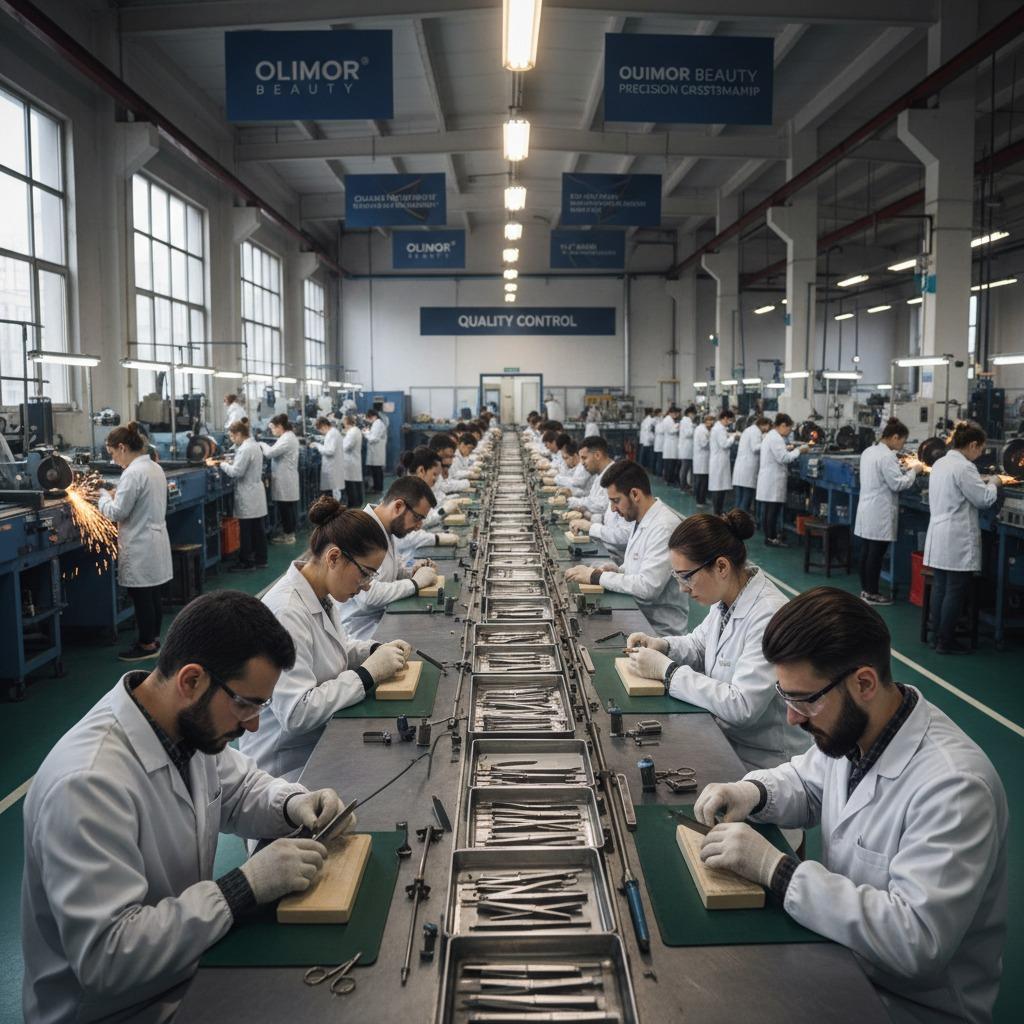
Tweezers are small tools, but small defects matter. A minor misalignment can make a beauty tweezer frustrating, and inconsistent tension can make a professional team lose confidence in the tool. The supplied Olimor information notes inspection from raw materials to packaging. Buyers can use that idea to build their own approval checklist before confirming production.
- Confirm the intended use: State whether the tweezer is for brow shaping, lash support, retail grooming, kit assembly or another purpose.
- Review the material claim: Confirm stainless steel construction and the finish expected for the specific item.
- Inspect sample alignment: Close several samples slowly under good lighting and check whether the tips meet evenly.
- Test grip on fine hair: A beauty tweezer should hold fine hairs without excessive pressure or slipping.
- Assess repeated-use comfort: Open and close the tweezer repeatedly to judge tension, balance and possible hand fatigue.
- Check finish consistency: Look for rough edges, scratches, uneven gloss, marks or surface issues that could affect resale quality.
- Evaluate packaging protection: Tips should be protected so they do not bend, scratch or damage neighboring products during transport and handling.
- Compare several units: Do not approve a bulk order based on one attractive sample. Check consistency across a sample set.
- Record approval details: Keep notes or photos of the approved sample, finish, packaging and any customization requirements.
This type of inspection is especially important when comparing supplier quotes. The lowest price may not be the lowest total cost if rejections, returns, repacking or customer complaints increase after shipment.
Packaging and Customization Questions for B2B Buyers
Packaging should match the sales channel. A salon may prefer simple bulk packing for operational use, while a retailer may need individual packaging that presents well on shelves or in online product images. A kit assembler may need compact packaging that protects the tips without making the set bulky.
Customization can include finish selection, packaging style, assortment planning or branding discussions, depending on supplier capability and project requirements. Buyers should avoid assuming that every customization is available for every tweezer shape or order type. Instead, provide the intended market, use case, packaging format and any brand requirements early in the conversation. Olimor buyers can start a specification discussion through the bulk tweezer inquiry page.
Useful customization questions include: Which tweezer shapes and lengths are available for the intended use? Can samples be provided before final confirmation? What packaging formats can protect the tips during transport and display? What information is needed for branding or retail presentation? How are pre-shipment quality checks handled? Are there any design limitations that could affect the chosen finish, packaging or timeline?
Cost Factors When Buying Tweezers in Bulk
Bulk tweezer cost is influenced by more than the base unit price. Buyers should compare the total commercial picture, including material and finish expectations, tip precision, packaging, customization, inspection needs, order quantity, shipping arrangement and after-sales handling. A precise, consistent tool with suitable packaging may deliver better value than a cheaper item that needs extra sorting or creates complaints.
When requesting a quotation, provide enough detail for an accurate comparison. Include the use case, preferred tweezer shape, finish expectations, packaging needs, destination market and whether samples are required. If you are comparing several suppliers, ask them to quote on the same specification. Otherwise, a lower quote may simply reflect a different tool, lighter packaging or fewer service requirements.
How to Evaluate a Tweezer Supplier
A dependable tweezer supplier should make the buying process clearer, not more confusing. Look for product clarity, practical communication and willingness to support sample evaluation. The supplier should be able to discuss material, finish, tip design, packaging and quality checks in plain language.
- Product clarity: Are length, weight where available, tip type, finish and intended use clearly described?
- Sample support: Can you review physical samples before approving a larger order?
- Quality communication: Can the supplier explain inspection points from material to packaging without making unsupported claims?
- Packaging suitability: Are retail, kit or bulk packing needs discussed before production?
- Customization guidance: Does the supplier explain what can and cannot be customized for the selected version?
- Documentation readiness: Can the supplier provide relevant product or process documents when applicable, without implying unsupported certifications?
- Repeat-order consistency: Is there a clear method to reference the approved sample and specification for future orders?
If your team needs help choosing a tweezer specification for salon, retail or kit use, Olimor can be contacted through the wholesale support team for a practical discussion of available options.
Practical Buying Recommendation
For most beauty buyers, the right bulk tweezer is the one that combines aligned slanted tips, comfortable tension, smooth stainless steel finish, suitable length and protective packaging. Do not select by catalog appearance alone. Approve samples, test several units, document the agreed specification and make sure the supplier understands the end use.
For brow and grooming use, prioritize hair-gripping precision and hand comfort. For retail sets, add appearance consistency and packaging presentation. For kits, confirm length, tip protection and fit. For any food-related handling variant, evaluate serrated tip performance, cleanability and applicable documentation separately from beauty tweezers.
Olimor offers a restrained B2B path for buyers who want to compare stainless steel tweezer options for professional beauty, retail and kit applications. Share the target use, packaging needs and customization expectations first so the recommended tool matches the commercial purpose.
FAQ
Can I request samples before buying tweezers in bulk?
Yes, sample review is an important step for bulk buyers. Use samples to check tip alignment, tension, finish consistency, hand comfort and packaging protection before confirming a larger order.
Does Olimor publish a fixed MOQ for all tweezer orders?
MOQ can depend on the tweezer style, packaging, customization and order requirements. Buyers should ask for the applicable MOQ for the exact specification rather than assuming one value applies to every project.
Can tweezers be customized for retail or kit projects?
Customization may be possible depending on the selected item and project needs. Discuss finish expectations, packaging format, branding requirements and assortment plans early so feasibility can be confirmed.
What quality checks should I request before shipment?
Ask about checks for stainless steel material confirmation, tip alignment, closing tension, surface finish, appearance consistency and packaging protection. Buyers should also compare production results against the approved sample.
How should I ask about lead time?
Provide the target quantity, customization needs, packaging format and destination details. Lead time can vary by specification and production schedule, so it should be confirmed for the actual order rather than estimated from a generic product listing.
Tag: