Buy Tweezers in Bulk: Quality Sourcing Checklist for Beauty Brands
When you buy tweezers in bulk, the decision affects more than unit cost. Tweezers are small tools, but customers notice immediately when the tips do not meet evenly, the grip feels uncomfortable, or the finish starts to discolor after routine cleaning. For beauty retailers, salon suppliers, brow professionals and private-label buyers, a tweezer order becomes part of the brand experience every time a customer uses it.
Good sourcing starts with understanding how tweezers are used in real conditions. A brow artist may need clean hair isolation and control over repeated use. A retail customer may judge the tool by how easily it removes a fine hair without slipping. A kit assembler may care about consistent sizing, packaging fit and surface finish across thousands of units. The right bulk tweezers supplier should help you reduce these risks before an order reaches your customers.
This guide explains practical quality criteria to review when sourcing bulk tweezers, including material selection, tip alignment, finishing, ergonomics, packaging and supplier communication. For related categories, you can also browse Olimor beauty tool products or compare broader product collections while planning your assortment.
Define the Use Case Before Comparing Bulk Tweezers
Not every tweezer design serves the same purpose. Before requesting samples or reviewing a production partner, define the exact buyer and usage scenario. This prevents overbuying a design that looks attractive but does not perform well for the intended job.
Common sourcing scenarios include retail brow tweezers, professional salon tools, grooming kits, travel kits, gift sets and promotional beauty accessories. A retail brow tweezer may need a polished appearance and clear consumer packaging. A professional tool may need stronger emphasis on precision, repeatability, cleaning compatibility and hand comfort. A kit component may require stable dimensions so it fits trays, pouches or cartons consistently.
- For brow shaping: prioritize accurate tip contact, stable tension and comfort during repeated use.
- For general grooming kits: look for a balanced design that is easy for non-professional users to control.
- For retail display: evaluate surface finish, visible defects, packaging presentation and barcode or labeling needs.
- For salons or training schools: consider durability, sanitation practices and consistency across reorder batches.
- For private-label programs: plan branding, packaging structure and inspection criteria before approving bulk production.
A clear product brief also helps avoid vague quality discussions. Instead of asking only for “high quality tweezers,” define the application, expected finish, packaging type, inspection priorities and acceptable tolerance for cosmetic marks.
Material and Finish: What to Check in Stainless Steel Tweezers
The supplied product information highlights stainless steel as an important material choice for tweezers because it supports durability, rust resistance and easier sanitation. For beauty tools, this matters because tweezers are often exposed to skin oils, cleansers, disinfecting routines and humid bathroom or salon environments.
When evaluating stainless steel tweezers, do not focus only on whether the word “stainless” appears in a quotation. Review how the material performs in the final tool. The surface should feel smooth, without sharp unfinished edges along the arms. The finish should look consistent across the lot, especially if the tweezers will be sold in transparent packaging or displayed as part of a premium kit. Any coating, color treatment or surface texture should be assessed for appearance and handling, not just for decoration.
A strong bulk sourcing process includes checking samples after basic handling and cleaning simulations. Buyers can look for discoloration, rough spots, residue in creases, uneven polishing or surface scratches that appear too easily. Even when final specifications are still being negotiated, early sample review gives a realistic view of the factory’s production discipline.
Tip Alignment Is the Core Performance Test
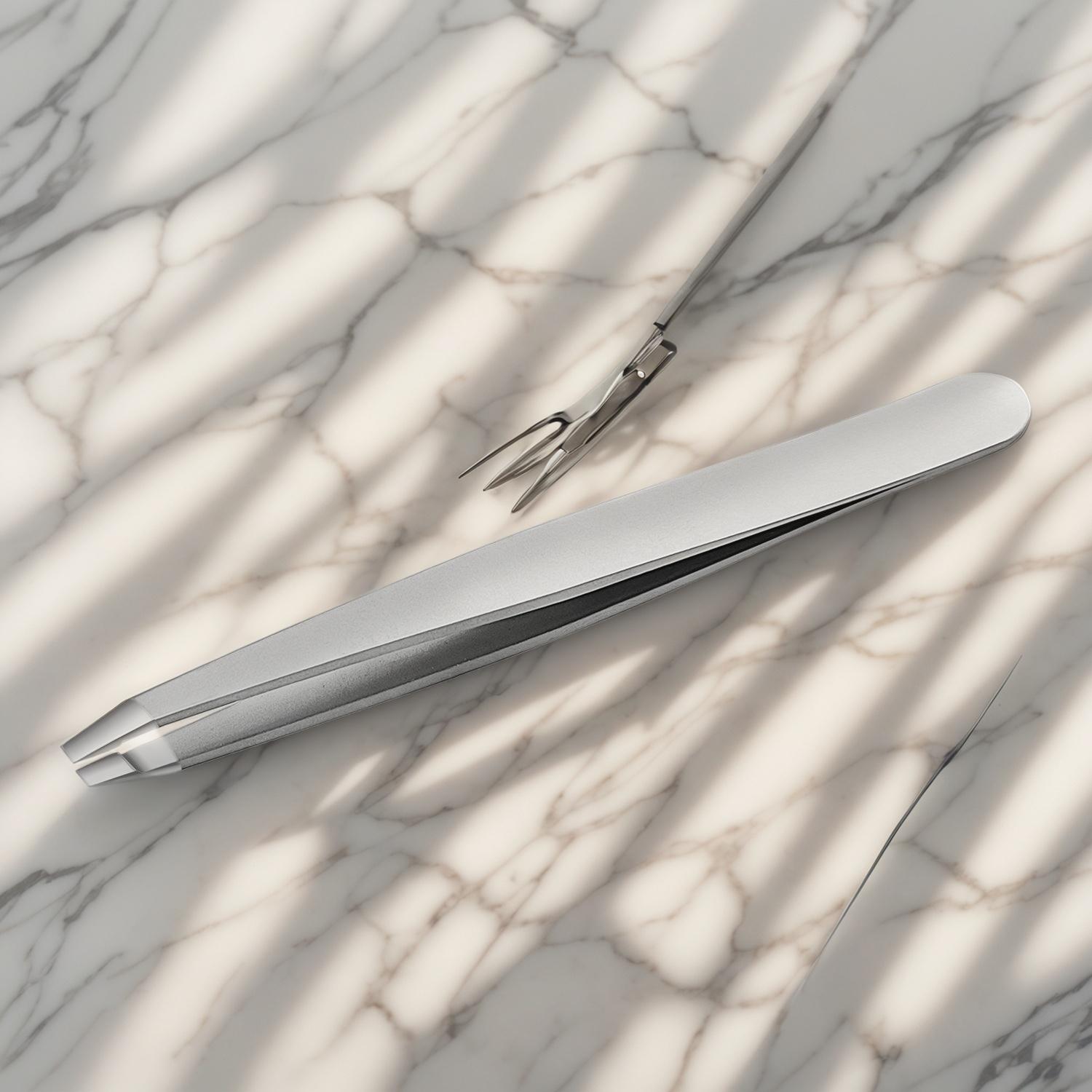
The most important performance feature of tweezers is the tip. A tweezer can look attractive in packaging but still fail if the tips do not align correctly. Poor alignment causes slipping, hair breakage, uneven pressure and customer frustration. For professional users, inconsistent tips slow down service and reduce confidence in the tool.
Olimor Beauty emphasizes precise engineering steps, quality checks, ergonomic design and meticulously aligned tips in its stainless steel tools. For buyers, these points should translate into measurable sample review. Do the tips meet evenly from edge to edge? Is the gripping point clean and controlled? Does the tweezer close smoothly without feeling loose or overly stiff? Does performance remain consistent across multiple samples rather than only one hand-selected piece?
Use a simple receiving checklist for sample approval and incoming inspection:
- Visual check: inspect each tip under good lighting for gaps, chips, burrs or uneven grinding.
- Closure test: open and close the tweezer several times to assess tension and smoothness.
- Alignment test: confirm that both sides meet evenly at the intended gripping area.
- Fine-grip test: test on fine hair or a similar thin material to confirm that the tips hold without sliding.
- Comfort check: hold the tool in a normal working position to evaluate grip, pressure and hand fatigue.
- Batch comparison: compare several pieces side by side to detect variation in shape, finish or tension.
For large orders, do not rely only on a single pre-production sample. A practical sourcing approach reviews production samples and defines what counts as a functional defect versus a minor cosmetic issue.
Ergonomics and User Comfort Affect Repeat Purchases
Ergonomic design is not only a marketing feature. It influences how accurately a user can control the tweezer and how comfortable the tool feels over time. The width, arm length, spring tension, surface texture and weight distribution all affect the user experience.
For professional brow services, excessive tension can tire the hand during repeated work. Too little tension can make the tweezer feel weak or imprecise. A slippery surface can reduce control, while unfinished edges can create discomfort. For consumer retail, the tweezer should feel intuitive even for someone who uses it only occasionally.
When comparing samples, involve the people closest to the use case. A purchasing manager may check appearance and price, but a brow technician, kit developer or retail merchandiser may notice practical issues sooner. Their feedback can help refine the specification before bulk production begins.
Packaging, Branding and Inventory Planning
Bulk tweezers are often sourced for resale, kits or private-label programs, so packaging decisions should be made early. Packaging protects the tip, supports presentation and communicates value. It can also create problems if the tool shifts in transit or if the tip is left exposed.
Useful packaging questions include: Will each tweezer need a protective tip cover? Will the product be sold in a pouch, blister card, paper box or set packaging? Does the packaging need to display the tip shape clearly? Are there retailer labeling requirements? Will cartons protect the finish during international transport and warehouse handling?
Inventory planning is another reason many buyers look for a flexible tweezers bulk supplier. The original sourcing advantage of low MOQ tweezers is flexibility: it can help emerging and established brands test products, manage stock and reduce upfront inventory pressure when available for a program. The key is to balance flexibility with consistency. A small initial order should still be evaluated with the same seriousness as a larger repeat order because customers judge the product, not the purchase volume.
How to Evaluate a Tweezers Manufacturer
A dependable tweezers manufacturer should be able to discuss production quality in concrete terms. Buyers should listen for process awareness: raw material inspection, tip shaping, alignment control, polishing, cleaning, packaging and final inspection. Olimor Beauty states that internal quality control is enforced throughout the production cycle, from raw material inspection to final packaging. For a buyer, that type of production mindset is valuable because tweezer quality depends on many small steps being controlled consistently.
| Evaluation Area | What to Look For | Why It Matters |
|---|---|---|
| Material | Stainless steel construction and consistent surface finish | Supports durability, rust resistance and sanitation needs |
| Tip work | Even alignment, clean edges and reliable gripping | Determines actual tweezer performance |
| Ergonomics | Comfortable tension, balanced shape and controlled grip | Improves user control and reduces hand fatigue |
| Inspection | Checks from raw material through final packaging | Reduces inconsistent batches and avoidable defects |
| Packaging | Tip protection, clean presentation and carton planning | Protects the product before it reaches the customer |
Good communication is also part of quality. Provide clear artwork, packaging expectations, sample comments and defect priorities in writing. If you need help comparing options for a beauty tool program, you can contact Olimor or send an inquiry with your intended application and sourcing requirements.
Maintenance Guidance to Reduce Customer Complaints
Even well-made tweezers can perform poorly if customers misuse or store them incorrectly. Brands that sell tweezers in bulk for retail or kits should consider adding simple care instructions. This helps protect customer satisfaction and reduces avoidable complaints.
Recommended guidance can include wiping the tweezer after use, keeping the tips protected during storage, avoiding drops that can knock the tips out of alignment, and following appropriate sanitation practices for the usage environment. If the tweezer includes a protective cap or pouch, make sure customers understand that it is not only packaging; it helps preserve the precision of the tips.
For professional settings, cleaning procedures should match local hygiene requirements and the tool’s material and finish. Retail customers should receive clear, simple language that encourages safe handling without making unrealistic performance claims.
Final Buying Checklist for Bulk Tweezers
Before placing a bulk order, confirm that the product meets the needs of your channel, not only your target price. A lower unit cost can become expensive if returns, inconsistent quality or poor reviews damage the program. A stronger sourcing decision considers performance, presentation and supply reliability together.
- Confirm the tweezer type and intended user before sample approval.
- Inspect stainless steel finish, edges and visible workmanship.
- Test tip alignment and gripping performance across multiple samples.
- Evaluate hand comfort, tension and control during realistic use.
- Define packaging that protects tips and supports your sales channel.
- Document inspection priorities before bulk production.
- Review carton protection and storage needs for the finished goods.
- Plan reorder consistency if the product will become a long-term SKU.
Buying tweezers in bulk is a sourcing decision where small details create visible differences. By focusing on material, precision, ergonomics, packaging and production control, beauty brands can select tweezers that perform well, present cleanly and support repeat customer trust.
Tag: