Buy Tweezers in Bulk: How to Compare Retail, Wholesale and Factory Options
Buying tweezers in bulk is not only about finding a lower unit price. For salons, brow studios, lash technicians, beauty retailers and distributors, the better question is whether the supplier can deliver consistent tip alignment, comfortable handling, safe materials and packaging that fits the sales channel. A tweezer that looks acceptable in a photo can still fail in daily use if the tips do not meet cleanly, the grip is slippery, or the finish wears quickly.
This guide explains where to buy tweezers in bulk, how retail, wholesale and factory-direct sourcing differ, and what to check before committing to a larger order. It is written for buyers comparing practical sourcing routes rather than shoppers looking for a single pair.
Start with the Use Case Before Comparing Suppliers
Different tweezer buyers need different product characteristics. A brow bar may prioritize fine tapered tips and reliable tension for shaping. A lash technician may need lightweight handling and precision for detailed work. A retail buyer may care just as much about finishes, color consistency and display-ready packaging. A distributor may need repeatable quality across many cartons, not just attractive samples.
Before comparing a tweezers wholesaler with a factory-direct option, define the intended use. This helps prevent overbuying the wrong style or choosing a supplier based only on price. Useful criteria include:
- Application: eyebrow shaping, general grooming, lash work, ingrown hair removal, retail beauty kits or promotional sets.
- Tip type: slant, pointed, flat or specialty tips depending on the task and user skill level.
- Grip and tension: the tweezer should close smoothly without excessive hand fatigue.
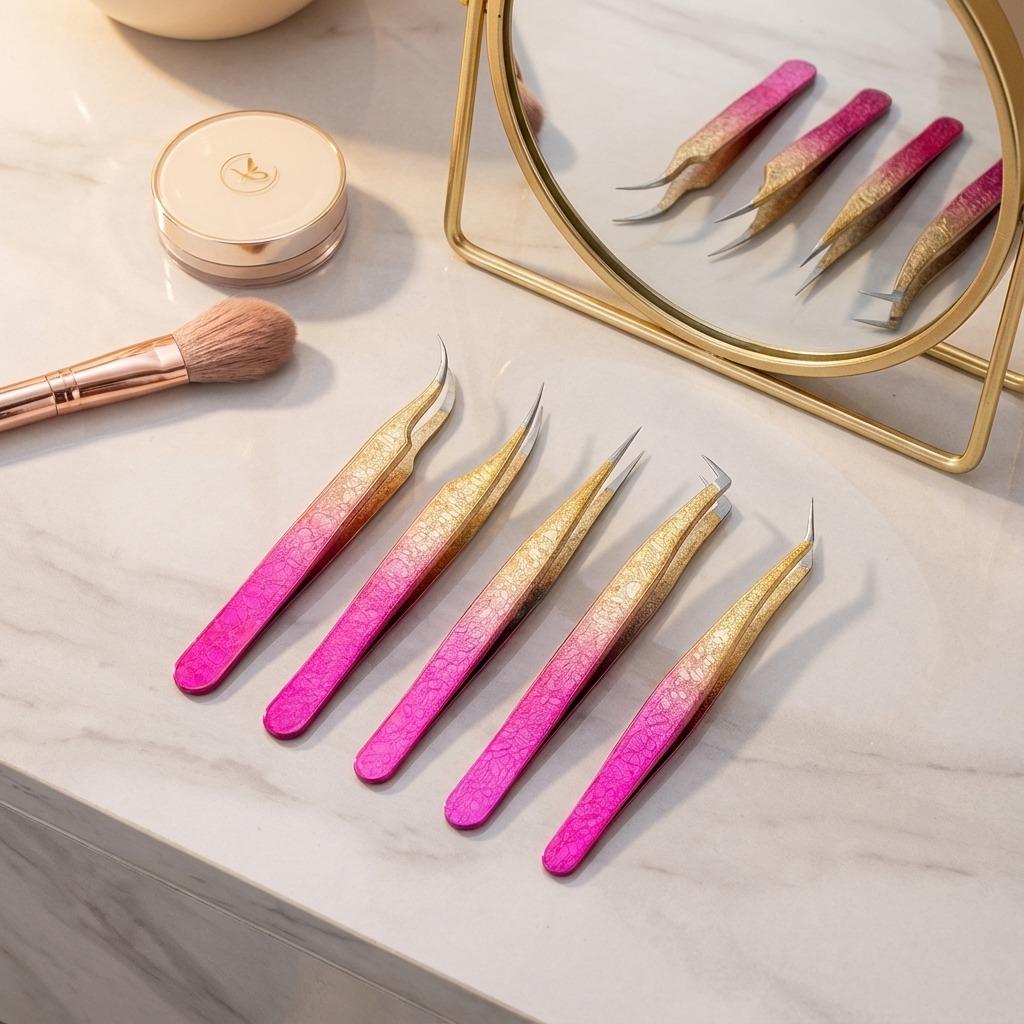
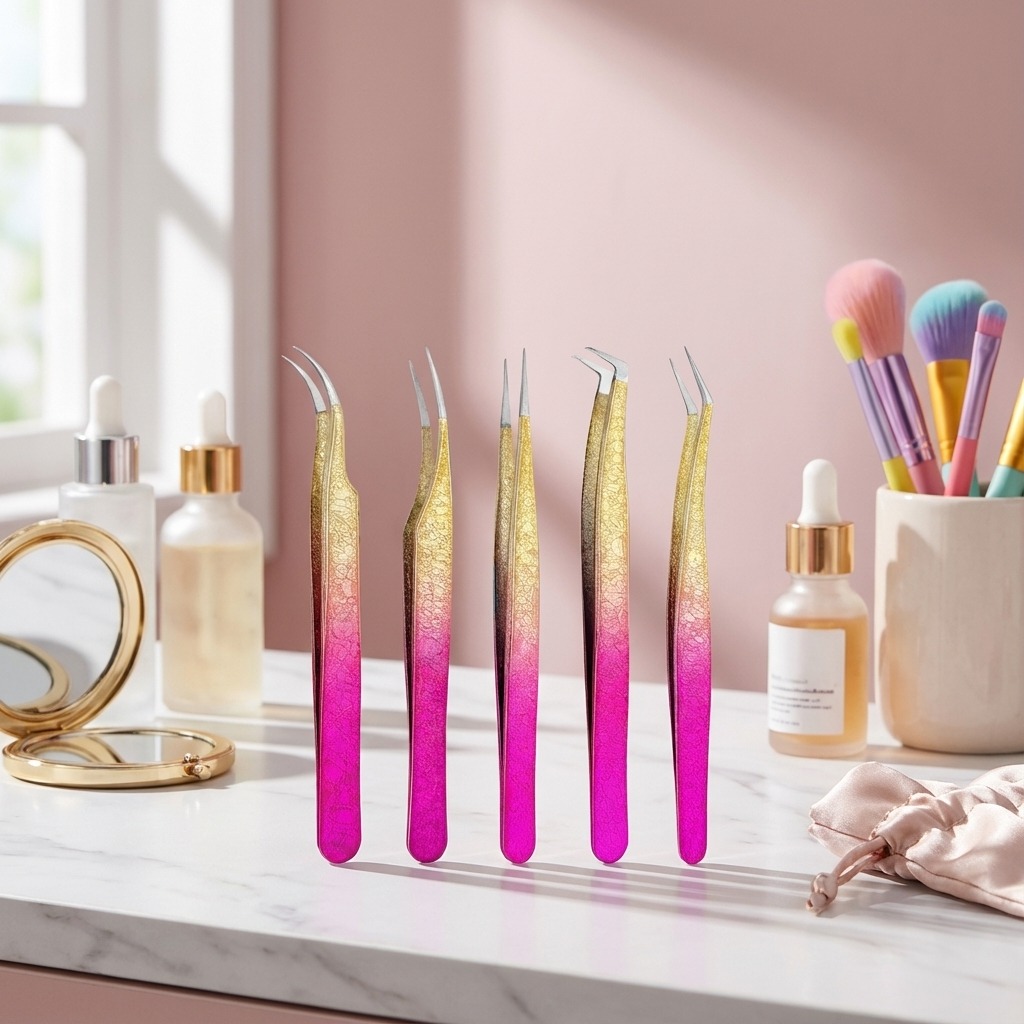
- Finish: plain metal, colored, gradient or ombre finishes may suit different retail and salon positioning.
- Packaging needs: individual sleeves, retail cards, boxes or kit packaging may affect the final landed cost.
- Inspection expectations: tip alignment, surface finish, cleanliness and protective packing should be defined clearly.
Olimor Beauty offers beauty tool sourcing support for buyers who need to compare tweezer options with other beauty tool products. For bulk projects, it is useful to think in terms of a complete tool program rather than a single SKU.
Retail Buying: Convenient but Limited for Bulk Needs
Retail purchases are simple when the order is small or urgent. A salon owner who needs a few replacement tweezers can buy from a local beauty store or an online shop without long lead times. Retail buying also lets users test different shapes before making a larger sourcing decision.
However, retail sourcing becomes inefficient when the same product is needed repeatedly. Unit costs are usually higher, available colors and packaging may change without notice, and batches may not match. For professional teams, inconsistent tool feel can affect service quality. For retailers, inconsistent packaging or finish can create display and inventory problems.
Retail is most useful as a discovery channel. Buyers can compare basic shapes, test customer preferences and decide which tweezer styles deserve bulk purchasing. It is less suitable for distributors, private-label buyers or salons standardizing tools across multiple technicians.
Wholesale Tweezers: Better for Repeat Orders and Mixed Styles
A tweezers wholesaler can be a practical middle path between retail and factory direct. Wholesalers often support repeat buying, mixed assortments and easier communication than large open marketplaces. This can help buyers who need more than a few units but are not yet ready for a highly customized factory order.
Wholesale sourcing is especially useful when a buyer wants several tweezer types in one shipment. For example, a beauty retailer may want slant tweezers for general grooming, pointed tweezers for precision use and a decorative finish for giftable beauty kits. A salon supplier may want to keep backup stock available for professional accounts while avoiding the complexity of managing production details.
The tradeoff is that wholesalers may have less flexibility on exact dimensions, finishes and packaging than a direct manufacturing partner. Some wholesalers carry existing stock; others coordinate production. Buyers should understand which model is being used because it affects lead time, repeatability and the ability to make changes.
Factory-Direct Sourcing: Best for Defined Bulk Programs
Direct factory procurement becomes more attractive when the buyer has clear product requirements, repeat demand and a need for consistent presentation. A top tweezers factory should be evaluated on production control, inspection process, communication and ability to repeat a confirmed sample accurately.
The original product information highlights stainless steel tweezers, ombre finishes, ergonomic designs and gradient gold-to-pink styling. It also references the Luxe Precision line with lengths from 115mm to 130mm and etched textures for grip. These details show why factory-level sourcing can matter: the buyer is not only purchasing a tweezer shape, but also controlling the practical feel, finish and visual identity of the tool.
Factory direct is not automatically the best option for every buyer. It works best when specifications are stable and the buyer can review samples carefully before production. If the buyer is still testing the market, a wholesaler may be more flexible. If the buyer knows the preferred tweezer length, finish, packaging and acceptable quality standard, factory sourcing can support stronger consistency over time.
Comparison Table: Retail vs Wholesale vs Factory Direct
| Sourcing route | Best for | Main advantage | Main limitation |
|---|---|---|---|
| Retail | Small purchases, urgent replacements, style testing | Fast access and low commitment | Higher unit cost and inconsistent repeat supply |
| Wholesale | Salons, retailers and distributors needing repeat stock | More practical for bulk and mixed assortments | Customization may be limited by available ranges |
| Factory direct | Defined bulk programs, private-label planning, repeat orders | Better control over specifications and consistency | Requires clearer requirements and sample approval |
Quality Checks That Matter for Bulk Tweezer Orders
When buying a single tweezer, a small defect is inconvenient. When buying in bulk, small defects multiply into returns, customer complaints and wasted stock. Quality checks should focus on both performance and presentation.
- Tip alignment: the tips should meet evenly without gaps, crossing or twisting.
- Closing pressure: tension should be firm enough to grip hair but not so stiff that it causes hand fatigue.
- Edge finish: tips should feel clean and precise, not rough or uneven.
- Surface condition: check for scratches, dents, discoloration or inconsistent coating.
- Grip area: etched textures or shaped handles should improve control rather than create discomfort.
- Packaging protection: tips need protection during shipping so alignment is not damaged in transit.
- Batch consistency: compare several pieces, not only the best sample.
The supplied product description refers to inspections from raw materials to packaging and features such as corrosion-resistant stainless steel tools. For buyers, the practical step is to translate such claims into visible inspection points: material appearance, finish durability, tip protection, packaging condition and consistent performance across samples.
Choosing Finishes, Lengths and Packaging for Your Channel
Bulk tweezers can serve very different sales channels. A professional salon may prefer simple, easy-to-clean tools that technicians can identify quickly. A beauty retailer may want a more decorative finish, such as a gradient or ombre look, because the tweezer must attract attention on a shelf or in an online listing. A gift set may need coordinated colors across multiple tools.
Length also affects user experience. The supplied information references versatile lengths from 115mm to 130mm in the Luxe Precision line. Shorter tweezers can feel compact and easy to pack, while longer tweezers may offer a different hand position and more control for some users. The right choice depends on the application and the audience, not only on appearance.
Packaging should be selected early because it affects cost, shipping volume and the way customers perceive the product. Buyers planning coordinated tool ranges can review Olimor Beauty product collections to think about how tweezers may fit with other beauty tools, kits or retail displays.
Questions to Settle Before Sending a Bulk Inquiry
A clear inquiry helps suppliers respond with relevant information and reduces avoidable revisions. Instead of asking only for a price, prepare a concise brief that describes the desired tool, quantity range, packaging and intended market. This does not require technical drawings at the first stage, but it should be specific enough to avoid misunderstandings.
- Which tweezer type is required: slant, pointed, flat or mixed?
- Is the intended user a professional technician, retail consumer or distributor customer?
- Should the finish be plain, colored, gradient, ombre or another approved option?
- Is individual protective packaging required?
- Will the order need retail-ready packaging or simple bulk packing?
- Are there reference samples or photos showing the target shape and finish?
- What inspection points are most important: tip alignment, surface finish, tension, packaging or all of these?
Buyers can send an inquiry with these details or contact Olimor to discuss suitable sourcing routes for bulk tweezer programs.
Final Buying Advice for Bulk Tweezers
The best place to buy tweezers in bulk depends on how mature the project is. Use retail channels for quick replacement and early testing. Use wholesale when you need repeat stock, mixed styles and simpler purchasing. Consider factory-direct sourcing when the product specification, packaging direction and quality expectations are clear.
For professional and retail buyers, the strongest bulk order is built around repeatable quality rather than the lowest visible unit cost. Good tweezers should grip accurately, feel comfortable, resist avoidable wear and arrive protected. By comparing sourcing routes carefully and defining specifications before ordering, buyers can select tweezers that perform reliably across a full bulk shipment.
Tag: