Buy Tweezers in Bulk: Factory vs Wholesaler Sourcing Guide
Buying tweezers in bulk is not only a unit-price decision. For beauty retailers, salons, brow studios, lash technicians, grooming kit brands, gift set buyers, e-commerce sellers and distributors, tweezers are small precision tools that customers judge quickly. If the tips slip on fine hair, feel unbalanced, show rough finishing or lose alignment after use, the problem can affect reviews, repeat purchases and brand trust.
The right bulk tweezer order starts with one clear question: what will the end user do with the tool? A salon workstation, a brow retail display, a lash kit and a promotional grooming set may all need tweezers, but they do not need the same level of tip style, hand feel, packaging or supplier control. This guide explains how to compare a tweezers wholesaler with a direct factory source, what specifications to check, and how to evaluate samples before committing to a larger order.
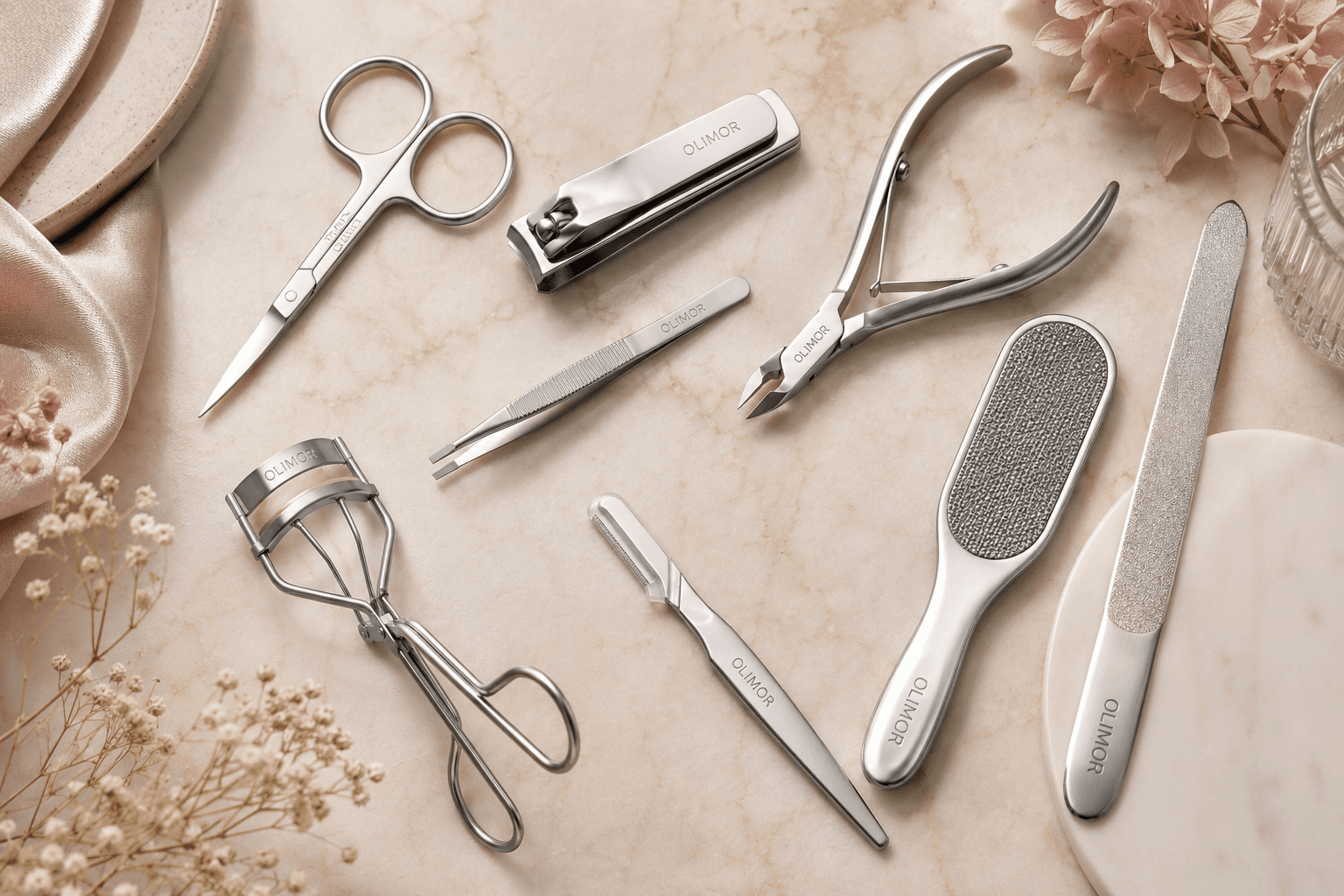
Olimor Beauty supplies stainless steel beauty tools for professional and retail use, including tweezer options described with straight, angled and curved tips. Depending on the model, referenced Olimor tweezer information includes lengths such as 115 mm, 116 mm, 118 mm, and curved-tip variations from 120 mm to 136 mm; weights from about 11 g to 17 g; widths around 9 mm to 10 mm for some styles; stainless steel construction; silver or satin-style finishing; and contoured grip details. These are small specifications, but they influence grip, reach, comfort and product positioning.
Who Should Buy Tweezers in Bulk?
Bulk sourcing makes sense when tweezers are sold, used or packed repeatedly rather than purchased as one-off accessories. The most common B2B buyers include beauty retailers building a core grooming range, salons replacing shared tools, brow and lash studios that need accurate tips, private-label brands, kit assemblers and distributors supplying regional shops.
Bulk tweezers can also be relevant for nail art preparation, jewelry handling, craft sorting, light assembly and other delicate handling tasks. However, buyers should match the tip design and finish to the actual use case rather than assuming one universal tweezer can serve every market.
- Professional salon use: prioritize tip alignment, comfortable tension, corrosion resistance, tip protection and repeated handling.
- Retail resale: check shelf appearance, finish consistency, packaging compatibility and customer-perceived value.
- Private-label beauty tools: focus on repeatable specifications, packaging decisions, inspection expectations and supplier communication.
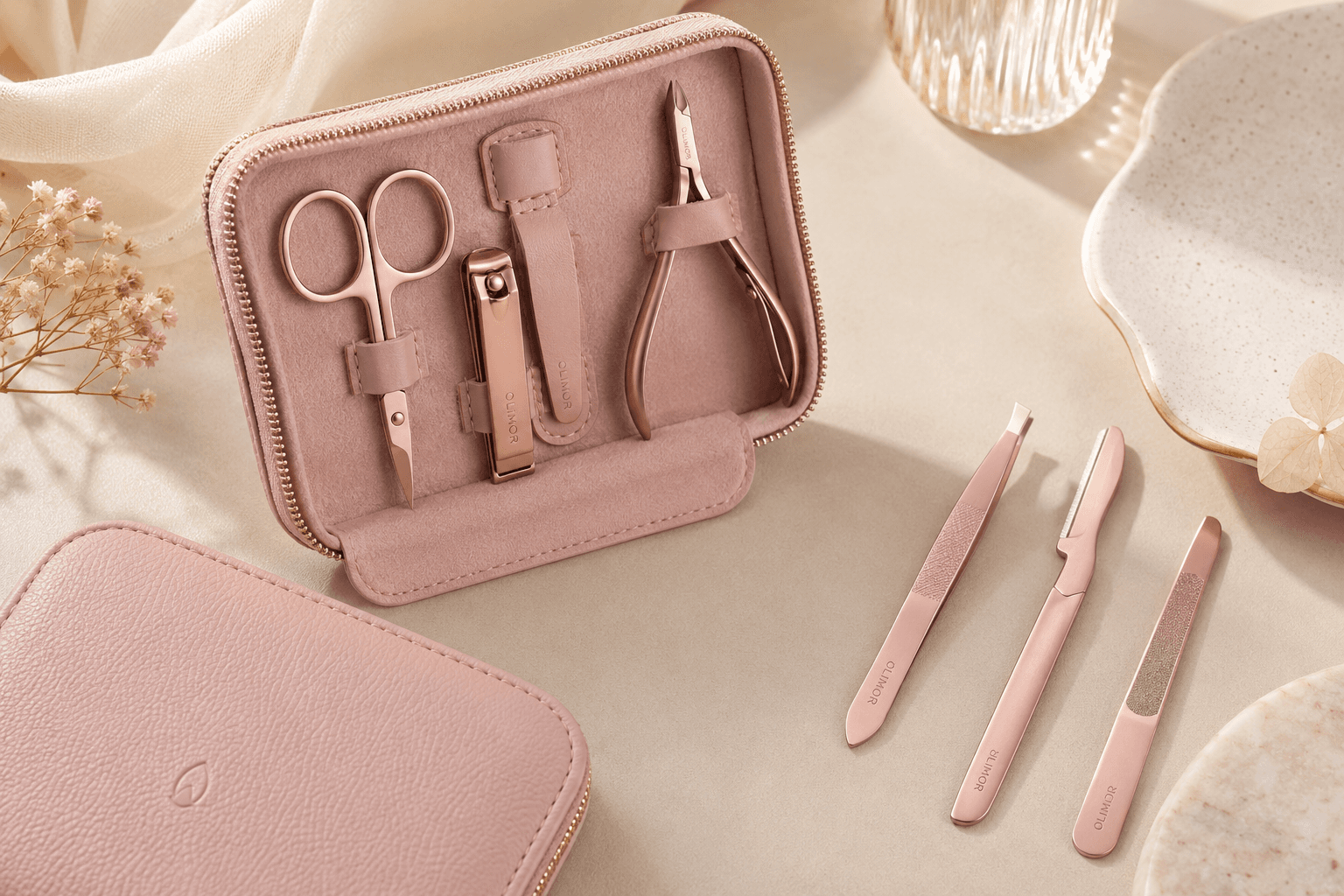
- Assorted beauty kits: confirm length, weight, protective covers and how the tweezer fits with scissors, nail tools, lash tools or other accessories.
- Distribution programs: evaluate replenishment reliability, consistent product presentation and defect-handling communication.
If you are building a wider grooming range, you can review Olimor beauty tool products to compare tweezers with related accessories before finalizing your assortment.
Factory vs Wholesaler: Which Sourcing Route Fits Your Order?
Most buyers compare two routes when searching where to buy tweezers in bulk: a general tweezers wholesaler or a direct factory partner. Both can be practical, but they solve different business problems.
When a Tweezers Wholesaler Makes Sense
A wholesaler usually acts as an intermediary. The wholesaler may stock tweezers and other beauty tools from different manufacturers, then sell them to retailers, distributors or business buyers. This route can be convenient when you need mixed products, a quick assortment test or smaller replenishment flexibility.
The main advantage is simplicity. A buyer may be able to compare several shapes and finishes in one catalog, combine tweezers with other accessories and start selling without detailed production discussions. This can help new stores, trial displays, promotional sellers and businesses that are still testing customer response.
The trade-off is reduced visibility. If a wholesaler buys similar-looking tweezers from several production sources, the material handling, tip grinding, polishing, tension and packaging may vary by batch. Per-unit cost may also include an intermediary margin for stocking, handling and distribution. A wholesaler can be useful for speed and variety, but it is less ideal when your business depends on repeatable specifications and long-term consistency.
When Direct Factory Sourcing Is Stronger
Factory-direct sourcing is usually better for repeat programs, private-label projects and quality-focused retail or salon supply. Instead of selecting only from stocked inventory, buyers can discuss functional details, finishing preferences, packaging needs, inspection points and future reorders more directly with the manufacturing side.
For tweezers, this matters because performance depends on small details. A product can look correct in a photo but fail during use if the tips do not meet evenly or the arms require too much pressure. Direct communication helps buyers define expectations before production rather than after the goods arrive.
Olimor Beauty focuses on beauty tools and can support buyers who need consistency in bulk sourcing. If you already know your target tweezer type, packaging direction and order planning needs, you can send a focused request through the Olimor bulk sourcing inquiry page.
Factory vs Wholesaler Comparison Table
| Buying factor | Tweezers wholesaler | Direct factory sourcing | What buyers should verify |
|---|---|---|---|
| Best fit | Market testing, mixed orders, quick assortment building | Repeat orders, private-label projects, defined specifications | Whether your goal is speed, variety or long-term product control |
| Product visibility | Often limited to available stock and catalog descriptions | More direct discussion of materials, finishing, inspection and packing | Ask how batch consistency is controlled and documented |
| Cost structure | May include stocking and intermediary margin | Can be more competitive for planned bulk orders, depending on requirements | Compare total cost, not just unit price, including packaging and defect handling |
| Customization | Usually more limited if buying existing stock | More suitable for packaging, finish and specification discussions | Confirm what is actually customizable before approving samples |
| Quality control | May vary if products come from multiple sources | Inspection expectations can be discussed more directly | Define sample approval, tip checks, finish checks and packing checks |
| Reorder consistency | Can be affected by changing stock sources | Better suited to repeatable supply planning | Ask how approved samples are referenced for future production |
Choose the Right Tweezer Tip Style
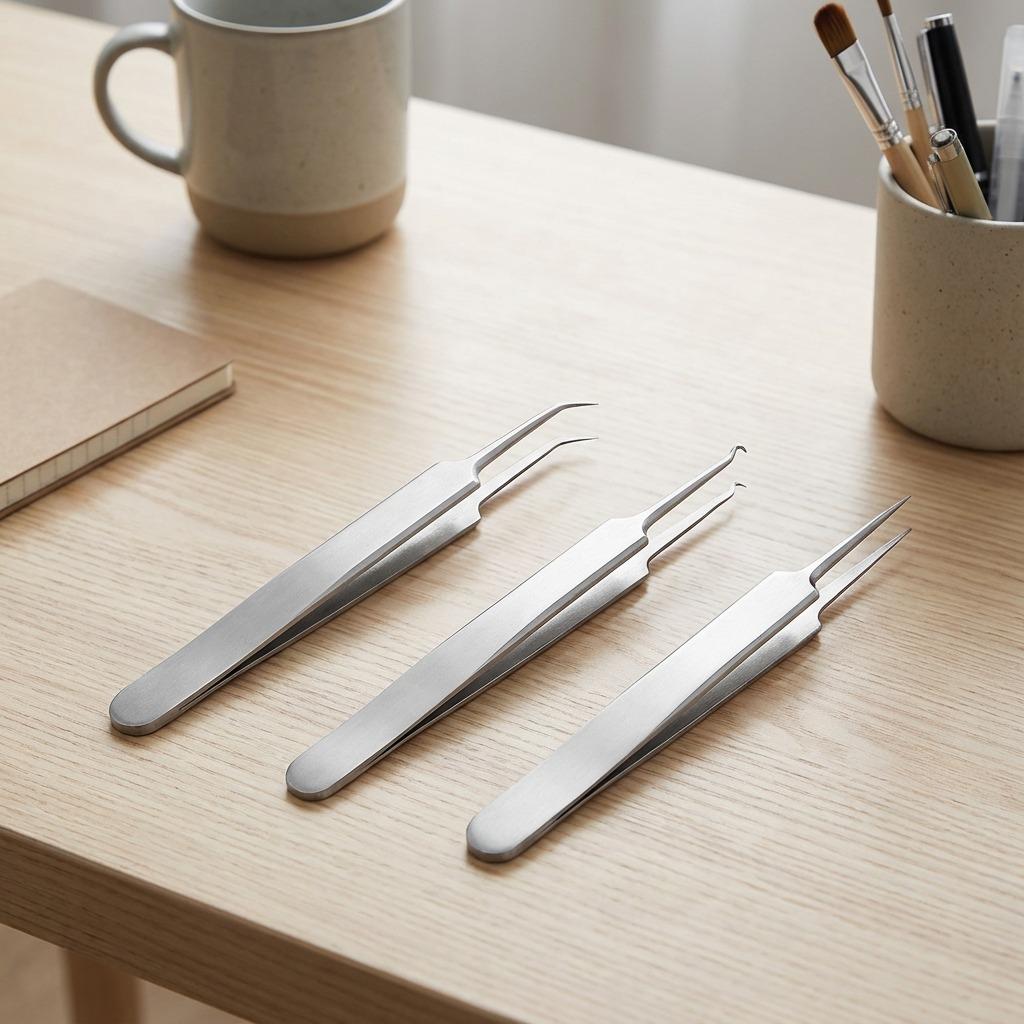
The tip shape is the most important feature when selecting tweezers in bulk. A small change at the tip can affect how the tool grips, lifts or separates fine materials. Olimor Beauty references straight, angled and curved tip options, and some listed variations focus on curved-tip stainless steel tweezers.
- Straight tips: useful for general precision handling where the user wants a direct line of sight and simple alignment. They can suit grooming, craft sorting, product assembly or kit inclusion when a versatile tool is needed.
- Angled tips: commonly selected for brow grooming and hair removal because the slanted edge can sit naturally against the skin and help isolate individual hairs.
- Curved tips: helpful when the user needs to approach from an angle or work around delicate items. They can be relevant for lash application, nail art details, jewelry handling and controlled placement tasks.
A retailer may need more than one tip style to serve different customers. A salon or lash studio should map each style to the technician’s service process. Before placing a large order, buyers should handle samples, check whether the tips close evenly and confirm whether the grip is secure without excessive finger pressure.
Specifications That Affect Hand Feel and Customer Satisfaction
Tweezers are compact tools, but dimensions matter. Referenced Olimor product information includes options such as 115 mm, 116 mm and 118 mm lengths, as well as curved-tip variations from 120 mm to 136 mm. Listed weights range from about 11 g to 17 g, with some widths around 9 mm to 10 mm. Depending on the model, a slightly longer tweezer may provide more reach, while a lighter or heavier option can change how steady the tool feels in the hand.
Professional users often notice hand fatigue faster than occasional retail consumers. If the arms are too stiff, repeated use can be tiring. If the arms are too soft or the tips are not aligned, the tool may not grip fine hair or small components reliably. Contoured grip details can help users control pressure during detailed beauty or craft work.
When comparing samples, do not rely only on catalog descriptions. Have the people closest to the end user test the product. A purchasing manager may focus on price and delivery, while a brow artist, lash technician or retail product developer may notice tip performance and comfort issues sooner.
Material, Finish and Daily Care Considerations
Stainless steel is a practical material for beauty tweezers because it supports durability, routine cleaning and corrosion resistance. For grooming tools, this matters because tweezers may be exposed to moisture, cosmetics, skin oils and frequent wiping. Olimor tweezer information describes stainless steel construction and corrosion-resistant use for daily beauty applications.
Even with stainless steel, maintenance affects service life. Retail customers and professional users should keep tweezers dry after cleaning, store them with tips protected and avoid dropping them on hard surfaces. A tweezer may still look intact after a fall but lose fine alignment at the tips. For salons and studios, clean and used tools should be separated according to the sanitation procedures applicable to the service setting.
For B2B buyers, finish consistency is also part of brand perception. Silver or satin-style finishes should be checked for visible marks, rough edges, uneven polishing and color inconsistency. The finish should match the sales channel: retail displays often need a cleaner presentation, while professional replenishment orders may prioritize efficient packing and quick access.
Sample Inspection Checklist Before Bulk Ordering
Sample testing should imitate real use. A tweezer that looks acceptable online can still perform poorly if the tip contact, spring tension or edge finish is inconsistent. Use a structured checklist so your team can compare suppliers fairly.
- Visual inspection: check surface finish, symmetry, visible marks, polishing consistency and whether edges feel rough.
- Tip alignment: close the tweezer slowly under good light and confirm whether both tips meet evenly without gaps.
- Grip performance: test on fine hair, thread or thin material to see whether the tips hold without slipping.
- Tension and pressure: squeeze repeatedly and note whether the tweezer feels too stiff, too loose or unstable.
- Hand comfort: compare different lengths and weights using actual service movements, especially for professional users.
- Packaging fit: confirm whether tip protectors, sleeves, pouches, cards or boxes protect the tips during shipping and display.
- Batch expectation: define what future production should match so the approved sample is not treated as a one-time exception.
Some buyers use recognized quality frameworks to structure supplier evaluation. For example, ISO 9001 is commonly referenced for quality management systems, and ISO 2859-1 is often used as a basis for sampling inspection plans. These references do not replace product-specific checks, and buyers should verify the applicable version, scope and supplier documentation. Do not assume a supplier holds any certification unless current evidence is provided and relevant to the order.
Packaging and Customization Questions to Resolve Early
Packaging is not an afterthought when buying tweezers in bulk. It protects the tips, affects shelf presentation and influences the customer’s first impression. Buyers should decide early whether the order needs simple bulk packing, individual sleeves, pouches, retail cards, cartons or space for brand information.
Customization should be discussed in practical terms. Instead of asking broadly whether a supplier can customize, specify what you need: product model, tip style, finish direction, packaging format, labeling requirements and inspection expectations. Also confirm which elements are available for your order before committing to artwork or sales promises.
If you are planning coordinated sets, browse Olimor beauty tool collections to consider how tweezers may fit with other grooming or retail products. This helps avoid a common sourcing problem: selecting a tweezer that works alone but does not match the appearance, packing size or positioning of the full kit.
How to Evaluate a Bulk Tweezer Supplier
A reliable supplier should help you make a clear decision, not push you toward the lowest visible price. When comparing a tweezers factory or wholesaler, ask questions that reveal how the supplier manages consistency, communication and order risk.
- Can the supplier provide actual samples for tip alignment, finish and packaging review?
- Are the material, tip style, length, weight, finish and grip details clearly described?
- How are approved samples referenced for repeat orders?
- What inspection points are used before packing and shipment?
- Can packaging protect the tips during transport and match your sales channel?
- How does the supplier handle changes, defects, replacement discussions or reorder communication?
- Does the supplier provide documentation relevant to your market without making unsupported claims?
Total cost should include more than the quoted unit price. Consider sample review time, packaging, inspection expectations, defect handling, communication clarity, reorder consistency and the cost of customer complaints. A cheaper tweezer that creates returns or damages customer trust may be more expensive over the full buying cycle.
Work With Olimor on Bulk Tweezer Sourcing
Olimor Beauty is a practical option for buyers who want stainless steel beauty tools and a direct discussion about bulk tweezer specifications, packaging needs and quality checks. The best inquiry includes your intended use, preferred tip style, target packaging, sales channel and any sample review requirements.
For product questions or order planning, contact Olimor through the contact page. A focused message helps the team respond with relevant options instead of generic recommendations.
FAQ: Buying Tweezers in Bulk
Can I request samples before placing a bulk tweezer order?
Yes. Sample review is recommended because tweezer quality depends on tip alignment, grip feel, tension, finish and packaging protection. Buyers should test samples in the same way the final user will handle the tool.
What MOQ applies to bulk tweezers?
MOQ can depend on the model, packaging choice, customization needs and production plan. Buyers should confirm the applicable requirement directly with Olimor before finalizing a sourcing decision.
Can tweezers be customized for retail or private-label projects?
Customization may involve packaging format, product presentation or specification discussions, depending on the order. Confirm available options, artwork requirements and approval steps before making retail commitments.
What quality checks should I ask for?
Ask about tip alignment, grip performance, surface finish, tension, symmetry, packing protection and how approved samples are used as a reference for production. If inspection standards are referenced, verify the applicable version and documentation.
How should I plan lead time?
Lead time depends on product selection, sample approval, packaging requirements, order size and production scheduling. Confirm timing with the supplier after the specification and packaging plan are clear.
Tag: