Buy Tweezers in Bulk for Professional Beauty: What to Check Before You Order
When you buy tweezers in bulk for a salon group, beauty retail brand, brow service menu, e-commerce store or promotional kit, the decision is not only about price per unit. Tweezers are small tools, but customers judge them quickly: do the tips meet cleanly, do they grip fine hairs, do they feel balanced in the hand, and do they stay reliable after repeated use? A weak tweezer can create returns, poor reviews and inconsistent service results. A well-made tweezer supports professional work and helps protect your brand reputation.
Olimor Beauty works with beauty tool buyers who need consistent grooming instruments for professional and retail use. The goal of this guide is to help you evaluate tweezers as a sourcing category: tip shape, alignment, material expectations, ergonomic feel, finish, packaging and supplier communication. Use it before you compare quotations, review samples or prepare a bulk order.
Why bulk tweezer quality matters more than it appears
Tweezers are often low-cost items in a product assortment, but they carry a high level of user expectation. A customer may forgive simple packaging, but not a tool that slips on short hair or pinches skin because the tips do not align. For professional beauty businesses, the issue is even more important. Brow artists, lash technicians and grooming specialists repeat the same gripping motion many times each day, so small differences in spring tension, tip finishing and handle comfort become noticeable.
Buying in bulk also magnifies inconsistency. If a sample pair performs well but production varies, the buyer may face a mixed shipment: some tools grip cleanly, while others require extra pressure or leave hair behind. This is why a direct relationship with a specialized tweezers manufacturer or capable bulk supplier can be useful. Production oversight, repeatable inspection points and clear standards help reduce the risk of inconsistent goods.
Before placing an order, define the user and purpose. A retail brow tweezer for general grooming may need a different balance of comfort and appearance than a professional tool used repeatedly in treatment rooms. A travel kit tweezer may prioritize compact size and protective packaging. A premium beauty line may require tighter finish expectations and more detailed packaging review.
Choose the right tweezer tip for the intended use
The tip is the most important functional area of the tweezer. Many sourcing problems begin when a buyer selects a shape based on appearance rather than use. For bulk purchasing, it is helpful to describe the exact grooming task and expected user skill level before selecting a tip style.
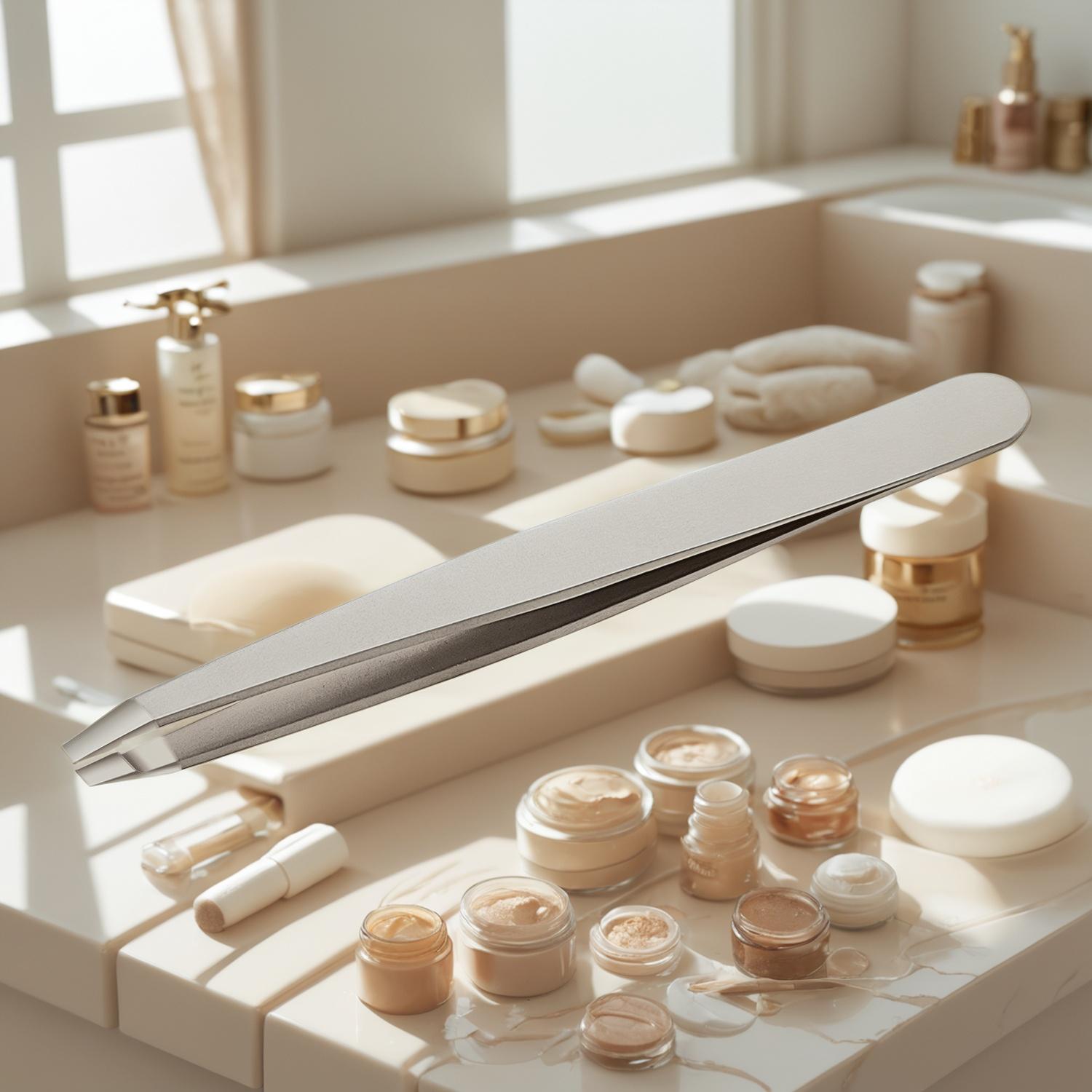
- Slant tip: A common choice for brow shaping and everyday grooming. The angled edge helps users approach hairs from different directions and is suitable for many retail beauty assortments.
- Point tip: Useful for very fine, short or isolated hairs, but it requires more control. It may suit professional or experienced users better than broad consumer kits.
- Flat tip: Can grip a wider area and may be used for general tasks, but it is less precise for shaping brows.
- Pointed slant tip: Combines angled access with a narrower gripping area. This can be useful where precision is important but a fully pointed tip may feel too sharp for the target customer.
When reviewing samples, test the tips on fine hair, short hair and a smooth thread or fiber. The tips should meet evenly without visible gaps. They should grip without requiring excessive hand pressure. If the tips cross over, feel rough, or meet only at one corner, the tool may cause inconsistent performance in bulk use.
Key selection criteria for professional and retail buyers
A good sourcing process compares more than visual finish. Buyers should create a simple inspection checklist and use it for every sample round. This keeps the conversation practical and reduces misunderstandings between purchasing, product development and the supplier.
| Feature to review | Why it matters | What to check on samples |
|---|---|---|
| Tip alignment | Determines whether the tweezer grips fine hair cleanly | Tips should meet evenly from edge to edge with no obvious gap |
| Tip finishing | Affects comfort, safety and precision | Edges should feel controlled, not jagged, overly blunt or uneven |
| Spring tension | Influences hand fatigue and control | Tool should open and close smoothly without feeling too stiff or weak |
| Handle shape | Supports repeated use and user confidence | Check grip comfort, balance and whether the fingers slide during use |
| Surface finish | Impacts appearance and perceived quality | Look for consistent color, polish, coating or texture across samples |
| Packaging fit | Protects the tips and improves presentation | Tips should not rub against packaging or arrive exposed to impact |
For brands planning repeat orders, keep approved samples with dates and notes. These samples become a practical reference for future production comparisons. They can also help your team describe acceptable variation in a concrete way.
Working with a dedicated tweezers manufacturer
Working directly with a dedicated manufacturer can give buyers better visibility into how the tool is made and inspected. The original production process for a quality tweezer typically depends on careful material preparation, forming, finishing and tip alignment. The final performance is shaped by small details, especially the way the gripping edges are finished and matched.
Olimor Beauty positions its tweezer supply around precision, durability and ergonomic design. For a buyer, those qualities should be translated into reviewable requirements. Instead of requesting “high quality” in general terms, define the expected tip shape, finish, grip feel, packaging protection and inspection method. This helps the supplier understand the intended market and reduces avoidable sample revisions.
A manufacturer relationship can also support product development decisions. If your target buyer is a professional brow artist, you may prioritize tip accuracy and spring feel. If your buyer is a mass retail customer, you may place more emphasis on easy handling, safe packaging and clear instructions. If the tweezer is part of a wider beauty kit, you may need the tool to coordinate visually with other items while still meeting functional expectations.
You can explore broader beauty tool products to compare how tweezers fit into a complete assortment, or review product collections when planning a coordinated retail range.
Order quantity, inventory and repeatability
For growing businesses, order quantity can be a practical barrier. Large stock commitments may tie up cash, while very small orders may not support packaging or product development goals. The original value of flexible sourcing is that it allows a business to test demand, refine packaging and build confidence before expanding volume. Olimor Beauty supports buyers seeking manageable bulk sourcing options, including low MOQ tweezers, without requiring brands to overcomplicate their first order.
Even when starting with a modest order, think ahead to repeatability. A successful tweezer product often becomes a reorder item. To make repeat orders easier, document the approved sample, packaging artwork, finish preference and inspection criteria. If you sell through multiple channels, track customer feedback separately: salon users may comment on tension and precision, while retail consumers may focus on comfort and ease of use.
Inventory planning should also consider packaging protection. Tweezers with exposed tips can be damaged during shipping or handling. Tip covers, inserts or secure packaging can help maintain alignment and reduce complaints. If your packaging is designed mainly for display, make sure it still protects the functional tip area.
Quality control questions to settle before production
A clear quality conversation is better than relying on assumptions. You do not need to use technical language for every point, but you should define what success looks like. The following checklist can help buyers prepare for a bulk tweezer order:
- Confirm the use case. Specify whether the tweezer is for brow shaping, general grooming, professional service, travel kits or retail resale.
- Approve the tip shape. Match slant, point, flat or pointed slant tips to the target user and application.
- Review alignment standards. Decide how samples will be checked for even tip contact and gripping performance.
- Assess hand feel. Test opening resistance, closing control and comfort over repeated use.
- Check surface consistency. Review finish, texture and appearance under normal lighting, not only in product photos.
- Protect the tips. Choose packaging that prevents bending, rubbing or impact during transport.
- Keep reference samples. Store approved samples for future comparison and reorder control.
This kind of checklist is especially useful when multiple people are involved in approval. It keeps the discussion focused on measurable tool performance rather than personal preference alone.
Packaging and brand presentation for bulk tweezers
Packaging should do two jobs: protect the tool and communicate the product clearly. A tweezer may be sold on a card, in a pouch, in a box, or inside a beauty kit. Each option affects cost, shipping efficiency, retail display and the risk of tip damage. For professional buyers, simple protective packaging may be more useful than decorative elements. For retail buyers, the packaging may need space for usage guidance, safety notes and barcode or product information.
When comparing packaging options, consider how customers will store the tool after purchase. A reusable sleeve or protective tip cover can reduce damage in makeup bags and drawers. If the tweezer is part of a set, make sure it can be removed and replaced without scraping the finish or bending the tips.
Visual consistency also matters in bulk orders. If your brand uses a particular color direction or finish style, request samples that show how the tweezer looks in real packaging. Product photos alone may not reveal fingerprints, glare, coating variation or how the finish appears under retail lighting.
When to contact Olimor Beauty about bulk tweezers
If you are preparing to buy tweezers in bulk, the best time to start a supplier conversation is before artwork and launch dates are fixed. Early discussion gives you more room to compare tip options, review packaging protection and align the tool with the needs of your customer. It also helps prevent rushed decisions that can lead to uncomfortable tension, weak grip or packaging that fails to protect the tips.
Olimor Beauty is a beauty tools manufacturer and supplier focused on practical product quality for professional and retail customers. Whether you are building a brow grooming line, adding tweezers to an existing beauty assortment or planning a kit, a structured sourcing process will help you choose a tool that performs consistently.
To discuss a bulk tweezer project, contact Olimor with your intended use, target market, preferred tip style and packaging direction. If you are ready to share order details or request product support, you can also send an inquiry. A clear brief makes it easier to match the tweezer to your customer’s expectations and to build a repeatable product for future orders.
Tag: