

Bulk Order Tweezers: How to Choose, Customize and Source with Confidence
Bulk order tweezers are not just a low-cost accessory for salons, beauty brands, repair benches or craft suppliers. They are small tools that affect grip, accuracy, hygiene, customer experience and daily workflow. A tweezer that looks acceptable in a product photo may still fail in use if the tips do not meet cleanly, the spring tension is tiring, or the finish is inconsistent from one unit to the next.
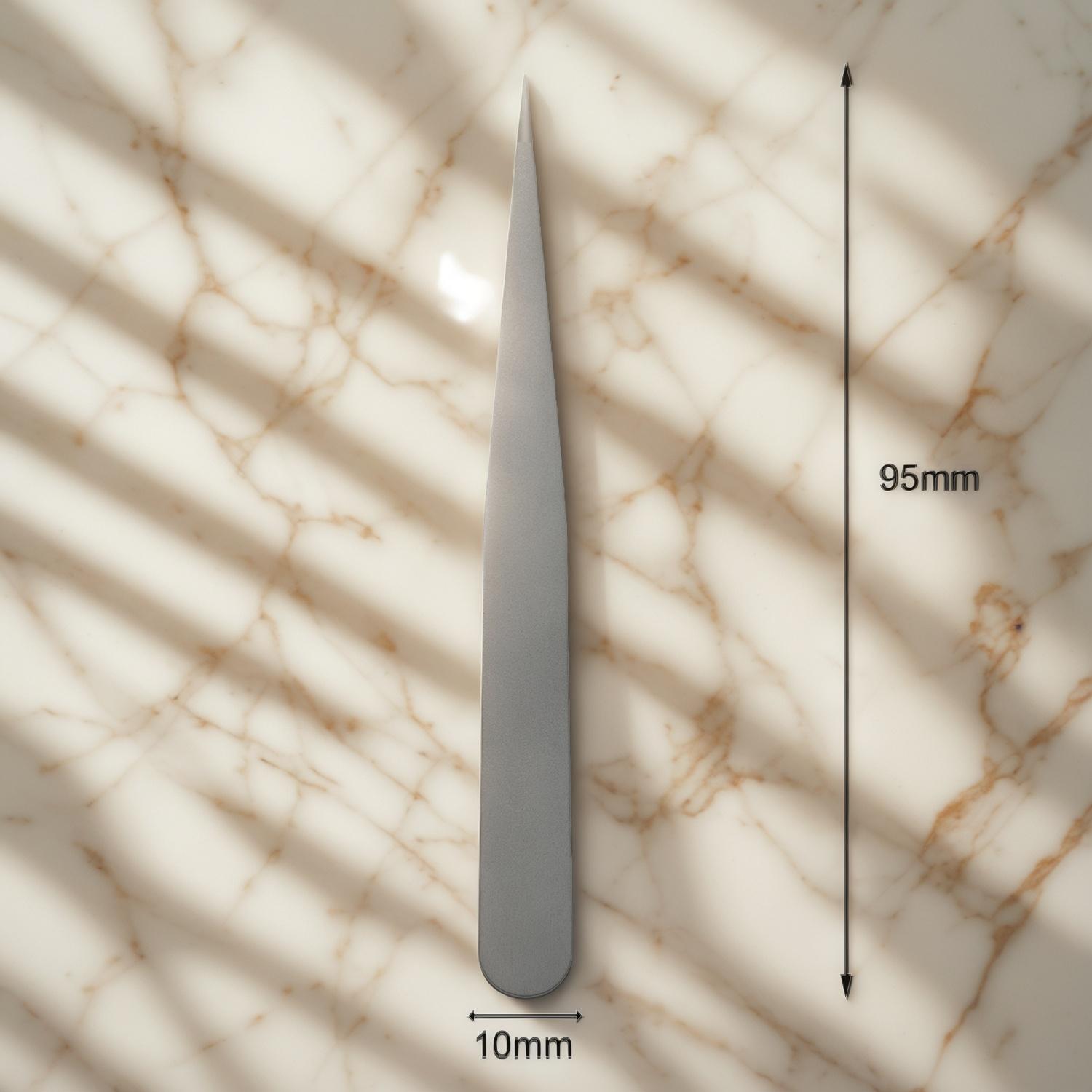
Olimor Beauty supplies stainless steel tweezers for professional and practical use, including the Precision Stainless Steel Tweezer described with a fine point tip, 95mm length and 10mm base width. Those dimensions make it suitable for detailed handling where control matters, from beauty applications to intricate crafts, electronics work, jewelry work and model making. If you are preparing a bulk purchase, the most important goal is to define how the tweezer will be used before deciding on quantities, finish or packaging.

Why Bulk Order Tweezers Require More Than a Unit Price Comparison
Bulk purchasing can reduce per-unit handling costs and help keep tool quality consistent across a team, retail display or kit assembly line. However, the lowest quoted price is not always the best sourcing decision. Tweezers are precision tools, and the cost of poor alignment can show up later as returns, wasted time, damaged components or customer complaints.
For beauty professionals, the tips need to grip fine hairs cleanly without excessive pressure. For craft and jewelry users, the tweezer must hold tiny decorative parts without slipping. For electronics repair, the tool should allow controlled placement of small parts and reduce hand fatigue during repetitive tasks. These use cases all require different emphasis, but they share one expectation: the tweezer should feel predictable in the hand.
When comparing suppliers or reviewing beauty tool products, evaluate the tool as part of your workflow rather than as a generic metal item. Look at the tip profile, edge smoothness, grip comfort, finish consistency and packaging suitability. A good bulk order decision starts with a sample review, clear acceptance criteria and a shared understanding of what the tweezer must accomplish.
Key Features to Check in Stainless Steel Tweezers
Stainless steel is widely used for tweezers because it offers a durable, clean-looking structure for repeated handling. The material alone, however, does not guarantee a reliable tool. Buyers should inspect the complete build, especially the relationship between the arms, tip and spring tension.
- Tip alignment: The two tips should meet evenly. For fine point tweezers, a small mismatch can reduce grip accuracy.
- Tip finish: Tips should feel smooth and controlled, without rough edges that can scratch skin, craft surfaces or small components.
- Spring tension: The arms should open and close with enough resistance for control, but not so much that users experience fatigue.
- Length and balance: The Precision Stainless Steel Tweezer has a 95mm length, which can provide a compact but usable grip area for detailed work.
- Base width: A 10mm base width can support a comfortable hold, especially for users who perform repeated precise movements.
- Surface consistency: Check that the finish is uniform across units, particularly if the tweezers will be sold as part of a branded kit.
- Packaging fit: Bulk packaging, individual packaging or kit packaging should protect the tips from bending during storage and transport.
For a professional buyer, the question is not only whether one sample performs well. The question is whether the same performance can be maintained across a batch. Olimor Beauty emphasizes internal quality control from raw materials to final packaging, which is especially relevant when consistency matters across a larger order.
Choosing the Right Tweezer for Beauty, Craft, Repair and Retail Kits
The best tweezer for a bulk order depends on the end user. A salon, lash studio, electronics bench and hobby craft kit may all need tweezers, but they do not all need the same grip style or tip behavior. Before placing a bulk order, map the tool to the task.
| Use case | What to prioritize | Buyer note |
|---|---|---|
| Beauty applications | Tip alignment, comfortable tension, smooth finish | Users need control and cleanliness during repeated close-up work. |
| Intricate crafts | Fine point accuracy and stable grip | Helpful for beads, decals, miniature parts and delicate placement. |
| Electronics repair | Precise handling and fatigue reduction | Evaluate grip control for small components before ordering at scale. |
| Jewelry work | Tip control and surface smoothness | Rough or uneven tips can mark delicate materials. |
| Model making | Fine point access and steady closing action | Useful when placing small parts into narrow spaces. |
| Retail or promotional kits | Consistent appearance and packaging protection | The tweezer must look uniform and arrive with tips protected. |
If your customers use tweezers for more than one purpose, a fine point stainless steel option can be a practical all-rounder. It supports detailed handling without requiring the buyer to manage too many separate product types. For broader sourcing, you can also review Olimor product collections to compare how different tools may fit into a complete beauty or care range.
What Custom Tweezer Options Should Buyers Consider?
Customization can be useful, but it should solve a real commercial or operational problem. A custom finish, adjusted alignment preference or packaging format may make sense when the tweezers are part of a beauty kit, retail display, subscription box, professional supply program or brand launch. Customization becomes less useful when it adds complexity without improving user experience.
Before choosing a design your own tweezer approach, define the purpose of the customization. Is it for brand recognition? Is it for better handling? Is it to match a set of tools? Is it to make the product easier to present in-store? These answers help prevent overdesigning a simple tool.
- Start with the use case. Decide whether the tweezer will be used mainly for beauty, craft, repair or general retail.
- Confirm the required tip behavior. Fine point tips are valuable for detailed work, but they need careful protection in packaging.
- Decide what should be customized. Consider finish, alignment preference, packaging or presentation needs without adding unnecessary features.
- Review samples under real conditions. Test grip, tension and tip contact with the actual materials your customers handle.
- Set visual and functional acceptance criteria. Define what counts as acceptable alignment, finish and packaging condition before mass production.
For custom discussions, it is helpful to prepare a short brief rather than a long list of vague preferences. Include intended users, target application, packaging needs and any restrictions that affect distribution. If you are ready to discuss a project, you can send an inquiry with the core details for review.
Quality Control Questions for Bulk Tweezer Orders
Quality control is one of the main reasons to take bulk tweezer sourcing seriously. A tweezer can be small, but it is judged by touch and performance. Even minor variations can be obvious to a professional user. Olimor Beauty describes internal quality control processes that inspect stages from raw materials through final packaging, which is the kind of process buyers should look for when repeatability matters.
When preparing your own quality checklist, avoid relying only on appearance. A shiny finish does not prove tip alignment, and a good single sample does not prove batch consistency. Practical checks should include function, handling and packaging protection.
- Do the tips meet cleanly when viewed from the front and side?
- Does the tweezer grip fine items without forcing the user to squeeze too hard?
- Is the tension consistent across multiple samples?
- Are the tip edges smooth enough for the intended application?
- Does the 95mm length feel appropriate for the target user’s hand and task?
- Is the 10mm base width comfortable for repeated handling?
- Are individual units protected so the fine point tip is not bent before use?
- Is the outer packaging suitable for transport, storage and distribution?
These checks help buyers compare manufacturers in a practical way. Lists of “top tweezers manufacturers” can be a starting point, but a ranking is less important than whether the supplier can meet your actual criteria. The strongest partner is the one that understands both the tool and the end user.
Care, Storage and Handling After Delivery
Even well-made stainless steel tweezers need proper handling after delivery. Bulk buyers should plan storage and user instructions, especially when the tweezers have fine point tips. Poor storage can bend tips, create uneven contact or make the product look damaged before it reaches the customer.
Store tweezers in a dry area and avoid loose dumping of fine point tools into bins where tips can strike each other. If the tweezers are used in a salon or beauty setting, they should be cleaned according to the hygiene practices required for that environment. For craft, jewelry or repair use, keep the tips free of adhesive residue, dust and oils that may reduce grip accuracy.
If you distribute tweezers to a team, simple handling guidance can extend usable life: do not pry with the tip, do not use the tweezer as a screwdriver, and do not bend the arms to increase tension. For retail kits, protective packaging or a sleeve can reduce damage during shipping and improve first impression when the customer opens the product.
How to Prepare a Clear Bulk Order Brief
A clear brief saves time and improves sourcing accuracy. Instead of asking only for “bulk order tweezers,” describe the user, the task and the presentation format. Mention if you are interested in a stainless steel fine point tweezer, whether the 95mm length and 10mm base width are suitable, and whether the order is for professional use, retail kits, crafts or repair work.
Include any preferences for packaging, finish or inspection focus. If the product will be sold under your own brand or included in a kit, explain how it will be displayed and shipped. If it will be used internally by technicians or beauty professionals, explain the daily tasks and frequency of use. These details help align the tool with the buying purpose rather than treating tweezers as a one-size-fits-all item.
For help matching a tweezer to a sourcing plan, you can contact Olimor with your application details. A strong bulk order starts with a practical product brief, realistic quality expectations and a focus on how the tweezer will perform in the hands of the final user.
Tag: