How to Choose a Tweezers Manufacturer for Wholesale Beauty Tools
For beauty retailers, private label brands, salon suppliers and distributors, tweezers are small products with little room for error. A tweezer may look simple in a catalog photo, but its real value depends on alignment, tip finish, grip, material consistency and packaging quality. If any of those details are weak, the user notices immediately: the tweezer slips, pulls unevenly, rusts too quickly or feels uncomfortable during detailed grooming.
Olimor Beauty works in the beauty-tool category where buyers often need reliable wholesale tweezers, custom logo options and export-ready presentation. This guide explains how to evaluate a tweezers manufacturer with practical criteria rather than broad marketing claims. It is written for buyers comparing suppliers, developing a branded line or improving an existing beauty tool assortment.
Start with the Use Case Before Comparing Designs
The best tweezers manufacturer for one buyer may not be the best fit for another if the intended use is different. A retailer building a brow-care set has different priorities from a professional kit supplier that needs several tip shapes for detailed work. Before discussing finishes or logos, define how the tool will be used and who will buy it.
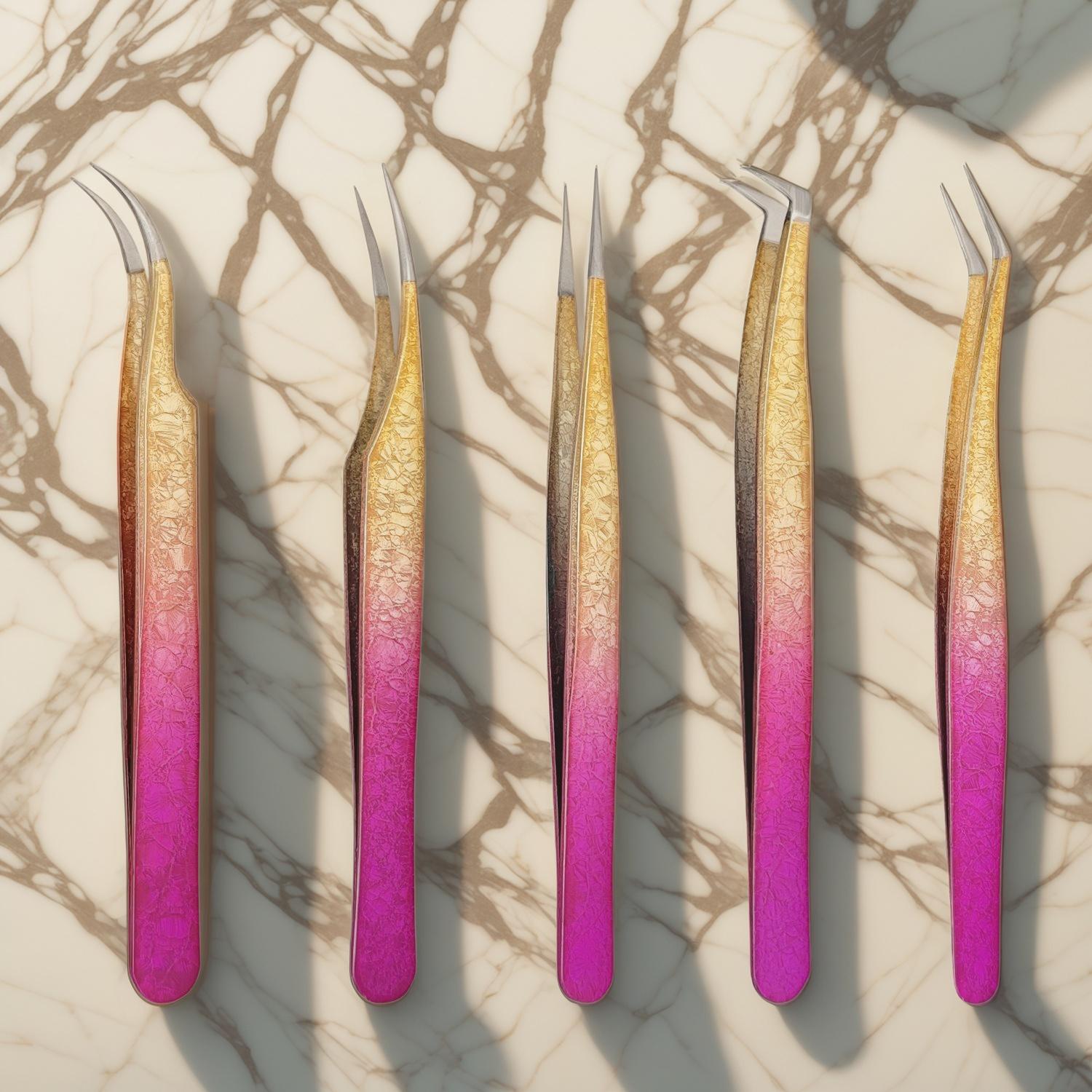
Common tweezer applications include eyebrow shaping, removing fine facial hair, applying false lashes, handling small nail art accessories and general grooming. Each use changes the selection criteria. A slant tip is often preferred for eyebrow shaping because it gives both surface contact and control. Curved tips can help with angled access or delicate placement tasks. Fine or needle-style tips are useful for precision work, but they require careful finishing and protection because sharp tips can be more vulnerable during transport and daily storage.
For a branded assortment, it is usually better to offer a focused selection with clearly different uses instead of many similar items. If every product in the range appears interchangeable, customers may choose only by color or price. A more useful lineup might include a slant tweezer for everyday brow work, a fine-tip tweezer for detailed grooming and a curved-tip tweezer for application tasks.
Material and Tip Alignment Matter More Than Decoration
Decorative finishes can make a tweezer attractive on the shelf, and the original Olimor Beauty range has included design details such as gold-to-pink gradients. However, appearance should never be evaluated before the working edge. A high-quality tweezer starts with durable material, a clean tip profile and stable tension.
Stainless steel is commonly used for quality tweezers because it supports durability and rust resistance when properly selected, processed and maintained. Buyers should look beyond the phrase “stainless steel” and review the actual performance of samples. The key question is not only what the tweezer is made of, but whether the two arms meet evenly, close smoothly and grip hair or fine objects without excessive pressure.
When reviewing samples, test several pieces rather than one hand-picked unit. Open and close each tweezer repeatedly. Check whether the tips meet from edge to edge. Look at the finish near the points, because roughness, uneven polishing or tiny burrs can affect comfort and accuracy. A tweezer that performs well only once under ideal conditions is not enough for wholesale supply.
Practical Sample Evaluation Checklist
A good manufacturer should make sample evaluation straightforward. Buyers can create a simple review sheet so that product managers, quality teams and sales staff judge samples using the same criteria. The checklist below is a practical starting point.
- Tip contact: The two tips should meet evenly without visible gaps when gently closed.
- Grip performance: The tweezer should hold fine hair or small test material without sliding immediately.
- Arm tension: Resistance should feel controlled, not too loose and not tiring after repeated use.
- Edge finish: The working area should be smooth enough for skin-adjacent grooming tasks.
- Handle comfort: The body should feel stable in the hand and should not twist during use.
- Surface finish: Coating, color or polishing should look consistent across multiple samples.
- Cleaning practicality: The shape should not trap visible residue in hard-to-clean areas.
- Packaging fit: Tips should be protected so they do not shift, bend or scratch during transport.
This type of checklist is especially useful when comparing multiple beauty tool products or building a mixed assortment for retail channels.
Customization: Logos, Tip Variations and Retail Presentation
Custom logo tweezers can help a beauty brand create a more complete product line, but customization should be approached carefully. Logo placement, finish, packaging and tip style all affect the final result. A logo that looks good on a flat digital proof may be difficult to read on a narrow tweezer handle, especially if the surface is reflective, gradient-colored or textured.
Useful customization discussions should include the desired brand position, sales channel and packaging format. A salon distributor may prefer a clean professional appearance with simple product labeling. A gift-focused retailer may value color, presentation and coordinated sets. A private label brow brand may need clear tip identification so customers can easily distinguish slant, curved or fine-tip tweezers.
When comparing options, request physical samples or production-representative references whenever possible. Review the logo scale, color contrast and durability of the marking. For packaging, consider whether the customer can understand the product use quickly. A beautiful package that fails to explain the tip type or care instructions can create avoidable customer service issues.
Wholesale Buying Requires Consistency, Not Just a Good First Sample
Wholesale tweezers buying is different from purchasing a single personal tool. A buyer needs repeatable quality across cartons, replenishment orders and possibly multiple product variations. Consistency is where manufacturer evaluation becomes important.
During sourcing, look at how the manufacturer controls the process from material preparation through shaping, polishing, inspection and packaging. The strongest questions are specific: How are tips checked for alignment? At what stages are cosmetic defects removed? How is packaging inspected before shipment? How are mixed styles or colors separated to avoid packing errors?
These questions do not require a buyer to know every technical step of tweezer production. They simply help reveal whether the supplier has a structured quality process or relies mainly on final visual review. For export quality tweezers, final inspection should include both appearance and function. A clean-looking tweezer that cannot grip properly is still a failed product.
Export Readiness and Communication for Long-Term Supply
Export supply involves more than making the product. Buyers may need stable labeling, carton organization, documentation, barcode placement, language requirements or channel-specific packaging. The manufacturer should be able to discuss these details clearly before production begins.
For distributors and brands, reliable communication also matters. A useful supplier will confirm artwork, product style, finish, packaging method and inspection expectations in a structured way. This reduces ambiguity and helps prevent mistakes that are expensive to correct after goods are packed.
If you are comparing options for a new beauty tool program, Olimor Beauty’s product collections can help you think through how tweezers fit alongside other grooming and personal-care tools. For custom sourcing questions, buyers can also send an inquiry with target product type, finish preferences, packaging direction and expected sales channel.
Care Guidance Adds Value After the Sale
Good tweezer performance also depends on how the end user handles the tool. Brands and retailers can reduce complaints by including simple care guidance on packaging, inserts or product pages. The instructions do not need to be complicated; they should focus on keeping the tips clean, dry and protected.
- Wipe the tweezer after use, especially after contact with skincare products or moisture.
- Store the tool with a tip cover or in packaging that protects the points from impact.
- Avoid dropping the tweezer, because even a small bend can affect tip alignment.
- Do not use fine grooming tweezers as general household tools, since hard materials can damage the tips.
- Keep tweezers separate from loose metal tools in a bag to prevent scratches and misalignment.
These simple instructions can make a noticeable difference in perceived product quality. A manufacturer that thinks about end-user care, not only production, can help a brand present tweezers as dependable beauty tools rather than disposable accessories.
Questions to Settle Before Placing a Wholesale Order
Before confirming a wholesale tweezer order, buyers should align on the commercial and technical details that influence customer satisfaction. The goal is not to collect endless paperwork, but to prevent mismatched expectations.
Clarify the exact tip style, finish, logo method, packaging format and inspection standard. Confirm whether the approved sample represents the expected production appearance and performance. If several colors or tip styles are included, define how each will be packed and labeled. For retail programs, confirm how the product name, usage description and any care notes will appear on the packaging.
It is also wise to consider future replenishment. If a product sells well, the next order should match the original as closely as possible. Keep approved samples, artwork files and packaging references organized so that repeat orders do not depend only on memory or old email threads.
Choosing the Right Manufacturing Partner
The right tweezers manufacturer combines precision, practical customization and supply reliability. Design details such as a gradient finish can help attract attention, and options like logo marking or slant and curved tips can support a branded assortment. Still, the foundation is always the same: accurate tips, durable material, comfortable handling and consistent inspection.
For buyers building a beauty tool line, choosing a supplier should be a structured process. Test multiple samples, review the working edges closely, compare packaging options and define inspection expectations before committing to volume. If your project requires custom branding or export-ready presentation, contact Olimor with the product direction and intended market so the discussion can begin with the details that matter most.
Tag: