Beauty Tools Wholesale for Salon Efficiency: A Practical Buying Guide
Beauty tools wholesale purchasing is not only about getting more items at a lower per-unit cost. For salons, spas, nail studios, beauty schools and distributors, it is a sourcing decision that affects appointment flow, staff consistency, hygiene routines, storage planning and customer perception. When everyday grooming tools are inconsistent, dull, uncomfortable to hold or difficult to maintain, service time increases and technicians spend more effort compensating for the tool instead of focusing on the client.
Olimor Beauty focuses on grooming tools for professional and personal care use, including manicure and pedicure-related supplies. For buyers comparing wholesale grooming tools with retail options, the goal should be clear: build a reliable tool supply that supports repeated daily use, reduces last-minute shortages and fits the service menu of the business. This guide explains how to evaluate wholesale beauty tools without relying on vague claims or overbuying products that do not match your salon operations.
Why Wholesale Beauty Tools Matter for Salons
Retail buying can work for occasional replacement, but it is rarely the most efficient way to support a busy treatment environment. A salon may need multiple sets of similar tools for different stations, staff members, sanitation cycles and backup inventory. If tools are bought one at a time from unrelated sources, the result is often mixed sizes, varied finishing, uneven sharpness and inconsistent handling.
Wholesale buying helps businesses standardize. When a team uses tools with similar weight, grip and construction, training becomes simpler and the service experience is easier to repeat. Bulk beauty products for salons also make stock planning more predictable. Instead of reacting only when something breaks or goes missing, managers can prepare inventory for seasonal demand, new staff onboarding, training sessions or expanded service hours.
The advantage is not limited to cost. A thoughtful wholesale program can help a salon reduce downtime between appointments, avoid mismatched tools at workstations and maintain a cleaner back-of-house system. For buyers building a broader purchasing list, Olimor’s beauty tool products page is a useful starting point for reviewing available categories before deciding what belongs in a wholesale order.
Wholesale Grooming Tools vs. Retail Options
The difference between wholesale and retail is often described only in terms of price, but professional buyers should compare the full operating impact. Retail tools may be convenient when you need one item quickly, yet they can create inconsistency across workstations. Wholesale grooming tools are better suited to repeated use across multiple staff members and service rooms, provided that the selection is aligned with your actual workflow.
| Buying factor | Wholesale beauty tools | Retail beauty tools |
|---|---|---|
| Inventory planning | Supports backups, multiple stations and repeat orders | Often purchased only when a tool is urgently needed |
| Consistency | Easier to standardize tool type, handling and presentation | Tools may vary by store, batch or brand availability |
| Unit cost | Usually more cost-efficient for volume purchasing | Typically higher per item for small quantities |
| Best use case | Salons, spas, distributors, schools and service teams | Home users or emergency replacement needs |
| Operational impact | Can reduce shortages and simplify replenishment | Can lead to fragmented inventory over time |
For a professional setting, the strongest reason to buy wholesale is control. A salon manager can decide which tools are used for specific services, how many are assigned to each station and how often replacements should be reviewed. This is more efficient than allowing each technician to source tools independently or relying on whatever is available at retail when stock runs low.
Matching Tools to Manicure, Pedicure and Grooming Services
Before placing a wholesale order, map the tools to the services you actually provide. A nail studio with high manicure volume may need a different tool mix than a spa focused on pedicure treatments. A distributor may need a balanced assortment that appeals to salons, beauty schools and personal care retailers. The key is to separate general personal care tools from specialized supplies.
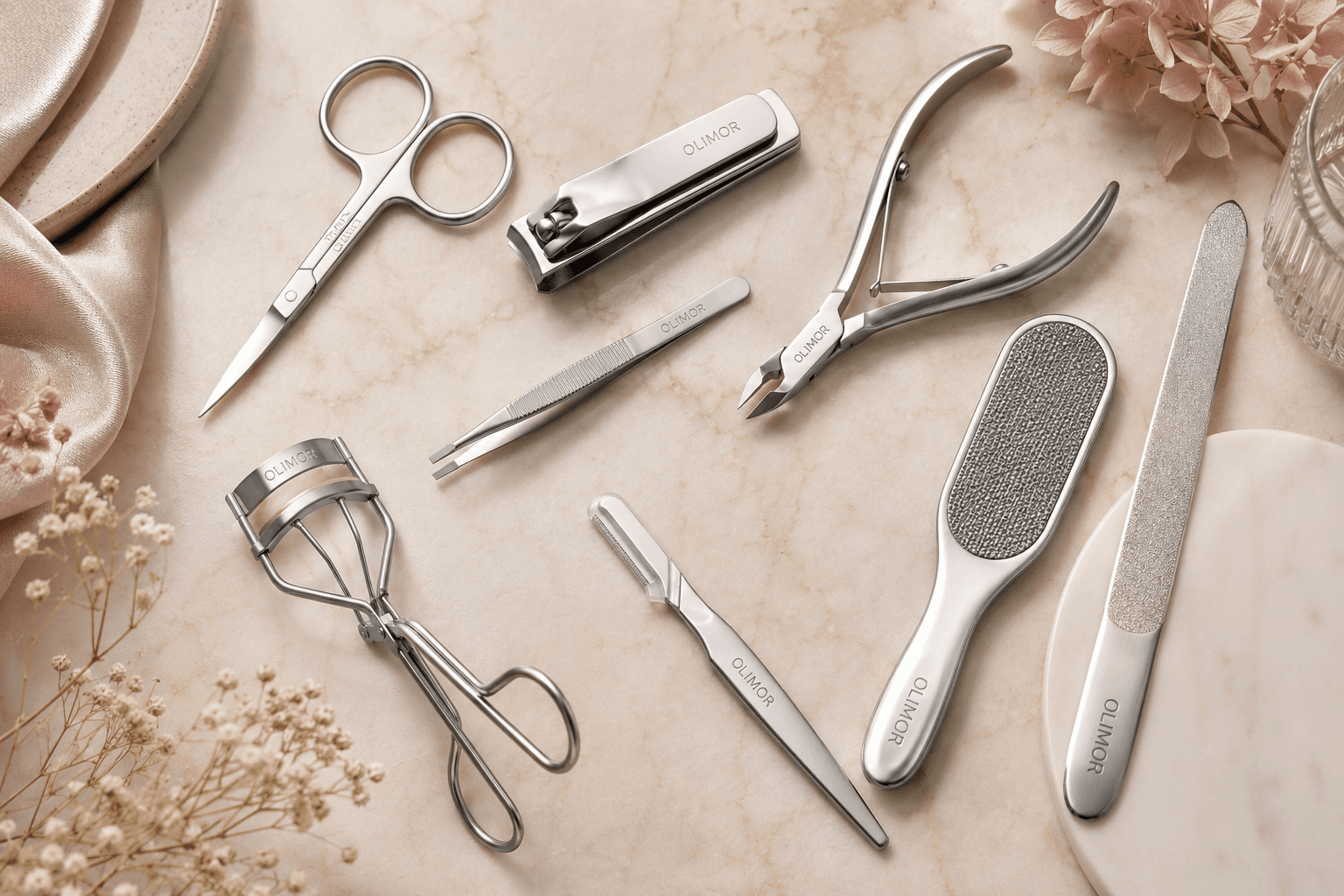
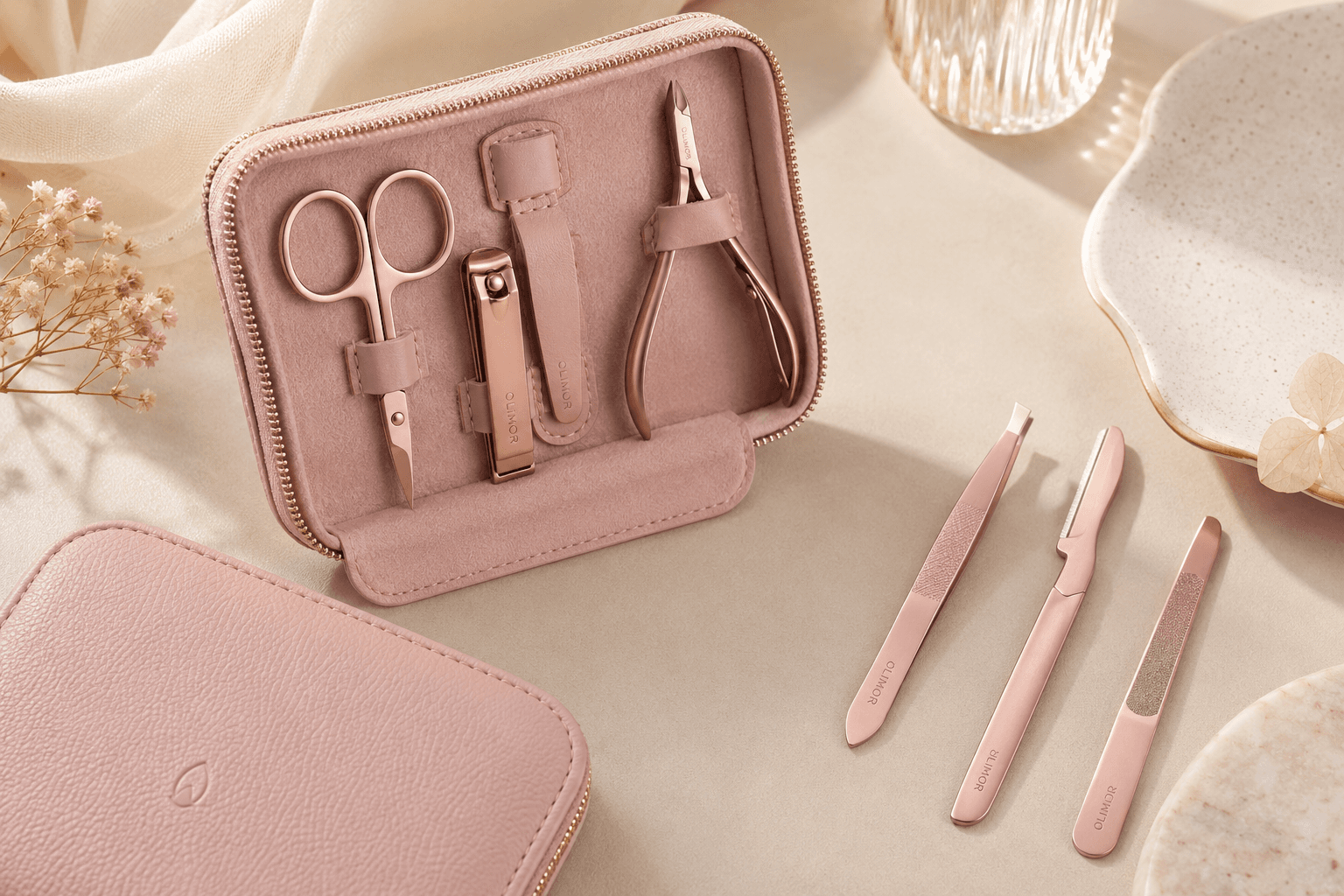
Personal care tools wholesale can include versatile grooming sets intended for broad maintenance tasks. These are useful when buyers want an assortment that covers common needs. Pedicure supplies wholesale are more targeted because foot care services often require a focused tool selection, clear station organization and reliable handling for repeated appointments. Manicure sets, including stainless steel manicure sets described by Olimor Beauty as designed for ease of use and durability, may be especially relevant when salons need tools that feel consistent during detailed hand and nail work.
Use the following checklist when matching products to your service menu:
- Service frequency: Prioritize the tools used every day before adding occasional items.
- Station count: Calculate how many complete tool sets are needed per workstation, plus backup sets for sanitation or replacement.
- Staff habits: Choose tools that technicians can hold comfortably through repeated appointments.
- Client category: Separate professional salon use, beauty school training, retail resale and personal care kits if you serve more than one buyer type.
- Storage method: Confirm whether tools can be organized clearly in drawers, cases, trays or station kits.
- Replacement planning: Keep a simple log of tools that wear faster, go missing or require frequent review.
This approach prevents overbuying attractive but rarely used items. It also helps you build a wholesale order that supports real revenue-generating services rather than a crowded supply cabinet.
Quality Signals to Review Before Ordering
Quality is difficult to judge from a product name alone. Professional buyers should look at construction, finishing, comfort and repeatability. Olimor Beauty emphasizes precision and excellence in grooming tools, and the original product positioning highlights stainless steel manicure sets with ergonomic design, durability and quality assurance through inspections. When comparing any beauty tools wholesale option, those are the kinds of signals worth reviewing.
For manicure and pedicure tools, small details matter. Edges should be appropriate for the intended task, handles should feel stable, and the finish should be suitable for regular cleaning and professional presentation. Tools that feel awkward may slow technicians down even if they look acceptable in a catalog. A comfortable grip can matter during a full day of appointments, especially for repetitive tasks requiring control.
Buyers can evaluate wholesale grooming tools using neutral criteria such as:
- Material suitability: Check whether the material is appropriate for the tool type and expected maintenance routine.
- Finish consistency: Look for smooth surfaces, clean edges and uniform appearance across pieces.
- Handling comfort: Consider grip, balance and ease of control during detailed work.
- Tool assortment: Confirm that each piece in a set has a practical role in your service menu.
- Packaging practicality: Review whether packaging supports storage, display, resale or staff assignment.
- Inspection process: Give preference to suppliers that communicate quality control expectations clearly.
If you are comparing product families or planning a broader assortment, Olimor’s product collections can help you organize decisions by category rather than evaluating every tool in isolation.
Inventory Planning for Better Salon Workflow
Wholesale purchasing becomes most valuable when it is linked to a workflow plan. Start by counting your service stations, staff members and daily appointment volume. Then consider how many tools are unavailable at any time because they are being cleaned, stored, transported, repaired or replaced. Many salons underestimate this buffer and end up with staff waiting for tools during peak periods.
A practical system is to divide tools into three groups: active station tools, cleaned backup tools and reserve inventory. Active station tools are assigned to current services. Cleaned backup tools are ready when the next client arrives or when a tool needs to be swapped. Reserve inventory stays unopened or separately stored until replacement is required. This simple separation supports hygiene routines and reduces confusion.
For distributors, the planning logic is slightly different. Instead of stations and appointments, evaluate customer segments. Some buyers may want complete grooming sets; others may need pedicure supplies wholesale or salon manicure tools in volume. A well-structured wholesale selection should allow buyers to choose by use case, not just by appearance.
Maintenance and Storage Considerations
Even well-made tools perform poorly if they are stored carelessly or maintained inconsistently. Wholesale buying should therefore include a plan for tool care. While care instructions depend on the specific item and material, salons can still create consistent internal habits: clean tools after use according to the appropriate procedure, dry them fully when applicable, store them in designated locations and remove damaged tools from active service.
Labeling can also improve accountability. Some salons assign sets by station, while others assign them by service type. Either method is better than leaving all tools mixed in a shared drawer. When tools are easy to find, technicians spend less time searching and managers can identify shortages before they affect bookings.
For businesses purchasing tools for resale, packaging condition and presentation are also part of maintenance. Keep wholesale inventory away from moisture, dust and unnecessary handling. A clean storage process protects the appearance of the product and makes order fulfillment more professional.
How to Build a Smarter Wholesale Inquiry
A strong wholesale inquiry is specific without needing to include every final detail. Instead of asking only for a catalog, describe your buyer type and intended use. For example, a salon can explain that it needs tools for manicure and pedicure services across several workstations. A distributor can explain whether the goal is salon supply, retail resale or training kits. This helps narrow the conversation toward suitable product categories.
Prepare a short sourcing brief that includes your tool categories, estimated quantity range, packaging needs, target customer and any handling preferences. Avoid assuming that the lowest unit price is the best choice. A slightly better match in tool assortment, comfort or packaging can reduce operational waste and improve the buying experience for your own customers.
If you are ready to compare options or discuss a wholesale purchase, you can send an inquiry with your intended use and quantity needs. For questions that require a more general conversation, contact Olimor directly.
Choosing Wholesale Beauty Tools with Confidence
The right wholesale beauty tools should make salon work more organized, not simply fill shelves. Look for practical assortments, comfortable handling, durable construction, consistent presentation and a supplier that supports professional purchasing decisions. Retail buying has its place for urgent replacements, but wholesale sourcing is usually the better path for salons and beauty businesses that need repeatable quality and dependable inventory.
By comparing general personal care tools with specialized manicure and pedicure supplies, buyers can create a tool plan that matches real services, staff workflow and customer expectations. Olimor Beauty offers a practical direction for businesses seeking grooming tools with attention to precision, usability and quality control. A clear buying checklist, organized storage system and category-based inquiry will help you turn wholesale purchasing into a stronger, more efficient salon supply strategy.
Tag: