B2B Beauty Supplies: How to Source Reliable Tweezers and ODM Solutions
Tweezers are small tools, but they carry a large amount of responsibility in a beauty product line. For a salon, brow studio, cosmetics retailer, distributor or private-label brand, a tweezer is not just an accessory; it is a daily-use precision instrument. If the tips do not align, the grip feels unstable, the finish wears quickly or the packaging does not match the sales channel, the product can damage customer trust.
That is why sourcing B2B beauty supplies requires a more detailed approach than choosing a tool that looks attractive in a catalog. Buyers need to understand material choices, tip performance, finishing, ergonomics, quality control and customization boundaries before committing to a supplier. This guide explains how to evaluate a reliable tweezers supplier and how to approach tweezers ODM projects with practical, brand-focused questions.
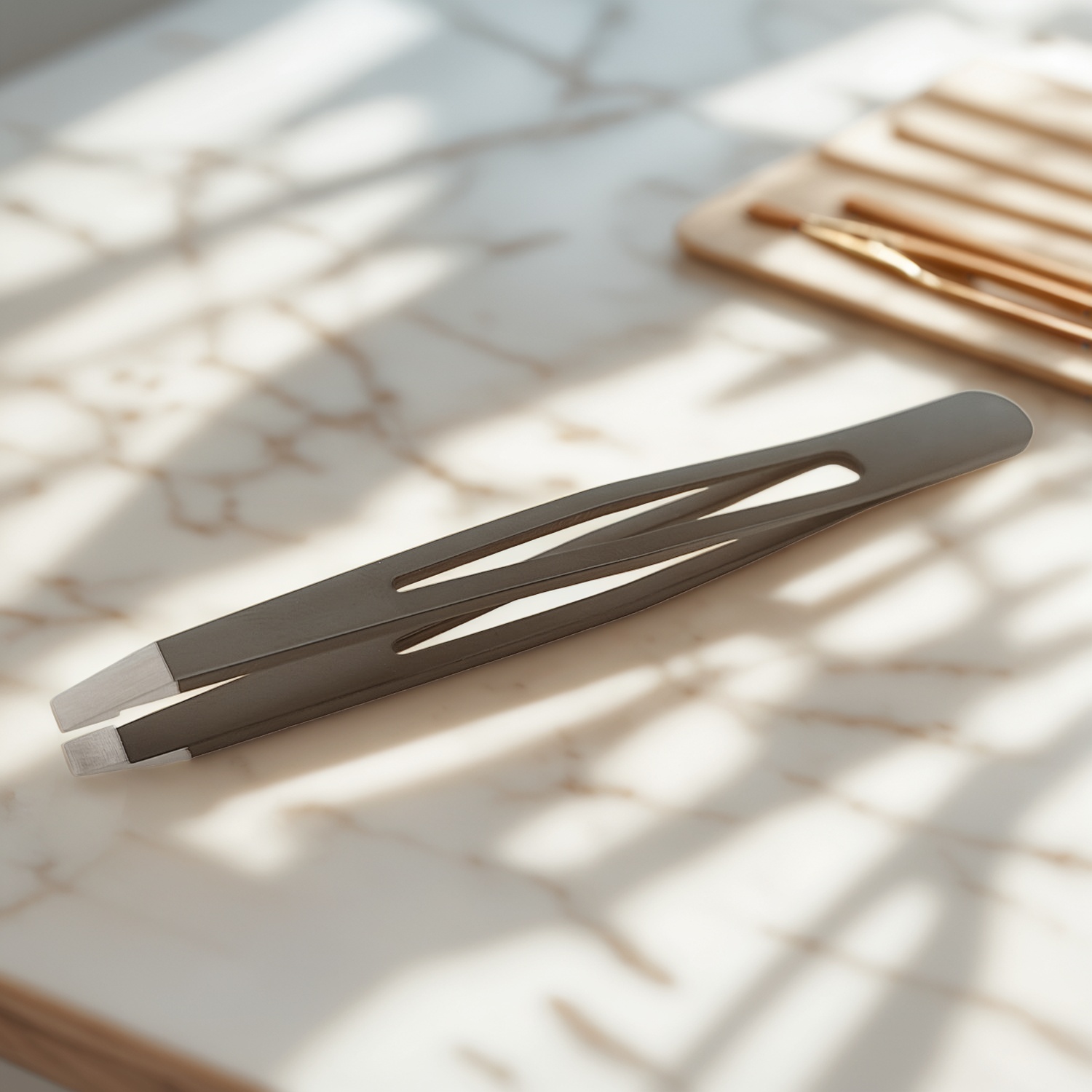
Why Tweezers Matter in B2B Beauty Supplies
In professional and retail beauty, tweezers are often used for eyebrow shaping, facial hair removal, lash application support, grooming kits and travel-size beauty sets. Because the user can immediately feel whether a tweezer grips hair cleanly, the tool becomes a direct reflection of the brand that sells it.
A weak tweezer usually fails in predictable ways: the tips do not meet evenly, the arms feel too soft or too stiff, the coating is uncomfortable, or the edge cannot pick up fine hair without repeated attempts. These problems are especially damaging for B2B buyers because one poor production decision can affect hundreds or thousands of units across a retail launch, salon program or promotional kit.
For buyers comparing beauty tool products, tweezers deserve the same sourcing discipline as larger cosmetic tools. A reliable product line is built from repeatable manufacturing, clear specifications and inspection standards that can be checked before shipment.
Key Criteria for Choosing a Reliable Tweezers Supplier
A dependable tweezers supplier should be evaluated on more than price. The goal is to find a manufacturing partner that can consistently deliver the feel, alignment and appearance your customers expect. When reviewing potential suppliers, focus on the areas below.
- Material suitability: High-grade stainless steel is commonly valued in beauty tools because it supports durability and a clean professional appearance. Buyers should confirm the material approach and whether it fits the intended sales channel.
- Tip alignment: The tips should meet evenly and hold fine hair or lash materials without slipping. Slanted, pointed or flat tips each require different inspection attention.
- Spring tension: The arms should return smoothly without feeling loose. Too much stiffness causes hand fatigue; too little tension reduces control.
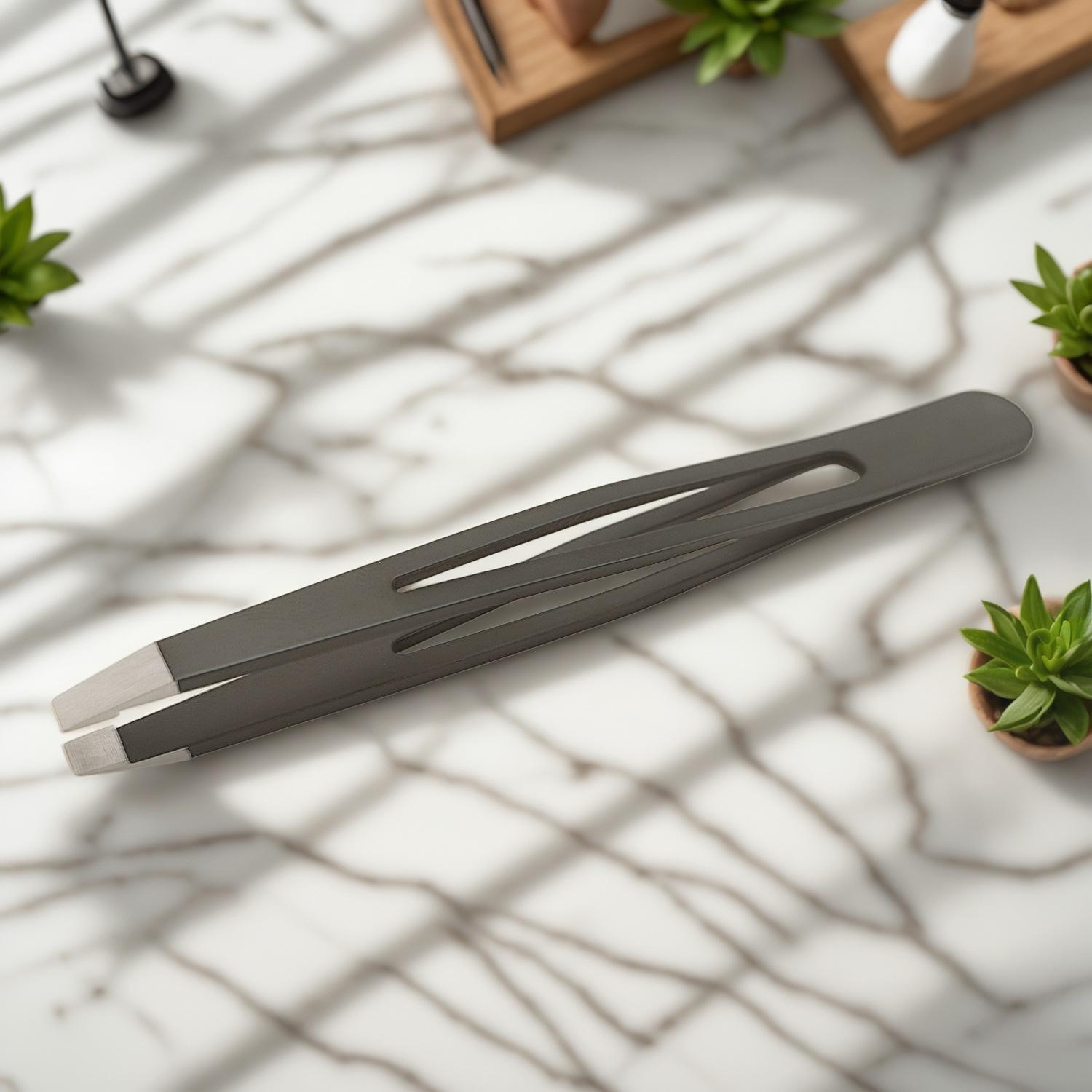
- Surface finish: Polished, matte or coated finishes should be even, comfortable to hold and appropriate for the brand aesthetic. If a non-slip matte black coating is desired, the finish should be evaluated for feel and consistency.
- Edge comfort: Tweezers need precision, but the external edges should not feel sharp in the hand.
- Packaging compatibility: Retail display, salon supply packs, gift sets and e-commerce shipments may require different packaging structures.
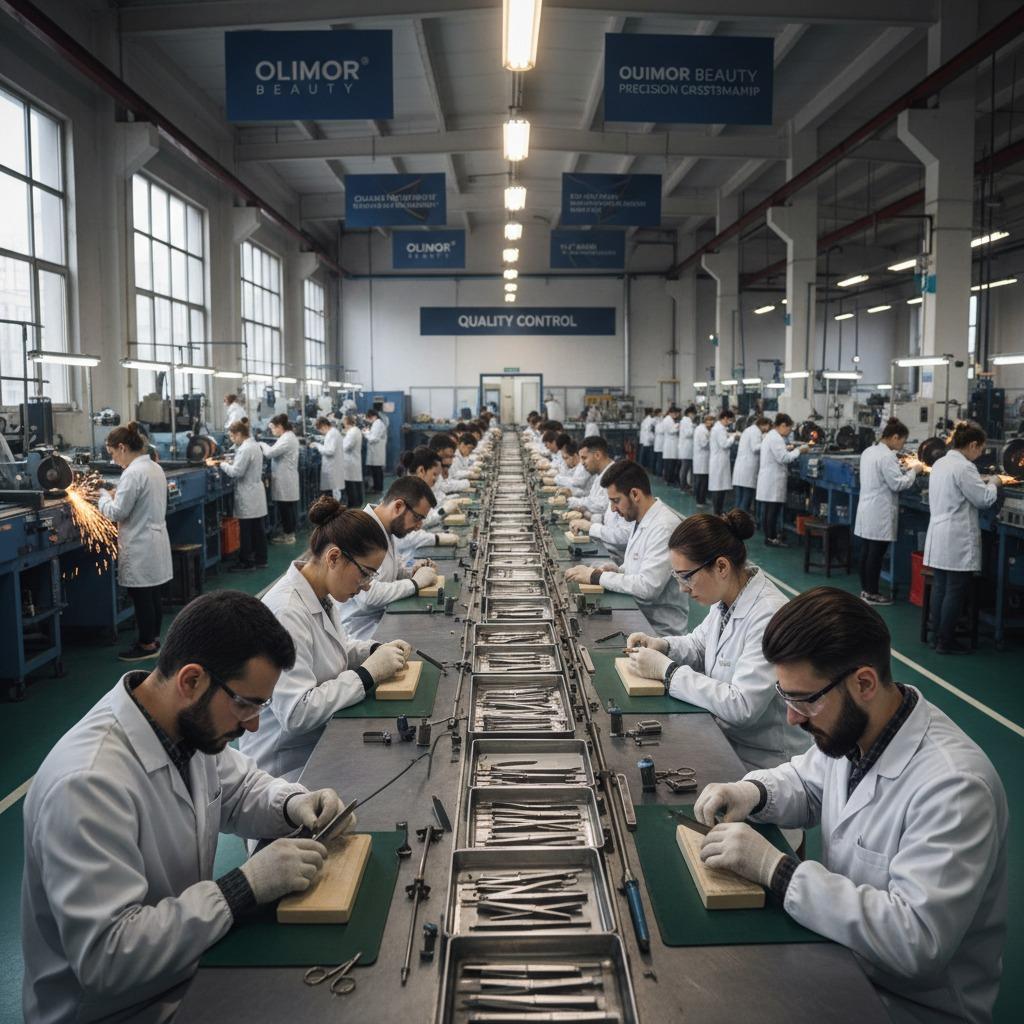
- Quality control process: A supplier should be able to explain how products are checked from raw material handling through final packaging.
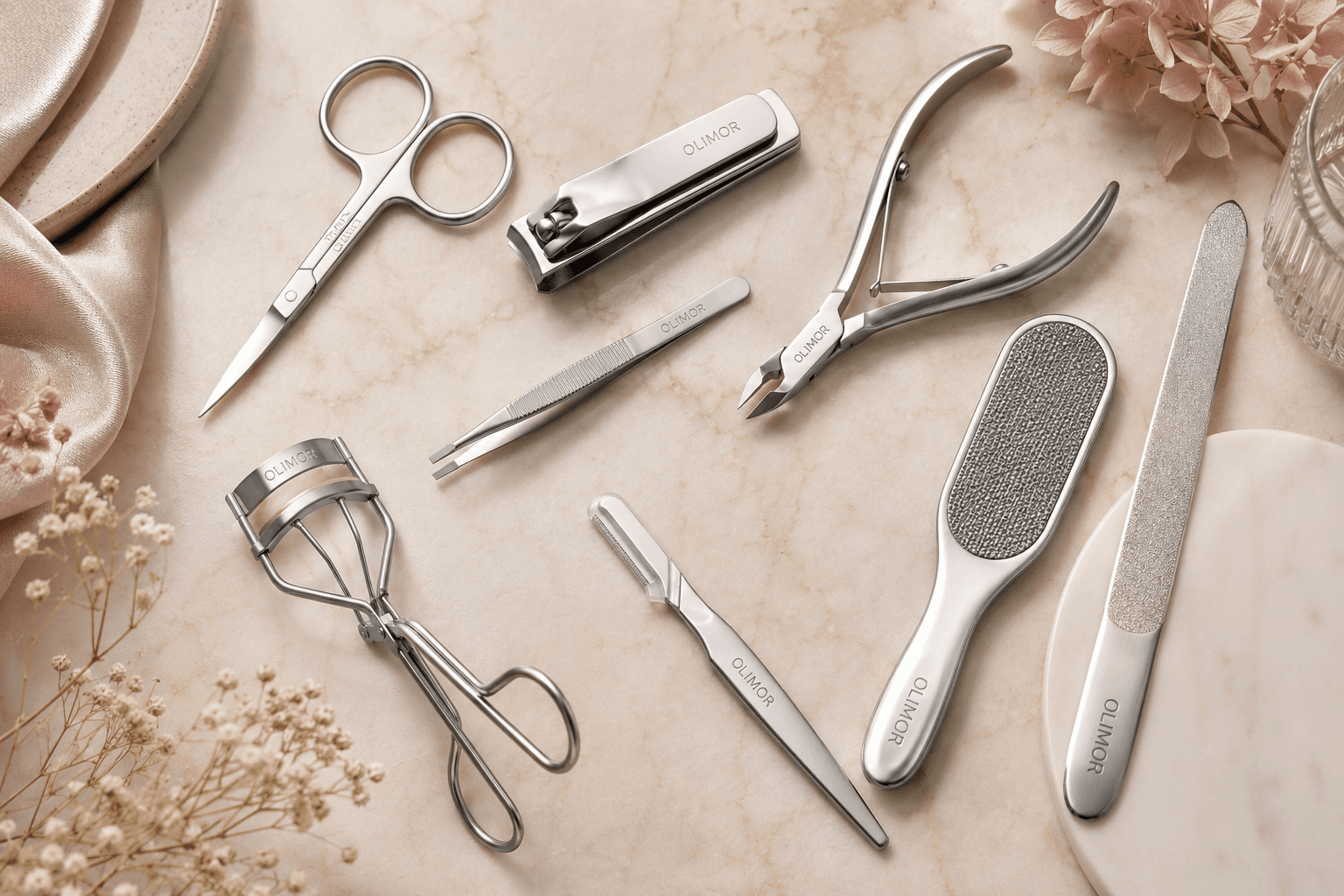
Olimor Beauty focuses on internal quality control across beauty tool production, which is especially important for products like tweezers where small differences can be obvious to the user. Buyers can review more sourcing options through Olimor product collections when planning a coordinated beauty tool range.
ODM Tweezers: Where Customization Adds Real Value
Tweezers ODM services are most useful when a brand needs a product that is not simply a generic item with a logo. ODM development may involve adjusting the tool’s appearance, hand feel, tip style, finish or packaging concept so the final product supports a specific market position.
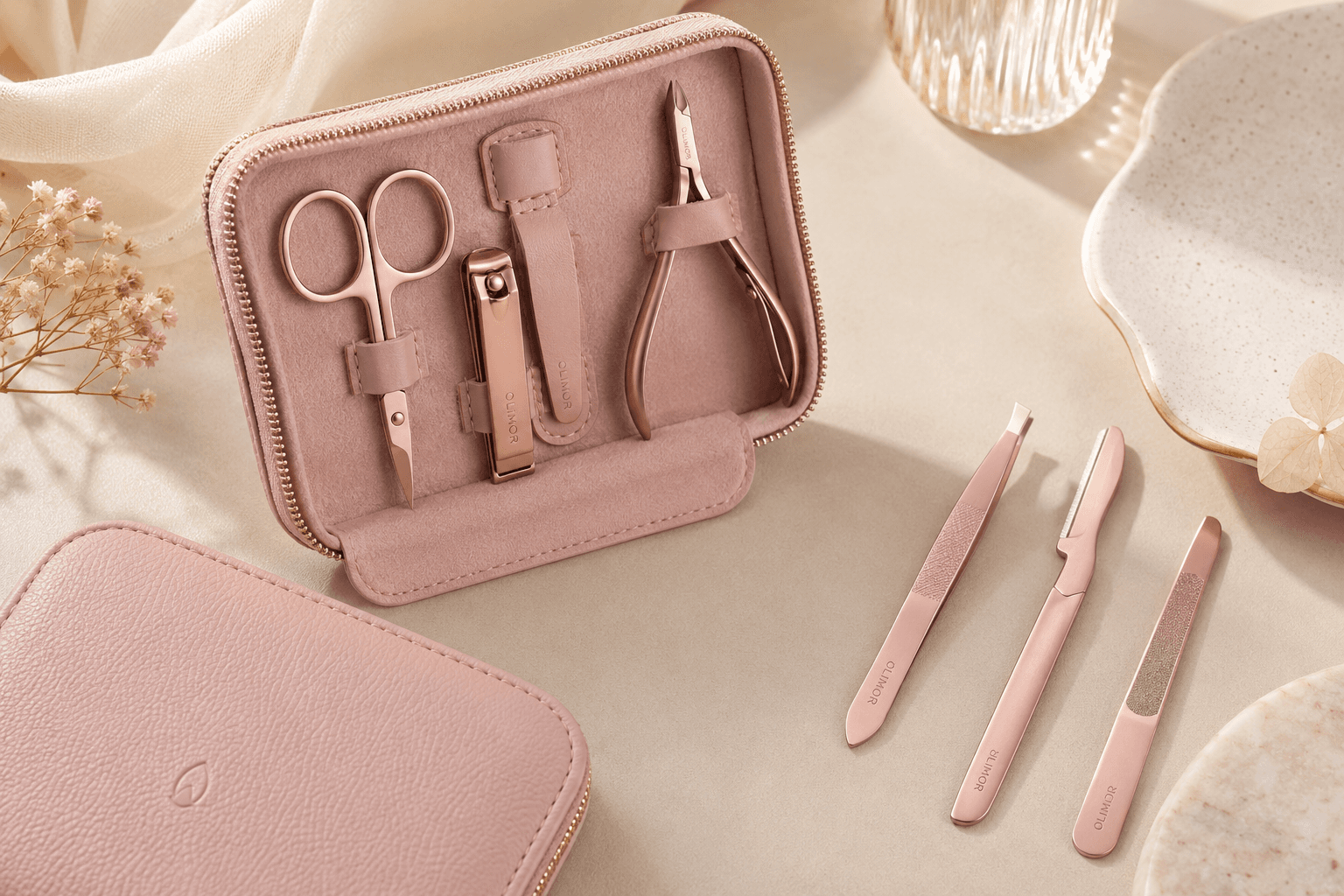
For example, a brow-focused brand may prioritize a slanted tip with a controlled grip and understated professional finish. A retail beauty kit may need a compact tweezer that fits a pouch or box insert. A salon distributor may value a durable finish and practical packaging that is easy to store. These use cases require different design decisions, even though the product category is the same.
ODM work should begin with a written brief. The brief does not need to be complicated, but it should define the intended user, sales channel, target appearance, usage scenario and any functional expectations. Without this information, the supplier may only be able to recommend an existing style rather than develop a tool that matches the brand strategy.
Practical Specification Checklist for Tweezer Sourcing
Before requesting samples or moving toward a custom project, buyers should organize their requirements. The table below shows common decision points and why each one matters.
| Decision Area | What to Define | Why It Matters |
|---|---|---|
| Tip shape | Slanted, pointed, flat or other functional style | Determines the main grooming use and level of precision |
| Grip feel | Arm tension, width and surface texture | Affects comfort, control and repeat use |
| Finish | Polished, matte, coated or color treatment | Supports brand appearance and user handling |
| Logo placement | Tool body, packaging or both | Impacts branding visibility and production method |
| Packaging | Retail card, pouch, box, set insert or bulk pack | Must match the sales channel and shipping needs |
| Inspection focus | Tip alignment, finish consistency, packaging condition | Reduces avoidable quality issues before shipment |
This checklist helps internal teams compare quotations more fairly. A low price for a basic tweezer is not the same as a quote that includes defined finish requirements, packaging work and alignment checks. Clear specifications protect both the buyer and the manufacturer by reducing assumptions.
Sample Review: What Buyers Should Test Before Production
Sampling is the stage where many sourcing mistakes can be prevented. Do not judge a tweezer only by its appearance in photos. A physical sample should be handled, tested and reviewed by the people who understand the end user.
- Check tip contact: Hold the tweezer toward light and confirm that the gripping edges meet evenly.
- Test fine grip: Use a consistent material, such as fine hair or thread, to compare gripping ability across samples.
- Assess hand comfort: Open and close the tweezer repeatedly to evaluate spring tension and fatigue.
- Review finish quality: Look for uneven coating, rough areas, discoloration or visible defects.
- Inspect packaging: Confirm that the tool is protected, easy to present and aligned with your retail or professional channel.
- Document feedback: Record what needs adjustment before approving a pre-production sample.
For ODM tweezers, it is useful to approve the functional sample and the packaging sample together. A good tweezer can still disappoint if the packaging makes it look lower value, allows movement in transit or fails to communicate the brand clearly.
Quality Control Questions for a B2B Tweezer Project
Quality control should be discussed early, not only after production is complete. A supplier’s process should cover raw material review, in-process checks, finishing inspection and final packaging review. For tweezers, the most important checks are usually alignment, tension, surface finish and visible branding quality.
Buyers should prepare neutral, practical questions such as: How are tweezer tips inspected? What finish defects are considered unacceptable? How are logo placement and packaging checked? Are approved samples kept as production references? What inspection report or production photos can be provided for review?
These questions help establish a shared standard. They also make it easier to compare suppliers, because a reliable partner should be able to explain how consistency is maintained without relying on vague promises.
Building a Long-Term Beauty Tool Sourcing Strategy
A single tweezer order can support a campaign, but a consistent sourcing strategy can support an entire beauty tool business. Many buyers eventually want coordinated items across grooming, brow care, manicure, lash or cosmetic accessory categories. When possible, align product appearance, packaging language and quality expectations across the range.
Olimor Beauty works with buyers interested in practical beauty tools and custom development. If your team is evaluating tweezers ODM options, comparing professional grooming tools or preparing a private-label sourcing plan, you can send an inquiry with your target product details. For broader sourcing discussions, you can also contact Olimor to clarify next steps.
The best B2B beauty supplies are not selected by appearance alone. They are chosen through careful review of user needs, manufacturing consistency, customization choices and inspection standards. For tweezers, that means focusing on the details customers feel immediately: grip, alignment, comfort and presentation. With the right supplier and a clear ODM brief, a small tool can become a reliable part of a stronger beauty product line.
Tag: