

Stainless Steel Nail Clipper Buying Guide for Clean, Consistent Trimming
A good stainless steel nail clipper should do one simple job well: cut nails cleanly without crushing, tearing, or leaving rough edges that catch on clothing. For personal grooming, travel kits, salon tool sets, retail assortments, and B2B beauty-tool sourcing, the difference between an average clipper and a dependable one is usually found in the cutting edge, lever stability, hand feel, finish quality, and maintenance routine.
Olimor Beauty offers a stainless steel nail clipper designed for precise trimming, practical handling, and everyday reliability. It focuses on essential grooming functions: sharp cutting edges, a stable lever, an ergonomic feel, and a built-in nail file for smoothing small corners after trimming. This guide explains how to choose, inspect, use, clean, and source nail clippers without relying on vague product claims.
What Buyers and Users Expect from a Stainless Steel Nail Clipper
The primary search intent behind a nail clipper guide is practical: people want to know which clipper will cut smoothly, last through regular use, feel comfortable, and be worth adding to a grooming kit or product line. A stainless steel nail clipper is popular because the material is suitable for frequent handling and can resist ordinary moisture exposure better than many lower-grade alternatives when it is cleaned and dried properly.
Smooth trimming depends on several working parts. The upper and lower cutting edges must meet evenly. The lever must transfer pressure without wobbling. The body should be comfortable enough to hold securely. The cutting mouth should allow the user to see the nail edge clearly. A built-in file is helpful because even a clean cut may leave a small corner that needs softening.
For retail buyers and distributors, these points matter because a nail clipper is a repeat-use product. Customers may buy it quickly, but they judge it over time. If it feels weak, dull, rough, or difficult to clean, it can reduce confidence in the wider beauty-tool assortment. If it cuts consistently and feels well finished, it becomes a simple but useful daily grooming item.
How Smooth Nail Cutting Actually Works
A clean nail cut is created by alignment, sharpness, pressure control, and trimming technique. When the two cutting edges close evenly, they separate a small section of nail with less bending. When the edges are dull or misaligned, the nail may compress before it cuts. That can leave a jagged edge, a split layer, or a corner that catches on fabric.
Sharpness is important, but it is not the only factor. A very sharp edge still performs poorly if the jaws shift during cutting. A stable lever helps the user apply pressure in a controlled way. The body shape also matters because slipping fingers make trimming less accurate, especially on toenails or when the user is working at an awkward angle.
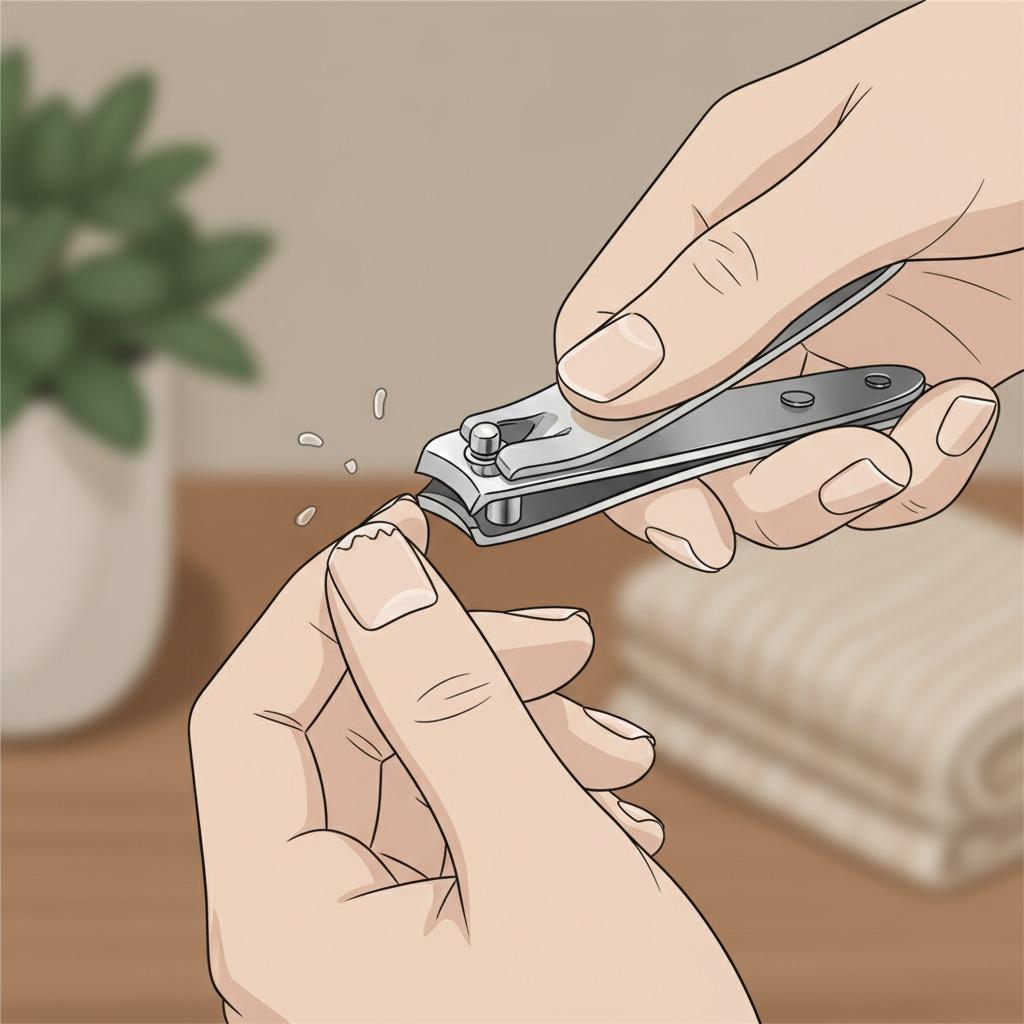
The best technique is to trim in small sections rather than forcing the clipper across the entire nail in one press. Fingernails can usually follow a gentle curve. Toenails are often trimmed straighter across, then lightly smoothed at the corners. The built-in nail file on the Olimor Beauty nail clipper supports this trim-and-smooth routine without requiring a separate file for basic finishing.
Stainless Steel Nail Clipper Selection Checklist
Whether you are buying one tool for home use or reviewing samples for a beauty business, inspect the clipper as a working tool rather than only as a visual product. A polished appearance is useful, but the most important signs are how the clipper closes, how the lever feels, and how the edges are finished.
| Selection point | Why it matters | What to check before buying or approving a sample |
|---|---|---|
| Material and surface | Influences durability, cleaning, and user confidence | Stainless steel construction, smooth touch points, no obvious burrs, stains, or rough areas |
| Blade alignment | Determines whether the nail cuts cleanly or bends first | Upper and lower cutting edges should meet evenly with no visible uneven gap |
| Cutting feel | Affects comfort and perceived quality | Clean cut in small sections without requiring excessive force |
| Lever stability | Controls pressure and reduces wobble during trimming | Lever should press smoothly and return without feeling loose or unstable |
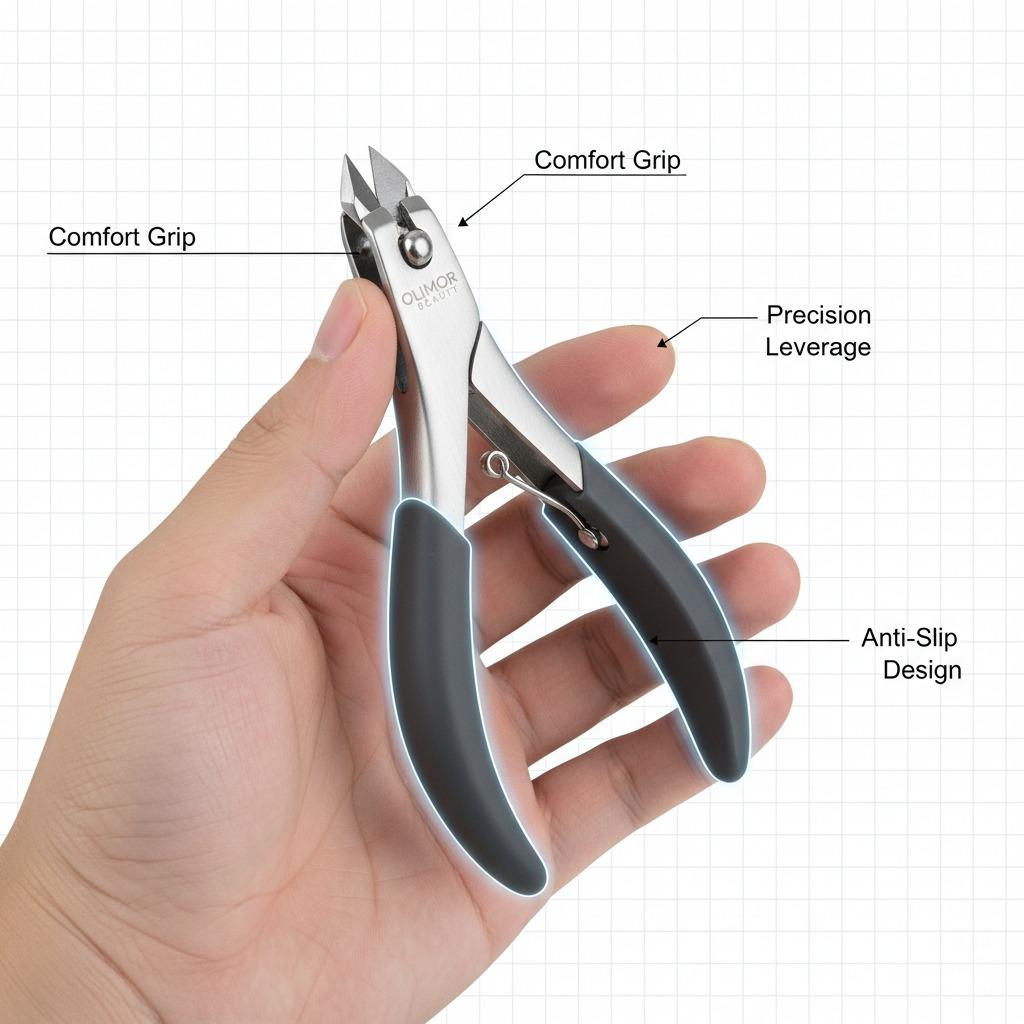
| Ergonomics | Improves control for different hand sizes and use angles | Body should be easy to grip and not feel slippery during normal use |
| Built-in file | Adds practical edge finishing after clipping | File should be accessible and useful for smoothing small points |
| Cleaning access | Supports hygiene and long-term performance | Clippings should be easy to remove from the cutting area and hinge |
| Retail suitability | Matters for B2B assortments and kit planning | Finish, presentation, and function should match the target price position and customer expectation |
For assortment planning, compare the nail clipper with related grooming items in the broader beauty tool product range. A clipper can be sold alone, paired with tweezers or files, or included in compact travel and personal-care sets depending on the target market.
How to Use a Nail Clipper for Cleaner, Safer Trims
Good technique protects the nail edge and makes even a familiar grooming tool perform better. The main rule is control: cut less nail per press, keep the clipper steady, and finish the edge after trimming.
- Clean and dry the nail area first. Washing removes debris. If nails are very hard, trimming after bathing may help because the nail can be slightly softened, but the hands or feet should be dry enough to hold the tool securely.
- Start from one side. Clip a small section rather than taking a wide bite across the whole nail. Move gradually across the edge.
- Follow the correct shape. Fingernails are commonly shaped with a gentle curve. Toenails are often kept straighter to reduce sharp side corners.
- Avoid cutting too close. Leave a small free edge to reduce tenderness and the chance of irritating the skin around the nail.
- Use the built-in file. Smooth small points, corners, or rough spots so the nail does not snag.
- Clean the clipper after use. Remove clippings and wipe the cutting area before storing.
If a nail is brittle, split, or thick, avoid forcing the clipper through a large section. Work slowly in smaller cuts. If a nail condition appears painful, infected, or unusual, a grooming tool is not a substitute for professional health advice.
Common Nail Clipping Problems and How to Prevent Them
Jagged edges after trimming
Jagged edges usually come from taking too much nail in one cut, using a dull or misaligned clipper, or skipping the finishing step. Use smaller cuts and smooth the edge with the built-in file. When sourcing, test whether the blade alignment stays even during repeated normal operation.
Nails bending before they cut
This can happen when the cutting edge is not sharp enough or the nail section is too wide. A stable lever and well-aligned blades help reduce bending. Users should also avoid clipping very dry, brittle nails aggressively.
Clipper feels slippery
A smooth metal tool still needs secure handling. Dry hands and feet before trimming. For buyers, check the body shape and grip comfort during sample review, not only the surface appearance.
Rough feel around the tool edges
Rough burrs or uncomfortable touch points can make a clipper feel low quality even if it cuts acceptably. Inspect the areas users hold, the lever contact area, and the sides of the body. A beauty tool should feel safe and smooth in normal handling.
Cutting performance declines
Nail dust, moisture, or misuse on non-nail materials can reduce performance. Keep the clipper clean and dry. Do not use it as a general cutter for tags, wire, plastic, or packaging.
Maintenance, Cleaning, and Storage
Stainless steel is a practical material for a nail clipper, but it still benefits from proper care. Moisture, nail dust, and residue can collect around the hinge and cutting area. A short cleaning routine helps preserve cutting feel and keeps the tool ready for the next use.
- Remove visible nail clippings after each use.
- Wipe the cutting edges, lever, and handle with a clean dry cloth.
- If the clipper is washed, dry it thoroughly before storage.
- Store it in a dry pouch, drawer, or case rather than leaving it in a damp area.
- Do not use the clipper on non-nail materials.
- Keep personal nail tools separate if hygiene is a concern.
- In shared or professional settings, follow the hygiene procedure required by the workplace or local rules.
Businesses that sell or use grooming tools should also confirm current consumer product and hygiene expectations in their own markets. For example, the EU General Product Safety Regulation and guidance from national consumer safety authorities may be relevant to retail consumer products. Requirements can change, so buyers should verify current versions, packaging obligations, labeling expectations, and supplier documents rather than relying on assumptions.
B2B Sourcing: What to Ask Before Placing an Order
For wholesalers, retailers, salon suppliers, gift-set developers, and private-label buyers, a nail clipper should be evaluated through both product performance and supplier communication. The goal is not to collect the most claims; it is to confirm that the tool matches your market, packaging plan, quality expectations, and customer use case.
Sample evaluation questions
- Does the clipper cut cleanly in small sections on fingernails?
- Does the lever feel stable, or does it wobble under pressure?
- Are the cutting edges aligned when viewed from the front?
- Are the handle, lever, and sides smooth to the touch?
- Is the built-in file accessible and useful for quick smoothing?
- Is the surface finish consistent across the sample?
- Does the tool fit the intended retail presentation or grooming kit?
Commercial and customization questions
Commercial decisions often depend on packaging, branding, order quantity, inspection process, and delivery planning. Avoid assuming details that have not been confirmed. Instead, ask for the available options and documents for your specific project. If you are building a full grooming range, review the relevant beauty tool collections to see how a nail clipper can fit with files, scissors, tweezers, and other daily-care accessories.
Quality management standards such as ISO 9001 may be useful as a supplier-evaluation reference when a supplier provides valid, current documents, but a buyer should verify authenticity and scope. Do not treat any standard as automatically applying to a product unless the supplier’s documentation clearly supports it.
Cost Factors Without Guesswork
The cost of a stainless steel nail clipper can vary for reasons that are practical rather than mysterious. Material choice, finishing quality, cutting-edge consistency, packaging, customization, inspection requirements, order quantity, and freight method can all influence the final quotation. A simple unbranded bulk product and a retail-ready customized item may have very different cost structures.
When comparing offers, look beyond the unit price. A low price may not be attractive if the lever feels loose, the edges are rough, packaging is unsuitable, or quality checks are unclear. A better sourcing comparison should include sample performance, finish consistency, packaging requirements, communication speed, defect-handling process, and whether the product is appropriate for the intended customer.
To get a useful quotation, prepare clear information: intended market, target packaging style, branding needs, expected order plan, inspection requirements, and delivery destination. This allows the supplier to respond to the real project rather than offering a generic estimate.
When a Stainless Steel Nail Clipper Is the Right Choice
A stainless steel nail clipper is a strong choice when the buyer wants a familiar, practical grooming tool with a clean look and routine maintenance requirements. It works well for home grooming, travel kits, retail beauty sections, promotional care sets, and salon or personal-care assortments where customers expect dependable basic tools.
It may not be the only tool needed for every nail-care situation. Very detailed shaping may require a separate nail file. Thick or problem nails may require extra care. Professional environments may require defined cleaning and storage systems. However, for routine trimming, a well-made stainless steel nail clipper with sharp edges, a stable lever, comfortable handling, and a built-in file covers the essential daily need.
If you are comparing nail clippers for a product line, focus on the parts users notice immediately: clean blade contact, controlled pressure, smooth hand feel, accessible filing, and easy cleaning. To discuss suitable options for your assortment, contact Olimor Beauty or send a sourcing inquiry with your intended market and product requirements.
FAQ
Can I request a sample before ordering?
Sample availability should be confirmed with Olimor Beauty based on the product and project requirements. A physical sample is the best way to check cutting feel, lever stability, surface finish, and packaging suitability.
Is there a minimum order quantity for nail clippers?
MOQ can depend on the product version, packaging, customization, and order plan. Ask for the current requirement for your specific inquiry rather than assuming a fixed quantity.
Can the nail clipper be customized for retail or private-label projects?
Customization may be available depending on the requested branding, packaging, and production arrangement. Provide artwork, packaging goals, and market requirements so the supplier can confirm feasible options.
How should buyers check quality before shipment?
Buyers can define practical inspection points such as blade alignment, cutting function, lever movement, surface finish, built-in file access, packaging condition, and quantity checks. Any required inspection standard or document should be agreed before production or shipment.
How is lead time confirmed?
Lead time depends on order details, customization, packaging, production schedule, and shipping method. Confirm timing directly for the current project and verify all artwork, samples, and order details early to avoid delays.
Tag: